War · Middle East · Iraq
The Kataib Hezbollah oil smuggling network that Iraqi officials describe — a punctured pipeline, crude siphoned into makeshift pits, and a revenue stream they say has run since 2021 — has drawn the toughest challenge of Prime Minister Ali al-Zaidi’s tenure: nine senior officials dismissed, suspects sent to the courts, and government troops preparing to enter a militia stronghold. Kataib Hezbollah, Iran’s most powerful armed ally in Iraq, denies it had any role at all.
Track it live: Middle East tracker · Live war trackers
BAGHDAD, November 16, 2026 — The Kataib Hezbollah oil smuggling investigation began, in public at least, with a hole in a pipe. Investigators who travelled to Jurf al-Sakhar, a town in Babil province about 50 kilometres (30 miles) south of Baghdad, say they found a crude pipeline punctured and oil siphoned off into makeshift storage pits — the physical trace, Iraqi officials argue, of a theft operation that has drained the state for years. What Prime Minister Ali al-Zaidi has done with that finding is what makes this week different from every previous Iraqi anti-corruption drive: he has dismissed nine senior security and oil officials, referred suspects to the courts, and ordered additional forces to deploy around the town and prepare for government troops to go in. Jurf al-Sakhar is a Kataib Hezbollah stronghold. Entering it would be a direct confrontation between the Iraqi state and the most powerful of the pro-Iran armed groups that operate, semi-officially, inside it.
Reuters, reporting from Baghdad on Monday, put the allegation at the centre of the story plainly: Kataib Hezbollah has taken in hundreds of millions of dollars from oil stolen from the state, according to Iraqi officials, through a smuggling network officials say has operated since 2021 with accomplices among some security and oil officials. Every figure in that sentence carries an attribution, and this article keeps them attached, because none of the numbers has been audited in public and the group at the centre of the accusation contests it outright. Kataib Hezbollah denied any role in oil smuggling on November 15. Both halves of that — the crackdown and the denial — are the story, and both are set out in full below.
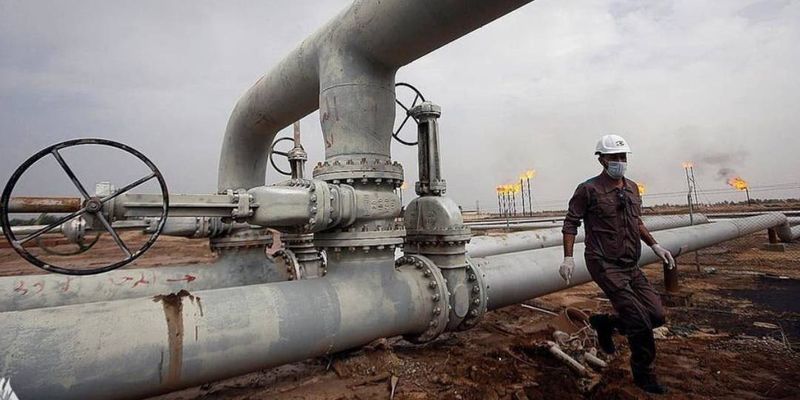
What investigators say they found at Jurf al-Sakhar
The inspection that turned suspicion into a crisis took place on Saturday, when two security sources on an inspection mission described what the team encountered, according to Reuters: a punctured crude pipeline and crude oil siphoned into makeshift storage pits. The pipeline matters because of its scale. It is a 26-inch line that, according to an Iraqi Oil Ministry document reviewed by Reuters, carries at least 200,000 barrels of crude a day. A line of that capacity is not a garden hose tapped for a few tanker loads; officials argue that a sustained tap into it, run over years, is an industrial operation — one that would need storage, transport, buyers and protection, which is precisely the shape of the network the government says it is now dismantling.
The geography matters too. Jurf al-Sakhar — also known as Jurf al-Nasr — sits in Babil province, close enough to the capital to be strategically sensitive and far enough into Kataib Hezbollah’s heartland to have been effectively closed to the state for years. The town’s history is written into its double name: it was a battleground in the war against the Islamic State, emptied and contested, and it emerged from that war under the control of the armed groups that fought there. For Baghdad to announce that its troops are preparing to enter is therefore not a policing detail. It is a sovereignty claim, made in the one vocabulary — deployments, deadlines, dismissals — that every armed actor in Iraq reads fluently.
The investigative trail did not begin on Saturday. The Long War Journal, in its account of the crackdown published November 15–16, reports that the outlet Al-Hurra published satellite images and investigation details on November 9; that al-Zaidi set up a committee whose visit confirmed findings by the Federal Intelligence and Investigations Agency on smuggling operations and refineries; and that Iraqi security forces completed preparations to enter Jurf al-Sakhar on November 15, with reports of an ultimatum for the site to be handed over. Taken together, the two accounts describe a government that spent a week building a file before it spent a day building a cordon — committee, confirmation, dismissals, deployment — and that sequence is itself a signal that Baghdad intends this to be read as a state operation, not a raid improvised for the cameras.
The money: hundreds of millions, say officials — and not yet counted
The financial claim is the largest in the story and the least settled, and it should be read with its sourcing kept visible. Two oil officials estimated to Reuters that the value of the oil siphoned since 2021 could reach hundreds of millions of dollars. The same reporting is explicit that it is too early to quantify the loss precisely. Iraqi officials say the network has run since 2021. Those are official estimates and official assertions, reported by Reuters; they are not an audited figure, no court has adopted them, and Kataib Hezbollah rejects the underlying accusation. What can be said without the attribution is narrower and still significant: the government of Iraq has chosen to accuse its most powerful militia, in public and by name, of stealing state oil at a scale its own officials measure in the hundreds of millions.
Even the mechanism officials describe explains why the number is hard to pin down. Oil siphoned from a pipeline into pits does not pass through a metering station. It moves, investigators say, through informal storage and refining — the Long War Journal’s account notes the committee confirmed findings on smuggling operations and refineries — and out through channels that leave no customs record. Iraq’s formal oil economy, by contrast, is one of the most measured on earth: every legal barrel is counted because the state budget depends on counting it. The gap between those two economies — one metered to the barrel, one deliberately unmeasured — is where the estimate lives, and why officials can describe a range in the hundreds of millions while conceding they cannot yet produce a ledger.
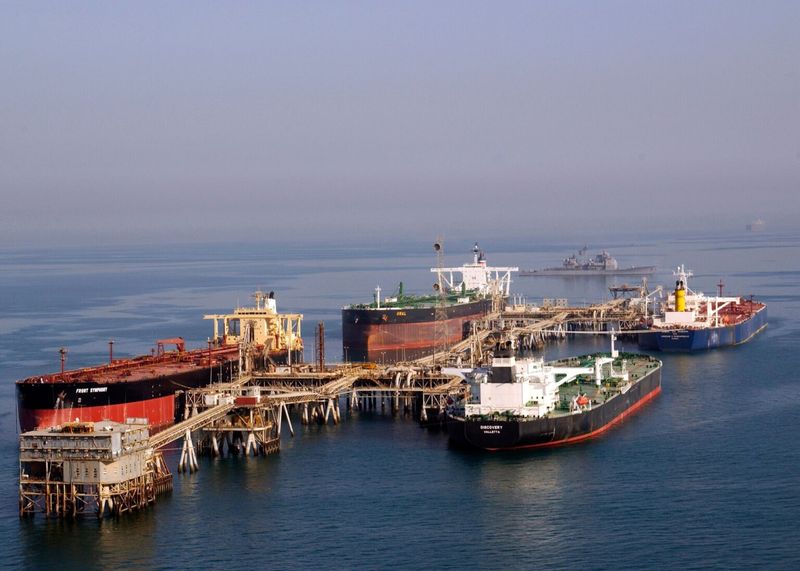
Nine officials dismissed, and a file sent to the courts
A crackdown that stopped at accusing the militia would have been familiar. This one reached into the state itself. On November 14, according to the Long War Journal’s chronology, al-Zaidi fired nine senior security and administrative officials and referred suspects to the judiciary; Reuters reports the same nine dismissals among senior security and oil officials. The names of the posts tell the story of what the government believes went wrong: the Babil police chief was dismissed, as were the province’s intelligence and security commanders, and the director of the state-run Oil Pipelines Company — the very company whose lines were tapped. A smuggling operation on a state pipeline, in a province policed by state forces, does not survive for years on militia strength alone, and the dismissals are Baghdad’s public admission of that arithmetic: the network officials describe had accomplices, or at least blind eyes, inside the apparatus now ordered to destroy it.
The referrals to the courts matter for a second reason. Iraq has seen many announced crackdowns dissolve into communiqués; a judicial file creates a paper trail that outlives a news cycle and gives the operation a legal frame — theft of state property, corruption, collusion — distinct from the military question of who controls Jurf al-Sakhar. It also raises the stakes of the evidence. What investigators say they found — the punctured line, the pits, the documents — will eventually have to be presented, tested and defended in proceedings where Kataib Hezbollah’s denial can be put to the state’s witnesses. Until then, the honest status of every scale figure in this story remains what Reuters’ sourcing says it is: what Iraqi officials say.
Kataib Hezbollah’s answer: a denial, issued before the troops move
Against all of that stands a sentence that readers should weigh as carefully as the accusation. On November 15, Kataib Hezbollah denied a role in oil smuggling, according to both Reuters’ reporting and the Long War Journal’s account. The denial was issued as Iraqi security forces were completing their preparations around Jurf al-Sakhar — that is, at the moment of maximum pressure, and before any court has heard a word of evidence. The group has not, in the reporting available, offered an alternative account of the punctured pipeline or the storage pits. But a denial from an armed organisation that controls the ground in question is not a press detail; it is a statement of position in a confrontation, and it tells Baghdad — and Washington, and Tehran — that the group does not intend to absorb the accusation quietly or to treat the coming entry of government troops as a routine inspection.
That is the balance of the public record as of Monday, and Signal Post News reports it as a balance, not a verdict. On one side: a government investigation, a committee confirmation of an intelligence agency’s findings, satellite imagery published by Al-Hurra, nine dismissed officials, suspects referred to judges, and two named categories of witness — security sources who saw the punctured line and oil officials who estimated the loss. On the other: a flat denial from the accused organisation, and the absence, so far, of any publicly tested evidence. The state’s case will stand or fall in the courts it has just invoked and on the ground it is preparing to enter. The accusation is grave; the denial is categorical; the proof is not yet public. All three clauses belong in the same paragraph, because each is true.
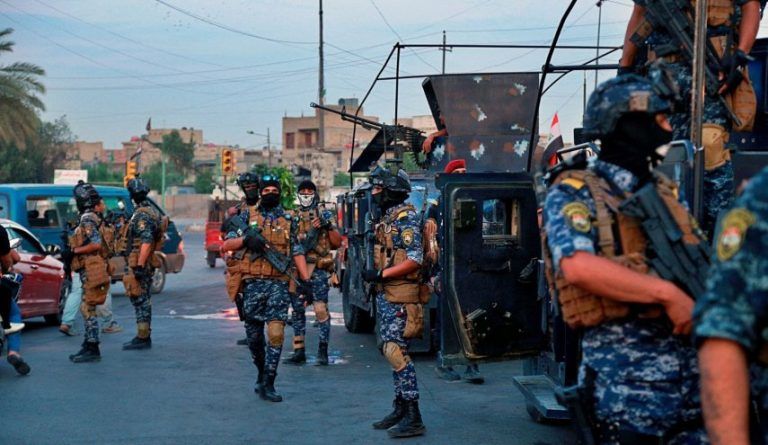
The group, the town and the state inside the state
To understand why a pipeline theft can bring a country to the edge of an internal armed confrontation, the reader needs the structure of post-2003 Iraq in one paragraph. Kataib Hezbollah is designated a terrorist organisation by the United States. It is also one of dozens of semi-official pro-Iran armed groups in Iraq — formations that fought the Islamic State, were folded in varying degrees into the state’s security architecture, draw salaries and legitimacy from that association, and yet answer, in the last instance, to their own commanders and their own external alliances. That dual status is the permanent ambiguity at the heart of Iraqi politics: the state pays, the state salutes, and the state does not fully command. Successive prime ministers have promised to resolve it. None has, because resolving it means doing what al-Zaidi is now preparing to do at Jurf al-Sakhar — sending the state’s soldiers to a place where another armed authority already sits.
The group’s recent record sharpens the point. Reuters notes that Iraq’s pro-Iran armed groups have struck US troops and targets in Saudi Arabia and the UAE in solidarity with Tehran since the US and Israeli war on Iran began in February, and that they have resisted repeated disarmament calls from both al-Zaidi and President Trump. This newsroom’s own coverage has tracked the same tension from the other direction: only last month, Kata’ib Hezbollah suspended its attacks as the last US troops left Iraq — a pause that looked, at the time, like de-escalation. Read against this week, it looks more like a group husbanding its position at home while the foreign enemy departs, and a government deciding that the departure of the Americans is precisely the moment to settle the domestic question. Both readings can be true at once, and the collision between them is now parked outside Jurf al-Sakhar.
The American pressure behind Baghdad’s timing
No Iraqi prime minister moves against Tehran’s strongest Iraqi ally in a vacuum, and the external pressure on this file has been building in public. In May, Washington sanctioned Iraq’s deputy oil minister over alleged facilitation of oil diversion — a shot, as Reuters records it, across the bows of exactly the oil-smuggling economy now under investigation. The logic of that pressure is straightforward: oil revenue that leaks to armed groups is revenue that funds rockets, and a Baghdad government that cannot police its own pipelines will find its sovereignty questioned in Washington before it is questioned anywhere else. Al-Zaidi’s crackdown answers that pressure in the most legible way available — dismissals, courts, troops — and it does so while claiming the initiative as Iraq’s own, which matters in a capital where being seen to act on American instructions is its own political cost.
The regional frame is wider still. Iraq’s legal oil trade is being renegotiated at the same moment its illegal one is being raided: Baghdad’s recent oil and gas framework agreement with Türkiye opened a new northern route for Iraqi crude, and every such route raises the value of the question this crackdown asks — who, exactly, controls the movement of Iraqi oil, and who is paid when it moves? A state that cannot answer that question at Jurf al-Sakhar will struggle to answer it at a negotiating table in Ankara. The confrontation’s audience, in other words, includes oil buyers and pipeline partners as much as militiamen, and the follow-on reporting in this newsroom’s coverage of the Iran war’s pressure on Iraqi and Gulf infrastructure shows how quickly an Iraqi domestic file becomes a regional one.
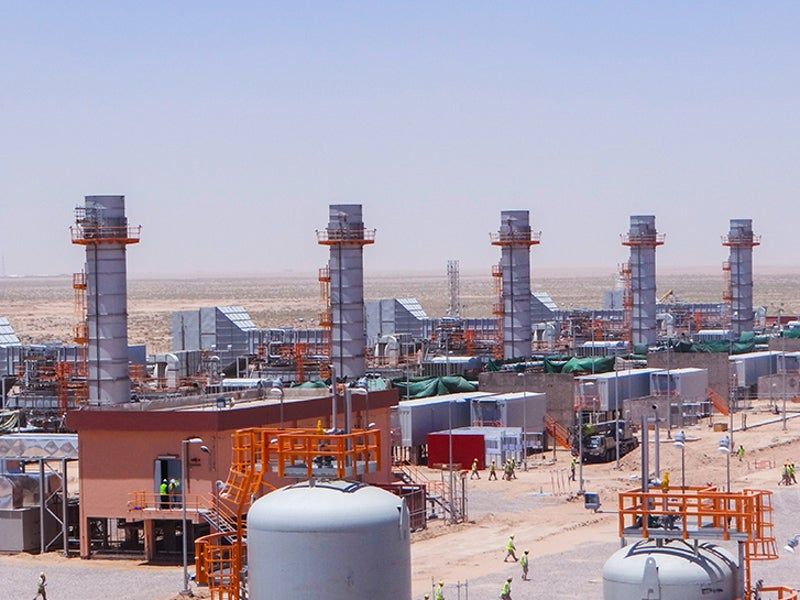
Why this matters
Oil is the state, and the state is contesting its own revenue
Iraq is a petro-state in the strictest sense: oil income funds the government, the salaries, the subsidies and the security forces themselves. A network that diverts crude at the scale officials allege — hundreds of millions of dollars since 2021, on their estimate — is therefore not merely stealing a commodity. It is taxing the state in parallel, and spending the proceeds outside any budget the parliament votes on. When the accused beneficiary is an armed group, the fiscal offence and the security offence become the same offence: money that should have paid for the state’s army is alleged to have paid for a rival one. That is why a story that begins with a punctured pipe ends with troop deployments, and why al-Zaidi has framed his response as the toughest challenge of his tenure rather than as a police matter.
The first direct state-versus-militia test since the Iran war began
Since February, the region’s violence has run along familiar lines: Iran and its allies on one side, the United States, Israel and their partners on the other, with Iraq’s armed groups striking outward in solidarity with Tehran. Jurf al-Sakhar threatens a different geometry — Iraqi against Iraqi, the state’s forces against a group that sits inside the state’s own security order. If government troops enter and the site is handed over, Baghdad will have established a precedent every other armed group in the country will study: that the post-American Iraq intends to enforce a monopoly on force, starting with the oil. If the entry is negotiated away, or worse, resisted, the precedent runs in the opposite direction with equal clarity. Either outcome will be cited in every Iraqi argument about sovereignty for years, which is why the reports of an ultimatum — hand over the site, or the state comes in — deserve such close attention in the coming days.
Who gains, who pays
Al-Zaidi gains, if this holds, the one asset Iraqi premiers chronically lack: demonstrated authority. Washington gains a partner visibly acting on the diversion economy it sanctioned in May. Iraq’s treasury gains whatever portion of the alleged flow is actually stopped — a figure that, to repeat the lock on this story, officials estimate in the hundreds of millions since 2021 and no auditor has yet confirmed. The losers, on the government’s account, are the network’s operators and protectors, nine of whom have already lost their posts. The risks are distributed less neatly. Babil’s residents gain a confrontation on their roads. Iraq’s courts gain a case in which the state’s evidence will be tested against a powerful defendant’s denial. And Kataib Hezbollah, which denies everything, faces a choice its denial has already half-made: comply and lose a stronghold’s immunity, or resist and become, in fact, what Baghdad’s accusation says it is — an armed power willing to fight the state over oil money.
What happens next
The immediate question is mechanical: do the troops go in, and if so, how? The Long War Journal’s account describes preparations completed on November 15 and reports of an ultimatum to hand over the site; Reuters reports al-Zaidi’s order for additional forces around the town and preparations for entry. Between those two sentences sits a spectrum of outcomes, from a negotiated handover under the ultimatum’s shadow, through a slow cordon-and-search entry, to the armed clash both sides’ rhetoric is now pricing in. Watch, first, for the language of the next government statement — deadlines named in public are hard to walk back — and, second, for any statement from the wider constellation of pro-Iran groups, whose solidarity, or silence, will tell Baghdad how isolated Kataib Hezbollah actually is.
Beyond the town, the judicial file is the slow story that will decide what this week ultimately was. Suspects have been referred to the courts; the dismissed officials’ cases will test whether the accomplices officials describe are named, charged and tried, and whether the evidence for the operation’s scale — the 26-inch line, the 200,000 barrels a day it carries on the Oil Ministry document Reuters reviewed, the officials’ estimate of hundreds of millions since 2021 — is ever produced in a form the public can examine. If it is, this article’s attributions can be retired and the figures can stand on their own. If it is not, the crackdown will join the long Iraqi archive of operations that were announced at full volume and documented at none. The troops outside Jurf al-Sakhar are the headline. The paperwork is the verdict, and it has not been written yet.
Sources
- Reuters (Ahmed Rasheed), November 16, 2026 — “Iran’s proxy in Iraq rakes in hundreds of millions through oil smuggling” (reuters.com): Iraqi officials’ account that Kataib Hezbollah has taken in hundreds of millions of dollars from oil stolen from the state since 2021; the Jurf al-Sakhar investigation in Babil province; the punctured pipeline and makeshift storage pits described by two security sources; the 26-inch pipeline carrying at least 200,000 barrels a day per an Iraqi Oil Ministry document reviewed by Reuters; two oil officials’ estimate that the value siphoned since 2021 could reach hundreds of millions of dollars, with precise quantification not yet possible; the dismissal of nine senior security and oil officials, including the Babil police chief, the province’s intelligence and security commanders and the director of the state-run Oil Pipelines Company; suspects referred to the courts; al-Zaidi’s order to deploy additional forces around Jurf al-Sakhar and prepare for troops to enter; Kataib Hezbollah’s designation by the US and the May US sanctions on Iraq’s deputy oil minister. All scale figures are attributed to Iraqi officials in the text and are not stated as audited fact.
- Long War Journal, November 15–16, 2026 — “Iraqi PM’s crackdown on oil smuggling raises tensions with Kataib Hezbollah” (longwarjournal.org): Al-Hurra’s November 9 publication of satellite images and investigation details; the committee set up by al-Zaidi confirming the Federal Intelligence and Investigations Agency’s findings on smuggling operations and refineries; the November 14 dismissal of nine senior security and administrative officials and referral of suspects to the judiciary; Iraqi security forces’ November 15 preparations to enter Jurf al-Sakhar (Jurf al-Nasr) and reports of an ultimatum to hand over the site; and Kataib Hezbollah’s November 15 denial of a role in oil smuggling, which this article carries in full alongside the government’s account.
- Signal Post News, related coverage: Kata’ib Hezbollah Suspends Attacks as Last U.S. Troops Leave Iraq; Iraq Turkey Oil Gas Agreement: Ankara Opens New Route; Pentagon Ignored Warnings Before Iran Drone Killed Six at Port Shuaiba, Whistleblower Tells Congress.
- Photos: file photos — pipeline worker at an Iraqi oil facility, via News.iq; Iraqi security forces on patrol, via Tanawue News; Rumaila oil field processing towers, via Egypt Oil & Gas; tankers at the Basra offshore oil terminal, via House of Saud. None depicts Jurf al-Sakhar or the November 2026 operation.