War · Middle East · Gaza
The Nasser Hospital strike Gaza officials described on Thursday hit the surgery department of the south’s main hospital shortly after midnight — killing a surgeon and a 13-year-old boy who had been waiting for surgery, and closing the ward that would have treated the wounded.
Track it live: Israel war map
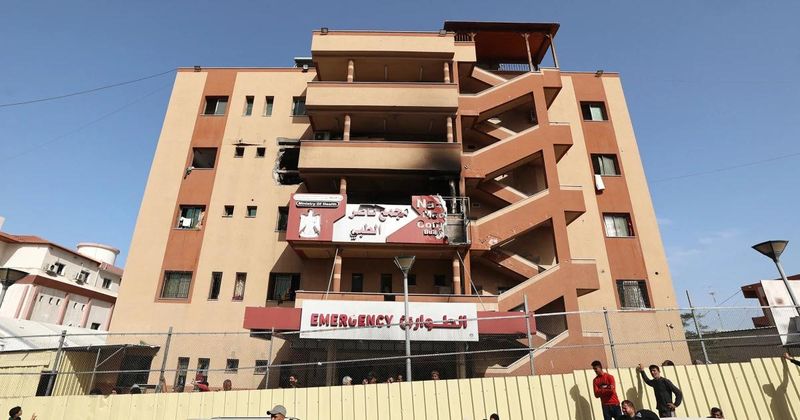
KHAN YOUNIS, Gaza Strip, November 12, 2026 — An Israeli airstrike shortly after midnight on Thursday hit the second floor of the Al-Yasin building at the Nasser Medical Complex in Khan Younis, southern Gaza, killing six people and putting the hospital’s surgical ward out of service, according to Gaza’s civil defence and hospital officials, in reporting carried by Reuters, AFP, the Associated Press, the BBC and CNN. The building houses the surgery department and intensive care at the largest hospital in southern Gaza. Gaza civil defence spokesman Mahmoud Basal put the death toll at six, a figure carried consistently across the wire reports through Thursday. Israel’s military and its Shin Bet security service said the strike targeted Muhammad Abu Ismail, the commander of Hamas’s Khan Younis Brigade, and other operatives. Abu Ismail’s death has not been confirmed, and the Associated Press reported that the military offered no evidence for its targeting claim. A Hamas spokesman called the strike a “fully fledged war crime.” What happened at the hospital is documented by five news organisations; why it happened is asserted by two sides that agree on almost nothing else, and this article keeps the two apart.
The strike landed in the second year of a ceasefire that took effect in October 2025 and has reduced the war’s scale without ending its toll — a pattern this newsroom has tracked strike by strike, most recently in the November 1 strikes that killed eight people in Khan Younis and Gaza City and the strikes three days later that killed three more. Thursday’s attack struck the surgical floor of the hospital to which southern Gaza’s wounded are brought — including, on Thursday, the wounded of the strike itself.
What happened at the hospital
The Al-Yasin building: surgery and intensive care, hit after midnight
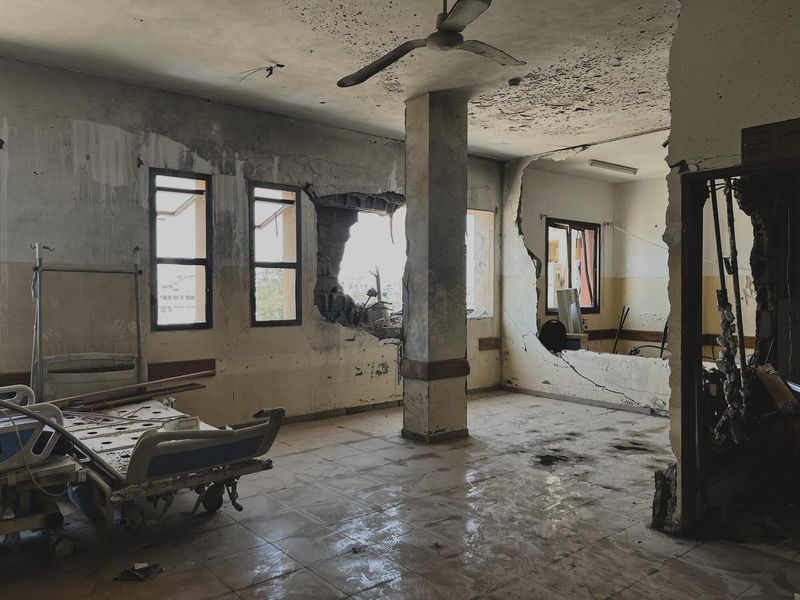
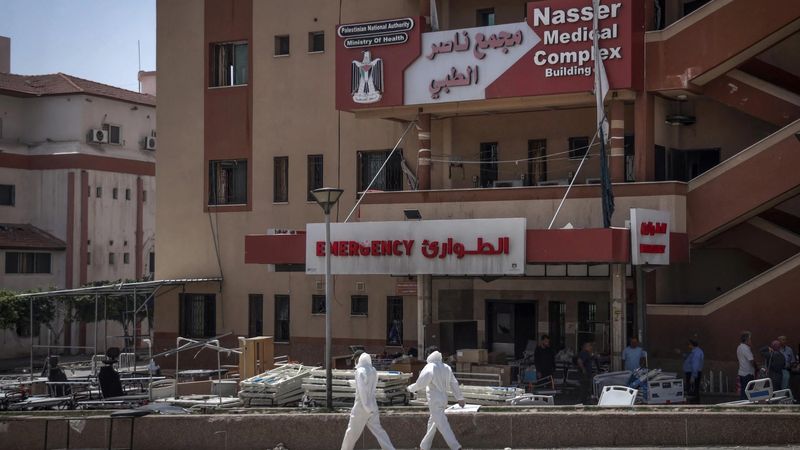
The strike came shortly after midnight on Thursday, November 12, according to the hospital and civil defence accounts carried by the wires. It hit the second floor of the Al-Yasin building, the part of the complex that houses the surgery department and intensive care. The surgical ward was put out of service, hospital officials said — in a territory where functioning operating theatres are scarce and Nasser is the principal referral hospital for the whole of southern Gaza.
What “out of service” means in practice was described only in outline: a damaged surgical floor, an intensive care unit in the same building, and a hospital that must now treat strike casualties — its own and everyone else’s — with its main surgical capacity closed. Thursday’s reports did not establish how many patients were in the building when it was hit or how long the ward will remain closed, and this article does not fill those gaps with estimates.
The wounded: four counts, no settled number
Reuters said more than 20; AP at least 28; the BBC about 30; CNN 40
The number of people wounded is the first point on which Thursday’s reporting openly disagrees, and it is reported here as a range of attributed counts, not as a single figure — because no single figure exists in the sources. Reuters’ early reporting put the wounded at more than 20. The Associated Press reported at least 28. The BBC reported about 30. CNN reported 40, including two doctors in critical condition. Counts taken at different hours, from different desks inside the same overwhelmed complex, commonly diverge in exactly this way.
Readers should take the spread itself as the information. The dead, at six, are consistent across every report; the wounded are somewhere in a band from the low twenties to forty, with CNN’s two doctors in critical condition a reminder that the toll may not be final. Signal Post News will not average the four counts into a fifth number no source reported. Even the lowest count describes dozens of casualties arriving at a facility that has lost the department built to receive them.
One missile or two: the accounts do not agree
The hospital director’s account, the eyewitness account, and CNN’s footage
The second open disagreement concerns how many munitions struck the building. Ahmed al-Fara, the hospital’s director — also rendered al-Farra — said two missiles struck the Al-Yasin building, one of which did not explode. Eyewitnesses cited by the BBC described a single missile. The accounts stand in direct conflict, and neither had been resolved by any independent examination reported on Thursday: an unexploded munition, if recovered and documented, would settle the question; its absence from the record so far settles nothing.
CNN reported that footage it examined appeared to show two bombs, one of them labelled as a US-manufactured GBU-39/B. That identification is attributed here strictly to CNN: it has not been independently verified by the other wires in Thursday’s reporting, and the Israeli military’s statements did not address the munition type. The honest summary is the one the sources support: the hospital director says two missiles, one unexploded; BBC-cited eyewitnesses say one; CNN says its footage shows two bombs, one labelled as a GBU-39/B. The discrepancy is recorded, labelled, and left open.
The named dead
A surgeon, and a 13-year-old boy who had been due for surgery
Of the six people killed, two were named in Thursday’s reporting. The first is Dr Rizk Abu Shaira, 52, a surgeon at the hospital — his name appears in varying spellings across the outlets, including Rezik Abushira and Rizq Abu Shaaera. The man whose work was operating on the wounded of this war died in the ward where he did it, in a strike his hospital and Israel’s military describe in irreconcilable terms.
The second named victim is a 13-year-old boy who had been due for surgery. The reporting does not name him or say what operation he awaited; it establishes his age, his presence in the building, and that his treatment was scheduled in the department the strike closed. The remaining four dead were not named in the reports available at publication time. Six is the toll on which Reuters, AFP, AP and the BBC agree, attributed to Gaza’s civil defence and its spokesman, Mahmoud Basal; Israel’s statements neither confirmed nor disputed the toll, addressing instead the target the military said it was aiming at.
What each side says
Israel’s claim: a brigade commander was the target
Israel’s account was issued by the Israel Defense Forces and the Shin Bet: the strike, they said, targeted Muhammad Abu Ismail, commander of Hamas’s Khan Younis Brigade, together with other operatives, and the results were under review. Three precision points define the status of that claim. First, it is a claim about intention. Second, his death has not been confirmed — no source on Thursday reported the brigade commander among the six dead, whose named members are a surgeon and a child. Third, the Associated Press reported that the military offered no evidence in support of the claim that Abu Ismail or other operatives were present in the Al-Yasin building. Israel’s broader standing position is that Hamas operates from within civilian infrastructure and that its strikes aim at militant targets; Hamas denies that it does so. Neither standing position is evidence about this building on this night. The targeting claim is presented here as what it is: the military’s stated account, unconfirmed as to its central fact and unsupported, so far, by evidence offered in public.
Hamas’s response: “a fully fledged war crime”
Hamas’s response was a single quoted sentence with a legal conclusion built into it: a spokesman for the group called the strike a “fully fledged war crime.” That characterisation is Hamas’s, reported as such. Whether the strike violated international humanitarian law turns on questions Thursday’s reporting cannot answer — who was actually in the building, what the attacking force knew, and what precautions were taken — and no court or inquiry had examined the strike by publication time. The two positions stand as issued: one side’s military says it aimed at a brigade commander; the other calls the strike a war crime in full.
The international response
The Board of Peace, and the WHO’s 1,056 attacks
The first institutional response came from the US-led Board of Peace, the body overseeing the post-ceasefire order, which on Thursday called on both sides to uphold the peace plan and to protect civilians. The formulation was addressed to both parties and assigned no blame for Thursday’s strike; its significance is procedural — the body charged with the plan’s survival treated a strike on the south’s main hospital, thirteen months into the ceasefire, as an event requiring the plan’s terms to be restated.
The World Health Organization’s Director-General, Tedros Adhanom Ghebreyesus, said healthcare must be protected. Behind that sentence sits the WHO’s own ledger: the organisation has documented 1,056 attacks on healthcare in Gaza since October 2023. Thursday’s strike enters that count as its newest entry, and the count frames the WHO’s argument throughout the war — that the pattern, not any single incident, is the phenomenon. Israel’s standing response is its claim that armed groups embed themselves in medical facilities; as applied to the Al-Yasin building specifically, that is the unconfirmed assertion examined above.
Ceasefire context: the ledgers both sides keep
More than 1,620 dead since the ceasefire, by Gaza’s Health Ministry count
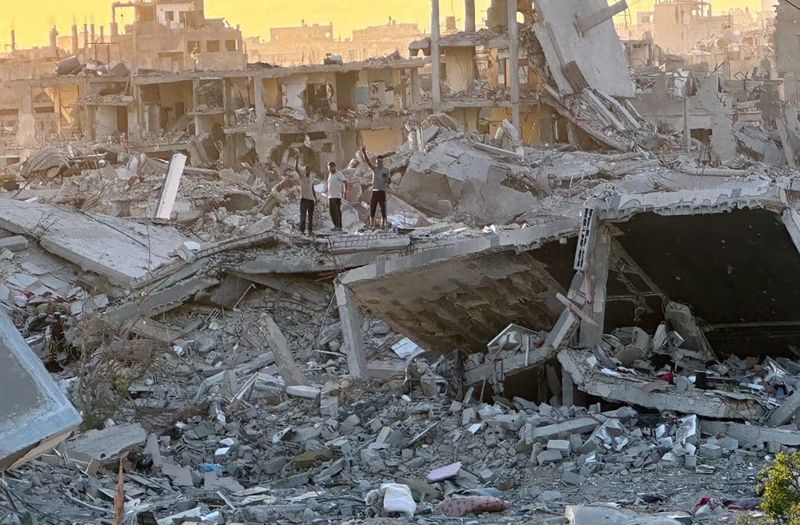
Thursday’s six deaths join a ceasefire ledger each side compiles and neither accepts from the other. Gaza’s Health Ministry puts Palestinian deaths since the ceasefire began in October 2025 at more than 1,620 — the figure used in this article, attributed to the ministry in those terms; other tallies vary by the hour at which they were frozen, and they are not blended here. The ministry’s count does not distinguish between civilians and fighters: it establishes the scale of the dying under the ceasefire without settling its composition.
Israel’s side of the ledger is counted in soldiers — and even that figure is reported differently by the three wires that covered Thursday’s strike: four, according to Reuters; five, according to the Associated Press; six, according to the BBC. Each figure is attributed here to the outlet that reported it, because choosing one silently would misstate the record. The divergence shows the condition of the ceasefire’s bookkeeping in its second year: the most basic quantities arrive in public as ranges and rival figures, and there is no agreed ledger in which violations can be entered. Our earlier reporting on the strike that killed five in a Gaza City apartment building traced the same pattern.
Why this matters
A surgical ward is not one ward: Nasser’s place in the south
The first reason Thursday matters beyond its toll is what was closed. The Nasser Medical Complex is the main hospital of southern Gaza — the largest functioning medical facility in the south, the referral destination for Khan Younis and Rafah, and the place to which casualties from across the southern half of the territory are brought, as they were after the November 1 al-Mawasi strike. A surgical ward out of service there removes operating capacity from the one institution serving a population of hundreds of thousands, much of it displaced, at the moment it is receiving the strike’s own wounded. Every day the ward stays closed, southern Gaza’s surgical emergencies travel further, wait longer, or go untreated; that arithmetic does not depend on which side’s account is believed.
Healthcare under a ceasefire
The second reason is the WHO number: 1,056 documented attacks on healthcare since October 2023. A strike that closes the south’s surgical ward in the truce’s second year tests what the ceasefire actually protects. If the Israeli claim is correct that a brigade commander was present, the incident will be argued as the law’s hardest case — a military target inside a protected facility. If no evidence for it is ever produced, it stands as a strike on a hospital that killed its surgeon and a child awaiting surgery, under a truce, with the justification left unexamined. The difference between those two histories is precisely the evidence the AP noted was not offered.
The precedent each unexamined strike sets
The third reason is cumulative. Each ceasefire incident that closes without an agreed account — no evidence published, no inquiry reporting, no claim tested — lowers the practical cost of the next one. The Board of Peace’s restatement of the plan’s terms on Thursday is the diplomacy of that problem: the framework survives by being reaffirmed after each breach, but reaffirmation without adjudication is a wasting asset.
What happens next
The immediate questions are concrete. The first is medical: how long the surgical ward remains out of service, where southern Gaza’s surgical cases go in the meantime, and at what number the wounded toll settles as the hospital completes its count. The second is evidentiary: whether Israel publishes anything in support of its claim that Muhammad Abu Ismail was in the building, and whether his death is confirmed by any source — Hamas had not confirmed it on Thursday. The third is physical: whether the unexploded missile the hospital director described is recovered and documented, settling the one-missile-or-two dispute.
Beyond those sit the framework questions: whether a strike on the south’s main hospital is absorbed into the ceasefire’s now-routine ledger of violations — the pattern of November 1 and the days around it — or treated as the kind of incident that forces the argument the truce has avoided for a year: what verification, evidence and consequences attach to a claimed military target inside a hospital. Reconstruction, the ceasefire’s promised later phase, assumes functioning hospitals; each ward that closes moves it further away.
For now, the established record of Thursday, November 12, is this: shortly after midnight, a strike hit the surgery and intensive care floor of the Nasser Medical Complex; six people were killed, among them a surgeon of 52 and a boy of 13 who had been due for surgery; the surgical ward was put out of service; the wounded numbered, on four counts that do not agree, between more than twenty and forty. Israel says it targeted a brigade commander; his death is unconfirmed and no evidence was offered. Hamas calls the strike a fully fledged war crime. The missile count is disputed. Everything beyond that record is claim — and this article has labelled it as such.
Related coverage: Israeli Strikes Kill Eight in Gaza, Including Five Police Officers in Khan Younis, Medics Say · Israeli Strikes Kill Three in Gaza · Gaza City Apartment Strike in Rimal Kills Five
Sources
- Reuters, November 12, 2026 — reporting of the overnight strike on the Al-Yasin building at the Nasser Medical Complex in Khan Younis: six killed per Gaza’s civil defence, more than 20 wounded in its early count, the surgical ward put out of service, the IDF and Shin Bet statement that the target was Muhammad Abu Ismail, commander of Hamas’s Khan Younis Brigade, and other operatives, with results under review; and four Israeli soldiers killed since the ceasefire began in Reuters’ ceasefire tally.
- Agence France-Presse (AFP), November 12, 2026 — reporting carried across the wires confirming the strike on the surgery department and intensive care building, the toll of six killed attributed to civil defence spokesman Mahmoud Basal, and the named dead including surgeon Dr Rizk Abu Shaira, 52 (spelling varies across outlets).
- Associated Press, November 12, 2026 — at least 28 wounded; the 13-year-old boy who had been due for surgery among the dead; and the report that the Israeli military offered no evidence for its claim that Abu Ismail and other operatives were the target; five Israeli soldiers killed since the ceasefire in the AP’s tally.
- BBC, November 12, 2026 — about 30 wounded; eyewitnesses cited by the BBC describing a single missile, against the hospital director’s account; and six Israeli soldiers killed since the ceasefire in the BBC’s tally.
- CNN, November 12, 2026 — 40 wounded, including two doctors in critical condition; and CNN’s report that footage it examined appeared to show two bombs, one labelled as a US-manufactured GBU-39/B — an identification made by CNN and not independently verified in the other reporting.
- Hospital and civil defence statements, November 12, 2026, as reported by the wires — Gaza civil defence spokesman Mahmoud Basal on the toll of six; Nasser Medical Complex director Ahmed al-Fara (also rendered al-Farra) on two missiles striking, one of them unexploded; a Hamas spokesman’s description of the strike as a “fully fledged war crime”; Gaza’s Health Ministry figure of more than 1,620 Palestinian deaths since the ceasefire began.
- Board of Peace and World Health Organization statements, November 12, 2026 — the US-led Board of Peace’s call on both sides to uphold the peace plan and protect civilians; WHO Director-General Tedros Adhanom Ghebreyesus’s statement that healthcare must be protected; and the WHO’s documented total of 1,056 attacks on healthcare in Gaza since October 2023.