War · Middle East · Gaza
Three dead and six wounded across the south and centre of the enclave on Monday — a day after eight were killed, under a ceasefire now in its second year.
Track it live: Israel/Gaza war map
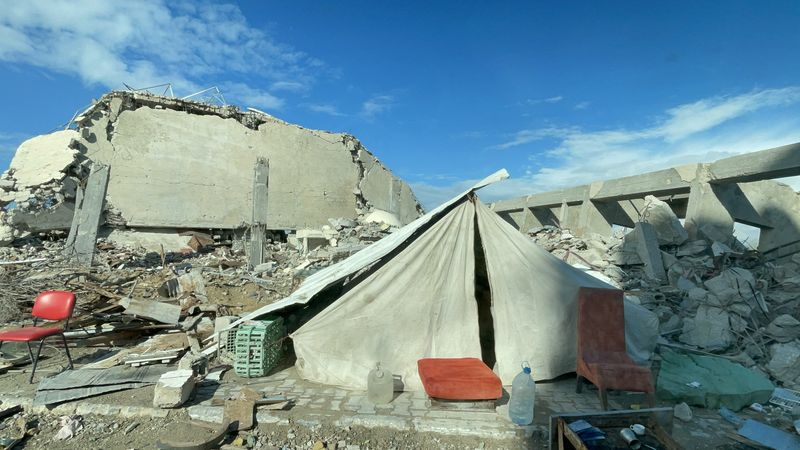
KHAN YOUNIS, Gaza Strip, November 2, 2026 — Israeli strikes kill three in Gaza on Monday and wounded several other people, according to Gaza health officials cited by Reuters, in a second consecutive day of lethal fire under a US-brokered ceasefire that is now more than a year old. Medics said two people were killed and six others wounded in two separate airstrikes in Khan Younis, in the south of the enclave, and that a third person was killed in an Israeli airstrike in the town of Al-Mussadar, in central Gaza. The Israeli military did not immediately comment on any of the attacks. Monday’s strikes came one day after Israeli attacks killed at least eight Palestinians on Sunday, and they land on a ceasefire whose central unfinished questions — whether Hamas disarms, and whether Israeli troops withdraw — remain exactly where they were when the deal was signed.
No names of Monday’s dead were published in the reporting available at publication time, and no Israeli statement on these specific strikes had been issued. What follows is what the day’s reporting establishes, what each side says about the pattern these strikes belong to, and why a toll of three — smaller than Sunday’s eight — still matters to the future of the agreement.
What happened in Khan Younis
The Khan Younis strike today: two dead and six wounded in two airstrikes
The day’s heaviest toll came in the south. Medics said two people were killed and six others wounded in two separate airstrikes in Khan Younis, the southern city that has been struck repeatedly in recent weeks, according to Reuters, whose report was filed by Nidal al-Mughrabi. The reporting does not specify the neighbourhoods hit inside Khan Younis, the identities of the dead, or the targets Israel may have intended, and Signal Post News does not fill those gaps by inference: they were not in the medics’ account, and the Israeli military offered no account of its own on Monday.
Khan Younis was also the centre of Sunday’s deadliest attack, when five police officers were killed in al-Mawasi, west of the city, according to Gaza’s Ministry of Interior — a separate incident, on a separate day, covered in full in our report on Sunday’s strikes, which killed eight people across Gaza. The two days should not be merged: Monday’s Khan Younis airstrikes in November 2026 are a new development in the same pattern, not a continuation of the same attack, and the medics’ figures for the two days are counted separately in the tolls examined below.
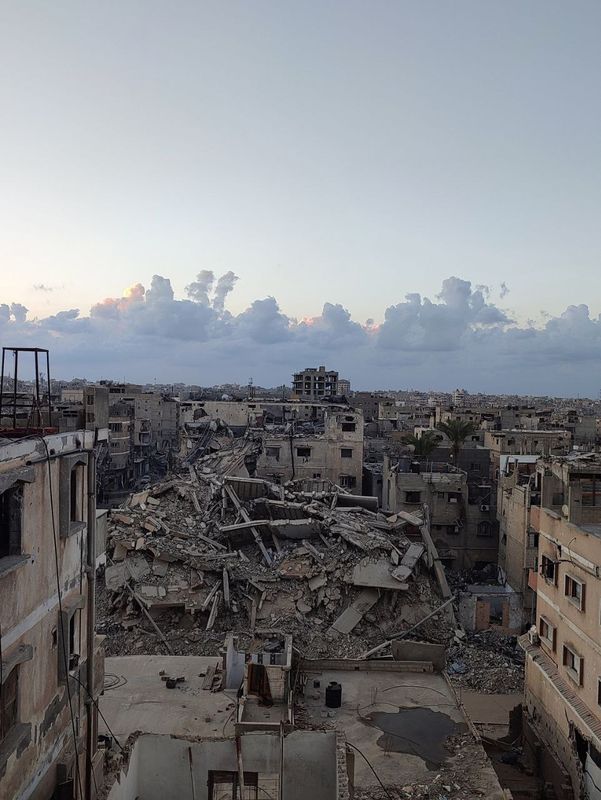
The six wounded in Khan Younis were counted by the medics who received them; their conditions were not detailed in the reporting. In a territory where nearly all of the more than 2 million residents are crowded into the third of Gaza that Israel does not hold — Khan Younis among the most crowded places in it — airstrikes in built-up areas have repeatedly produced civilian casualties alongside whatever target was intended, a pattern Palestinian officials cite and Israel disputes in its general terms. For Monday’s two strikes specifically, neither side has published evidence about who the dead were, and this article makes no claim about their status.
What happened in Al-Mussadar
The Al-Mussadar strike: a third death in central Gaza
The third death on Monday came in Al-Mussadar, a town in central Gaza in the Deir el-Balah governorate, east of the central refugee camps. A third person was killed there in an Israeli airstrike, medics said, according to Reuters. No wounded were reported in Al-Mussadar in the initial reporting, and no further detail about the strike — its target, timing or the identity of the person killed — was published. Central Gaza has generally seen a lower strike tempo than the south in recent weeks, which is part of why a lethal strike there draws attention: Monday’s fire was not confined to one end of the enclave.
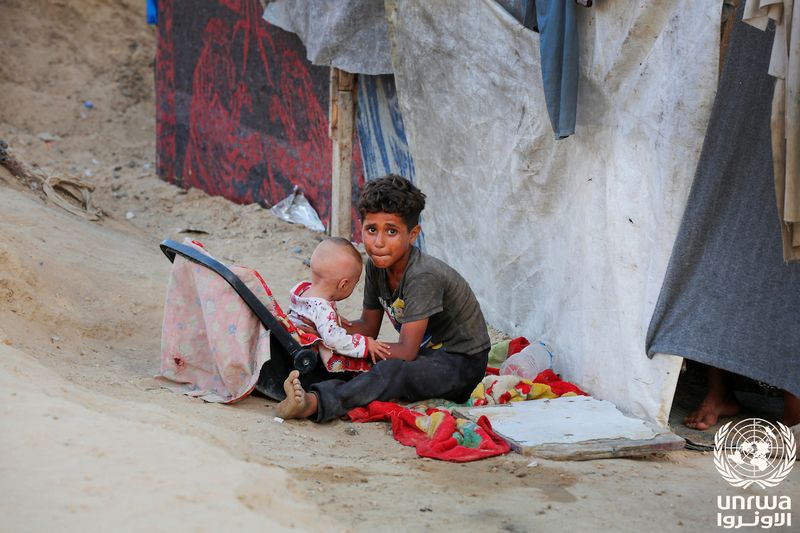
Al-Mussadar sits in the part of central Gaza that remains under effective Hamas control, outside the roughly two-thirds of the territory Israeli troops now hold. Like Khan Younis, it is surrounded by displaced families living in makeshift tents and damaged buildings. A single death in a small town, reported in a single line of a wire dispatch, is easy to pass over; for the town itself, and for the ceasefire arithmetic examined below, it counts the same as any other.
What each side says
No Israeli comment on Monday’s strikes — and Israel’s standing rationale
The Israeli military did not immediately comment on any of Monday’s attacks, Reuters reported. That absence should be stated plainly, because it is the whole of the Israeli position on these specific incidents as of publication: there is no IDF statement about the Khan Younis airstrikes or the Al-Mussadar strike, and none is quoted or paraphrased here, because none exists yet in the reporting.
Israel’s standing position — the rationale it gives for the wider pattern of strikes, of which Monday’s may or may not be an instance — is separate from a comment on these attacks, and is reported as such. Israel says Hamas has been rearming and launching attacks in violation of the year-old US-brokered ceasefire, and it has stepped up strikes on the group in recent weeks, according to Reuters. On that account, continued fire is enforcement of the deal, not a breach of it. Whether Monday’s targets fit that description is precisely what a military comment would normally address, and what cannot be established without one.
Hamas’s denial, and the medics’ account
Hamas’s standing position is the mirror image. Hamas denies trying to carry out attacks or rebuild its arsenal, and it accuses Israel of undermining the Gaza peace deal, according to Reuters. On that account, near-daily strikes are themselves the violation, and Monday’s three deaths are further evidence that the ceasefire is being hollowed out by the side with the aircraft. Signal Post News reports both positions as positions; neither side’s characterisation of the other’s conduct is presented here as established fact.
The third account is the ground-level one, and it is the source of Monday’s confirmed facts: Gaza’s health officials and medics counted three dead — two in Khan Younis, one in Al-Mussadar — and six wounded, all in Khan Younis. The medics’ reporting establishes the toll and the locations. It does not, by itself, establish who the dead were or why the sites were struck, and the hospital and health-authority counts are attributed to those authorities wherever they appear in this article.
Why this matters
A ceasefire in its second year that still produces lethal days
The first reason Monday matters is the sequence: eight killed on Sunday, three on Monday, in a ceasefire that took effect in October 2025. The Israel Hamas ceasefire latest November 2026 picture is not of a deal collapsing in a single dramatic breach, but of a deal whose daily operation includes airstrikes and funerals. A truce that caps a war’s intensity without ending its killing performs a real function — the tolls of the open war were far higher — but it is a different function from the one its name announces, and each additional day tests how long both sides, and the mediators who brokered it, will keep calling the arrangement a ceasefire.
The unanswered-comment problem
The second reason is Monday’s silence from the Israeli military. When a strike’s toll is reported by medics and no official account follows, the public record consists of one side’s numbers and the other side’s standing rationale, with nothing incident-specific in between. That gap matters beyond this one day: the ceasefire’s enforcement argument depends on claims about what Hamas is doing, and its violation argument depends on claims about what Israel is hitting. Incidents that enter the record without a stated target cannot be tested against either claim, by mediators or by readers — which is why this article records the absence of a comment as a fact in itself, rather than treating it as a detail to be smoothed over.
Geography: the fire is not confined to one front
The third reason is the map. Monday’s deaths came in Khan Younis in the far south and Al-Mussadar in the centre, a day after strikes in al-Mawasi and Gaza City’s Rimal neighbourhood in the north. Four locations, at every latitude of the enclave, in forty-eight hours. Whatever else the pattern means, it is not a localised flare-up around a single contested point; it is territory-wide, and it lands on a population that has nowhere within Gaza left to move to, because the remaining third of the territory is where almost everyone already is.
Context and background
The war began on October 7, 2023, when Hamas-led fighters attacked southern Israel, killing about 1,200 people and taking 251 hostages, according to the tolls cited in Reuters’ reporting. Israel’s ensuing assault on Gaza has, by Palestinian authorities’ count, killed more than 74,000 people. The US-brokered ceasefire that followed took effect in October 2025 and calls, in its later phases, for eventual reconstruction of the territory.
Little of that later phase has arrived. Little progress has been made on the deal’s core exchange, and negotiators have failed to agree terms for Hamas to disarm or for Israel to withdraw its troops, according to Reuters. The territorial facts on the ground are stark: Israel controls about two-thirds of Gaza and has ordered residents out of those areas, while nearly all of the enclave’s more than 2 million residents live in the remaining third, among the war’s ruins, mostly in makeshift tents and damaged buildings, in areas still under effective Hamas control. Khan Younis and Al-Mussadar both sit in that crowded third. Our earlier coverage traces how the pattern formed: yesterday’s strikes that killed eight, and why Israel strikes Gaza despite the ceasefire.
What the numbers actually imply
The Gaza ceasefire death toll: 1,580 and rising
Asked plainly — how many killed in Gaza since ceasefire? — Gaza health officials’ current figure, cited by Reuters on Monday, is at least 1,580 Palestinians killed in Israeli attacks since the ceasefire took effect. A day earlier, the same reporting put the figure at 1,500. The one-day movement of that headline number should be read carefully: it reflects updated counting by the health authorities as much as the arithmetic of any single day’s strikes, and Monday’s three deaths are part of, not additional to, the running total as the authorities compile it. What the trend establishes is direction, not just scale: thirteen months into a ceasefire, its associated death toll is still climbing by the week. Israel says four of its soldiers have been killed in the same period — the figure from the other side of the ledger, and part of Israel’s stated case that the truce is being violated against it as well.
The wider ledger: 74,000 dead since October 2023
Against the whole war, Palestinian authorities say more than 74,000 people have been killed in Israel’s assault since October 2023; Sunday’s reporting put the cumulative figure at 74,594. Health-authority counts of this kind do not distinguish between civilians and combatants, a caveat attached to the figures by the news organisations that cite them, and one that sits at the centre of the argument over nearly every individual strike — including, potentially, Monday’s, once the dead are identified. The counts can establish the scale of the killing without settling its composition, and this article uses them for the first purpose only.
What happens next
Four scenarios cover most of what could follow, and they are not equally likely. The first, and on the evidence of the past thirteen months the most probable, is continuation: the strike tempo of recent weeks persists, each day’s toll is logged by the other side as a violation, and the disarmament and withdrawal talks continue without concluding. The second is clarification: the Israeli military may still comment on Monday’s strikes, and if it identifies the targets it says it hit, the day’s argument will shift from whether anything can be verified to the familiar dispute over the status of the dead. The third is pressure: two lethal days in a row, across four locations, is the kind of sequence mediators have previously used to push both sides back toward the sequencing question — who moves first on disarmament and withdrawal — and the coming days will show whether Washington and the regional brokers treat this week that way. The fourth is deterioration: if either side concludes the framework no longer restrains the other at all, the cap the ceasefire places on the fighting is itself at risk, and the more than 2 million people crowded into a third of Gaza have the most to lose from its removal. Reconstruction, the ceasefire’s promised later act, waits behind all four.
For now, the established facts of Monday are narrow and should be stated narrowly: three people were killed — two in two airstrikes in Khan Younis, where six more were wounded, and one in an airstrike in Al-Mussadar — according to Gaza’s medics and health officials, and the Israeli military did not immediately comment on any of the attacks. Everything beyond that, about intent and justification and what Monday means for the deal, is claim and counter-claim between two sides who agree on the location of the dead and on almost nothing else — and this article has labelled it as such.
Related coverage: Israeli Strikes Kill Eight in Gaza, Including Five Police Officers in Khan Younis, Medics Say · Why Israel Strikes Gaza Despite the Ceasefire, Explained · Russia Fires 433 Drones in One Night, Cutting Power to Hundreds of Thousands Across Ukraine
Sources
- Reuters, November 2, 2026 (Nidal al-Mughrabi) — “Israeli strikes kill three people in Gaza, medics say”: at least three Palestinians killed and several wounded on Monday per Gaza health officials; two killed and six wounded in two separate airstrikes in Khan Younis and a third person killed in an airstrike in Al-Mussadar, per medics; the Israeli military did not immediately comment on any of the attacks; Israel’s position that Hamas is rearming and launching attacks in violation of the ceasefire and has stepped up strikes, and Hamas’s denial and accusation that Israel is undermining the peace deal; at least 1,580 Palestinians killed since the ceasefire per Gaza health officials and four Israeli soldiers killed per Israel; more than 74,000 killed overall per Palestinian authorities; and the ceasefire background, including the October 2025 start, the stalled disarmament and withdrawal terms, the two-thirds/one-third territorial split and the October 7, 2023 attack toll of about 1,200 killed and 251 hostages.
- DevDiscourse, November 2, 2026 (Reuters syndication) — “Israeli strikes kill three people in Gaza, medics say”: the Reuters report as syndicated, carrying the same medic-attributed toll for Khan Younis and Al-Mussadar, the absence of an immediate Israeli military comment, and the ceasefire background and tolls.
- Reuters, November 1, 2026 (background) — “Israeli strikes kill eight people in Gaza, medics say”: Sunday’s attacks that killed at least eight Palestinians, including five police officers in al-Mawasi, west of Khan Younis, and three people in Gaza City; at least 1,500 Palestinians killed since the ceasefire per Gaza health officials in that day’s reporting — the baseline against which Monday’s 1,580 figure moved — and the cumulative toll of more than 74,000.