Gaza apartment strike October 2026
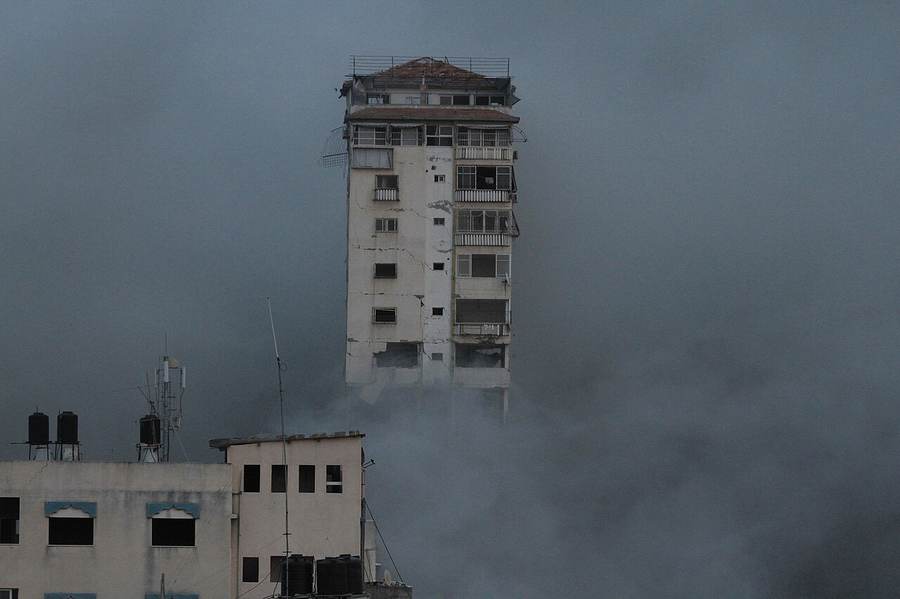
Gaza apartment strike October 2026 — an Israeli airstrike hit the al-Asala residential building in the Rimal neighborhood of western Gaza City early Saturday while residents were asleep, according to witnesses and medical officials cited by Reuters. Medics said at least five Palestinians were killed, four of them women, and six other people were wounded and taken to al-Shifa Hospital.
Among those killed were an elderly Christian woman and her daughter, medical staff and neighbors said. Witnesses told reporters that the building received no warning before the strike. The Israeli military made no immediate public comment on this attack, leaving the target, intelligence basis and intended military purpose unconfirmed.
That silence is central to any responsible reading of the event. Israel publicly identified militants it said it killed in other strikes announced Saturday, but it did not link those operations to the al-Asala building. The Rimal apartment strike must therefore be assessed on its own verified facts: a residential building was hit; medics reported five dead and six wounded; witnesses said no warning was given; and no Israeli explanation was available at publication.
Why this matters: civilian deaths inside a ceasefire
The immediate horror is measured in a mother, a daughter and three other lives. The strategic meaning is measured against the word “ceasefire.” Gaza health officials say Israeli fire has killed at least 1,400 Palestinians since the United States-brokered truce began in October 2025. Israel says militants have killed four of its soldiers in Gaza over the same period. Those figures come from opposing parties and do not, by themselves, adjudicate each incident, but together they show that the ceasefire has not meant an end to lethal force.
The Christian identity of two victims carries added weight without changing the legal or moral status of any civilian casualty. Gaza's Christian community is small and deeply rooted, sharing neighborhoods, schools, hospitals and family ties with Muslim neighbors. Ahmed Al-Dahdouh, an eyewitness interviewed by Reuters, described the victims as peaceful neighbors loved by the community. His account undercuts any attempt to treat the dead as abstractions in a running tally.
The reported absence of warning matters too. Warnings do not automatically make a strike lawful, nor is a warning always operationally possible. But in a residential building at night, while people sleep, a warning can determine whether families have any chance to escape. If Israel believed there was an urgent military target inside al-Asala, it has not yet said what it was or why the strike proceeded without a publicly known evacuation measure.
The night in Rimal: blast, fire and a search through rubble
Witnesses described a sudden sequence rather than a gradual escalation. “We were asleep and suddenly heard continuous strikes, and heavy explosions,” Al-Dahdouh told Reuters. The strike penetrated an apartment and tore through lower floors of the multi-story building, according to reporting attributed to Al Jazeera correspondent Hani al-Shaer and republished by LaPresse.
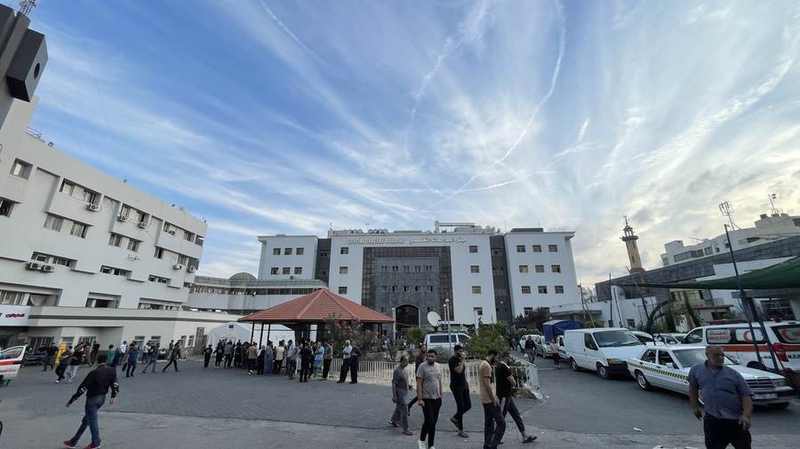
Fire burned for about an hour before Palestinian Civil Defence crews extinguished it. Rescuers searched broken concrete and damaged rooms for people who might still be missing while Israeli drones continued to fly overhead, according to the same reporting. The six wounded were transported to al-Shifa, the principal hospital serving Gaza City.
Al-Dahdouh's testimony gave the casualty list a human frame: “We are Muslims and these are our Christian brethren, who are not involved in anything, they are peaceful people, and everybody loves them, and now we pulled out their bodies, a mother and her daughter.” His words are eyewitness testimony, not an independent determination of military status, but no public evidence had emerged by Saturday afternoon to contradict his description of the women as civilians.
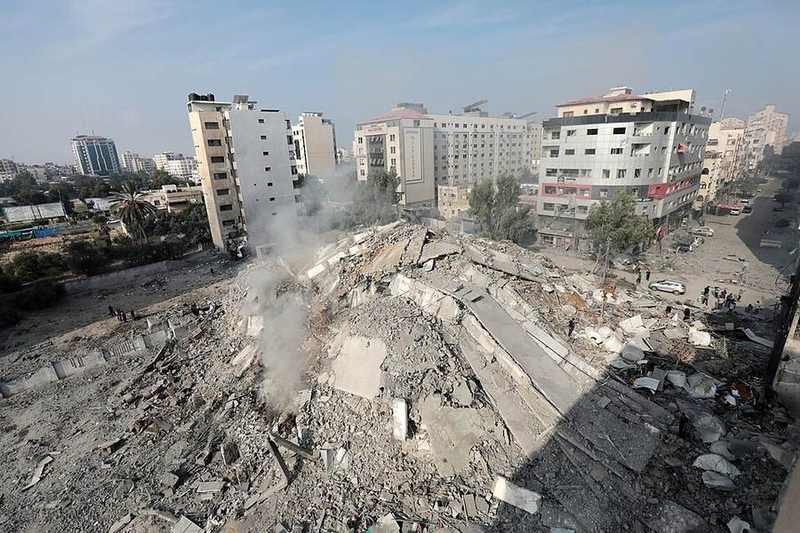
Background: a US-brokered truce stuck before phase two
The ceasefire reached in October 2025 stopped the previous phase of sustained war, but it did not resolve the core questions. Phase two was supposed to address Hamas's disarmament, Israel's further troop withdrawal, Gaza's governance and the security arrangements needed to prevent another full-scale conflict. Progress has been slight, and each unresolved issue gives both sides a reason to accuse the other of using the pause to improve its position.
Israel says Hamas is rearming and attacking in violation of the agreement and has stepped up strikes in recent weeks. Hamas denies that account and says Israel is hollowing out the ceasefire through repeated attacks. These claims are not equivalent to verified findings. They are rival descriptions of a truce with no broadly trusted, public enforcement ledger capable of settling every allegation.
The result is a ceasefire that operates less like a firm ban on violence and more like a disputed ceiling. Israel claims freedom to strike what it defines as immediate threats. Hamas and other armed groups retain personnel and weapons Israel considers intolerable. Civilians remain beneath both calculations. The al-Asala strike is especially destabilizing because no announced target permits outsiders even to test the stated military rationale.
Claims versus verified facts
Verified through multiple reports: an Israeli strike hit the al-Asala apartment building in Rimal; medical officials reported at least five dead, including four women, and six wounded; witnesses said residents were asleep and received no prior warning; a fire followed; and the Israeli military had not issued an immediate comment. Reuters and Al Jazeera reporting agree on the central outline.
Claimed by Hamas: the group condemned the strike as a “continuation of the escalating aggression against civilians,” accused Prime Minister Benjamin Netanyahu of using the US-mediated ceasefire as cover, and called on mediators and the US administration to intervene. The Gaza Government Media Office, controlled by Hamas, separately claims 5,147 Israeli ceasefire violations, 1,421 Palestinians killed and 4,983 wounded since October 2025. Those precise totals were reported by PressTV; they have not been independently audited and should not be treated as established fact.
Reported by Gaza health officials: at least 1,400 Palestinians have been killed by Israeli fire since the ceasefire. Health-authority figures provide the most continuous casualty record available inside Gaza, but access limits and wartime conditions make independent incident-by-incident verification difficult.
Stated by Israel: militants have killed four Israeli soldiers in Gaza during the ceasefire period. Israel also says Hamas has used the pause to rebuild military capacity. The IDF's lack of comment on this particular apartment strike stands in contrast to the named operations it announced the same day.
Separate strikes, separate evidence
On Saturday, the IDF said it had killed Palestinian Islamic Jihad commanders Ahmed Mahmoud Harb Ramlawi and Munir Ibrahim Masr in separate Gaza City strikes. It also said a Thursday operation near Khan Yunis killed Hamas sniper Tamer Hamaida. Those claims were reported by the New York Post, citing Israeli military statements.
There is no verified basis to merge those targeted operations with the al-Asala building strike. Doing so would turn proximity in time into a false evidentiary bridge. Signal Post News examines the commander strikes separately in its report on Israel's killing of two Islamic Jihad commanders.
The distinction is more than editorial housekeeping. Target identification, civilian-harm assessment and military necessity are incident-specific. An explanation offered for one strike cannot be borrowed to justify another. Until the IDF provides an account of al-Asala, the public record contains a casualty report and witness evidence, not an announced military target.
Multiple angles: pressure, leverage and the civilians in between
Netanyahu's pressure calculus. For the Israeli government, continuing strikes can serve two purposes: disrupting armed groups before they regenerate and demonstrating to domestic audiences that a ceasefire does not restrain self-defense. The political benefit is freedom of action without formally declaring the truce over. The cost is diplomatic: unexplained civilian deaths make it harder for allies to defend Israel's claim that force is narrowly calibrated.
Hamas's leverage play. Hamas gains rhetorical leverage from every civilian casualty, using the deaths to press mediators and portray Israel as the party dismantling the agreement. That political use of the incident does not determine what happened at al-Asala, and condemnation is not independent evidence. It does show why civilian harm quickly becomes negotiating currency.
Israel's security argument. Israeli officials argue that waiting until rearmed groups launch attacks would make the ceasefire a shield for military rebuilding. That concern is not imaginary: Hamas and Palestinian Islamic Jihad have maintained armed networks despite years of war. But a durable security argument requires more than assertion. When a residential building is hit and civilians die, transparency about the intended target and precautions is essential.
The mediators' dilemma. Washington and regional mediators need enough pressure to deter violations without allowing one side to become prosecutor, judge and enforcer in every disputed event. If they publicly challenge Israel, they risk losing leverage over security arrangements. If they accept unexplained strikes, they weaken the truce they brokered. The civilian population pays for that institutional gap.
Data in context: what the numbers reveal — and conceal
The most striking comparison is 1,400 Palestinian deaths reported by Gaza health officials against four Israeli soldiers Israel says were killed during the ceasefire. That asymmetry does not explain the circumstances of each death, identify combatants or decide proportionality. It does show how unevenly lethal force has been distributed during a period intended to reduce it.
The broader war toll reported by Gaza health authorities has exceeded 74,000 deaths. That total is not a direct measure of the current ceasefire, and it includes an immense range of incidents over years of conflict. It does, however, explain why each new apartment strike lands in a society already saturated with bereavement, displacement and destroyed housing.
Rimal was once one of Gaza City's most developed districts. Repeated bombardment and population movements have transformed its residential landscape. Families displaced from other areas may be living with relatives or in buildings already damaged by earlier attacks. Exact occupancy data for al-Asala was not available, and no responsible account should invent it. The known fact is that people were asleep inside when the blast struck.
Numbers also create false precision. “Five killed” sounds complete, yet rescue crews were still searching rubble in the initial reporting. “Six wounded” says nothing about injury severity or long-term disability. “5,147 violations” sounds definitive, but it comes from a party to the conflict and depends on definitions outsiders cannot audit. Good war reporting uses figures while preserving the uncertainty around them.
What happens next: the tests that could hold or break the truce
The first test is factual. Israel can identify the intended target, state whether it assessed civilians were present, explain why no warning was reported and describe any review. Silence may preserve operational secrecy, but it also allows the civilian account to stand unanswered and weakens confidence in the claimed precision of the campaign.
The second test is diplomatic. US and regional mediators must decide whether the strike is handled as another isolated breach allegation or as evidence that phase one is eroding before phase two begins. A credible process would record incidents from all sides, compare claims against evidence and establish consequences that do not depend solely on retaliation.
The third test is military restraint. A Hamas or Islamic Jihad response could give Israel grounds for broader attacks; another high-casualty Israeli strike could intensify pressure on militants to answer. The ceasefire's collapse risk lies in accumulation: each side treats its own action as limited and the other's as proof of bad faith until the political threshold for restraint disappears.
Watch next for an IDF statement on al-Asala, revised hospital casualty figures, evidence about the intended target, mediator contacts and any movement on phase-two negotiations. Also watch whether Israel continues separating named militant strikes from unexplained residential attacks. The credibility of its security case depends on that distinction.
The Gaza apartment strike of October 2026 is therefore not only a report of five deaths in Rimal. It is a test of whether a ceasefire can retain meaning when lethal attacks continue, explanations lag and civilians remain exposed. The agreement may still be formally intact. Saturday's rubble shows why formal survival is not the same as protection.
Sources and reporting notes
- Reuters: “Israeli strike kills five people in Gaza, medics say,” updated October 3, 2026
- LaPresse: report citing Al Jazeera's Hani al-Shaer on the al-Asala rescue scene, October 3, 2026
- PressTV: Hamas condemnation and Gaza Government Media Office claims, October 3, 2026
- New York Post: IDF statements on separate commander strikes, October 3, 2026
Reporting note: casualty figures are attributed to medics and Gaza health officials; ceasefire totals from the Gaza Government Media Office are labeled as Hamas claims. The Israeli military had not commented on the al-Asala strike at publication. Context photos do not depict the October 2026 incident.