
Israel's first national vote since the October 7 attacks is also a judgment on the war, the ceasefire and who gets to investigate the country's gravest security failure.
On Tuesday, October 27, some 7.3 million Israelis will cast ballots in the Israel election October 2026 — the country's first national vote since the Hamas-led October 7, 2023 attacks that killed around 1,200 people and saw 251 taken hostage, according to Reuters. Three years on, with a fragile Gaza ceasefire holding and no hostages remaining in Gaza, the ballot has become something Israeli campaigns rarely are: a referendum on a single day and a single question — who bears responsibility for the deadliest attack in the country's history, and for everything that came after it.
A new N12 poll puts the stakes in stark terms: 68 percent of Israelis say October 7 is a key factor in their vote. Benjamin Netanyahu, who has governed through the attack, the war, and the uneasy ceasefire, is asking voters to return him to office before any official inquiry into the catastrophe has reported its findings. Whether the electorate grants him that — or delivers the reckoning his opponents have demanded for three years — will be decided in less than three weeks.
Why this matters
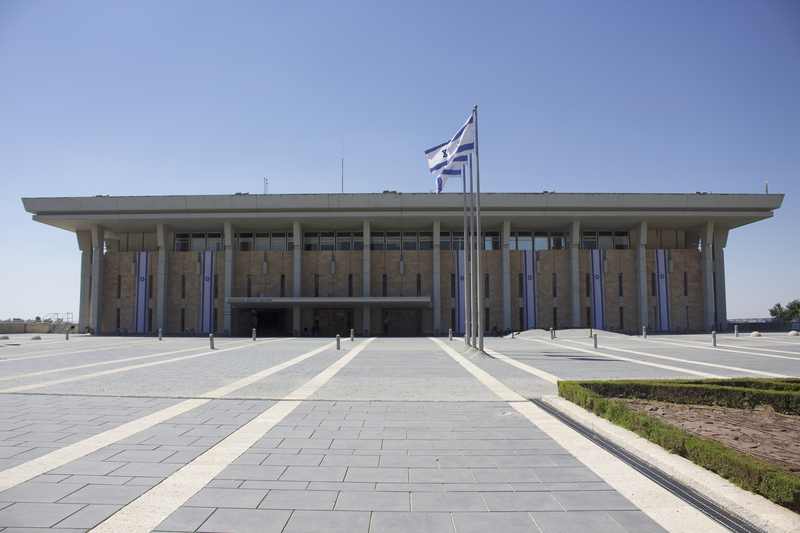
Elections are normally about the future. This one is about the past — and about who gets to investigate it. The government that led Israel through October 7 and the Gaza war is seeking another term before an independent accounting has taken place, and the vote will effectively decide whether that accounting ever happens. The Knesset State Control Committee has already rejected the opposition's demand for a full state commission of inquiry — one with subpoena power, chaired by a retired Supreme Court justice — opting instead for a government-appointed review panel that would report to the very political echelon it is meant to examine.
That is the deeper significance of October 27: Israeli voters are not just choosing a coalition. They are choosing the investigators. An election held before accountability mechanisms conclude risks becoming the accountability mechanism itself — messier, more partisan, and far more final than any commission's report. As Tamar Hermann, a public opinion expert at the Israel Democracy Institute, told the Associated Press, the trauma of October 7 continues to shape the country's political debate — and this vote is where that trauma gets translated into power.
How Israel got here
The road to October 7
The attack did not come out of a calm sky. Through most of 2023, Israel was consumed by mass protests over the government's judicial overhaul, a domestic crisis so severe that security officials publicly warned it was eroding military readiness and emboldening the country's enemies. When Hamas-led gunmen breached the Gaza fence on the morning of October 7, 2023, they found a country — and an intelligence apparatus — caught off guard on a scale without precedent.
What exactly the prime minister knew, and when, has been contested ever since. Netanyahu has argued that elements of Israel's military withheld intelligence from him because they feared he would respond too aggressively. His opponents call that blame-shifting, and they have seized in particular on his account that on the morning of the attack, in his telling, no one woke him up — a phrase that has become shorthand in Israeli debate for a leadership failure at the top. The facts of who knew what remain disputed; what is not disputed is that the state failed, catastrophically, and that no independent body has yet been empowered to say how.
The war, the ceasefire, and the anniversary
Israel's subsequent Gaza campaign killed more than 74,000 people, according to Gaza health authorities cited by Reuters — a toll that made the war one of the deadliest chapters in the region's modern history and drew sustained international condemnation. A US-brokered ceasefire on October 10, 2025 halted major fighting, but as Reuters has reported, it has neither ended Israeli attacks in Gaza nor disarmed Hamas — a stalemate examined in our earlier analysis of why Israel keeps striking Gaza despite the ceasefire and the stalled state of the Gaza plan one year on.
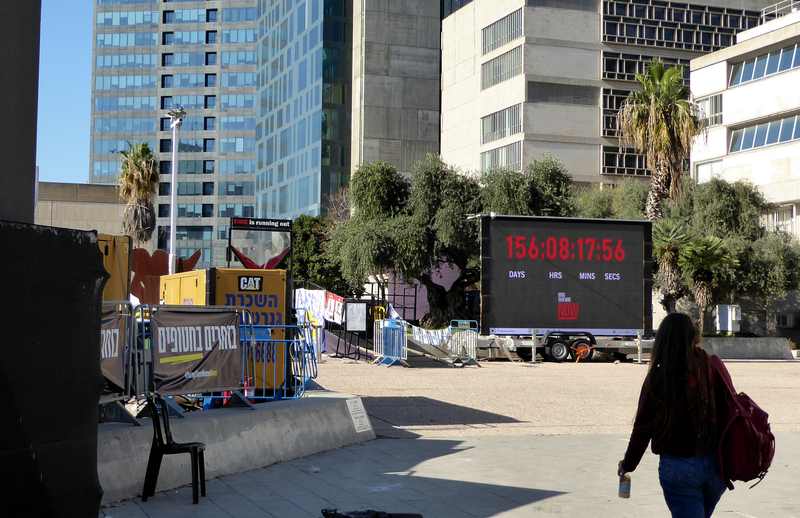
This week's third anniversary was marked at the Nova music festival site near Gaza and at Hostage Square in Tel Aviv — the first anniversary with no hostages remaining in Gaza, following hostage-prisoner exchanges. The commemorations, and the debate over how the anniversary was marked abroad, underscored a national mood that is grieving, angry, and increasingly impatient for answers. Sixty-eight percent of voters say October 7 will shape their ballot. The question is which answers they will accept.
What the Israel election polls actually say
The numbers, as reported by Axios from recent polling, are sobering for the prime minister: Netanyahu's Likud is polling at 20 to 22 seats, down from the 32 it holds now, and his right-wing coalition as a whole is projected at 50 to 54 seats — below the 61 needed for a Knesset majority. For context, Likud has been the anchor of every Netanyahu government; a drop into the low twenties would be the party's weakest showing of his long tenure and would leave him dependent on partners he has historically dominated.
The 61-seat math
Israel's 120-seat Knesset requires 61 seats for a governing majority, and right now neither Netanyahu's alliance nor the opposition bloc is projected to get there without support from an Arab party — a remarkable feature of this race. Arab parties have traditionally been excluded from governing coalitions, with the brief 2021 participation of Ra'am in the Bennett-Lapid government standing as the exception that proved the rule. If either bloc needs Arab votes this time, it would mark a genuine structural shift in Israeli coalition politics — and a source of acute discomfort for the nationalist right.
Two technical features could still scramble the picture. First, roughly 650,000 double-envelope ballots — cast by soldiers, diplomats, hospital patients, and others voting away from home — will not be counted on election night because they require verification first. That is a record number, worth roughly 14 Knesset seats, which means exit polls and overnight results will not reflect the final seat distribution; the map could shift for days after the vote. Second, the 3.25 percent electoral threshold remains a cliff edge: a small party that misses it by a fraction of a percent sees all its votes discarded, a dynamic that has decided Israeli elections before.
And a note of caution the polls themselves demand: these are snapshots taken more than two weeks out, in a campaign where the central issue — accountability for October 7 — is emotional, volatile, and unusually resistant to modeling. Israeli polling has missed before. Treat every seat projection as a scenario, not a verdict.
The state commission of inquiry October 7 fight
If there is a single policy question that captures this election, it is the inquiry. The N12 poll found 66 percent of Israelis support establishing a state commission of inquiry into October 7, with 21 percent opposed — but the topline masks a chasm: 93 percent support among opposition voters, just 37 percent among Netanyahu-aligned voters. The commission is not a procedural footnote; it is the campaign's second ballot question.
What each side wants
The opposition demands a full state commission of inquiry with subpoena power, chaired by a retired Supreme Court justice — the mechanism Israel has used after past national failures, from the Agranat Commission after the 1973 Yom Kippur War to the Winograd Commission after the 2006 Lebanon war. The historical parallel is deliberate: those commissions ended careers and rewrote the official record, which is precisely why the opposition wants one and why the government fears it.
The government's position, as expressed through the Knesset State Control Committee, is that a wartime leadership cannot be judged mid-crisis by its political opponents — that a commission would be weaponized, that its mandate would be written by people who want Netanyahu gone. The committee therefore rejected the opposition's call and opted for a government-appointed review panel that reports to the political echelon it would examine. The opposition's response is unsparing: that is the examined examining itself, accountability as theater.
There is a third voice in this fight, and it may matter most after the vote. The attorney general's office reportedly told the Supreme Court in August that a commission of inquiry should be established after the election regardless of the outcome — a legal position that could force the issue no matter who wins on October 27. Whoever forms the next government may find the commission question decided for them.
Who benefits, who loses
Start with Netanyahu. He benefits from a security-first framing that plays to his lifelong brand, from an opposition that remains fragmented with no single challenger commanding the field, and from an incumbent's control of the campaign calendar. He loses if accountability dominates the final stretch — 68 percent is a heavy number — and if the Arab-party kingmaker math leaves him with no path to 61 that his own base will tolerate.
The opposition benefits from the same number in reverse: a clear majority wants the inquiry, and the prime minister's seat losses in the polls suggest the accountability argument is landing. But the opposition loses on arithmetic of its own — it, too, appears short of 61 without Arab support, and its constituent parties span a spectrum from left to right that has collapsed governments before. Winning the argument and winning the Knesset are different tasks.
The potential kingmakers — the Arab parties — benefit from leverage they have rarely held, but at the cost of walking into a campaign that parts of the Israeli right will frame as illegitimate the moment they are needed. And the small parties hovering near the 3.25 percent threshold face the starkest binary of all: cross it and matter, miss it and vanish, taking a bloc's majority math down with them. Critics on the right warn that an opposition government dependent on Arab parties would be held hostage on security policy; critics on the left warn that another Netanyahu term without an inquiry would bury the truth about October 7 for a generation. Both critiques cannot be fully right. Both deserve to be heard.
What happens next: three scenarios for the October 27 Knesset election
Scenario 1: Netanyahu survives
The prime minister assembles 61 — with Arab-party support he would rather not advertise, or by peeling defectors in the post-election scramble — and governs under the permanent shadow of the commission fight. The attorney general's post-election commission position then becomes the defining battle of his term: a prime minister who won the vote but may still face the inquiry. Survival, in this scenario, is not exoneration.
Scenario 2: The opposition forms a government
An opposition bloc, likely also requiring Arab support, takes power and commissions the full inquiry — subpoena power, retired justice in the chair, testimony under oath. The proceedings would dominate Israeli public life for a year or more, and their findings could end the careers of military and political leaders alike. This is the scenario Netanyahu's camp fears most, and the reason the commission fight has become a proxy for the election itself.
Scenario 3: Stalemate
Neither side reaches 61, coalition talks drag on for months, and Israel drifts toward yet another election — the fifth-round nightmare of the 2019–2022 cycle is the living precedent, and Israeli voters remember it. A stalemate would leave the inquiry question in limbo, the Gaza ceasefire without a political horizon, and the accountability that 68 percent of voters demand deferred once again. It is the scenario nobody campaigns on and everybody privately games out.
The bottom line
An election cannot do what a commission does. Voters punish and reward; they do not subpoena, cross-examine, or establish an official record. What October 27 can do — what it will do — is decide who chooses the investigators, and under what constraints they work. Three years after the worst intelligence failure in Israel's history, the country finally gets its vote on who to blame. The trauma, as the Israel Democracy Institute's Tamar Hermann told the AP, continues to shape the political debate. On October 27, it gets counted.
Sources
- Axios — October 7 anniversary puts Netanyahu's record at center of Israeli election
- Newsmax — Israel elections / Benjamin Netanyahu
- JFeed — Israel election coverage
- The Algemeiner — Your Israeli election primer: it all comes down to 61
- Australian Jewish News / AIJAC — In wake of the Gaza ceasefire, Israel's election countdown begins
- Polling: N12; Axios-cited surveys. Casualty figures: Reuters; Gaza health authorities. Expert analysis: Tamar Hermann, Israel Democracy Institute, via the Associated Press. Election administration: Israel's Central Elections Committee; Knesset State Control Committee.