Mamdani October 7 statement
New York's mayor tried to hold two accounts of suffering in one anniversary message. The political explosion came from where he placed them — together, on October 7.
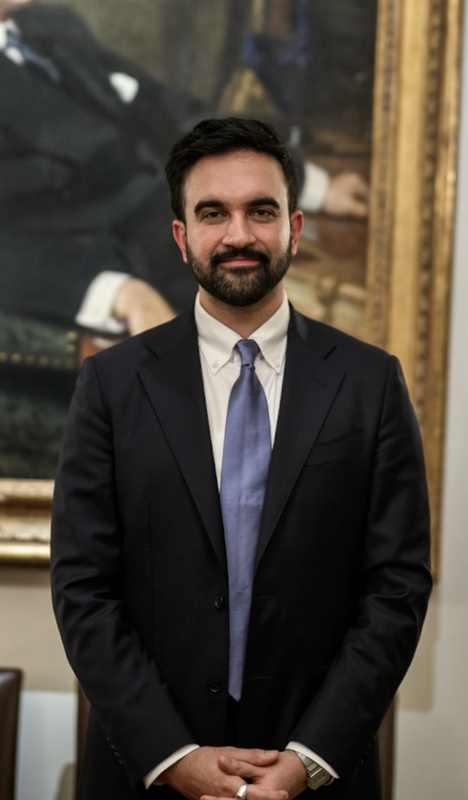
The Mamdani October 7 statement arrived Wednesday morning with two starkly different judgments in the same message. New York City Mayor Zohran Mamdani condemned the Hamas attack of October 7, 2023, grieved with Israelis and New Yorkers still carrying its losses, and then accused Israel's government of an “ongoing genocide” in Gaza. The pairing triggered immediate backlash from Israeli officials and pro-Israel voices, who argued that the anniversary should center the people murdered and abducted by Hamas rather than an indictment of Israel.
That dispute is not merely about wording. It is about the ownership of a day of mourning, the responsibilities of a mayor in a city with one of the world's largest Jewish populations, and whether a public official can commemorate one catastrophe while naming another without diminishing either. Mamdani's supporters will say he did precisely that. His critics will say the structure of the message transformed remembrance into accusation.
The statement, in full: what Mamdani said
Mamdani opened by acknowledging the anniversary's emotional weight: “This day is profoundly painful for so many New Yorkers.” He described the Hamas assault as horrific war crimes, cited more than 1,100 Israelis killed and 251 people abducted, and said the city grieves alongside friends and neighbors living with that loss.
The statement then shifted from October 7 to Gaza. Mamdani said Palestinian suffering both preceded and followed that day, accused the Israeli government of committing an “ongoing genocide,” and cited more than 74,000 Palestinian deaths, including more than 21,000 children. Those figures are attributed to Gaza's health ministry. Israel disputes the figures and rejects the genocide accusation, saying its military campaign targets Hamas rather than the Palestinian people.
In the remainder of the statement, Mamdani placed responsibility beyond the Israeli government. He criticized the United States for continuing to supply weapons and argued that American policy has enabled the conduct he condemned. He closed by framing remembrance as a demand for safety and dignity across communities rather than as a claim that one people's grief cancels another's. The result was a statement broad in moral scope but highly combustible in its timing and terminology.
The backlash
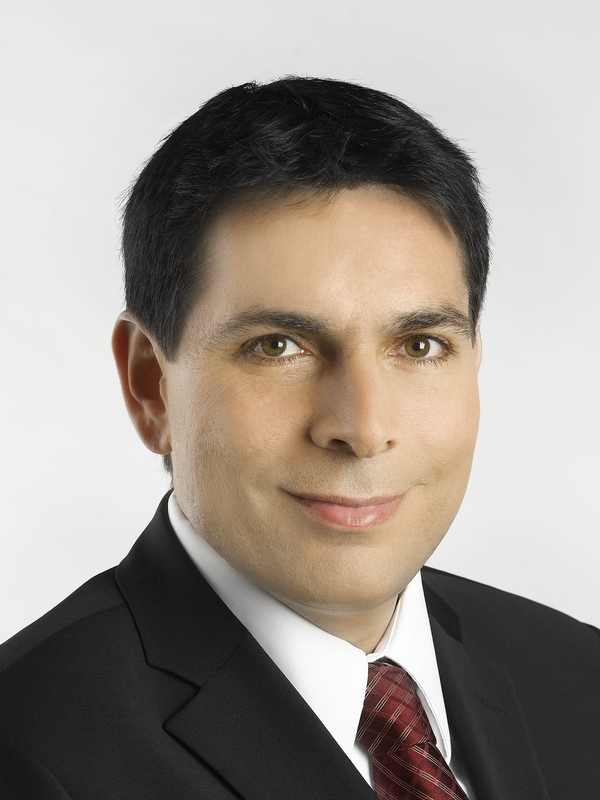
Danny Danon’s response to Mamdani
Israel's ambassador to the United Nations, Danny Danon, argued that the mayor was attempting to “hijack the only day we have for the victims and survivors.” He said the anniversary had been redirected into an attack on Israel. Other Israeli officials and pro-Israel voices echoed that criticism, objecting both to the genocide allegation and to its placement in an October 7 memorial message.
The framing dispute is the center of the controversy. Mamdani explicitly condemned Hamas and named the Israeli dead and abducted. Critics are not claiming those words were absent; they are arguing that the subsequent accusation changed the purpose of the message. Supporters answer that an anniversary statement need not stop at remembrance when the war that followed remains politically and morally unresolved.
Who Zohran Mamdani is
Mamdani took office as mayor in 2026 after campaigning as a democratic socialist. He entered City Hall with a record of sharp criticism of Prime Minister Benjamin Netanyahu and Israel's Gaza campaign. During the 2025 mayoral race, he also attacked the role of AIPAC spending in American politics, positioning himself against one of the most influential pro-Israel organizations in Washington.
Those views were never peripheral to his public identity. They shaped both his coalition and the opposition to him. Yet the mayor of New York does not speak only as a national ideological figure. He leads a city whose Jewish community is among the largest outside Israel and whose Palestinian, Arab and Muslim communities also expect recognition from City Hall. That makes every mayoral sentence about Israel and Gaza a local act of representation as well as a foreign-policy statement.
Mamdani's relationship with Jewish New Yorkers therefore cannot be reduced to a single axis. Some Jewish constituents share his opposition to the Gaza campaign; others regard his language as hostile to Israel or insufficiently attentive to antisemitism and Israeli trauma. The mayor's challenge is not simply to hold a position. It is to demonstrate that people who reject that position still belong fully within his civic concern.
The dispute also follows previous confrontations involving Mamdani and Israel. Signal Post News has examined his domestic political relationship with President Donald Trump in the context of their Gracie Mansion meeting, as well as the public clash surrounding Netanyahu's response to Mamdani at the United Nations. Wednesday's statement links those national and international tensions directly to the mayor's own city.
Why this matters
The word “genocide” is not an ordinary policy criticism. It alleges a crime defined by intent to destroy, in whole or in part, a protected group. When a sitting New York mayor uses that word on October 7 itself, the statement becomes a test of political sequence: whether moral attention can expand from the 2023 attack to Gaza in the same breath, or whether doing so on the anniversary necessarily competes with remembrance.
That tension is particularly acute in New York. The city is home to survivors, relatives of people killed or abducted, families with members serving in Israel, Palestinian families with relatives in Gaza, and residents who have spent three years protesting from opposite sides of police barricades. A mayor's calendar and vocabulary send signals about whose pain City Hall sees. Mamdani appears to have designed the day to speak to more than one constituency; the backlash shows how easily an attempt at inclusion can be read as displacement.
There is also a broader Democratic argument underneath the local one. The Washington Examiner noted that Israel and October 7 remain potent issues ahead of the 2028 presidential race. Mamdani's formulation — explicit condemnation of Hamas combined with an explicit genocide accusation against Israel — may become a template for one wing of the party and a warning sign for another.
The numbers, in context
The statement rests on two sets of figures that describe different periods and come from different sources. More than 1,100 people were killed in Israel in the Hamas-led attack on October 7, 2023, and 251 were abducted. Those numbers quantify a single day of mass killing and hostage-taking that set the war in motion and remains the focus of the anniversary.
Mamdani's figure of more than 74,000 Palestinians killed in Gaza, including more than 21,000 children, covers the ensuing war and comes from Gaza's health ministry. The scale is cumulative rather than a one-day count: measured against the October 7 death toll, it is more than sixty times as large, but that arithmetic does not make the events equivalent in cause, method or legal status. It illustrates the magnitude and duration of the human cost that Mamdani chose to place alongside the anniversary.
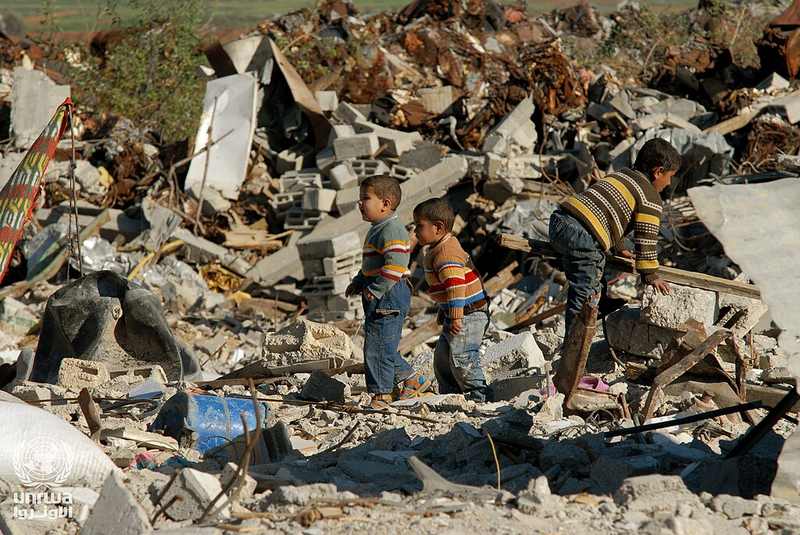
The source dispute matters. Gaza's health ministry reports the Palestinian toll; Israel challenges the reliability of those figures and says they do not distinguish adequately between civilians and combatants. Israel also rejects genocide accusations and maintains that its operations are directed at Hamas, which led the 2023 attack and operates from within densely populated territory. Reporting the figures responsibly therefore requires naming both the source and the dispute, rather than presenting either side's interpretation as uncontested fact.
Three ways to read it
Supporters: a refusal to ration empathy
Supporters of the Mamdani Gaza genocide statement will argue that he did not excuse Hamas. He named the killings, abductions and grief directly, then refused to treat those crimes as a reason for silence about Palestinian deaths. In this reading, the message is an attempt to establish a consistent moral standard: civilians do not become less worthy of protection because their government or an armed group claims to act in their name.
Critics: the anniversary was not a neutral stage
Critics will focus on the date. Their objection is not simply that Mamdani condemns Israel; it is that he attached the most severe possible accusation to a commemoration of Hamas's victims. For them, the sequence transforms a day centered on the murdered and abducted into a platform for prosecuting Israel's conduct, and it burdens survivors with a political argument at the moment set aside for their grief.
Strategically: a coalition message with unresolved limits
A third reading is political rather than moral. The statement tells progressive supporters that Mamdani will not soften his Gaza position in office, while its explicit Hamas condemnation answers the charge that he ignores Israeli victims. What it does not do is reconcile the incompatible legal and historical premises behind the word “genocide.” Nor does it explain what immediate policy power a New York mayor has over U.S. arms shipments. Its force lies in symbolism — exactly why every clause is being contested.
What happens next
Mamdani is scheduled to attend an October 7 vigil in New York City on Wednesday and to meet with Palestinian New Yorkers the same day. Those appearances will test whether the balance attempted in the statement can survive face-to-face encounters with communities carrying different losses. At the vigil, the emphasis is likely to be on the people killed and abducted in 2023; at the Palestinian meeting, the war's ongoing civilian consequences will be unavoidable.
Israel's consul general in New York has invited Mamdani to view an IDF-produced film assembled from videos captured by Hamas militants during the attack. As of Wednesday morning, the mayor's office had not indicated whether he would accept. The decision now carries symbolic weight: acceptance could show a willingness to engage directly with Israeli evidence and trauma, while refusal would be used by critics as proof that his condemnation of Hamas lacks depth. Accepting, however, would not necessarily alter his judgment of Israel's conduct in Gaza.
The immediate political fallout will unfold through public appearances, statements from Jewish and Palestinian organizations, and pressure on City Hall to clarify what the mayor means by genocide and what action he seeks from Washington. Nationally, prospective 2028 candidates will be watching how Democratic voters respond to a formulation that condemns Hamas without retreating from the party's growing criticism of Israel.
The most consequential question is not whether Mamdani's statement pleased either side; it plainly did not bridge the divide. It is whether a mayor can make room for simultaneous grief without allowing the language of one community's suffering to erase the other. On the third anniversary of October 7, New York has become a stage on which that unresolved argument is being conducted in full public view.