why does Israel keep bombing Gaza during ceasefire
why does Israel keep bombing Gaza during ceasefireis the Gaza ceasefire still in effectGaza ceasefire death toll todayIsrael airstrikes Gaza City Khan Younis Jabalia todayGaza Yellow Line explainedHamas disarmament refusal ceasefireGaza ceasefire phase two frozenGaza truce violations Israel Hamas claimsTrump Board of Peace Gaza disarmamentGaza death toll since ceasefire Reuters AP
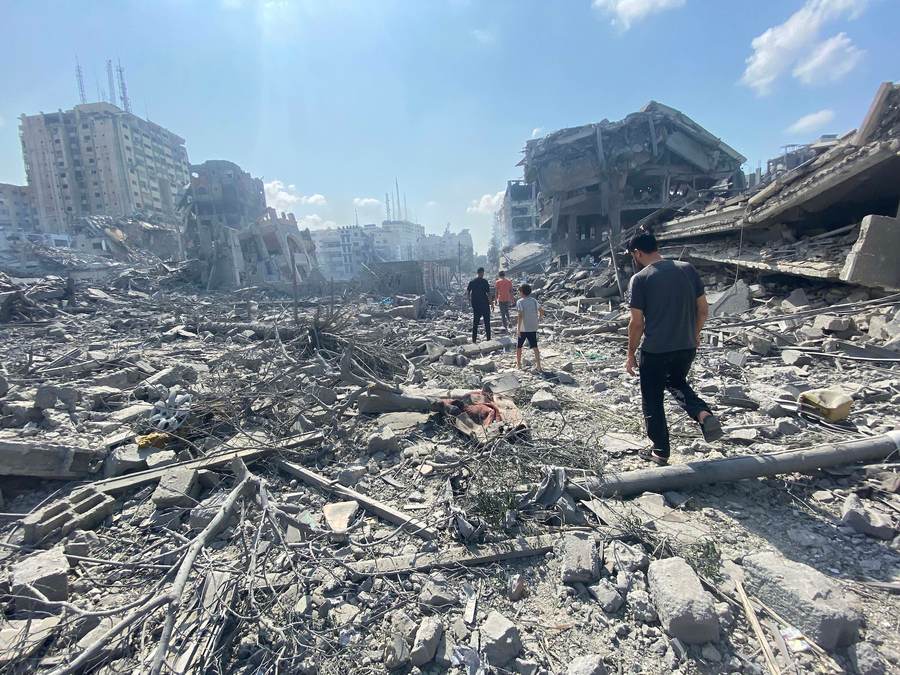
GAZA — It is the question typed into search bars nearly every day: why does Israel keep bombing Gaza during a ceasefire? The truce that took effect on October 10, 2025 was supposed to stop the war. A year later, Israeli strikes still kill Palestinians in Gaza City, Khan Younis and Jabalia on a near-weekly basis — while both sides insist the other is the one violating the deal. The short answer is that the two sides never agreed on what the ceasefire permits. The longer answer runs through a demarcation line, three different death tolls, and a second phase of the agreement that has never started.
This is an explainer, not a verdict. Every claim below is attributed to the side making it, because on the central questions — who is violating the truce, and how many have died since it began — the parties’ accounts do not agree, and independent verification from inside Gaza remains severely limited.
The Yellow Line — and the strikes Israel says the truce allows
The October 2025 agreement drew a “Yellow Line” across the Gaza Strip. Israeli forces pulled back to positions behind it but kept control of more than half of the territory; recent reporting puts the figure above 60 percent. The line was presented as temporary — the first step toward a full Israeli withdrawal in phase two of the deal.
Israel’s stated position, repeated by its government and military, is that the ceasefire does not prohibit strikes against what it calls threats: Hamas fighters it says are rearming, tunnels, weapons depots and operatives planning attacks against Israeli forces or civilians. Nearly every strike announcement follows the same formula — the IDF names a target, describes the person as a Hamas or Islamic Jihad operative, and characterizes the target’s activity as a Hamas ceasefire violation.
Hamas says it is not rearming and describes the strikes as Israeli violations of the truce. Mediators note that neither side’s battlefield claims can be independently verified from outside Gaza, where international journalists still lack free access and where the only casualty reporting comes from Palestinian authorities and medical workers on the ground.
The toll since the truce — and why three counts disagree
No party disputes that Palestinians are still being killed in Gaza. How many depends on who is counting. Reuters’ reporting, drawing on Gaza health authorities, puts the post-ceasefire toll at more than 1,400. The Associated Press maintains its own independently compiled tally, currently at 1,145. The Gaza Government Media Office — a Hamas-run body — counts 1,421 Palestinians killed since the truce began.
The counts differ for mundane, methodological reasons: different cutoff dates, different sourcing (hospital records versus media-office announcements versus newsroom-verified incidents), and different decisions about which deaths belong to the “ceasefire period.” Gaza’s Health Ministry, whose figures feed the Reuters number, reported in late September that 1,451 Palestinians had been killed and 4,953 wounded since the truce began — a reminder that every figure is a snapshot, not a final count.
What the figures agree on is the shape of the violence: the death rate fell sharply compared with the war’s peak, but lethal strikes never stopped — averaging several deaths a week, punctuated by deadlier waves in Gaza City, Jabalia and Khan Younis that Reuters and AP have reported as isolated incidents.
What Israel says the deal allows
Israeli officials argue the agreement preserves Israel’s right to act against “threats” — a term they define broadly. In their telling, Hamas never disarmed, continues to rebuild tunnels and weapons stocks, and uses the truce as cover to reconstitute its forces. Strikes on commanders, financiers and weapons sites are therefore enforcement of the deal, not violations of it.
Israel has also made everything conditional on disarmament: officials say there will be no Israeli withdrawal beyond the Yellow Line, no full opening of crossings and no reconstruction until Hamas is completely disarmed. Defense Minister Israel Katz has gone further, warning of a return to full-scale war, floating a “migration plan” for Gaza’s roughly two million residents, and setting an evacuation ultimatum for Gaza City tied to any new abduction of an Israeli.
What Hamas and the mediators say
Hamas says it is abiding by the truce and accuses Israel of using “rearming” claims as a pretext for continued attacks aimed at undermining the agreement. It points to the frozen second phase — no withdrawal, no reconstruction, no easing of restrictions — as evidence that Israel never intended to move beyond phase one.
The mediators have grown unusually blunt. Nickolay Mladenov, the Board of Peace’s high representative for Gaza, told the UN Security Council in August 2026 that continued Israeli strikes are undermining the ceasefire and delaying the demilitarization of Hamas. “Will another strike on a munitions depot stop Hamas from rearming or tightening its grip on Gaza? It will not,” Mladenov said. “It only delays the demilitarization that would happen, and it obstructs the civilian transition that should take place.”

What the Board of Peace plan says about disarmament
The U.S.-backed framework endorsed by UN Security Council Resolution 2803 in November 2025 makes disarmament the hinge of everything that follows. Article 17 of the Board of Peace plan calls for “temporary reconstruction” to begin only in areas designated free of Hamas control. An International Stabilization Force and a Palestinian technocratic body — the National Committee for the Administration of Gaza — are supposed to take over security and civilian administration until the Palestinian Authority can assume control after reforms.
On July 30, Hamas and other Palestinian factions accepted a 15-point roadmap calling for full disarmament of all weapons categories and handover of civilian and security authority. Mladenov called the agreement a “historic breakthrough” — then added the caveat that defines the current moment: “an agreed document on disarmament does not immediately mean a disarmed Gaza.” Implementation, he said, must follow the principle of “trust nothing and verify everything.”
None of it has been implemented. The technocratic committee has not been allowed into Gaza, crossings remain restricted, and reconstruction has not begun at any meaningful scale — with needs estimated at $71.5 billion. After unveiling a $2.45 billion first-phase recovery plan on the sidelines of the UN General Assembly, Mladenov said again that the plan depends on Hamas’s disarmament. Israel, meanwhile, has refused to move until disarmament is complete. Each side is waiting for the other to move first.
Why this matters
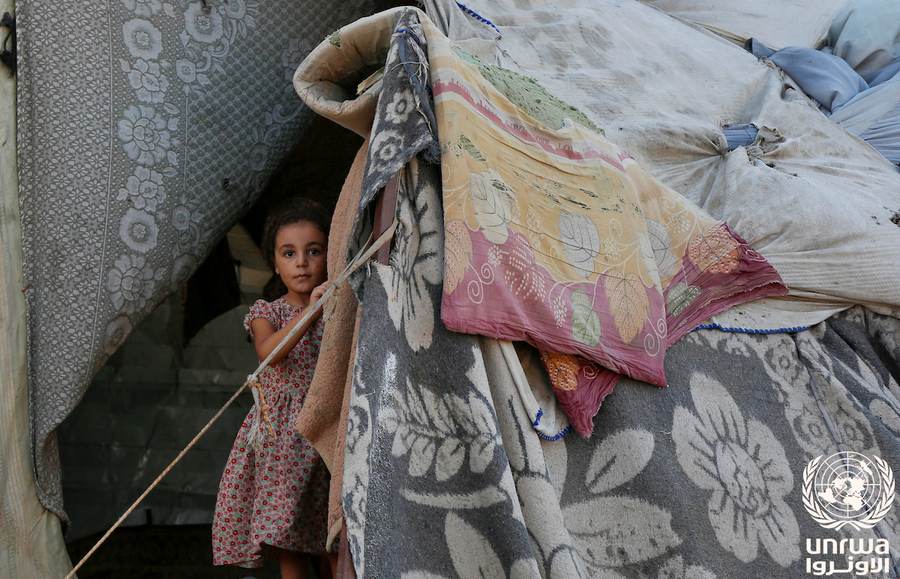
The ceasefire survives because no party wants to be blamed for killing it — not because its terms are being met. For Gaza’s 2.3 million people, most of them displaced, the legal debate matters less than the result: a truce that reduced the killing without ending it, and a recovery that exists only on paper.
For the region, the frozen deal is a case study in what happens when an agreement’s enforcement mechanism is each side’s own interpretation of the text. Until phase two moves — withdrawal beyond the Yellow Line, disarmament verified by someone other than the parties themselves, reconstruction — the question at the top of this article will keep being asked, because the strikes will keep happening.
Sources and reporting notes
- Reuters, September 30, 2026 — Gaza City strikes, casualties and both sides’ ceasefire claims; post-ceasefire toll reporting.
- Life News Agency, August 26, 2026 — Nickolay Mladenov’s UN Security Council remarks on Israeli strikes delaying demilitarization; the 15-point disarmament roadmap.
- St. Lucia Chronicle explainer — Board of Peace Article 17 reconstruction provisions, the Yellow Line, and Mladenov’s disarmament remarks at UNGA.
- IDF statements on targeted Gaza strikes — presented as Israeli claims; Signal Post News could not independently verify target identifications.
- Gaza Health Ministry and Gaza Government Media Office casualty figures — presented as attributed counts; methodologies and cutoff dates differ from AP and Reuters tallies.
Reporting cutoff: October 2, 2026 at 3:00 a.m. PDT. Casualty totals are attributed to the organizations publishing them and change with each reporting cycle. Claims by Israel, Hamas and mediators are presented as their stated positions.