Trump Gaza plan one year
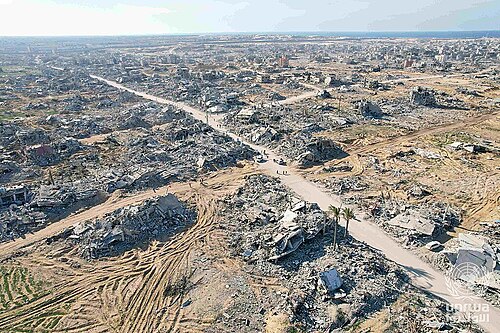
The Trump Gaza plan one year record is a study in the difference between stopping a war from fully restarting and building a peace. The October 10, 2025 ceasefire remains formally intact. The last remaining hostages seized in Hamas's 2023 attacks were released, and hundreds of Palestinian prisoners and detainees were freed. Those were concrete achievements.
Yet nearly every bridge from that first phase to a durable settlement is unfinished. Hamas remains armed. Israel has not withdrawn. The international force has not assembled. The new Palestinian administrative committee has not entered Gaza. Reconstruction remains a fraction of what assessments say is required. Meanwhile, strikes and deaths continue.
Why this matters
A ceasefire can be both meaningful and inadequate. It matters that the fighting has not returned to the intensity of the main war. It also matters that Gaza's Health Ministry says at least 1,400 Palestinians have been killed since the truce, including many women and children; the ministry does not distinguish militants from civilians in its public total. Israel says its strikes have targeted Hamas members preparing attacks or trying to rearm. Hamas denies violating the ceasefire and denies the Israeli characterization of its actions.
Those competing claims are not a side issue. They are the mechanism by which a truce becomes a permanent low-level conflict: Israel argues that continuing force is required to contain an armed threat, while Hamas argues that those strikes prove Israel is not honoring the deal. Each side points to the other's conduct as the reason it cannot take the next irreversible step.
The human cost remains significant even against the much larger scale of the war. Gaza health authorities say the Palestinian death toll since October 2023 has passed 74,000. The post-ceasefire figure of more than 1,400 is under 2% of that total, but it also means a period called a ceasefire has continued to produce deaths week after week. Israeli military figures say five soldiers were killed by Palestinian militants or in combat after the truce; the Associated Press separately reported two soldiers killed by friendly fire.
How the 20-point plan reached its first success — then stopped
The October 10, 2025 ceasefire and hostage deal
Trump's 20-point framework was designed as a sequence. Phase one dealt with the urgent and negotiable: halt full-scale operations, return the remaining hostages from Hamas's October 7, 2023 attack and release Palestinian prisoners and detainees. It succeeded because both parties could make a measurable exchange without first resolving Gaza's final political order.
The later phases were always harder. They envisaged Hamas giving up its weapons, a Palestinian technocratic body governing Gaza under the oversight of a Trump-led Board of Peace, an Israeli withdrawal in stages and the transfer of territory to a temporary International Stabilization Force. Each step depended on confidence that the next one would follow. That confidence never became durable.
The latest violence shows the problem. The Associated Press reported that strikes on Wednesday killed five Palestinians — one woman in Gaza City and four people on a bus — and wounded at least 14 people on the bus. Four people were also wounded in Khan Younis. The Israeli military said it was reviewing the Khan Younis strike and did not immediately respond to the AP about the bus strike. These incidents do not equal a return to full-scale war, but they keep the ceasefire under continual stress.
The numbers that show where the plan stalled
Israel Gaza occupation: from the yellow line to two-thirds
The original map left Israel controlling about 53% of Gaza behind the so-called yellow line. Reuters reports that Israeli control has since expanded to roughly two-thirds of the territory. Around 2 million Palestinians are concentrated in a narrowing coastal strip, while Israel-backed Palestinian militias opposed to Hamas operate in the Israeli-held zone.
Israel says continued control is necessary until Hamas is fully disarmed and the security threat is removed. Hamas says disarmament cannot be treated as surrender while Israeli forces retain territory and strikes continue. For civilians, the argument produces a practical result regardless of legal or political framing: less accessible land, more crowding and no clear timetable for normal movement.
Gaza aid trucks and IPC hunger: 227 versus 600
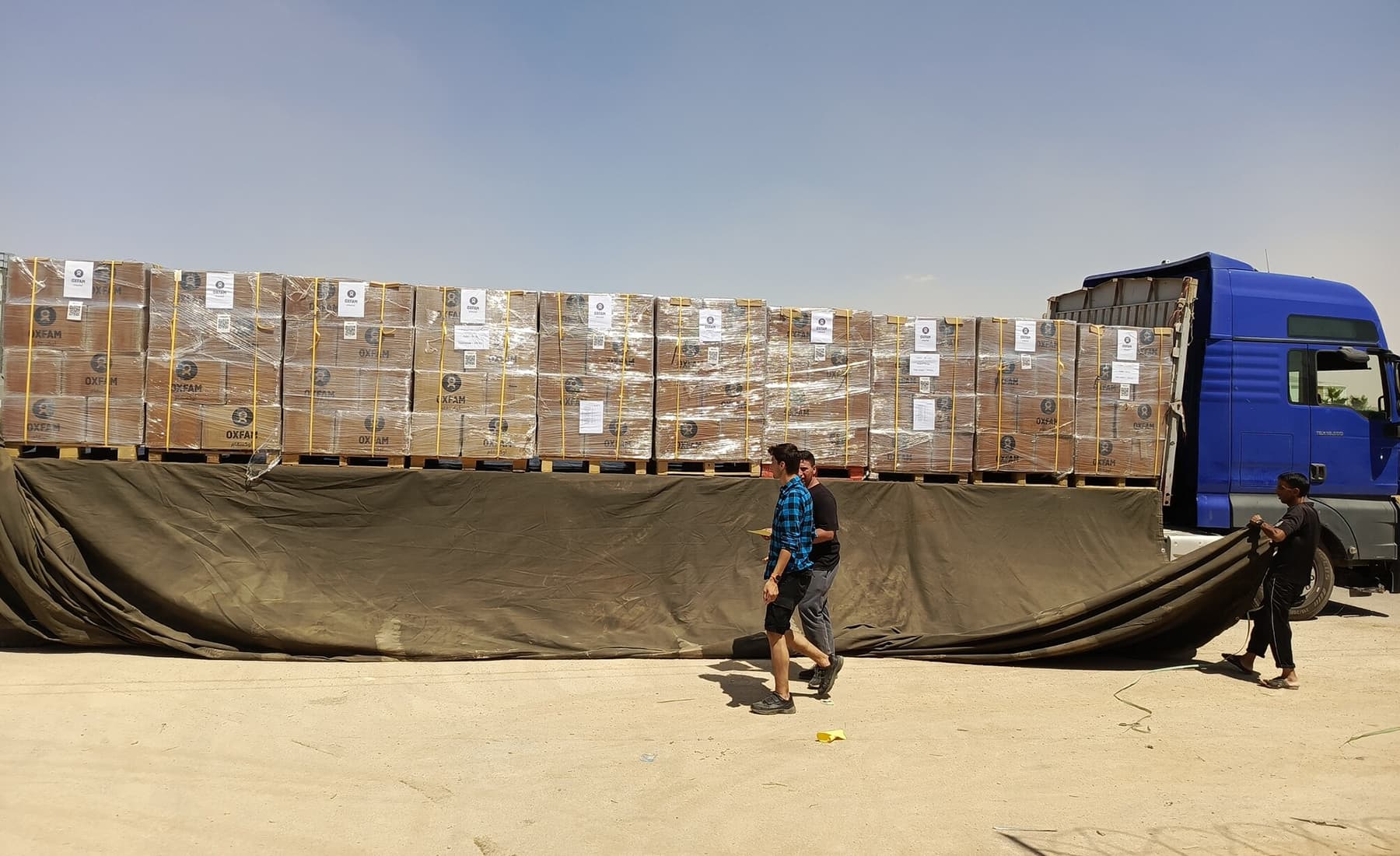
Food access is another dispute where the numbers and the narratives diverge. The IPC says more than 1.2 million people face acute hunger. From the ceasefire through the end of May, an average of 227 aid trucks entered Gaza each day, Reuters reported — far below the 600-per-day minimum written into the plan.
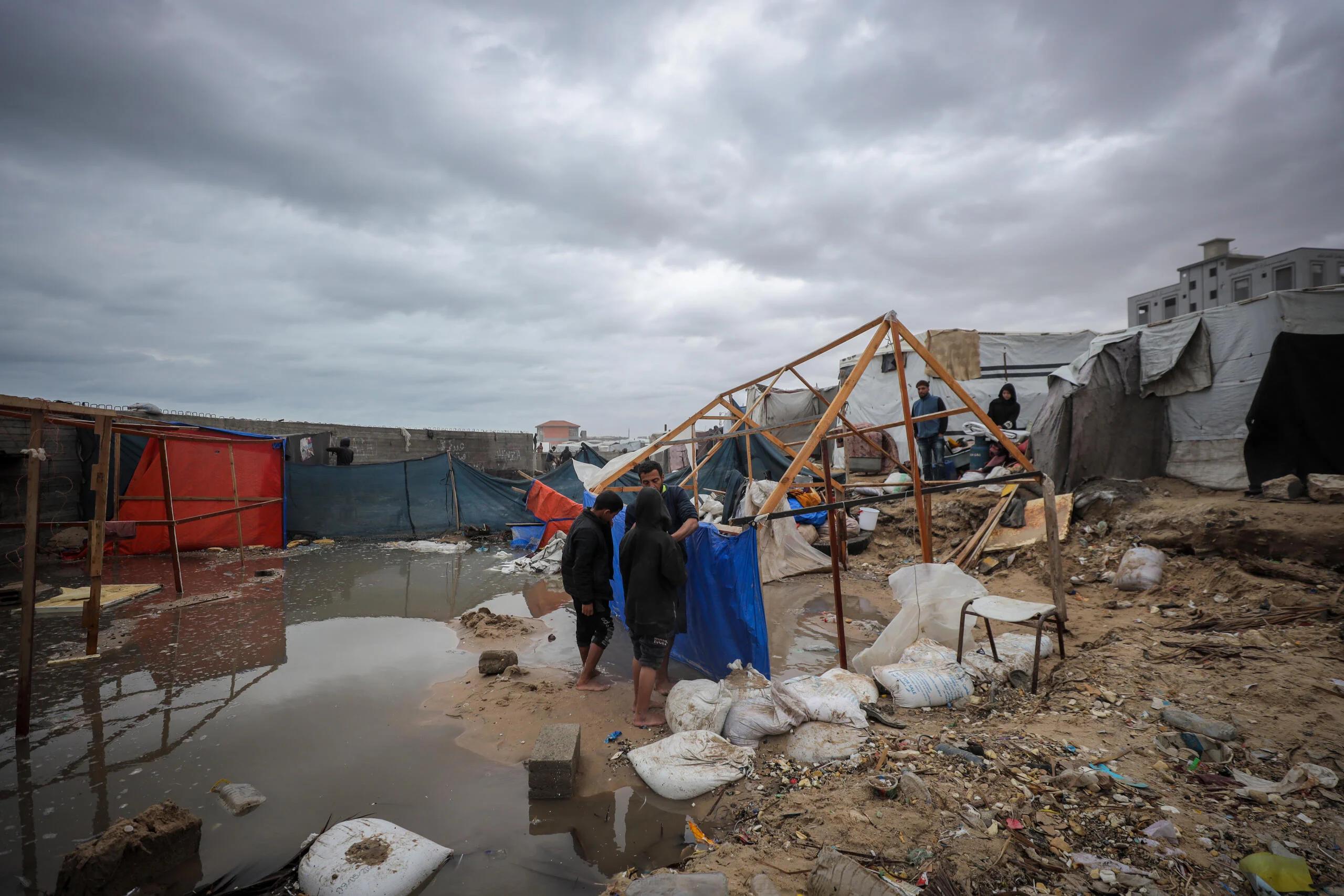
Israel says roughly 600 trucks are now entering each day and that humanitarian needs are being met. Aid organizations say restrictions still block goods including tent poles and engine parts, which affects shelter, transport and the ability to keep relief systems running. The disagreement is therefore not only about how many vehicles cross a border. It is about what is on them, whether supplies can move inside Gaza and whether the inflow is sustained.
Gaza reconstruction cost: $2.45 billion versus $71.4 billion
The Board of Peace Gaza proposal unveiled in September put forward $2.45 billion. An EU-UN assessment estimated that reconstruction would require $71.4 billion over a decade. The smaller figure is about 3.4% of the larger estimate. It may finance important early projects, but it cannot by itself answer the scale of housing, utilities, roads, health facilities and economic recovery described in the broader assessment.
Money is only one obstacle. Major rebuilding cannot proceed normally while control of territory is contested, authorities have not entered and security arrangements remain provisional. The stalled political plan and the reconstruction gap reinforce each other: donors hesitate without governance, while governance struggles to gain legitimacy without visible rebuilding.
International Stabilization Force Gaza: 20,000 planned, none assembled
The long-term concept calls for 20,000 international troops and the training of 12,000 Palestinian police. U.S. Major General Jasper Jeffers is the designated commander, and Indonesia, Morocco, Kazakhstan, Albania, Kosovo and Uganda have committed personnel. But the force has not assembled.
This is not a minor scheduling delay. The ISF is supposed to be the bridge between Israeli withdrawal and Palestinian administration. Without it, Israel says the security vacuum would benefit Hamas; Hamas and its supporters can argue that withdrawal remains hypothetical. A plan built on sequencing has lost its central sequencer.
The disarmament bargain neither side accepts
What the July Hamas disarmament plan actually offers
A 15-point roadmap unveiled in July attempted to narrow the gap. Hamas agreed to hand weapons into storage under a U.S.-backed Palestinian technocratic government, but it rejected the word “disarmament.” Israel called the proposal unacceptable and says it will not withdraw until Hamas is fully disarmed.
The distinction is substantive, not semantic. Storage could make weapons less available while preserving a claim that they have not been permanently surrendered. Israel seeks a verifiable end to Hamas's military capacity; Hamas seeks to avoid an irreversible concession before withdrawal and a political settlement. The July formula offers an interim mechanism, but each party worries that “interim” would become permanent in a way that disadvantages it.
The National Committee for the Administration of Gaza, led by former Palestinian Authority deputy minister Ali Shaath, was appointed in January. It has not entered Gaza. Its absence leaves the territory without the new governing authority the plan promised and deprives the disarmament roadmap of the institution meant to hold the weapons.
Who benefits from the stall — and who loses
Israel's security case and political incentives
Israel's stated case is direct: Hamas still has weapons, is trying to rebuild its capacity and may attempt new attacks. From that perspective, withdrawing before verifiable disarmament would trade current control for future risk. Continued military freedom of action gives Israel leverage and, in its view, protects its forces and communities.
There is also a domestic political dimension. Right-wing figures have called for “voluntary emigration,” and Defence Minister Israel Katz said there was “no real solution” without migration. Trump once suggested Gazans could be permanently displaced, then backed away; Israeli officials say there are no plans for forced removal. With a general election scheduled for October 27 — Israel's first since the October 7 attacks — any withdrawal decision carries electoral risk. Opposition figures who support Trump's plan may argue that an agreed transition offers a safer exit, while the right can argue that withdrawal without disarmament invites another war.
Hamas's position and incentives
Hamas can point to continued strikes and expanded Israeli control as evidence that surrendering weapons first would leave Palestinians without leverage or protection. Its refusal of the term “disarmament,” even while accepting storage, reflects that concern. Retaining arms also preserves Hamas's organizational power against Palestinian rivals and Israel-backed militias.
But the same position blocks the withdrawal, governance and reconstruction sequence on which Gaza's recovery depends. Hamas may preserve influence in the short term while bearing political responsibility among critics for helping freeze a system that leaves civilians crowded, hungry and exposed to continued violence.
The clear losers: civilians, governance and the plan's credibility
Palestinian civilians lose access to land, reliable aid, reconstruction and physical safety. Israeli soldiers and communities remain exposed to attacks rather than moving into a stable postwar security structure. Palestinian technocrats lose authority because they cannot govern. International contributors lose confidence because their promised force has nowhere to deploy. The United States loses credibility each time a deadline passes without the machinery its plan advertised.
Critics of the plan can fairly argue that it front-loaded the achievable exchange and postponed the conflicts over sovereignty, security and political legitimacy. Supporters can fairly answer that without phase one, hostages would have remained captive, prisoners detained and full-scale warfare more likely. Both judgments can be true: the first phase was valuable, and the architecture after it was insufficiently enforceable.
What happens next: four paths after a stalled year
1. Ceasefire collapse
A major militant attack, a high-casualty Israeli strike or an accumulating cycle of retaliation could end the distinction between near-daily incidents and full-scale operations. The risk is highest when both parties believe the present arrangement already violates the deal. Collapse would end the truce's remaining achievement and make the political components even harder to revive.
2. A frozen conflict behind shifting lines
The most plausible near-term path is also the least transformative: no formal end to the ceasefire, no comprehensive withdrawal, periodic strikes, continued Israeli control and fragmented Palestinian authority. That outcome contains the war without resolving it. It also allows every temporary arrangement — the territorial line, the aid regime, the absent government — to harden.
3. Revival through the July roadmap
The July proposal remains the closest thing to a negotiating bridge. A monitored weapons-storage arrangement, entry of the Shaath committee and phased deployment of the ISF could create reciprocal movement: limited Israeli withdrawal for verified restrictions on Hamas's weapons, followed by additional steps. The obstacle is trust. Each side would need enforcement strong enough to make its concession reversible if the other side failed.
4. The October 27 Israel election resets the politics
The election could produce a government with a clearer mandate either to implement Trump's framework or to hold territory until full disarmament. Polls described by Reuters show a tight race, and some opposition figures support the plan. A campaign fought around security, hostages, migration and the cost of continuing control may clarify public preferences — but it may also reward harder positions before voting day.
The verdict after one year
The ceasefire is not nothing. It prevented a return to the main war, brought hostages home and freed Palestinian prisoners and detainees. Those facts should not be erased simply because the larger project failed to advance.
But a deal cannot be judged only by the phase it completed. One year on, Israeli forces hold more territory than the original yellow line contemplated, Hamas has not disarmed, the international force is not in place, the technocratic committee is outside Gaza, aid levels remain disputed and reconstruction financing is nowhere near the estimated need. The Trump plan stopped one chapter from fully resuming. It has not yet written the next one.
Sources
- Reuters: One year on, Trump's Gaza plan has not stopped Israeli fire or disarmed Hamas — ceasefire timeline; casualty, territory, aid, disarmament, governance, stabilization-force, reconstruction and Israeli election details.
- Associated Press via USA Today: Mideast developments roundup — October 6 strike casualties and cumulative Palestinian and Israeli death tolls.