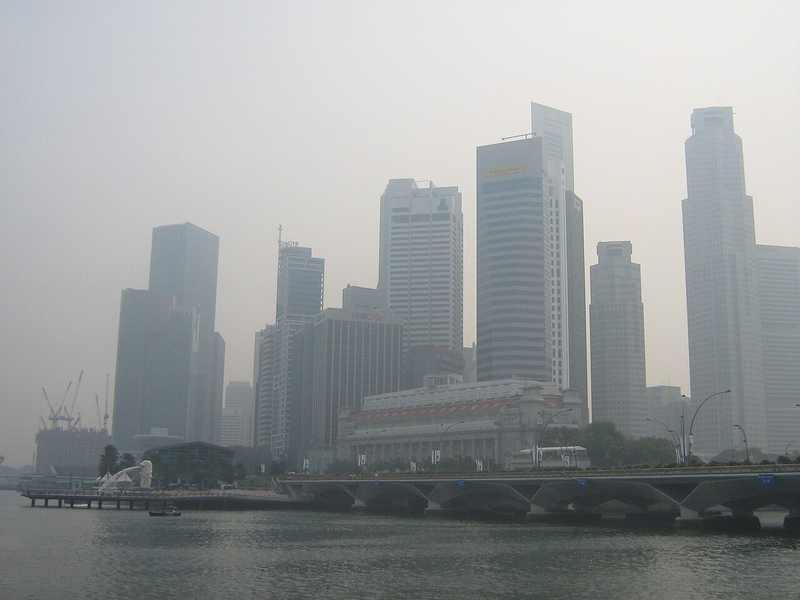
The Malaysia schools closed haze emergency has spread across six states and federal territories while Singapore faces unhealthy air days before Formula One brings crowds outdoors.
The Malaysia schools closed haze crisis is no longer a local disruption: it is a regional public-health emergency, an economic threat and another test of whether Southeast Asia can control a recurring man-made disaster. Malaysia's education ministry ordered schools shut Friday across Johor, Malacca, Negeri Sembilan and Selangor, the federal territories of Kuala Lumpur and Putrajaya, and Rompin district in Pahang after smoke from fires in Indonesia spread across the region.
Education Minister Fadhlina Sidek announced the closures late Thursday on Facebook. By Friday morning, 37 Malaysian areas had recorded an unhealthy Air Pollutant Index reading. Malaysia defines 101 to 200 as unhealthy, 201 to 300 as very unhealthy and anything above 300 as hazardous. The scale matters: this is not one smoky border district but a broad belt of bad air crossing school systems, workplaces and transport corridors.
What is happening across Malaysia and Singapore
Kuala Lumpur air quality unhealthy as closures widen
About 200 schools, kindergartens and nurseries in Batu Pahat, Johor, had already been ordered shut Wednesday. The broader Friday closure shows officials judged the danger was moving faster than isolated district measures could contain. IQAir rated Kuala Lumpur the world's second-most-polluted major city at one point, while Singapore was rated “very unhealthy” late Wednesday.
Malaysia's API and Singapore's Pollutant Standards Index are not identical scales, but both translate pollution into decisions about outdoor activity and exposure. Singapore's National Environment Agency recorded a 24-hour PSI of 105 to 140 on Wednesday evening—squarely in its unhealthy band. That range is high enough to change advice for children, older people and those with heart or lung conditions, even before it reaches the spectacle of a hazardous reading.
Singapore air pollution haze follows the wind
Singapore's NEA said moderate-to-dense smoke plumes from southern and central Sumatra and West Kalimantan were drifting toward the city-state. Southeasterly and southerly winds could continue carrying smoke across the Strait of Malacca. That forecast makes wind direction, not city boundaries, the immediate control knob: a shift can clear one skyline while exposing another.
Singapore was among the world's most polluted cities in real-time rankings this week. Those rankings move quickly and are not a substitute for official health measures, but they capture the visibility of the crisis: one of Asia's best-known financial and tourism centers was breathing air usually associated with active fire zones.
Why this matters
A recurring man-made emergency reaches children first
Closing classrooms protects children from exposure, but it also transfers the disruption to families. Parents must find care, teachers lose instruction time and students in lower-income households may have fewer ways to continue lessons. Respiratory irritation is the immediate concern; repeated episodes raise harder questions about cumulative exposure for young lungs.
The deeper significance is that the haze is recurrent and largely preventable. It is tied to land clearing by fire, peatland drainage and weak control over burning across complex supply chains. Weather can amplify the smoke, but weather does not strike the match. Every mass closure therefore measures not only atmospheric conditions but the accumulated cost of decisions made on plantations, smallholdings and degraded peat.
The Singapore F1 haze weekend exposes tourism risk
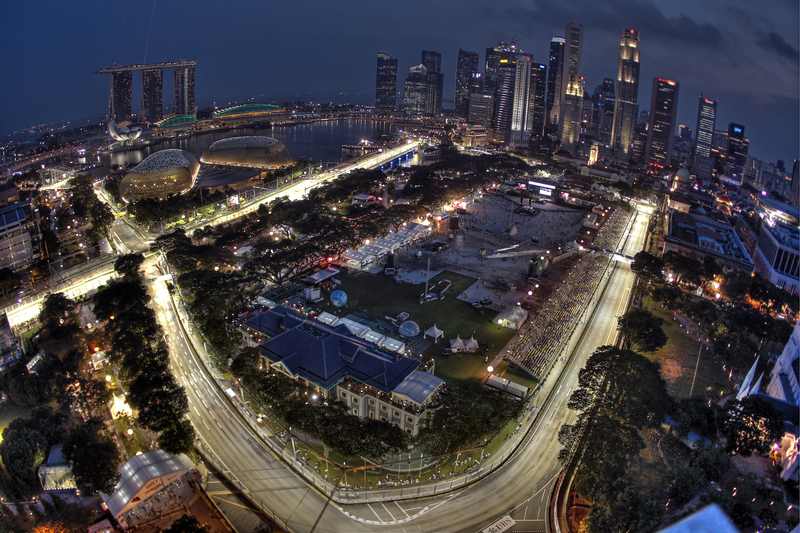
The Singapore Grand Prix is built around night racing, outdoor concerts and a dense international crowd. The FIA said entertainment could be affected by smoke, although not the race itself, while organizer Singapore GP said it had “no plans to modify entertainment activities.” Janet Jackson and The Killers are among the scheduled acts. The 2015 and 2019 races went ahead during haze, establishing a precedent for keeping the sporting program intact while adapting the experience around it.
Driver reactions underline the difference between elite athletic tolerance and population-wide risk. Valtteri Bottas said he was unbothered after cycling more than 400 kilometers from Malaysia. Lewis Hamilton said there were “much bigger issues to focus on.” Both can be true: the race may remain technically operable while the health burden falls most heavily on spectators, event staff, children and vulnerable residents.
How Southeast Asia arrived here
El Nino Indonesia wildfires meet drained peat
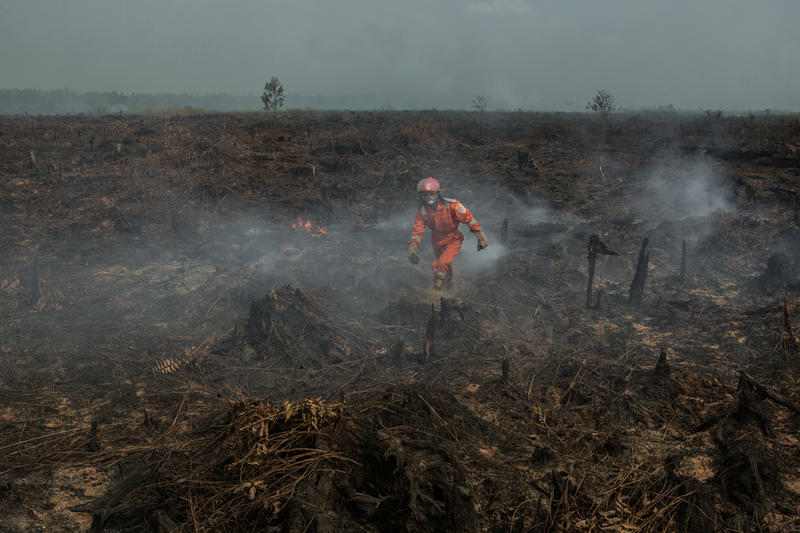
Fire is a cheap way to clear vegetation for agriculture, including land connected to palm-oil production. On mineral soil, a blaze may pass. On drained peat, it can descend below the surface, smoulder underground and reappear after crews believe the edge is contained. The ground itself becomes fuel, producing thick smoke and making suppression slow, dangerous and expensive.
Rainfall has been reported at roughly 80% below normal since June amid a strong El Niño. Indonesia's SiPongi monitoring system recorded last month's hotspot count as the highest since 2015. That combination—dry vegetation, exposed peat and abundant ignition points—helps explain why the Indonesia forest fires 2026 season has become the worst in more than a decade.
The 1997 and 2015 crises remain the warning
The 1997 haze crisis became a regional economic and health catastrophe as fires spread during a powerful El Niño. In 2015, smoke again closed schools, disrupted flights and blanketed cities for weeks. Those episodes produced pledges, prosecutions, restoration programs and stronger monitoring, yet the underlying landscape remained combustible.
ASEAN adopted its Agreement on Transboundary Haze Pollution in 2002, a landmark acknowledgment that smoke crossing borders requires collective action. The agreement improved coordination, but it relies heavily on national enforcement and consensus. The present crisis is therefore an ASEAN credibility test: twenty-four years after the pact, citizens are still measuring cooperation through the air they can see.
Who benefits, who loses and what critics say
Companies, smallholders and Indonesia's enforcement challenge
Critics of Indonesia's response argue that recurring haze proves enforcement has not matched the scale of plantation development, peat drainage and illegal burning. Neighboring governments face political pressure because their citizens bear the health and economic costs of smoke produced beyond their jurisdiction. Airlines, tourism operators and event organizers can lose revenue even though they control neither the fires nor the wind.
Indonesia's challenge is also real. Fire governance spans vast, remote landscapes; land ownership can be disputed; and responsibility may run from large corporate concessions to contractors and smallholders. Companies argue that they have invested in no-burn policies, patrols and restoration. Small farmers say mechanical clearing can be unaffordable. Enforcement that targets only one group can miss how the incentives connect.
The people who benefit most from burning are those able to externalize its cost: clearing land cheaply while schools, hospitals, workers and governments pay for the smoke. The losers include families with sick children, outdoor workers, legitimate growers harmed by blanket suspicion, airlines facing reduced visibility, and cities whose reputation for safety and livability is suddenly obscured.
Regional frustration and a diplomatic opening
Prime Minister Anwar Ibrahim said Indonesian President Prabowo Subianto agreed to take necessary steps and that Malaysia stood ready to help. Anwar also asked his foreign minister to push for an ASEAN ministers' meeting. That framing matters: it acknowledges Indonesian sovereignty and capacity constraints while insisting that a regional pollutant deserves a regional response.
A productive meeting would move beyond blame toward shared firefighting assets, transparent concession maps, hotspot attribution and peat restoration. A meeting that ends only in general declarations would reinforce the criticism that ASEAN's consensus culture is better at acknowledging haze than preventing it.
What the numbers imply
Thirty-seven unhealthy areas signal a system-wide event
Thirty-seven unhealthy Malaysian areas indicate geographic spread. Roughly 200 early closures in Batu Pahat show the disruption was already material before the nationwide attention intensified. Singapore's 105-to-140 PSI range shows that the city was not merely experiencing poor visibility: official exposure thresholds had been crossed.
The hotspot count being the highest since 2015 is the most consequential leading indicator. Air readings describe current exposure; hotspots describe the fire pressure feeding tomorrow's exposure. When that count rises during an exceptionally dry period, local improvements can be temporary unless rainfall increases or suppression removes the underlying heat.
These figures should not be collapsed into one index. Malaysia's API, Singapore's PSI, satellite hotspots and private city rankings measure different things. Read together, however, they tell a coherent story: widespread unhealthy air, a large and active fire base, and a weather pattern capable of transporting smoke across national borders.
What happens next
Wind, rain and suppression will decide the next 72 hours
If southerly and southeasterly winds persist, Singapore and peninsular Malaysia could continue receiving smoke. A wind shift may offer relief without extinguishing the source. Meaningful improvement requires rainfall or sustained suppression, especially where peat continues smouldering below ground.
For the Grand Prix, the decision tree is likely to separate the race from the surrounding festival. Organizers can shorten or relocate entertainment, adjust staff rotations and issue mask or hydration guidance while leaving the track schedule unchanged. Only a sharp deterioration in visibility or safety would put racing itself at risk, based on the FIA's current position and the 2015 and 2019 precedents.
Health advisories and an ASEAN meeting are the immediate tests
Residents should follow local official guidance, reduce strenuous outdoor activity when readings are unhealthy and pay particular attention to children, older adults and people with respiratory or cardiovascular conditions. Event visitors should treat real-time rankings as alerts, then use NEA and Malaysian official readings for decisions.
Diplomatically, the next test is whether Anwar's proposed ASEAN ministers' meeting produces operational coordination while fires are still burning. The wider El Niño pressure on developing economies shows why climate and debt shocks compound each other. Our reporting on the Southern California storm forecast and the Bouquet Fire under extreme heat likewise illustrate how weather extremes expose weaknesses in preparedness. Here, the essential question is simpler: can governments turn a recurring emergency into prevention before the next dry season starts?