World · Europe · Migration
Five centrist European governments stood together in Vienna on Monday and proposed the thing European politics has circled for a decade: a joint EU Rwanda deportation hub in Kigali, holding about 100 people at a time, for asylum seekers whose claims have been finally rejected and who cannot be sent home. The scheme is still being negotiated, nothing has been signed — and its real significance lies less in its size than in who is proposing it, and under what law.
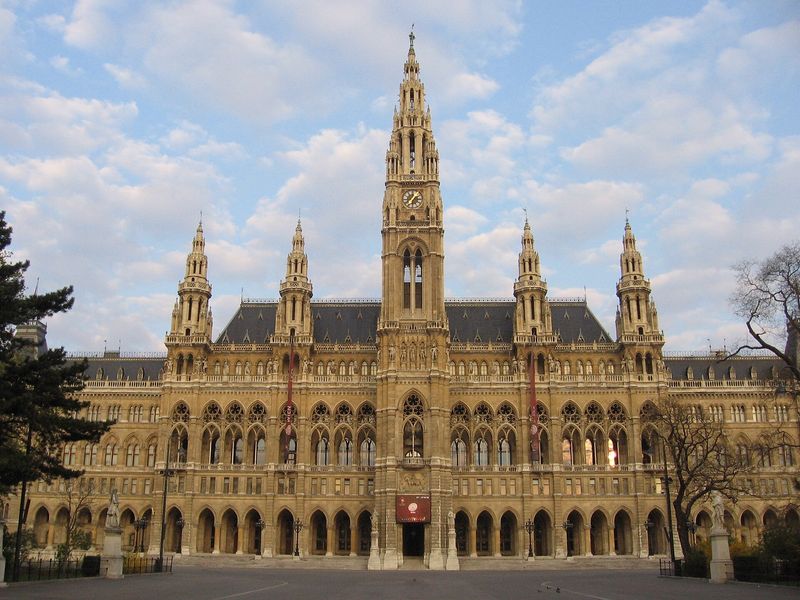
VIENNA, November 16, 2026 — Germany, Austria, Denmark, Greece and the Netherlands announced on Monday that they aim to set up a joint “return hub” in Rwanda for rejected asylum seekers, unveiling an EU Rwanda deportation hub plan that would send people whose claims have been finally refused — and who cannot be returned to their home countries — to Kigali from 2027. The announcement, made in Vienna on the margins of the Vienna Migration Conference, was fronted by Austrian Chancellor Christian Stocker and Danish Prime Minister Mette Frederiksen, alongside ministers from the five countries and Rwandan Interior Minister Vincent Biruta. It begins, deliberately, small: a pilot of about 100 people at a time, roughly 20 from each country, with the first transfers hoped for in 2027. And it begins, just as deliberately, unfinished: the scheme is still being negotiated with Rwanda, and no agreement has been signed.
The precision matters, because almost everything about this plan will be contested in the gap between what was announced and what exists. What exists today is an intention, a legal basis the five believe they have built for it, and a timetable. Denmark’s integration minister, Morten Bødskov, said the aim is a fully negotiated agreement within the next few months. German Interior Minister Alexander Dobrindt put the negotiation’s end in early 2027, with implementation later that year. Between now and then, every hard question — where the hub will be, who will monitor it, what happens to people who refuse every option it offers — remains open. Monday’s news is that five governments have decided to be asked those questions in public, together.

What the five are proposing — and what they are not
Start with the boundaries the five themselves drew, because they are the scheme’s legal and political armour. The Rwanda return hub would cover only people who have exhausted all legal avenues to remain, who hold enforceable departure orders, and who cannot be returned to their home countries. It does not process asylum claims: nobody would be sent to Kigali to have a case heard. The European procedure — application, examination, appeal — happens in Europe, in full, first. Only after a final rejection, and only where return home is impossible, would a transfer to Rwanda begin. First-phase reporting describes the cohort as adults without dependent families. The Dutch government said its own returns would focus on single men and on people from countries in Rwanda’s region — a narrower profile that should be read as the Dutch position, not as a rule the five announced jointly.
The language at the podium was not narrow at all. “I think it will be a game changer, making us able to confront the massive challenges of illegal migration,” Frederiksen said. Stocker called the plan a “truly historic paradigm shift in migration policy,” and set out its logic in one sentence: “If returning to their home country is not possible, then in the future people without a right of residence will be sent back to a third country such as Rwanda.” Note what that sentence does. It converts a residual problem — the person who must leave but cannot be sent home, and who therefore stays, often for years, in legal limbo — into a destination. The five are not claiming the hub will process migration. They are claiming it will end the limbo, and that ending the limbo changes the incentives of everyone watching.

How Kigali describes it: a ‘welcome centre’, not detention
Rwanda’s presentation of the same scheme is softer, and the difference in vocabulary is itself part of the negotiation. Kigali describes the facility as an open centre — a “welcome centre” — not a detention facility. People sent there, on Rwanda’s account, would face a choice rather than a sentence: they could return to their home country, settle in Rwanda, or move on to somewhere they have a right to stay. Biruta said Rwanda would give people a “second chance” and a residence permit. He also addressed the money directly: Rwanda, he said, is not looking to be paid for the arrangement itself, though the partner countries would meet relocation and integration costs. Each element of that description does work. “Open” answers the detention critique before it is made. “Second chance” reframes the transferee from deportee to settler. And the costs formula lets Kigali present the hub as partnership rather than commerce — a distinction that matters to a government sensitive to the charge, levelled throughout the British episode, that it rents out its territory to rich countries’ migration politics.
Whether the description survives contact with practice is a question the pilot exists, in part, to answer — and it is why the oversight arrangements, examined below, carry so much weight. An open centre is open only if the people inside it can meaningfully leave, work and choose; a residence permit is a second chance only if the labour market and the law behind it are real. None of that can be verified from a podium in Vienna. It can only be verified in Kigali, by monitors whose presence has not yet been agreed.
The legal basis: the EU Return Regulation and the European Return Order
The five’s central claim is that this time, unlike Britain’s attempt, the law was written first. The legal basis they cite is the EU’s new Return Regulation, adopted in mid-October 2026. In June 2026, European lawmakers voted to allow member states to set up return centres outside the EU, alone or in small coalitions — exactly the five-country format unveiled on Monday — and the regulation’s European Return Order makes one state’s return decision enforceable in the others, closing the loophole in which a person rejected in one member state could simply move to another and restart the clock. The European Commission welcomed the Vienna project and said it has been closely following the five states’ preparatory work. That welcome is not a legal judgment, but it is a political signal: the institution that would once have been expected to caution against offshore returns is instead blessing the experiment as it launches. The hub, in other words, is designed as an EU return hub Rwanda 2027 pilot operating inside the EU Return Regulation return hubs framework — a coalition of the willing acting under a regulation written to permit coalitions of the willing.
Oversight: hoped for, not yet agreed
Here the precision has to cut the other way, against the announcement’s momentum. The five hope for support from the UN refugee agency, UNHCR, and from the International Organization for Migration — but no formal operational agreement with either body has been finalised. UNHCR said it only supports return hubs in line with human rights standards, a conditional formulation that is neither endorsement nor refusal. The IOM said it does not take part in or negotiate state-to-state removal arrangements, and that it was providing technical input on the process — a narrower role than the word “support” might suggest. Biruta said Rwanda would bring organisations such as UNHCR on board and that there would be an independent monitoring mechanism; that is Rwanda’s stated intention, and it should be reported as exactly that — an intention, not a monitoring regime that exists. The Rwanda deportation hub human rights question will be decided in this gap: between the oversight the five hope for and the oversight that is signed, staffed and empowered before the first flight lands.
Why this matters
Be blunt about the arithmetic first, because the plan’s defenders and critics both prefer to argue about anything else: a 100-person pilot cannot change Europe’s return statistics. It is not meant to. Its real function is signalling — to voters at home, to people contemplating the journey, and to the other 22 member states watching from outside the coalition. For the first time, offshore returns would be normalised inside EU law itself: not a bilateral improvisation by one government testing the courts, but a mechanism the Union’s own regulation anticipates, blessed in advance by the Commission, and operated jointly by five states at once. Precedents in migration policy are rarely about their first cohort. They are about the second and the twentieth — about whether the exceptional becomes the administrative.
And notice who is doing it. These are not far-right governments performing toughness for their base. Denmark is led by Frederiksen’s Social Democrats; Germany and Austria by centrist coalitions; the five between them span the European mainstream that spent a decade insisting offshore schemes were a populist fantasy — legally impossible, morally out of bounds, or both. When the mainstream adopts the policy it once defined itself against, the mainstream itself has moved. That is the shift Monday actually announced, and it will outlast the pilot whatever the pilot’s fate: the argument in Europe is no longer whether returns can be externalised, but on what terms, with what safeguards, and at what scale. Elections across the continent, with far-right parties pressing centrist governments on precisely this issue, explain the timing. The five want to arrive at their next campaigns able to say the returns system finally returns people. The hub is the receipt they intend to show.
The numbers: 100 places against 110,000 crossings
Now do the maths openly, because the plan should be judged as what it is. Fewer than 30 percent of migrants ordered to leave the EU actually return — the figure cited in InfoMigrants and AFP reporting, and the single statistic that explains why five prime ministers and chancellors flew to Vienna for a 100-bed facility. Meanwhile the EU border agency Frontex recorded nearly 110,000 irregular border crossings in the first 10 months of 2026, a figure reported via the BBC. Set the pilot against those numbers. One hundred places is less than one-tenth of one percent of ten months’ crossings. Scale the hub tenfold — a thousand places, far beyond anything proposed — and it would still touch only a small share of the enforceable departure orders the system generates each year. As a returns mechanism, it is a rounding error. As a deterrence bet, it is the whole stake: the five are wagering that the credible prospect of Kigali changes behaviour upstream — that people who know a rejected claim ends in Rwanda, not in limbo, will not come, or will leave voluntarily sooner.
That wager’s evidence base is contested, and honesty requires saying so in the same breath. The 47 aid, trade union and rights groups that condemned the plan on Monday put the objection in writing: the deterrence goal is one “that evidence clearly suggests they will not reach.” Deterrence is the hardest effect in migration policy to measure — it requires proving a journey not taken, by a person who never appears in any statistic — and governments that invoke it are asking to be trusted on a counterfactual. The fair verdict on the numbers is this: judge the hub neither as a returns policy (it is too small) nor as a proven deterrent (the evidence is disputed), but as a political instrument whose authors believe the signal is the substance. Readers weighing the enforcement build-up around it should set Monday’s announcement beside our analysis of how Brussels wants Frontex to run Europe’s returns — the border-force expansion and the return hub are two halves of one strategy: more capacity to intercept, and somewhere new to send those the system finally rejects.
How Europe got here
The road to Vienna runs through three earlier experiments, each of which taught the five something they have visibly applied. The first is the 2016 EU-Turkey deal, in which Ankara agreed to take back migrants and host millions of Syrians in exchange for money and political concessions. It worked, on its own terms — Aegean crossings collapsed — and it taught Europe two lessons it has never unlearned: that externalisation can move numbers, and that it hands the partner state leverage, because the threat to reopen the route is a weapon the partner can brandish in every subsequent negotiation. The second is Italy’s arrangement with Albania, in which Rome built centres on Albanian soil for people intercepted at sea — a smaller, legally bruising rehearsal for processing European migration cases beyond EU territory, repeatedly entangled in court challenges over who could be sent and on what safeguards. The third, and the one hanging over every paragraph of Monday’s announcement, is Britain’s Rwanda scheme — examined in detail below — which demonstrated how a plan dies when the asylum decision itself is exported and the courts conclude the destination is not safe for the people whose claims would be decided there.
The Return Regulation is the five’s answer to that history: the legal unlock built before the policy, rather than litigated after it. Where London announced first and legislated in desperation later, the five legislated first — a June vote, an October adoption — and announced second, with the Commission briefed and welcoming. Whether that sequencing is enough to survive the court challenges that will certainly come is the open legal question of 2027. But the intent is unmistakable: this scheme was designed by people who had studied the wreckage of its predecessors and set out, item by item, not to repeat them.
UK Rwanda plan vs EU plan: the difference that decides the law
The comparison with Britain is unavoidable, so make it precisely. The UK scheme, launched in 2022, would have sent people who arrived without permission to Rwanda to have their claims processed there: the asylum decision itself was outsourced, and a person recognised as a refugee in Kigali would have stayed in Kigali. In November 2023 the UK Supreme Court ruled the scheme unlawful, concluding Rwanda was not a safe third country for that purpose because of the risk that people sent there could be returned to the countries they had fled — the principle of non-refoulement. Labour scrapped the plan in 2024, and Kigali subsequently sought a £50 million payment after the cancellation: the financial epitaph of a scheme that removed, in the end, almost no one. The EU five’s design starts at the opposite end of the process. Nobody’s claim is decided in Rwanda. The claim is decided in Europe, with European appeals, and only a finally rejected person — someone a European system has fully heard and refused — is transferred. German legal expert Daniel Thym’s point, made in the debate around the plan, is that doing the asylum procedure in Europe bypasses the central legal problem that sank the UK plan: the European courts are not being asked to trust Rwanda’s asylum system, because Rwanda’s asylum system is not being used.
One footnote from September deserves its exact weight. Two European Parliament lawmakers touring Kigali were shown facilities earmarked for the UK scheme, including a hotel, that could potentially house EU transferees. “Could potentially” is the whole sentence: the hub’s location has not been disclosed, no site has been confirmed, and a building shown to visitors is not a designated facility. If the five do inherit the physical shell of the British plan while rejecting its legal architecture, the symbolism will not be lost on anyone — but symbolism is not siting, and the siting decision, when it comes, will be one of the negotiation’s most scrutinised outputs.
Who gains, who bears the risk
The five governments: control, demonstrated
The clearest beneficiaries are the five governments themselves, and the benefit is electoral before it is administrative. Each faces voters for whom migration is a top concern and far-right challengers arguing that only they will act. A signed Rwanda agreement and a photographed first transfer give centrist incumbents something they have lacked: a returns story with a destination in it. Even the announcement alone has value — it repositions five governments as the adults who found the lawful version of the policy their opponents merely shout about. That is worth a great deal in five simultaneous domestic debates, and it costs, so far, nothing but negotiating time.
Rwanda: standing, leverage and a second partnership
Rwanda gains on several ledgers at once. Diplomatically, Kigali becomes a partner five European states need — courted in Vienna, its interior minister on the podium as an equal. Financially, the partner countries will meet relocation and integration costs, and a settled transferee population spends, builds and is funded like any other integration programme. And strategically, every new migration partnership deepens the web of relationships that makes European governments stakeholders in Rwanda’s stability and reputation — a form of protection no treaty provides. Kigali has walked this road before: our reporting on how Belgium and Rwanda restored diplomatic relations after an 18-month rift showed a government skilled at converting friction into renewed engagement. The hub extends that statecraft from diplomacy into migration infrastructure.
The transferees — and Europe’s leverage
The risk, as ever in externalisation, is borne first by the people with the least power in the design: the roughly 100 transferees of the pilot, and behind them anyone held in limbo if the scheme scales faster than its safeguards. A person who cannot be sent home, will not settle, and cannot move on does not disappear because a centre is labelled open; limbo can be exported as efficiently as it was once endured in Europe, and the critics’ warnings about psychological distress and indefinite waiting are aimed at exactly that failure mode. Europe’s own exposure is quieter but real. Dependence on Kigali creates the same structural leverage critics flagged with Turkey after 2016: a partner who can slow, price or threaten a migration arrangement acquires a voice in every other argument — trade, aid, and the EU’s criticism of Rwanda’s role in eastern Congo among them. The five are buying a returns channel with a currency of future restraint, and the exchange rate will only be known when the first disagreement arrives.
Supporters vs critics: ‘paradigm shift’ or ‘cruel black hole’
The support case, in its strongest form, is the one Stocker and Frederiksen made: a returns system that returns almost no one — under 30 percent — is not a system at all, and its failure corrodes public consent for asylum itself. On this view, the hub protects the institution of refugee protection by enforcing its boundary: those found, after full process, not to qualify cannot simply remain, and a lawful, monitored third-country option is more humane than the present reality of destitution, informal work and years of unresolved status. The Commission’s welcome and the Return Regulation’s parliamentary majority say this is now the European centre’s considered position, not a fringe one.
The opposition arrived in Vienna on the same day, in numbers. A joint statement by 47 aid, trade union and rights groups — including the International Rescue Committee and the Dutch Council for Refugees — urged the five to abandon the plan, warning that it “signals that Member States accept the risk of serious human rights violations against one of the most marginalized groups in society, in return for a deterrence goal that evidence clearly suggests they will not reach.” Amnesty International called the scheme a danger of a “cruel black hole for human rights” and spoke of illegal practices. Protesters outside the Vienna venue carried “Stop EU Rwanda-deal” placards. The Council of Europe and the Danish Refugee Council also raised concerns, and across the critical statements the same three risks recur: indefinite limbo for people who can neither settle nor move; psychological distress in a population already carrying both; and violations of non-refoulement — the prohibition on returning anyone, directly or through a chain of transfers, to a place where they face persecution or serious harm. Legal experts divide along the design’s central seam: the Thym argument holds that post-rejection transfer answers the objection that killed the British scheme, while sceptics answer that non-refoulement follows the person, not the procedure — and that a European order cannot launder a transfer whose end-point safety Europe does not control. Both readings will be put to judges; neither was settled in Vienna.
Rwanda, in full: the partner Europe is choosing
Any honest account of this plan has to hold two descriptions of Rwanda at once, because European voters will hear both for as long as the hub exists. President Paul Kagame won praise for helping end the 1994 genocide and for rebuilding Rwanda into an investment destination — orderly, ambitious Kigali, the conference capital of the region, is a real achievement built from catastrophe. His critics accuse his government of suppressing dissent and of backing rebels accused of abuses in neighbouring DR Congo, charges Kigali denies and which sit behind the diplomatic rupture with Belgium that only closed this autumn. Freedom House rates Rwanda “Not Free.” None of this is new information to the five governments; it is the priced-in context of the partnership, and the monitoring debate above is really a debate about whether European oversight can be made strong enough to make that context acceptable for 100 named individuals at a time. It is also worth noting that Europe’s five are not Rwanda’s first migration customer: the United States last year began transferring migrants to Rwanda under a separate agreement for up to 250 people. Kigali is assembling, deliberately, a portfolio of such partnerships — and each new one normalises the model further, which is, of course, precisely the five’s own argument run in the opposite direction. For readers tracking the human end of Europe’s arrival routes while these departure schemes are built, our report on the Canary Islands migrant surge that overwhelmed El Hierro is the necessary companion piece: the same system, at the point where the boats come in.
What happens next
The negotiation now runs on the timetable its principals set in public: Bødskov’s fully negotiated agreement within the next few months, Dobrindt’s wrap-up in early 2027, implementation and first transfers later in 2027 under the EU return hub Rwanda 2027 banner. Between the podium and the first flight, watch four open questions. First, the site: undisclosed, unconfirmed, and freighted with the symbolism of the British facilities shown to visiting lawmakers in September. Second, the monitoring: whether UNHCR or the IOM sign anything operational, whether the independent mechanism Biruta described is created with real access and real publication rights, and whether “open centre” is defined in the agreement or left as a description. Third, the courts: legal challenges in European and national courts are a near-certainty once named individuals receive transfer orders, and the scheme’s designers have built it to be defended — the judgments will test whether post-rejection transfer really is the legal distinction its authors believe. Fourth, expansion: whether other member states join the coalition, turning a five-country pilot into the Return Regulation’s general practice, or whether the five remain an exposed vanguard.
Success and failure, finally, should be defined before the first transfer makes them arguments. Success for the pilot would look like this: transfers carried out without court-ordered halts, transferees verifiably choosing among return, settlement and onward movement, monitoring reports published and critical where they need to be, and — the deterrence claim’s only honest proxy — measurable movement in voluntary returns and in the sub-30-percent enforcement rate. Failure would look like the British precedent in miniature: injunctions, an empty or quietly frozen centre, costs without transfers, and a partner government presenting an invoice for a cancelled promise. The five have until early 2027 to negotiate the difference. What they unveiled in Vienna was not a hub. It was a hypothesis — that Europe’s returns crisis is a crisis of destinations, and that Kigali can be one. The pilot will test it on 100 people, and European politics will feel the result at a scale those 100 people cannot explain.
What do you think — is a post-rejection return hub a lawful answer to a returns system that enforces fewer than a third of its orders, or does it export the problem along with the people? Follow Signal Post News for updates from Vienna, Brussels and Kigali, and share your thoughts below.
Sources
Reporting of the Vienna announcement, November 16, 2026, from the Vienna Migration Conference: the five countries’ stated aim to set up a joint return hub in Rwanda; Chancellor Christian Stocker’s and Prime Minister Mette Frederiksen’s remarks, including the “game changer” and “truly historic paradigm shift” quotations; Interior Minister Vincent Biruta’s description of an open “welcome centre,” the “second chance” and residence-permit offer, and the relocation and integration costs formula; Integration Minister Morten Bødskov’s negotiation aim of a fully negotiated agreement within the next few months; and Interior Minister Alexander Dobrindt’s early-2027 negotiation timetable with implementation later in 2027. InfoMigrants / AFP reporting: the figure that fewer than 30 percent of migrants ordered to leave the EU actually return; the pilot scale of about 100 people at a time; the Dutch government’s stated focus on single men and people from countries in Rwanda’s region; the joint statement of 47 aid, trade union and rights groups, including the International Rescue Committee and the Dutch Council for Refugees; Amnesty International’s response; and the UNHCR and IOM positions on return-hub support. BBC reporting: Frontex’s record of nearly 110,000 irregular border crossings in the first 10 months of 2026. EU Return Regulation: adopted mid-October 2026, following the June 2026 European Parliament vote allowing member states to establish return centres outside the EU individually or in small coalitions, with the European Return Order; the European Commission’s welcome of the project. UK Rwanda scheme background: the 2022 plan to process claims in Rwanda, the UK Supreme Court’s November 2023 ruling of unlawfulness, Labour’s 2024 cancellation, Kigali’s subsequent £50 million payment claim, and legal analysis by Daniel Thym on post-rejection transfer. Freedom House country assessment of Rwanda (“Not Free”). Photographs are via Wikimedia Commons, as credited: Kigali downtown skyline by Amakuru (file photo); Mette Frederiksen by Simon Dawson / No 10 Downing Street, Open Government Licence v3.0 (file photo, February 2025); Vienna City Hall by Roman Klementschitz, CC BY-SA 3.0 (file photo).