Saudi Arabia airspace warning
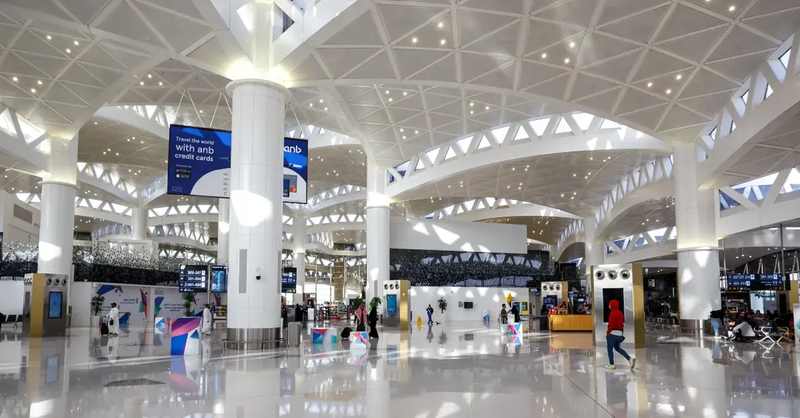
The Saudi Arabia airspace warning widened sharply on Friday as the European Union Aviation Safety Agency expanded its conflict-zone advisory for the kingdom and the aviation professionals' group OPSGROUP took the extraordinary step of telling its members to avoid Saudi Arabia entirely — the industry's strongest response yet to a week of Houthi missile strikes on Saudi airports that has left three people dead, dozens wounded, and airline schedules in tatters.
EASA's update to Conflict Zone Information Bulletin CZIB-2026-09 — first issued on September 30 — adds north-western Saudi Arabia to the areas where the regulator recommends airlines not operate. The agency said the Houthis' recent attacks had demonstrated both the ability and the intent to strike targets deeper inside Saudi territory, including the capital. The same day, OPSGROUP, a membership organisation of almost 10,000 aviation professionals that shares flight-risk information, sent members a “do not fly” memo warning of sustained missile attacks and the risk of “misjudgment” in defensive responses. “We now recommend avoiding operations in Saudi Arabia entirely, including the use of Saudi airports as enroute alternates,” the memo said, according to Reuters.
Neither move closes Saudi airspace, and the distinction matters. EASA issues recommendations, not orders, and Saudi Arabia has not shut its skies; OPSGROUP is an industry information-sharing body, not a regulator. But in commercial aviation, advisories carry a weight that approaches law: when the agency that certifies Europe's airlines and the network that briefs their pilots both say stay out, insurers raise war-risk premiums, crew unions balk, and schedulers quietly delete flights. The sky can empty itself without a single order being issued.
Why this matters
Regulators do not widen conflict-zone warnings casually. The escalation ladder is well established: a warning appears once a threat demonstrates capability; it widens once it demonstrates intent; and when an industry body tells ten thousand professionals to avoid an entire country, the market is pricing in a sustained campaign rather than a single bad night. Friday's update is EASA's second move on Saudi airspace in ten days — and each step makes the next unilateral airline decision easier to take.
The core danger is not that anyone would deliberately target an airliner. It is misidentification in a crowded, trigger-ready sky. Recurrent missile and drone attacks combined with active air defences create, in EASA's assessment, an elevated risk that a civilian aircraft is mistaken for a military target, struck by a weapon aimed at something else, intercepted, or hit by falling debris from an interception. That is the scenario behind the modern era's airspace disasters — the downing of MH17 over eastern Ukraine in 2014 and of Ukraine International Airlines Flight 752 over Tehran in 2020 — and it is the scenario Riyadh's air-defence batteries are now rehearsing night after night.
There is also a second-order effect the Houthis appear to understand perfectly. An advisory does not need to ground a single aircraft by force; it needs only to turn flying into a liability decision. Cancelled schedules, rerouted long-haul traffic, and climbing insurance costs do the rest. The warning becomes self-reinforcing: every airline that suspends service makes the next suspension easier to justify.
How we got here
The immediate backdrop is a missile and drone campaign that has intensified since September, unfolding against two larger conflicts: Yemen's reignited civil war, in which Saudi Arabia backs the country's United Nations-recognised government against the Houthis, and the wider United States–Iran military confrontation, whose spillover EASA itself has cited as a source of regional volatility. On September 30, EASA issued CZIB-2026-09 covering specified areas of the Jeddah Flight Information Region — the airspace block spanning nearly all of Saudi Arabia — at all altitudes, with no safe height band. The bulletin runs until November 16, 2026, subject to review. France issued its own notice the same day, and EASA maintains parallel high-risk bulletins for Jordan, Lebanon, Iran, Iraq, and Gulf territorial waters. Notably, the original bulletin made no mention of the late-September episode in which a flydubai airliner was diverted — a sign, critics said at the time, that the regulator was already trailing events.
This week's sharp escalation began on Thursday, October 8, when the Houthis struck King Khalid International Airport in Riyadh and the airport at Abha in the kingdom's south-west, claiming ballistic-missile strikes on both — the latest chapter in an airport-strike sequence covered earlier this week. The group issued what it called a final warning to global airlines operating in Saudi airspace, exempting only the skies above Mecca and Medina, and said the warning would stand until what it described as the aggression and blockade against Yemen ends. It also told people inside Saudi Arabia to keep clear of oil installations — a threat aimed squarely at the kingdom's economic core.
The human toll, as reported by Saudi Arabia's General Authority of Civil Aviation via the Wall Street Journal: three people killed — a Sudanese national in Riyadh and Moroccan and Algerian residents in Abha — and 36 wounded. The Saudi-led coalition said it intercepted two ballistic missiles headed for Riyadh and a third toward Khamis Mushait, and said its retaliatory strikes destroyed 82 military targets in Yemen, including 11 mountain-based ballistic-missile storage facilities in Saada province. Saudi officials warned the attacks “will not go unpunished.”
One claim from Thursday's attack remains genuinely disputed and should be treated as such. The Houthis say a ballistic missile struck a Saudia Airbus A320 parked at Riyadh airport with precision, destroying it; other accounts attribute the aircraft's destruction to shrapnel from a missile interception. What is not in dispute: no passengers were aboard, and no fatalities connected to the aircraft have been reported. Until an independent account emerges, the careful statement is that a Saudia jet was destroyed on the ground at Riyadh airport during the attack, and the precise cause is contested.
Who loses, who gains — and what the critics say
Airlines ground flights as the EASA Saudi airspace advisory bites
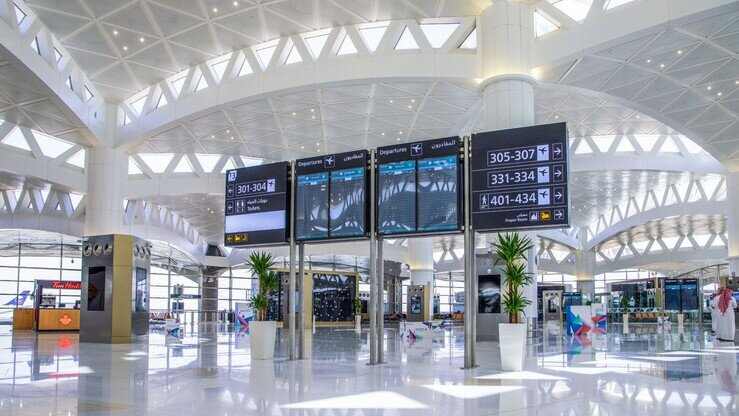
The operational impact is already measurable. Aviation analytics firm Cirium found that close to half of scheduled departures from Riyadh were scrapped by 1500 GMT on Thursday, with 31 further cancellations projected across Saudi airports on Friday. Lufthansa Group and Air India have suspended flights to Riyadh, according to multiple outlets — and suspensions tend to cascade, because once flag carriers move, smaller operators follow and insurers reprice everyone. Rerouting Europe-to-Asia traffic around an advisory zone means longer sectors, more fuel, and crew-duty complications; those costs land on ticket prices within weeks.
Saudi Arabia's aviation-hub ambitions take the hit
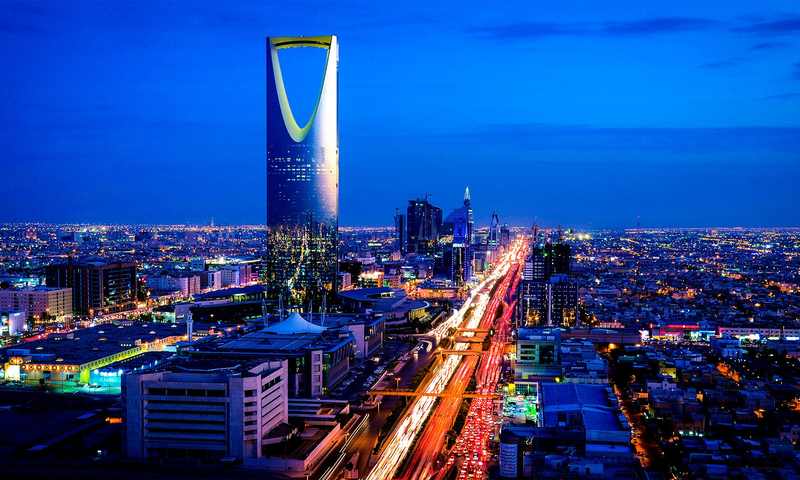
The timing could hardly be worse for Riyadh. Saudi Arabia has spent billions positioning the capital as a global aviation hub — a new national carrier in Riyadh Air, airport mega-expansions, and tourism targets that assume the world flies in without a second thought. A sustained airspace advisory undercuts that entire pitch: no hub strategy survives the perception that the hub sits under a missile threat. The Houthis know this. Aviation is leverage — every cancelled flight is a small economic sanction the group can impose without firing another missile. The crisis has already pulled regional partners deeper in, with Pakistani troops taking up a protective role in the kingdom.
The Houthis' warning to airlines — and the Mecca-Medina exemption
From the Houthi perspective, the week's events look like a success purchased cheaply. The group exempted the airspace above Mecca and Medina from its warning — a calibrated signal that it understands the religious red lines even its adversaries' supporters watch — while declaring the rest of Saudi airspace, in its words, a theatre of its military operations. The strategy does not require hitting an airliner; it requires making airlines believe one could be hit. Thursday's final warning was addressed to boardrooms, not air-defence crews.
Critics of the advisory regime make two opposing arguments, and both deserve airtime. Some aviation analysts argue that regulators and industry groups risk overreach — that country-scale advisories become self-fulfilling prophecies which punish economies without proportionate safety gains, and that the September 30 bulletin already stretched the evidence. Others argue EASA was late, not early: the flydubai diversion preceded the first bulletin, Thursday's airport strikes fell inside an existing advisory window, and Friday's widening merely ratified what dispatchers had already decided. Both camps agree on one thing: the gap between regulator and industry has now closed, with OPSGROUP moving further than EASA itself.
What the numbers actually say
What Cirium's cancellation figures imply
Close to half of Riyadh's scheduled departures cancelled by mid-afternoon Thursday, plus 31 projected Friday cancellations across Saudi airports — those are not weather numbers. For comparison, a major Gulf hub typically cancels low single-digit percentages of departures on a bad-weather day. A cancellation rate near half at a capital's main airport is the statistical signature of an airspace airlines no longer trust, and it arrived before Friday's advisories, not after: the market moved first, and the regulators followed.
Oil markets price the Middle East airspace risk
Brent crude rose about 2 percent to roughly $102 a barrel as the strikes and warnings landed — a modest move by the standards of Middle East shocks, but a directional one. The Houthis' instruction to keep clear of oil installations was designed to widen that move, and a separate maritime incident — the UK Maritime Trade Operations agency reported a tanker struck by projectiles north of Qatar — reminded traders that the threat spans sea as well as sky. Governments noticed too: the UK Foreign Office expanded its travel advice on October 8, telling Britons to avoid all but essential travel to Riyadh and to the Aseer, Najran, and Jizan provinces and Taif; Australia updated its Saudi travel advice on October 9; and the US Embassy issued a security alert.
What happens next
Three scenarios now compete, and the honest answer is that the next 72 hours will decide between them.
Scenario 1 — escalation
The coalition makes good on its “will not go unpunished” warning with deeper strikes into Houthi-held Yemen; the Houthis answer with more missiles toward Saudi airports or energy infrastructure; EASA extends its bulletin past November 16 or widens it again; more flag carriers suspend. In this world, the Mecca-Medina exemption becomes the key variable to watch — if it holds, the conflict retains a negotiated boundary; if it doesn't, the crisis enters genuinely uncharted territory.
Scenario 2 — containment
Air defences continue to intercept the bulk of incoming fire; the casualty count stays low; back-channel pressure — from governments with leverage over both sides — produces a quiet de-escalation; EASA's scheduled review narrows rather than widens the bulletin. Airlines, which hate abandoning slots and market share, trickle back first. Saudi authorities said airport operations returned to normal on Friday — a claim to treat as the official position rather than verified fact, but also a signal of the outcome Riyadh is working toward.
What to watch in the coming days
Four indicators will tell the story before the headlines do: the coalition's next retaliatory moves and their scale; EASA's review language — routine “monitoring” versus concrete widening; the schedule decisions of bellwether carriers beyond Lufthansa and Air India; and whether the Houthis' airline warning escalates from words to a demonstrated attempt against airborne traffic. Any one of those flipping would change the assessment.
The bottom line
Aviation regulators do not issue country-scale warnings lightly, and industry groups almost never go further than the regulator — yet that is exactly what happened on Friday. The sky over Saudi Arabia remains legally open and increasingly empty, and that emptiness is itself the Houthis' achievement: they have learned that in modern warfare, you don't need to close an airport to shut it down. You just need to make the world's airlines do the math — and right now, the math says stay away.
Sources and reporting notes
- Reuters, October 9, 2026 — EASA's widened advisory, the OPSGROUP memo and flight-cancellation data.
- The Wall Street Journal — the reported death toll, injuries and official Saudi account of the attacks.
- Associated Press, via JFeed — the Houthi warning to airlines and western-carrier cancellations.
- One Mile at a Time — reporting on the destroyed Saudia A320 and the dispute over how it was hit.
- airmedia24 — detail on CZIB-2026-09 and the regional airspace-risk picture.
Claims by the Houthis, Saudi officials, the Saudi-led coalition and other governments are attributed as such. Signal Post News has not independently verified contested battlefield claims, the cause of the Saudia aircraft's destruction or the precise effect of reported coalition strikes in Yemen.