Trump Iran attack midterms
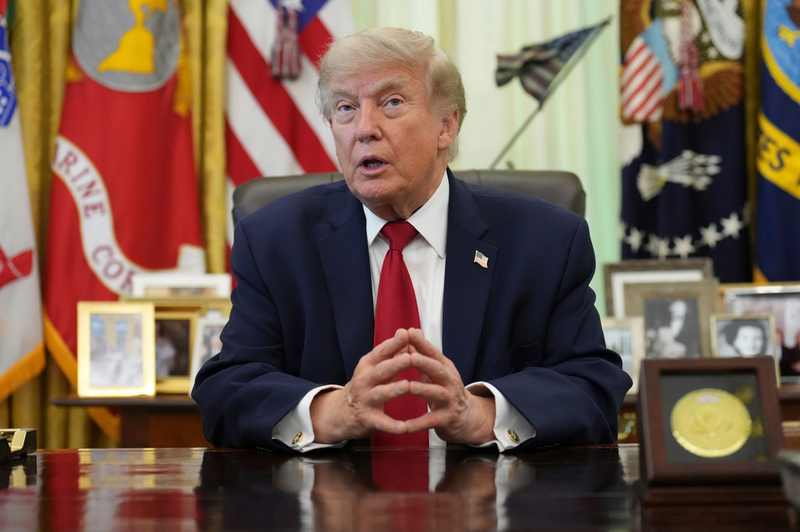
WASHINGTON — President Donald Trump said Thursday, October 8, that the United States would not launch another attack on Iran before the midterm elections November 3, describing U.S.-Iran contacts as “productive discussions” while keeping the American blockade of Iranian ports in place. The announcement pushed the immediate strike risk beyond Election Day and helped pull oil back from Thursday's sharp surge.
By early Friday, Brent crude was near $103 a barrel and West Texas Intermediate near $91. Reuters reported Brent at $103.53 and WTI at $90.97 in early trading; later, The Wall Street Journal put December Brent at $102.90 and WTI at $89.50. Those prices were below Thursday's intraday peaks but still carried a substantial war premium.
The declaration followed reports that the White House had requested limited Pentagon Iran strike plans usable before the vote. The New York Times separately reported preparations for three days of attacks on drone and missile arsenals and energy facilities. Trump closed the pre-election window in public; he did not rule out action after November 3.
Why this matters
The Trump Iran attack midterms pledge buys time, not peace
The distinction is crucial. A temporary no-strike period can lower the probability of an immediate shock without changing the structure of the conflict. U.S. forces remain positioned in the region, the naval blockade continues, sanctions are tightening and the reported target plans do not expire when voters leave the polls.
Markets understood that distinction. Oil fell after the statement, but it did not return to anything resembling its pre-war range. Brent around $103 was roughly half again as expensive as it had been immediately before the war began on February 28. A true peace dividend would require more than postponing a decision: shipping would need to normalize, insurance costs would need to fall and producers would need confidence that infrastructure would remain open.
The political importance is equally plain. Fuel costs reach voters through gasoline, diesel, freight and food. A strike before November 3 could have made a difficult cost-of-living argument harder for Republican candidates. A pause lets the administration claim restraint and diplomacy while maintaining pressure on Tehran. Critics will see the calendar as evidence that domestic politics, rather than only military necessity, is shaping the timing.
From a reported strike window to a public pause
Will Trump attack Iran? The answer now has a date attached
The latest Trump Iran news matters because it is unusually specific about timing. USA Today reported that the announcement came after The Atlantic said the White House had directed the Pentagon to develop limited options that could be used before the midterms. More substantial action after the election was also under consideration.
A three-day package aimed at drone and missile stocks and energy facilities would be limited in duration, not necessarily in consequence. Iran could answer against U.S. bases, allied infrastructure or shipping. Damage to energy sites could tighten the same market Washington wants to calm. Even a tactically contained strike could create an open-ended cycle if Tehran retaliates and the United States answers again.
The president's message therefore changes the sequence more than the strategic contest. Before the post, traders had to price a strike in the next three and a half weeks. After it, that specific danger was deferred. The market still has to price November 4, the blockade and whatever happens at sea in the meantime.
How the eight-month war reached this point
A US Iran war update centered on Hormuz
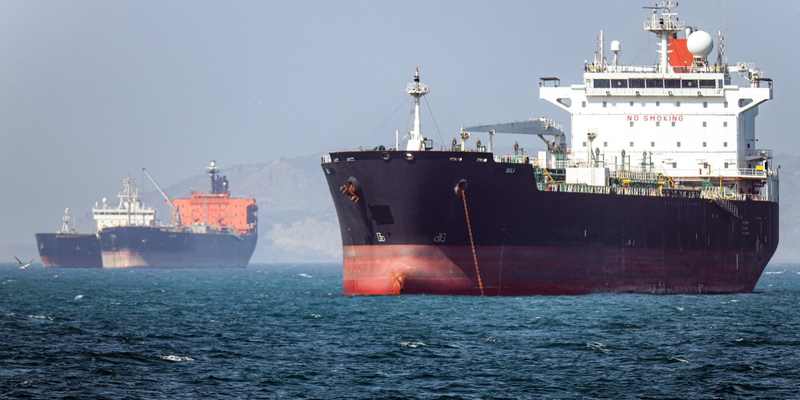
The war is now in its eighth month. Its economic center of gravity is the Strait of Hormuz, the narrow route between Iran and Oman through which volumes equal to about 20% of global oil and fuel moved before the conflict. The fighting has disrupted traffic, raised insurance costs and forced exporters, shipowners and governments to improvise around a route the world cannot quickly replace.
Washington's blockade is intended to deny Iran oil revenue and bargaining leverage. Tehran, meanwhile, has treated control and insecurity around the strait as leverage of its own. This creates an unstable symmetry: the United States can squeeze Iran's exports, while Iran can threaten a passage used by producers and consumers far beyond the two countries.
Iranian Foreign Minister Abbas Araghchi said Tehran was reviewing the U.S. response to an Iranian proposal that could reopen the strait within seven days, according to Reuters, citing Iranian media. That is the most concrete diplomatic timetable now visible, but it is not an agreement. The parties still differ over sanctions, the blockade, Iran's nuclear program and the sequencing of concessions.
President Masoud Pezeshkian has also told Russian President Vladimir Putin that Iran will not leave negotiations. That signal may help sustain contacts, but Tehran's willingness to remain at the table is not the same as accepting Washington's terms. The conflict has repeatedly produced optimistic statements without a durable settlement.
Strait of Hormuz oil claims remain contested
Trump's flow number is not the same as normal trade
In his Truth Social post, Trump said oil was moving through Hormuz in record volume and cited 22 million barrels in one night. Analysts dispute the implication that shipping has returned to pre-war normal. A single high-volume period can reflect queued vessels, timing, cargo mix or data revisions; it does not prove that daily transit is stable, insured and broadly accessible.
The more useful test is sustained passage over weeks: vessel counts, cargo volumes, delays, insurance premiums and whether Iranian-origin shipments are included. Trump also said the cited flow excluded barrels to or from Iran. If so, the number would demonstrate movement for other exporters while simultaneously underscoring the blockade's exclusion of Iran.
There is further uncertainty around reported attacks. Iran's Fars news agency has claimed tanker strikes involving mines, but that account remained unconfirmed by independent reporting at publication. In a market this sensitive, an unverified claim can move prices before investigators determine what happened. Responsible analysis has to separate the price effect of a report from proof of the event itself.
The oil move: fear added 5%, reassurance removed only part
Brent crude price action shows the market's skepticism
On Thursday, Brent rose as much as 5% to $105.23 and WTI also climbed about 5% to $92.70 before paring gains, according to the Journal. Brent later settled 4.1% higher at $104.28. After Trump's post, prices retreated on Friday, but they remained near $103 in early trading rather than collapsing.
That pattern carries a clear message. Traders quickly priced the chance of a near-term attack, then removed some of that premium when the president ruled one out before November 3. They did not remove the broader war premium because the physical and political risks remain. Oil prices falling for one session is not the same as a restored supply system.
The level matters more than the direction. Brent near $103 was still around 50% above the pre-war area. For importers, that means a 1% daily decline offers modest relief against a much larger cumulative increase. For producers, it preserves revenue. For central banks, it leaves inflation risk elevated even as the headline moves lower.
Sanctions tighten while diplomacy continues
Iran shadow fleet sanctions hit 17 vessels
On the same Thursday that Trump promised no pre-election strike, the Treasury sanctioned 17 vessels and associated networks accused of transporting Iranian crude, petroleum products and petrochemicals. The timing shows that Washington is not pausing its pressure campaign; it is changing the instrument from immediate military escalation to financial and maritime coercion.
The Iran shadow fleet sanctions can benefit the administration politically because they project toughness without the immediate casualty and price risks of an air campaign. They can also make negotiations harder. Tehran may see new penalties during talks as evidence that Washington wants concessions without offering reciprocal relief.
Ship sanctions work through finance, insurance, port access and counterparties. Their effect is rarely instantaneous. A listed vessel may change names, flags, ownership structures or routes. Buyers may demand discounts. Enforcement can raise costs without stopping every barrel. The number 17 is significant, but the real measure is how much cargo becomes harder to move and how quickly networks adapt.
Hurricane Isaias complicates the market signal
1.3 million barrels a day are offline in the Gulf of Mexico
Middle East risk is not the only force supporting prices. Hurricane Isaias caused producers to shut in about 1.3 million barrels a day of Gulf of Mexico output by Thursday—roughly 62.9% of current regional production, according to the U.S. Marine Minerals Administration figure cited by Reuters.
That outage matters because it prevents a clean reading of the Iran headline. If Gulf production were operating normally, Trump's statement might have produced a larger decline. Instead, traders were simultaneously processing lower near-term strike risk and a major weather-related supply loss. One bearish signal met one bullish disruption.
The hurricane is temporary in a way the Hormuz conflict is not, but the restart path still matters. Platforms and pipelines must be inspected, workers returned and damage assessed. A fast restoration would remove one support beneath prices. Delays would keep the market tight even if U.S.-Iran rhetoric stays calm.
Who benefits from the pause—and who does not
Oil importers, consumers and vulnerable candidates get breathing room
Large importers benefit first when crude retreats: refiners pay less, currencies face less pressure and governments spend less subsidizing fuel. Consumers may eventually see relief at the pump, though retail prices move with a lag and depend on refining, distribution and taxes as well as crude.
Voters get a lower immediate risk of a pre-election escalation. Republican candidates avoid, for now, having to defend a new attack while gasoline remains expensive. Democrats lose an imminent event around which to sharpen criticism, but they can still argue that tying the promise to Election Day politicizes national-security timing.
Financial markets benefit from reduced uncertainty, not certainty. Airlines, shipping companies and energy-intensive manufacturers gain when the risk premium falls. Oil producers and traders positioned for a larger spike lose some upside. Iran gains time without air attack but remains squeezed by the blockade and sanctions.
Critics on both sides see a vulnerable compromise
Supporters of military action may argue that announcing a deadline gives Iran a predictable period to disperse weapons, harden sites and test U.S. resolve. Diplomacy advocates may answer that a public pause creates space for the seven-day Hormuz proposal and reduces the danger of talks being overtaken by an attack.
Critics of the blockade say collective economic pressure deepens hardship without guaranteeing political change. Supporters say it is the strongest available leverage short of another bombing campaign. Both arguments contain a real trade-off: pressure can move a negotiation, but it can also convince the pressured side that talks offer no path to relief.
The neutral conclusion is not that one camp is right. It is that the policy is trying to do two conflicting things at once—reassure markets that escalation is not imminent while convincing Iran that the cost of refusing U.S. terms will keep rising.
US Iran talks 2026: what happens after November 3
Scenario one: a Hormuz deal becomes the first rung of de-escalation
Iran accepts a sequenced arrangement to reopen the strait, Washington offers defined sanctions or blockade relief, and both sides use the shipping deal as a bridge to wider talks. Oil would likely fall further if physical passage improves and insurers confirm lower risk. The hardest issues—nuclear limits, missiles and the war's end state—would remain.
Scenario two: the reported three-day strike plan returns
If negotiations fail, the pre-election promise expires after November 3. The reported plan targeting drone and missile arsenals and energy facilities could return to the president's desk. A strike might degrade capabilities, but it could also trigger retaliation across the Gulf and Red Sea, raise oil sharply and turn a three-day operation into a longer exchange.
Scenario three: blockade and sanctions become the indefinite strategy
Washington may decide that economic pressure is less risky than either a deal or renewed bombing. That would leave Iran's revenue constrained and shipping uncertain, but it would also preserve the conditions keeping oil expensive. A policy can be militarily quieter without being economically calm.
Scenario four: talks continue without a breakthrough
This may be the most plausible near-term path. Both sides keep intermediaries active, trade proposals and avoid the largest escalation while refusing the concessions needed for a settlement. Markets would swing on every post, tanker incident and diplomatic leak. The war would remain managed rather than ended.
The bottom line
Trump's October 8 statement accomplished one immediate objective: it pushed a feared U.S. attack beyond the midterm elections and took some heat out of oil. The fall from Thursday's roughly 5% surge shows that words from the White House still move billions of dollars in energy risk.
But the size of the pullback also shows the limit of reassurance. Brent stayed near $103 because the blockade continues, Hormuz remains contested, 17 vessels face new sanctions, reported strike plans remain available after November 3 and a hurricane has removed 1.3 million barrels a day from the Gulf of Mexico.
The key question is no longer simply will Trump attack Iran. It is whether the pause becomes a runway to a verifiable shipping and war-ending agreement, or merely a politically convenient holding pattern before the same military choice returns. Oil has priced a reprieve. It has not priced peace.
Sources and reporting notes
This analysis distinguishes public statements and attributed media reports from confirmed military action. No new U.S. attack was under way at publication, and the reported strike options have not been publicly released by the Pentagon.
- Donald Trump on Truth Social, October 8, 2026 — the president's no-strike-before-November-3 statement, talks claim, blockade position and Hormuz flow claim.
- Reuters, October 8, 2026 — Trump's announcement and the status of U.S.-Iran contacts.
- Reuters, October 9, 2026 — Brent and WTI prices, the 17-vessel sanctions, Hormuz's pre-war share and Hurricane Isaias shut-ins.
- The Wall Street Journal, October 9, 2026 — Thursday's intraday oil spike, Friday's pullback and continuing shipping risk.
- USA Today, October 8, 2026 — the reported pre-midterm Pentagon options and disputed Hormuz flow claim.