Houthi missile Riyadh airport
Houthi missile Riyadh airportHouthi last warning airlinesKing Khalid airport attackSaudi airspace warningYahya Saree statementHouthi ballistic missile claimRiyadh airport flights disruptedSaudi coalition retaliation YemenHouthi attacks Saudi airports October 2026Yemen war aviation riskAbha airport strike
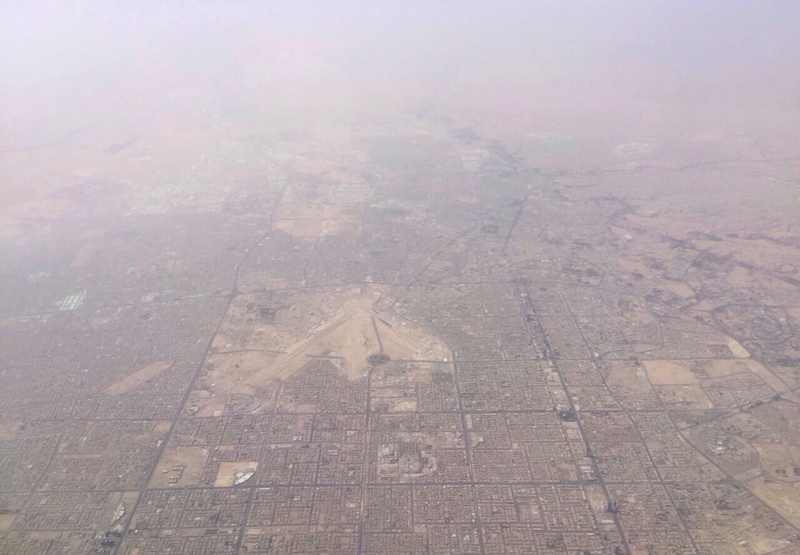
SANAA/RIYADH — Yemen's Houthi movement claimed Thursday that it fired a ballistic missile at King Khalid International Airport in Riyadh and issued what it called a "last warning" to international airlines over the use of Saudi airspace. Houthi military spokesman Yahya Saree said in a recorded statement posted on X that the missile "accurately struck its target and disrupted airport operations." As of publication, Saudi authorities had not confirmed the Thursday claim — no statement from the General Authority of Civil Aviation or the Saudi-led coalition addressed it directly.
Flight-tracking data pointed to disruption around the claimed strike: departures were briefly halted, and several flights were delayed or placed into holding patterns. But disruption alone does not confirm a strike — airports halt departures for threats that never materialize, and neither satellite imagery nor independent verification of damage was publicly available Thursday.
What the Houthis claim vs. what is confirmed
The Thursday claim: a missile and a "last warning"
According to the Houthi statement, the ballistic missile hit its intended target inside the airport and disrupted operations — a claim of precision that, if true, would mark a serious capability demonstration. The "last warning" to airlines escalates an earlier Houthi warning to "all international airlines using Saudi airspace" to halt flights, except over Mecca and Medina. The message is aimed squarely at carriers: the Houthis want the threat of closure to do work that missiles alone cannot.
What Saudi authorities have confirmed
Saudi authorities have said nothing publicly about the Thursday claim. What they HAVE confirmed: on Tuesday, October 6, an attack on Abha International Airport killed a Moroccan woman and an Algerian woman and wounded 28; on Wednesday, October 7, an attack on King Khalid International Airport killed a Sudanese national and wounded eight. Those confirmed strikes are covered in our earlier report: Saudi Arabia Confirms Houthi Airport Strikes Killed 3, Wounded 36.
The coalition's response: 80+ sites hit, launcher destroyed
The Saudi-led coalition said Wednesday it had destroyed the ballistic missile launcher used in the Riyadh attack, struck more than 80 Houthi military sites across several Yemeni governorates, and warned preparations were underway for "another imminent attack" by the Houthis. Coalition spokesman Maj. Gen. Turki al-Maliki framed the retaliation as ongoing. Related coverage: Sanaa airstrikes and the Houthi missile wave on Asir and Najran.
Why this matters
The claim itself is the weapon, regardless of whether Thursday's missile struck anything. Civilian aviation runs on confidence: airlines schedule, insurers price, and passengers book on the assumption that the corridor is safe. A "last warning" from a group that has already demonstrated it can hit Riyadh's airport forces every carrier's security team to recalculate — and recalculation costs money, reroutes flights, and raises ticket prices long before any confirmation arrives. The Houthis understand this asymmetry: a recorded statement costs nothing, while the response it triggers is expensive.
There is a second reason the claim matters. The gap between Houthi claims and Saudi confirmation has become a pattern in this campaign — "the Houthis have claimed a series of attacks on Saudi Arabia, many of which have gone unacknowledged or been denied by Riyadh," as the Wall Street Journal reported Thursday. Each unconfirmed claim that later turns out to be real erodes Riyadh's information position; each claim that doesn't materialize erodes the Houthis'. Thursday's claim is a credibility bet by both sides.
A week of airport attacks: how we got here
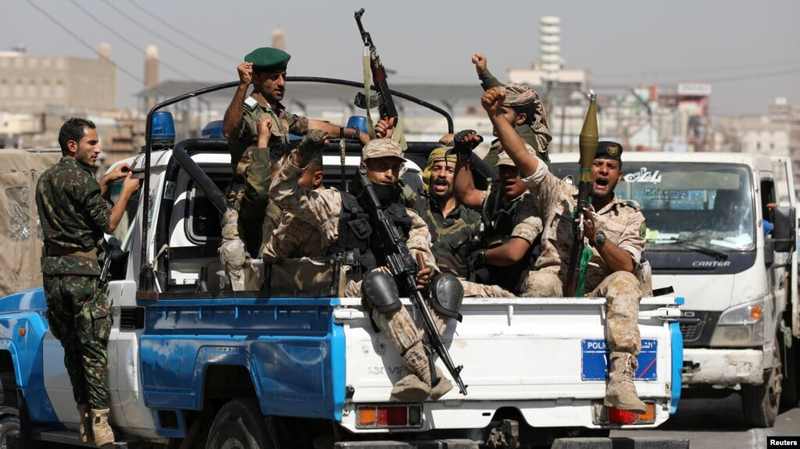
The Thursday claim did not come from nowhere. Tuesday's Abha strike and Wednesday's Riyadh strike — both now Saudi-confirmed with three dead and 36 wounded — established that the Houthis can reach civilian airports in the south and the capital. The group has also targeted Aden International Airport, where a missile landed near the runway shortly before a Yemenia Airways flight from Cairo was due to land, forcing a diversion to Jeddah. Saudi-backed Yemeni government forces, meanwhile, are pressing Operation "Dawn of Yemen," a counteroffensive aimed at rolling back Houthi gains after the group seized effective control of the Bab al-Mandeb Strait last month — the chokepoint for a significant share of global oil trade.
The airline warning: why aviation is the pressure point
Saudi airspace is a major international corridor connecting Asia, Europe, Africa and the Middle East. When a militant group with proven reach tells airlines to leave, the economics bite fast: rerouting around Saudi airspace adds flight time and fuel burn; insurers raise war-risk premiums; some carriers suspend service preemptively. The Houthis already forced a Yemenia flight from Cairo to divert to Jeddah this week — a concrete demonstration that the warning is not theoretical.
Riyadh airport flights disrupted — even by a claim
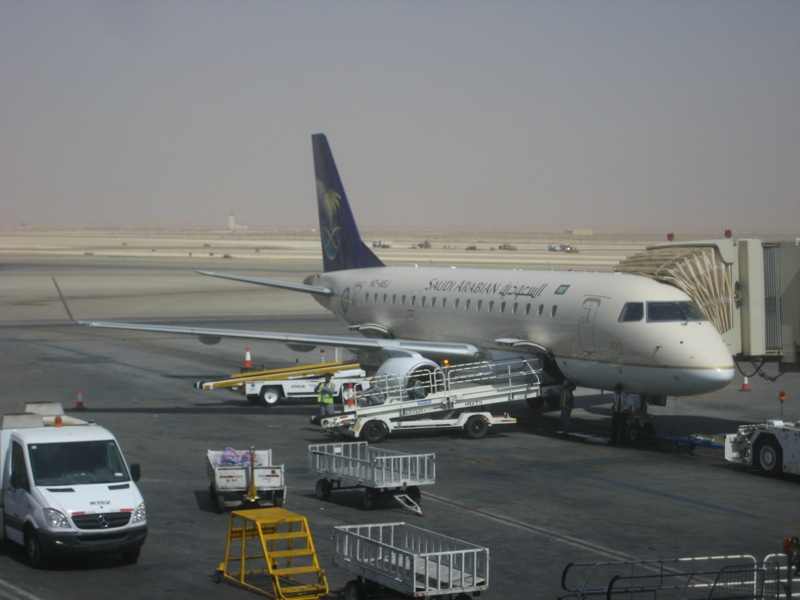
Publicly available tracking data showed departures briefly halted and flights delayed or rerouted around the time of the claimed strike. Whether caused by an actual impact, an interception, or precaution, the operational effect is the same for passengers: missed connections and stranded travelers. Notably, Saudi officials warned this week that filming and sharing images of attacks could bring legal charges — a sign of how much the information environment matters to Riyadh right now.
Who benefits, who loses — and what critics say
Houthi leverage and the credibility gamble
The Houthis benefit if airlines take the warning seriously and if the coalition is forced to divert resources to airport defense and launcher-hunting across northern Yemen. But the group also risks its credibility: if the Thursday claim proves false or exaggerated, future warnings carry less weight. The group's recent seizure of the Bab al-Mandeb coast already gave it enormous leverage over energy shipping; the airport campaign extends that leverage into aviation.
Airlines, foreign workers and oil markets lose
Airlines face higher costs and harder scheduling calls. Foreign workers — a large share of the Gulf's airport workforce and passengers — bear the physical risk, as the multinational casualty lists from Tuesday and Wednesday already showed. Oil markets watch Bab al-Mandeb and now Saudi airspace as linked risk factors in a conflict unfolding during the U.S. war with Iran, which the Wall Street Journal notes has deepened the Saudi-Houthi confrontation.
Saudi Arabia, the coalition and Pakistan
Riyadh gains international sympathy and a stronger case for retaliation with each confirmed strike — the coalition's 80+ site strikes and the destroyed launcher show it is responding. CNN reported Thursday that Pakistan confirmed it has troops in Saudi Arabia, a reminder that the kingdom's defense is drawing in regional partners. Critics of the Houthi campaign argue that targeting civilian airports crosses a line regardless of military objectives; critics of the coalition response point to the long civilian toll of airstrikes in Yemen. Both criticisms are on the record and neither side's claims should be taken at face value.
What happens next: three scenarios
1. Confirmation and escalation. If Riyadh confirms Thursday's strike — or evidence of damage emerges — expect expanded coalition strikes, tighter air defenses around Riyadh, and possible airline suspensions. The "last warning" then becomes a standing threat.
2. Denial and a credibility fight. If Saudi authorities deny or ignore the claim, the information war intensifies: the Houthis will release "evidence," Riyadh will dispute it, and airlines will have to decide whom to believe with their schedules.
3. A pause for the counteroffensive. Operation "Dawn of Yemen" is the coalition's bid to change the facts on the ground. If Saudi-backed forces retake Houthi positions near the Red Sea coast, the missile campaign's launch geography shrinks — but Houthi reach into the Saudi interior has already been demonstrated twice this week.
What is certain: civilian airports are now an active front in the Yemen war, and every flight through Saudi airspace carries a risk calculation that did not exist a week ago.
Sources: claims and statements attributed as reported; casualty and confirmation figures from Saudi authorities via the outlets below.
- Wall Street Journal — "Houthis Escalate Attacks on Saudi Airports, Killing 3 and Wounding Dozens" (Oct 8, 2026)
- CNN — "Pakistan confirms it has troops in Saudi as conflict with Yemen's Houthi rebels escalates" (Oct 7, 2026)
- Gulf Business — "Three killed, 36 injured in Saudi airport attacks" (Oct 8, 2026)
- The Traveler — "Houthis strike Riyadh airport, issue 'last warning' to airlines" (Oct 8, 2026)