Houthi strike Riyadh airport
RIYADH — Saudi Arabia confirmed on Friday that Houthi missile strikes on Riyadh's King Khalid International Airport the day before killed three Saudi nationals — the first official death toll from an attack that damaged a Saudia Airlines plane, sent smoke over Terminal 4, and pushed airlines to cancel flights to the Saudi capital. The announcement came alongside a fresh round of Saudi retaliatory airstrikes on Houthi targets in the Yemeni capital Sanaa overnight, and a Saudi-led coalition warning that it had destroyed three Houthi missile launch platforms and would “respond firmly” to attacks on civilians.
What Riyadh confirmed on Friday
The confirmation came from Saudi Arabia's General Authority of Civil Aviation, which said on X that two attacks struck King Khalid International Airport on Thursday, killing three Saudi nationals and wounding several people of various nationalities, with some property damage. Saudia Airlines said one of those killed was one of its employees. Reuters, reporting the statement on Friday morning, described the Houthis as having “stepped up missile strikes on the kingdom and tried to shut down its airspace in an escalating war triggered by the US-Iran conflict.” The aviation authority added that air traffic at the airport had returned to normal on Friday, and flight-tracking data showed a gradual resumption of flights, including some Middle Eastern carriers.
How the Riyadh airport attack unfolded
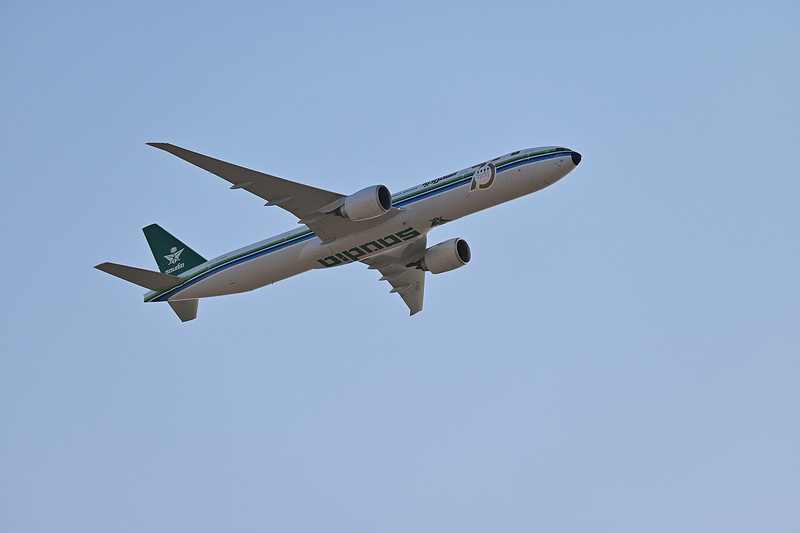
According to CNN, images posted on X and verified by the network showed smoke rising over Terminal 4 at King Khalid International Airport as well as what appeared to be a damaged Saudi aircraft. The Associated Press cited a witness as saying several explosions had been heard in Riyadh, including at the airport. The Houthis said Thursday they had carried out a new wave of attacks targeting two civilian airports — Riyadh and Najran Airport near the southern Saudi-Yemen border — and the Royal Saudi Air Force's King Khalid Air Base, claiming the attacks involved cruise and ballistic missiles and had caused damage and disrupted air traffic.
Saudi authorities said on Thursday that air defenses had intercepted and destroyed two ballistic missiles fired toward Riyadh, and that falling debris from the interceptions damaged a kindergarten and a medical clinic. It was the third consecutive day of Houthi attacks on the kingdom's airports and military facilities, and the second time this week that strikes on Saudi airports have killed people — Reuters reported the Houthis had already killed three people with earlier strikes this week.
The retaliation: Sanaa airstrikes overnight
Within hours of the airport confirmation, Saudi airstrikes hit Houthi targets in the Yemeni capital Sanaa overnight, Houthi officials and affiliated media said, part of what Reuters described as “an intensifying air war against the Iran-allied group.” A Saudi-led coalition backing Yemen's government forces said it had destroyed three missile launch platforms used by the Houthis and warned it would respond firmly to attacks on civilians. The overnight strikes continued a pattern that has defined this phase of the war: Houthi missile and drone attacks on Saudi territory met by Saudi air operations against Houthi positions in Yemen — a tit-for-tat cycle in which each round raises the stakes for the next.
Why the King Khalid International Airport attack matters
This is the first confirmed lethal strike on Riyadh's main international airport itself — not a near-miss intercepted over the capital, not debris damage, but a direct hit that killed three people and damaged an airliner on the ground. That is a threshold crossing. Airports are symbols as much as infrastructure: they are where a country's connection to the world is physically located, and the Houthis' stated aim is to shut down Saudi airspace.
An attack that kills, wounds, damages an aircraft, and forces international airlines to suspend flights is the closest the group has come to achieving that aim. The timing sharpens the point: Reuters noted the strikes came days before Riyadh is due to host a major meeting of global oil chiefs — the kind of gathering that tests whether the kingdom can guarantee security for the business of the world, not just its own citizens. The US Mission's warning to American citizens that the conflict “has the potential to escalate” puts the State Department on record that Washington sees the trajectory, not just the incident.
How the Saudi Arabia–Houthi escalation reached this point
The Houthi campaign against Saudi Arabia did not begin this week, but its current intensity has a specific trigger: Reuters describes the escalation as part of a war “triggered by the US-Iran conflict.” Since that conflict began, the Houthis — the Iran-allied group that controls much of northern Yemen, including Sanaa — have moved on multiple fronts at once. In Yemen itself, they have encircled government forces in Taiz, the country's third-largest city, while defending positions on the Red Sea coast against a Saudi-backed offensive. At sea, their attacks have threatened international shipping.
Against Saudi Arabia, they have opened an air campaign targeting airports: strikes earlier this week killed three people at Saudi airports, Thursday's attack on Riyadh's main airport killed three more, and the group has issued repeated warnings to global airlines — including what it called a “last warning” before Thursday's barrage. Riyadh's response has been to hit back from the air in Sanaa and to press its coalition's campaign against Houthi launch capabilities. Each side is now trying to impose costs the other cannot ignore.
Who wins, who loses
For the Houthis, the airport campaign is working as designed. Each successful strike demonstrates reach, imposes economic costs — cancelled flights, damaged aircraft, security spending — and forces Riyadh to defend a target set far larger than any air defense system was built for. The group has also shown it can sustain the tempo: three consecutive days of attacks, on multiple airports and an air base, using what it claims are both cruise and ballistic missiles.
For Saudi Arabia, the cost is defensive and reputational at once. Air defenses intercepted missiles aimed at Riyadh on Thursday, but interception is not prevention — debris still fell on a kindergarten and a clinic, and one attack got through to the airport itself. The kingdom must now defend its airports, its oil infrastructure, its shipping lanes, and its credibility with airlines and investors simultaneously, days before it hosts the world's oil chiefs.
For the airlines, the calculation is commercial and binary: Lufthansa Group, Air India, and others suspended flights after the attacks, and the speed of resumption will depend on whether insurers and risk teams believe the airport is safe — a judgment the Friday death toll makes harder. For civilians on both sides, the ledger is the bleakest: three dead at a Saudi airport Thursday, three dead earlier in the week, and overnight strikes on Sanaa — a city of millions — with casualties the reporting has not yet established. And for the oil market, the risk premium is the story: every missile that reaches Riyadh's airport is a reminder of how close the region's energy infrastructure sits to the region's wars.
What the numbers actually say
Six people killed in Houthi strikes on Saudi airports in a single week — three earlier in the week, three on Thursday — is a step-change. Earlier Houthi attacks on Saudi territory were mostly intercepted or caused property damage; the group had not demonstrated the ability to kill repeatedly at Saudi airports. Two attacks on King Khalid airport in one day suggests either saturation tactics or a deliberate second wave aimed at the response itself.
Three launch platforms destroyed by the coalition, if accurate, is a modest degradation of Houthi capability — the group has shown it can replace or relocate launchers quickly, and its missile inventory is supplied through channels the coalition has never fully closed. The “several” injured of various nationalities matters for the diplomatic dimension: foreign nationals hurt at a major international airport internationalize the incident in a way domestic casualties do not. And the kindergarten and clinic damaged by falling debris are a reminder that even successful interceptions carry costs — air defense is a shield that drops rubble.
What happens next
Three scenarios now compete. In the first, the airport attack becomes the new normal: the Houthis keep up the tempo, airlines keep suspending and resuming flights, and the war settles into a costly equilibrium neither side can win from the air.
In the second, Riyadh escalates — expanding its air campaign beyond Sanaa, pressing the Taiz and Red Sea fronts harder, and trying to degrade the Houthi missile force faster than it can regenerate, with the risk that escalation produces exactly the wider war the US warning hints at.
In the third, the oil chiefs' meeting in Riyadh becomes a forcing function: the kingdom has a reputational deadline to show the airport is safe, which creates an incentive to end the exchange — through deterrence, through back-channel de-escalation, or through the kind of US involvement that the “triggered by the US-Iran conflict” framing makes plausible.
What is certain is that Thursday's attack changed the facts on the ground: a major international airport in a G20 capital was hit, three people are dead, and the group responsible says it is not finished. The next move belongs to Riyadh — and the Houthis are already advertising that they are ready for it.
Sources and reporting notes
- Reuters, October 9, 2026 — Friday's GACA confirmation of three killed at King Khalid airport, the Saudia employee among the dead, the overnight Sanaa strikes, the coalition's three destroyed launch platforms, the earlier-week airport strikes that also killed three, and the US-Iran-conflict trigger framing.
- CNN, October 8, 2026 — verified images of smoke over Terminal 4 and the damaged aircraft, Thursday's interception of two ballistic missiles toward Riyadh with debris damaging a kindergarten and clinic, the Houthi claim of attacks on Riyadh, Najran and King Khalid Air Base, and the US Mission warning to American citizens.
Casualty figures and official statements in this article are attributed to Saudi Arabia's General Authority of Civil Aviation, Saudia Airlines, and the Saudi-led coalition as reported by Reuters and CNN, and to the Houthis as reported by the same outlets. Claims by either side about the other have not been independently verified by Signal Post News. The name of the deceased Saudia employee has been reported only by outlets outside our verification tier and is withheld here.