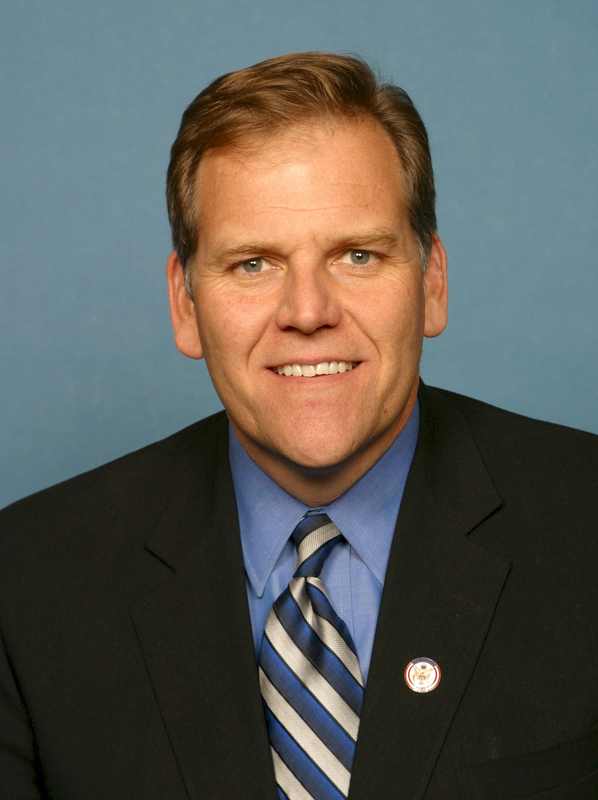
Trump Declares Rogers 'Obliterated' El-Sayed After Combative Michigan Senate Debate
Michigan Senate debate Rogers El-Sayed: The first head-to-head debate in Michigan’s open U.S. Senate race turned combative Thursday night, as Republican Mike Rogers and Democrat Abdul El-Sayed traded personal attacks, talked over each other, and even kept arguing through a commercial break at the WOOD-TV studio in Grand Rapids. Hours later, President Donald Trump rendered his own verdict on Truth Social: Rogers, he wrote, “completely obliterated” El-Sayed in the debate — “if this was a fight they would have stopped it.” The problem for Rogers: the polls still show a race nobody is winning, with a recent Fox News survey putting El-Sayed at 50 percent and Rogers at 49.
What happened in Grand Rapids
The hour-long debate, which aired at 7 p.m. ET and was simulcast nationally on NewsNation, was the first of two planned showdowns — the second is set for October 21. It was moderated by WOOD-TV political reporter Rick Albin, with anchor Amber Krycka fielding viewer questions. Within minutes it became clear this would not be a policy seminar.
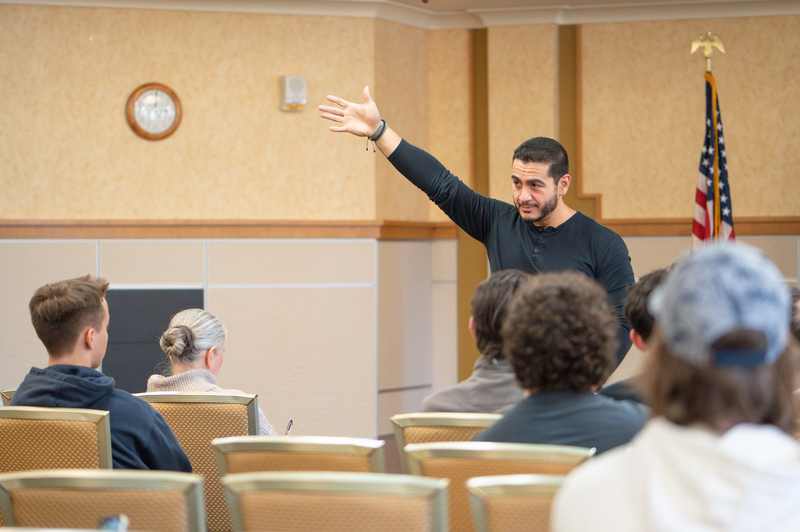
El-Sayed opened by branding Rogers a “sock puppet” for President Trump. Rogers returned fire by calling El-Sayed a “conman” and repeatedly dismissing him as “glitchy,” comparing his rival to a malfunctioning AI chatbot. The two talked past each other so persistently that the argument spilled into a commercial break. “I’d like to be a part of the debate, too,” Albin said at one point. “In 30 years of doing debates, I’ve never seen it continue during the commercial. But it did.”
Underneath the noise, the candidates did stake out real differences — on the war in Iran, immigration enforcement, tariffs, and health care. But the night’s defining moments were personal, not programmatic, and that is precisely the terrain Trump seized on after midnight.
Trump’s midnight verdict
Shortly after midnight Eastern, Trump posted his review of the debate to Truth Social, praising Rogers as “the great American Patriot” and the right man for Michigan. He repeated the misspelled name he has used for the Democratic nominee — calling him “Mohammad” and “Mohammed” instead of Abdul — and accused El-Sayed of extremism and dishonesty without offering evidence. He closed by invoking his own Michigan record: “I won Michigan BIG, and know that Mike Rogers, a total winner, is the man for you!!!”
The post was not Trump’s first intervention in the race. Days earlier, on the eve of the debate, he attacked El-Sayed on Truth Social in strikingly similar terms — an episode we covered in full. And on Thursday, Reuters reported that Trump had labeled El-Sayed a “radical extremist” just hours before a broader burst of anti-Somali and anti-Muslim rhetoric aimed at Minnesota. The midnight post fits a pattern: Trump is not just endorsing Rogers, he is making the Michigan Senate race a personal crusade.
Whether that helps Rogers is a separate question — and one the Republican’s own record complicates. Rogers has recently broken with the administration on several issues, and El-Sayed’s opening “sock puppet” line was designed to make Trump’s embrace a liability rather than an asset.
Why this Michigan Senate debate matters more than most
Strip away the shouting and this is the race the entire Senate map runs through. The seat is open because Democratic Senator Gary Peters is retiring. Both parties treat it as pivotal to control of the chamber — and control of the Senate decides everything from judicial confirmations to the fate of the president’s agenda in his final two years.
The combatants are mirror images of their parties’ 2026 dilemmas. Rogers is a former congressman and ex-FBI agent who ran unchallenged in the August 4 Republican primary — and who lost Michigan’s other Senate seat to Democrat Elissa Slotkin by fewer than 20,000 votes just two years ago. He is running again with the full weight of Trump’s endorsement and the lingering question of whether the MAGA base trusts him.
El-Sayed is a progressive and former public health official who defeated establishment-backed Representative Haley Stevens in the Democratic primary by less than a percentage point. He is betting that an anti-war, pro-working-family message can hold a diversifying Michigan coalition — and that Trump’s personal attacks will backfire with the suburban voters both campaigns need.
That is why the debate mattered: with 26 days until Election Day on November 3, this was the first unmediated look most Michiganders have had at the two men side by side. In a 50–49 race, a single bad night can move the needle.
The night’s sharpest exchanges
The credentials fight. Rogers’ most aggressive line of attack targeted El-Sayed’s biography itself. Though El-Sayed holds a medical degree from Columbia University’s College of Physicians and Surgeons and attended the University of Michigan Medical School, he never earned a medical license in Michigan or New York, according to Politico — his only hands-on clinical experience was a four-week hospital internship in Manhattan. Rogers pounced: El-Sayed was “not really a doctor,” he said, and anyone who walked into his office expecting treatment would send him to jail. “You’re going to find out that this guy is not what he says he is,” Rogers said. “He is actually selling the best con I think I’ve ever seen.” El-Sayed, for his part, introduced himself on stage as “a doctor and a dad” and has long presented his medical training as the foundation of his health-policy credibility.
The Iran war and gas prices. El-Sayed accused Rogers of being a “cheerleader for war” and blamed the conflict for the pain at the pump: “I don’t know about you, but when I go to the gas tank, I don’t feel like I’m winning.” Rogers defended the military campaign, arguing it has significantly weakened Iran’s capabilities. This exchange matters because the war is the single biggest drag on Republican candidates nationally — and Michigan, with its large Arab-American and Muslim populations, is where the war’s politics are most volatile.
Immigration and ICE. In one of the night’s more surprising moments, Rogers — the former FBI agent — said federal immigration enforcement actions in Minneapolis were “probably not appropriate,” referencing the deaths of two U.S. citizens. El-Sayed went further, accusing ICE of “terrorizing our streets” under what he called a “rogue administration.” Both men, notably, put distance between themselves and the administration’s enforcement tactics — a sign of where the politics of immigration now sit, even in a red-leaning debate.
Tariffs and trade. El-Sayed accused Rogers of flip-flopping on trade policy with Canada as his poll numbers sagged — a pointed jab at a state whose auto industry lives and dies on cross-border supply chains. Rogers’ shifts on tariffs have been a Democratic attack line for months, and El-Sayed clearly intends to keep it on the front burner.
Medicare for All. Rogers attacked El-Sayed’s support for a single-payer system as a massive tax increase; El-Sayed countered that it would make health care affordable for working families. On substance, this was the night’s most conventional exchange — and the one that best previews the closing argument both campaigns will make to undecided voters.
Who actually won? Don’t ask the candidates
Here is where the spin separates from the signal. Trump says Rogers “obliterated” El-Sayed. El-Sayed’s allies will surely say their man held his ground and landed the night’s most memorable blows. Both claims are campaign rhetoric — and the honest answer is that in a debate this personal, “winning” is mostly about which clips travel.
On that score, each side got something. Rogers’ “con man” attack on El-Sayed’s medical credentials was the night’s most quotable moment, and it will fuel weeks of ads questioning El-Sayed’s biography. El-Sayed’s “sock puppet” opener and his gas-pump framing of the Iran war gave his campaign two clean, repeatable lines aimed squarely at voters who dislike both Trump and high prices. The commercial-break brawl, meanwhile, guarantees the debate lives on as content rather than memory.
The deeper truth is in the numbers. A Fox News survey had the race at 50–49 — inside the margin of error, a statistical tie. Rogers lost this state’s other Senate seat by under 20,000 votes two years ago; El-Sayed won his primary by under a point. Nothing about Thursday night suggests either man has broken the deadlock. Trump’s “obliterated” is a wish; 50–49 is a fact.
What the numbers actually say
50–49. The Fox News survey margin: El-Sayed 50 percent, Rogers 49 percent — a dead heat within the margin of error.
26 days. Until Election Day on Tuesday, November 3 — the window in which this race gets decided.
Under 20,000. The votes by which Rogers lost Michigan’s 2024 Senate race to Elissa Slotkin — a reminder of how thin the margins are here.
Under 1 point. El-Sayed’s margin over Haley Stevens in this year’s Democratic primary — he is no stranger to knife-edge finishes either.
October 21. The date of the second and final debate — the last scheduled chance for either candidate to change the race’s trajectory.
12:02 a.m. When Trump posted his verdict — a reminder that in this race, the president is not a spectator but a participant, posting in real time.
What happens next
Watch the second debate. October 21 is the final scheduled face-off, and both campaigns now know exactly which attacks landed. Expect Rogers to press the credentials issue harder and El-Sayed to lean further into the war-and-prices frame.
Watch the ad war. The night’s sharpest moments — “con man,” “sock puppet,” the gas-pump line — were built for 30-second spots. In a 50–49 race, the campaign that turns its debate clips into the most effective ads wins the closing stretch.
Watch Trump. The president has now intervened twice in a week, and his endorsement is a double-edged sword: it energizes the Republican base, but it hands El-Sayed the “sock puppet” frame on a platter. Every additional Trump post is a gamble Rogers didn’t choose and can’t control.
Watch the polls. If the race stays at 50–49 through the final debate, Michigan becomes a pure turnout election — and the Senate majority may come down to which party’s voters show up on November 3. In that scenario, neither debate performance nor midnight post will matter as much as the ground game. The shouting in Grand Rapids was theater; the counting in November is the verdict.
Sources
- Newsmax — “Trump: Rogers ‘Obliterated’ El-Sayed in Mich. Debate,” October 9, 2026
- Associated Press — “Rogers and El-Sayed trade attacks in combative first Michigan Senate debate,” October 8, 2026
- New York Post — “Mike Rogers hammers Abdul El-Sayed as fake ‘doctor’ who’d be jailed for treating patients during feisty Michigan debate,” October 8, 2026
- Reuters — “Trump online: A burst of anti-Somali and anti-Muslim rhetoric,” October 9, 2026
- Lansing State Journal — “Senate candidates El-Sayed, Rogers to debate. How to watch,” October 8, 2026