Delhi CJP protest October 10
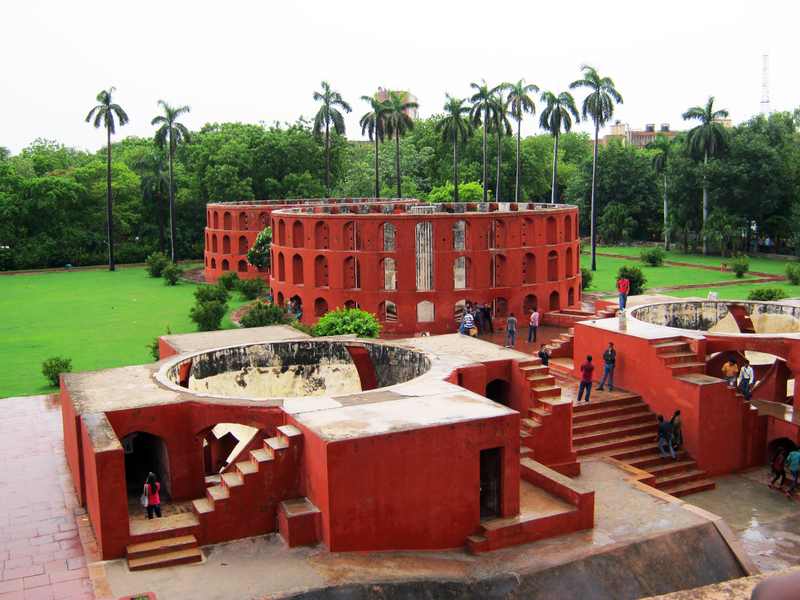
Delhi is moving into a security lockdown ahead of the Delhi CJP protest October 10, with entry and exit gates at 57 Metro stations scheduled to close at 9 p.m. Friday, mail and express trains cancelled during a ten-hour Saturday window, liquor sales suspended and unauthorized gatherings declared illegal. The scale is remarkable: roughly 26,000 central-force personnel, including 11,000 additional CAPF personnel, are being deployed alongside about 20,000 Delhi Police.
The restrictions are meant to stop supporters of the Cockroach Janata Party, or CJP, from reaching Jantar Mantar for a protest against Chief Election Commissioner Gyanesh Kumar. Police say they are responding to a public-safety risk. Organizers say the state is blocking peaceful dissent. The Supreme Court placed the cost to ordinary residents into the argument on Friday with a pointed observation about the mass station closure: “Not everyone has a car.”
What Delhi will look like tonight and tomorrow
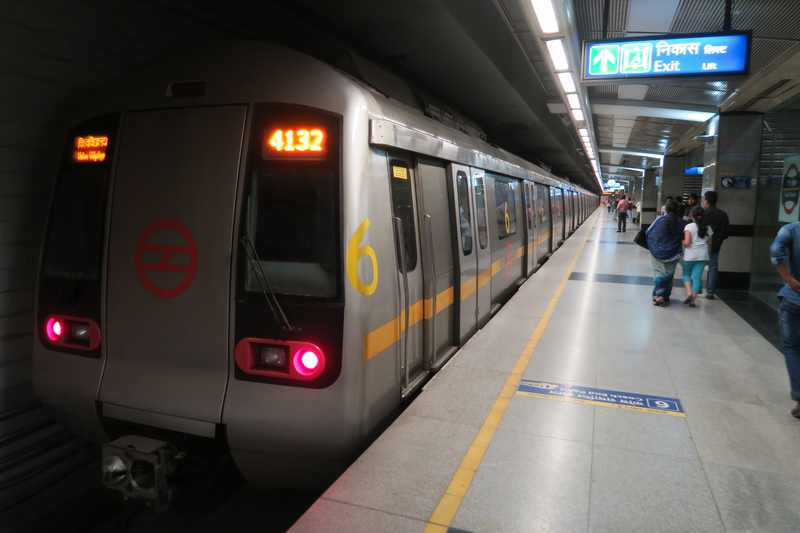
57 metro stations closed in Delhi from 9 p.m.
The immediate disruption begins Friday night. An October 8 letter from the Delhi Police Joint Commissioner of Police for the Transport Range asked the Delhi Metro Rail Corporation to close entry and exit gates at 57 stations from 9 p.m., citing the “likelihood of unruly mob movement towards sensitive locations.” ANI published the letter. Train frequency may also be reduced.
The named stations cut across the capital’s busiest interchange and institutional zones: Janpath, Patel Chowk, Central Secretariat, Rajiv Chowk, Mandi House, Barakhamba Road, Supreme Court and Indraprastha are among them. Kashmere Gate, Chandni Chowk, INA, Hauz Khas, Azadpur, Jamia Millia Islamia, Shaheen Bagh, Welcome and Rohini West are also on the list. Closing gates across such a broad network does more than seal a protest site; it changes how a city of commuters can move.
Delhi Police Section 163 restrictions reach roads, rail and hotels
Section 163 is in force, and DCP Shrishti Pandey said no protest has been permitted at Jantar Mantar or anywhere else. Any gathering, police say, will be illegal and could bring legal action. All liquor shops are closed October 9 and 10. Railways cancelled mail and express trains serving New Delhi and Hazrat Nizamuddin stations from 4 a.m. to 2 p.m. Saturday. Hotels and guest houses in central Delhi have been told to close or restrict bookings.
Possible internet restrictions at the protest site and key transport hubs add another layer. Taken together, the measures resemble a strategy of denying a crowd the routes, lodging, communications and supplies needed to assemble. Police are also tracking logistics suppliers used in the earlier agitation. It is among Delhi’s largest security deployments since the 2020 northeast Delhi riots.
The Supreme Court's pointed question
The Supreme Court metro closure remark shifts the frame
“Not everyone has a car” is a short line with a large constitutional and practical shadow. It does not itself cancel the closures, grant protest permission or decide whether police intelligence justifies the operation. But it rejects the idea that transit shutdowns are merely administrative. A metro closure transfers the cost of a security decision to workers, students, patients and travelers who may have no realistic alternative.
The court’s question signals scrutiny of proportionality: whether a threat linked to one planned demonstration can justify restrictions across dozens of stations and mainline rail terminals. Judicial attention does not mean the court has accepted the organizers’ case. It does mean authorities may be pressed to explain why narrower controls were inadequate and how essential travel will be protected.
Why this is happening: the CEC-SIR row
The SIR voter list controversy and the Form 6 allegation
The protest grows out of a dispute over the Special Intensive Revision of voter lists. CJP organizers accuse Chief Election Commissioner Gyanesh Kumar of manipulating the rolls under the guise of SIR and of bypassing fellow commissioners Sukhbir Singh Sandhu and Vivek Joshi in order to alter Form 6. Those are allegations, not established findings.
The Election Commission rejects the account of internal division and says decisions on SIR were unanimous. On October 5, the Supreme Court sought replies from the Election Commission, Kumar, the other commissioners and the Centre over claims that decisions were made without a collective process. The court did not suspend Kumar and did not declare SIR illegal. That distinction matters: a request for replies opens judicial examination; it is not a verdict.
The dispute sits within a broader Indian argument over the line between investigation and political accusation. A recent Kerala High Court corruption ruling likewise showed how quickly procedural decisions become tests of institutional credibility. Here, the stakes are even more basic because the contested institution decides who appears on the voter roll.
Who the CJP is and what it wants
Cockroach Janata Party demands go beyond one resignation
The CJP, founded by Abhijeet Dipke and represented publicly by spokesperson Saurav Das, planned the October 10 action at Jantar Mantar around a Gyanesh Kumar resignation demand. Its first demand is that Kumar resign and face criminal proceedings. Its second is that SIR be halted, upcoming elections paused and an independent inquiry ordered. Its third is repeal of the 2023 law governing election-commissioner appointments, followed by a new selection process.
The group also wants SIR frozen and the January 2025 voter list restored. Das says resignations alone will not end the campaign, framing it as a structural fight over how the Election Commission is chosen and how electoral rolls are revised. The CJP is not arriving without organizing experience: it held a prolonged sit-in at Jantar Mantar in July, then focused on the education minister.

A wider crackdown
Detentions, denied permission and planned house arrests
The Jantar Mantar protest permission denial is part of a wider confrontation. Rahul Gandhi and Priyanka Gandhi were detained October 6 after an Akashvani Bhawan sit-in and released that night. Reuters reported that they were detained again mid-week while trying to reach Jantar Mantar. Police are planning house arrests of politicians and activists, according to reporting cited for this article.
On Friday, the Delhi High Court refused an urgent hearing sought by the Indian Youth Congress against denial of protest permission at Jantar Mantar. That did not decide the underlying merits; it left the immediate police order in place as the city prepared for Saturday. The result is a familiar but combustible sequence: organizers claim a democratic right to assemble, authorities cite safety, and the legal process moves more slowly than the street-level deadline.
Delhi’s courts are already navigating cases where security and civil liberty collide, including the High Court’s denial of bail to Umar Khalid and Sharjeel Imam. The facts and legal questions differ, but the common pressure point is the state’s claim that preventive restrictions are necessary before harm occurs.
Why this matters
Election Commission credibility is a load-bearing wall
The Election Commission’s authority rests on more than formal power. Parties and voters must believe that rules are applied collectively, voter lists are maintained fairly and disputes can be tested without retaliation. That confidence is a load-bearing wall of Indian democracy: once it weakens, every deletion, addition and procedural change can be read as partisan engineering.
That is why the allegations require evidence and due process—not repetition as fact, but not dismissal without examination either. The Commission’s unanimous-decision defense deserves to be tested against records and procedure. The CJP’s accusations must meet the same standard. Public confidence is not protected by shielding an institution from questions; it is protected by answering them credibly.
The lockdown-as-precedent problem
A citywide preventive response can work operationally and still create a troubling precedent. If closing dozens of stations becomes a routine answer to a denied protest, future authorities inherit a ready-made template for suppressing assembly by making arrival impossible. Conversely, if warnings of coordinated crowd movement are ignored and violence follows, the same authorities will be blamed for failing to act.
The honest tradeoff is therefore not “security or freedom.” It is how much disruption is necessary, how geographically targeted it can be, what evidence supports it and what safeguards protect people uninvolved in the protest. Delhi has recent experience with sudden urban emergencies, from political violence to the New Seemapuri building collapse. Emergency capacity matters. So does preventing emergency powers from becoming the default language of political management.
Who benefits, who loses, what critics say
Authorities gain control; organizers gain a grievance
Delhi Police gain the clearest immediate advantage: fewer routes into central Delhi, more ability to isolate groups and a visible show of preparedness. The government can argue that it chose prevention over another uncontrolled confrontation. Commuters, railway passengers, hotel operators, hospitality workers and residents near affected hubs carry the direct cost through cancelled travel, lost bookings and longer journeys.
The CJP may lose the physical rally it planned but gain political reach from the scale of the response. A small or uncertain turnout can become a national civil-liberties story when 57 Metro stations and major railway terminals are affected. That does not validate the CJP’s claims about voter-list tampering. It does give organizers evidence for a different argument: that authorities fear the protest enough to shut down movement around it.
Critics of the organizers will say a group that announces defiance after permission is denied creates a predictable security problem, especially when police cite possible movement toward sensitive sites. Critics of the authorities will answer that blanket restrictions punish millions for conduct they have not committed. Both concerns can be genuine; the test is whether the response is specific, evidence-based and time-limited.
What happens next
Four paths from fizzle to political escalation
The least disruptive scenario is a fizzle: checkpoints and transport closures keep turnout low, organizers avoid confrontation and the city reopens after the restricted period. Police would claim deterrence worked; the CJP would likely argue the protest was prevented rather than rejected by the public.
The second path is confrontation. Attempts to gather outside Jantar Mantar or at substitute locations could produce detentions and localized clashes under Section 163. The third is court intervention, either through an urgent challenge to the scope of restrictions or later scrutiny of whether arrests and shutdowns were proportionate.
The fourth is political escalation. Further detentions of opposition leaders, extended internet controls or images of stranded commuters could shift attention away from the SIR dispute and toward civil liberties. At the same time, evidence of violence or attempts to breach sensitive areas would strengthen the police account.
Saturday will decide the immediate street story. The larger contest will last longer: whether the Election Commission can answer the collective-process allegations, whether the CJP can substantiate its claims, and whether Delhi’s security response is remembered as prudent prevention or as the moment a disputed protest made ordinary movement across the capital collateral damage.
Sources and reporting notes
- The Daily Jagran — lockdown measures, security deployment and police warning
- The Daily Jagran — 57-station closure list
- Hindustan Times, October 9, 2026 — Supreme Court remark, report relayed via LinkedIn
- The New Indian Express, October 9, 2026 — police tracking and preventive plans, report relayed via LinkedIn
- LiveLaw — October 9 court alerts
- Saptashwa TV — CJP demands and Saurav Das statement
- Reuters via 50news.in — opposition detentions and protest context
- The United Indian — CJP background, Abhijeet Dipke and campaign history
Reporting note: Claims that Gyanesh Kumar tampered with voter lists or bypassed fellow commissioners are CJP allegations, not established findings. The Election Commission says SIR decisions were unanimous. The Supreme Court sought replies on October 5 but did not suspend Kumar or declare SIR illegal.