War · Taiwan Strait · China
China Taiwan military drills on a scale Taiwan says exceeded its last named exercise were carried out in early November without announcement, according to Taiwan security officials who spoke to Reuters — more than 100 vessels at the peak, simulated attacks, and a carrier group practising 'area denial,' all in the days before world leaders gather in Shenzhen.
Track it live: live war tracker
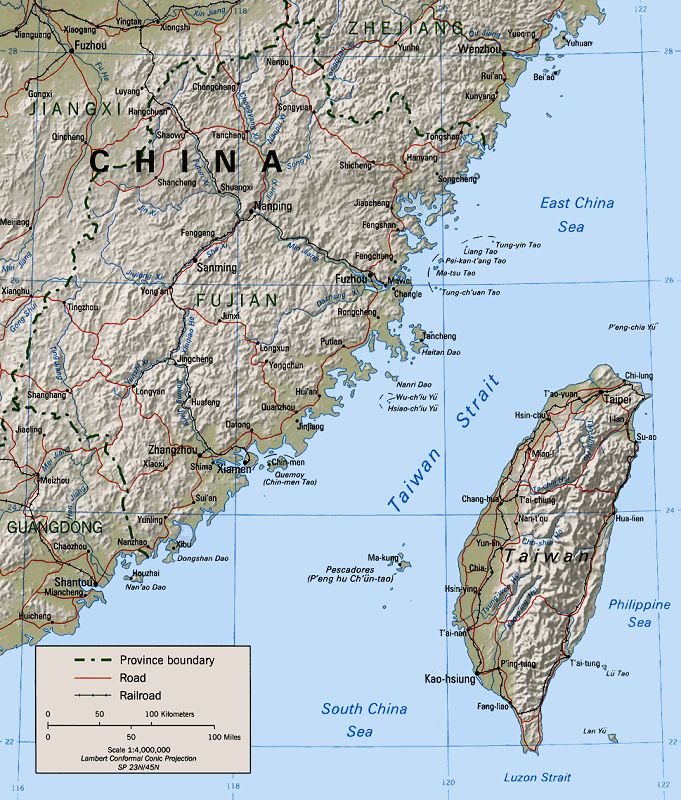
TAIPEI, November 14, 2026 — China carried out a large unannounced exercise across the western Pacific and around Taiwan in early November, in what Taiwan officials describe as 'silent intimidation' intended to pressure Taiwan and other governments ahead of major international meetings, Reuters reported from Taipei on Friday (Yimou Lee and Ben Blanchard). The China Taiwan military drills were not announced by Beijing in advance, the officials said, and their scale only became clear as Taiwan's security agencies pieced together the deployment: at one point, more than 100 Chinese military and coast guard vessels were at sea simultaneously, a senior Taiwan security official, speaking on condition of anonymity, told Reuters. The same official said the forces conducted simulated attacks on other militaries and on cities, including Taiwan's, and that the exercise was larger than 'Justice Mission 2025,' the named Chinese exercise held around Taiwan last year. Every element of that account comes from Taiwan's side of the strait, and this article attributes it accordingly throughout: the vessel counts, the simulated attacks and the comparison with Justice Mission 2025 are Taiwan officials' assessments as reported by Reuters, not independently verified facts. What is not in dispute is the calendar. The drills unfolded days before the APEC summit in Shenzhen, where Presidents Donald Trump and Xi Jinping are to meet — and where a White House-announced trilateral bringing in President Vladimir Putin is set for Thursday, November 19.
What Taipei says happened
100-plus vessels, three theatre commands
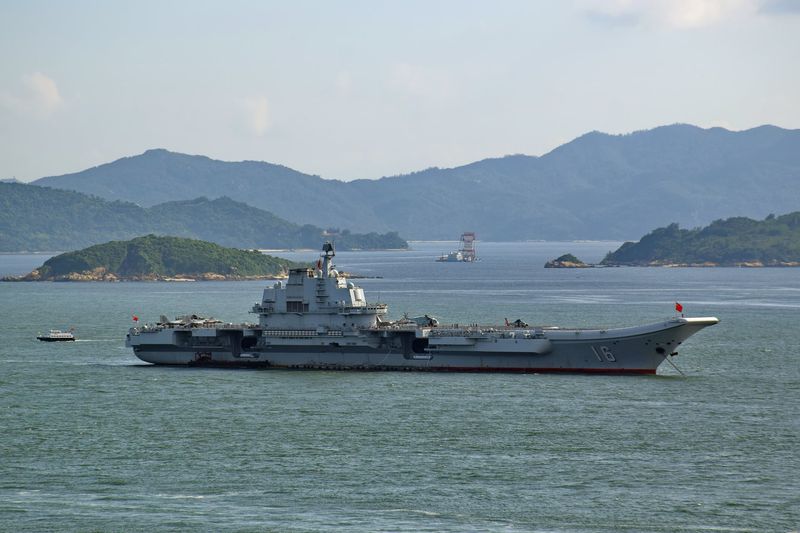
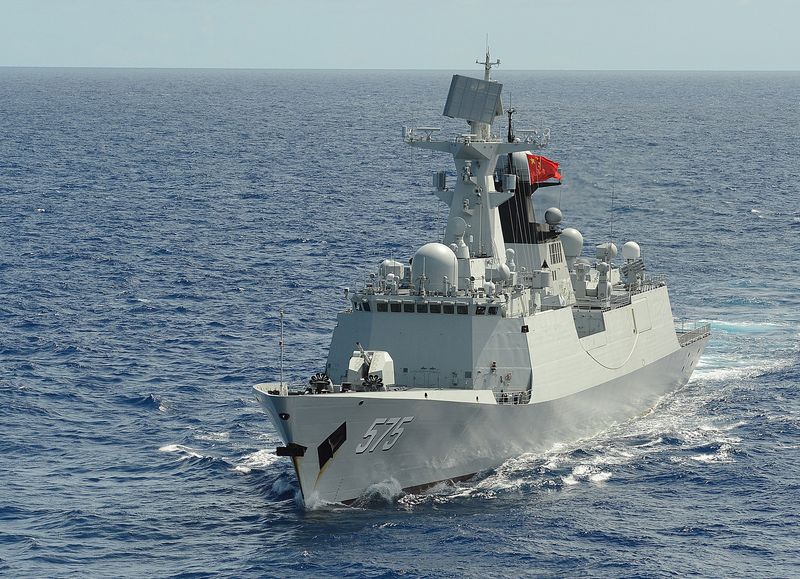
The senior Taiwan security official told Reuters that the deployment was coordinated across three of the People's Liberation Army's theatre commands — eastern, northern and southern — a span that takes in the Taiwan Strait, the East and South China Seas and the wider western Pacific. National Security Council Secretary-General Joseph Wu laid out the shape of it publicly: posting deployment details on X late on Thursday, November 12, Wu said that on November 3 there were already more than 100 PLA Navy and China Coast Guard vessels at sea simultaneously across the Taiwan Strait, the South China Sea and the western Pacific. Defence Minister Wellington Koo gave the deployment its operational label: China, he said, was carrying out 'area denial' drills involving the Liaoning aircraft carrier group and other formations — exercises designed, in the usual military meaning of the term, to practise keeping an adversary's forces out of a maritime area rather than to seize ground within it.
The ICBM claim — attributed, and not independently confirmed
The most striking single claim in the Reuters report is also the one that requires the most care. The senior Taiwan security official said that during the drills a Chinese submarine launched an intercontinental ballistic missile from the Yellow Sea, with the missile travelling into mainland China. Reuters reported the claim as the official's account; it has not been independently confirmed, and no corroborating public evidence accompanies it in the reporting checked. It is recorded here at exactly that weight — a claim by a named-role Taiwan official, made to a wire service, about the most sensitive category of weapon either side possesses — and readers should hold it there.
Timeline: two weeks of quiet pressure
November 3 — Wu counts 100-plus vessels at sea
The first dated marker in the public record is November 3, when, according to Joseph Wu's later account, more than 100 PLA Navy and coast guard vessels were at sea at the same time across the Taiwan Strait, the South China Sea and the western Pacific. The deployment was already, on Taipei's telling, at or near its peak in the exercise's opening days — and it had arrived without the advance announcement or the named-exercise publicity that accompanied operations such as Justice Mission 2025.
November 6 — ISW/AEI assesses the deployment could exceed Justice Mission 2025
On November 6, the Institute for the Study of War and the American Enterprise Institute's China Power project assessed that the deployment could exceed Justice Mission 2025 in scale. That is an assessment by outside analysts, labelled as such here and in their own publications — an informed estimate from satellite-visible and reported activity, not a confirmed order of battle. The senior Taiwan official's later comparison to Reuters points in the same direction, but the two judgements are separate: one is an analytic assessment, the other an official's account.
November 10 — The exercise window continues
Through the second week of November the deployment remained under way across the western Pacific, still without a public Chinese announcement characterising it. The absence of a name, a start notice or a closing statement is itself part of what Taipei is describing: where earlier exercises were staged as public signals, this one accumulated at sea and was left for other governments' sensors — and eventually their officials — to describe.
November 12 — Wu posts the details; Xi speaks of peaceful 'reunification'
Thursday, November 12, brought the two capitals' contrasting public faces within hours of each other. Late that day, Joseph Wu posted the deployment details on X, putting Taiwan's account — including the November 3 vessel count — into the public record. The same day, Xi Jinping delivered a major Taiwan policy speech urging peaceful 'reunification' and making no mention of force. The juxtaposition is a fact of the calendar; what it means is analysis, taken up below.
November 13 — Reuters reports; the count falls to about 70
On Friday, November 13, Reuters published the officials' account, and the deployment was already thinning: two Taiwan officials told the agency that the scale had fallen to around 70 vessels in the first island chain — the line of archipelagos running from Japan through Taiwan to the Philippines that frames China's maritime approaches. A peak above 100, a Friday figure near 70: the exercise, on Taipei's numbers, was a surge that crested and began to recede in the week before the Shenzhen meetings.
The numbers in context
Peak versus Friday: reading 100 and 70
The two figures measure different things, and keeping them apart matters. The 100-plus figure is a peak — vessels at sea simultaneously across three bodies of water on the deployment's largest day, per Wu and the senior official. The roughly 70 figure is narrower twice over: it counts vessels in the first island chain only, and it dates from Friday, after the peak had passed. Neither figure is a count of warships alone; both mix naval and coast guard hulls, a blend that is itself characteristic of China's maritime pressure campaigns, in which the coast guard's white hulls carry much of the day-to-day presence. What the numbers establish — again, on Taiwan's account — is a deployment big enough to require coordination across three theatre commands and sustained enough to still number about 70 vessels in the chain more than a week after it was first counted.
'Area denial' and the Liaoning
Wellington Koo's 'area denial' description points at the deployment's military logic. A carrier group such as Liaoning's, operating with escorts in the western Pacific, practises the outer layer of that concept: air and missile coverage pushed east of Taiwan, complicating any outside force's approach to the island in a crisis. Simulated attacks on other militaries and cities — the senior official's phrase, reported by Reuters — would be the inner layer rehearsed on paper and in command systems. None of this makes the exercise a prelude to an operation; large navies rehearse exactly these missions in peacetime, and China's has done so around Taiwan repeatedly across five years of stepped-up pressure. The analytical point is narrower: the missions Taipei describes are the missions a blockade or a coercion campaign would require, rehearsed quietly and at scale.
Why this matters
Analysis. Three features distinguish this deployment from the now-routine rhythm of Chinese exercises around Taiwan, and each carries a different implication.
Silence as the signal
First, the silence. Named exercises such as Justice Mission 2025 are communications as much as training: announced, branded and amplified, they tell audiences in Taipei, Washington and beyond exactly what Beijing wants them to hear. An unannounced deployment of comparable or larger scale communicates differently. It demonstrates capability without spending rhetoric, it denies other governments a named event to protest, and it normalises the presence itself — more than 100 hulls at sea becomes weather rather than news. Taipei's choice of phrase, 'silent intimidation,' is an interpretation, and it is labelled as Taipei's throughout this article; but the structural fact underneath it — scale without announcement — is the deployment's most unusual feature on any reading.
Pressure timed to the diplomatic calendar
Second, the timing. Taiwan officials told Reuters the purpose was to pressure Taiwan and other governments before major international meetings, and the calendar supports the plausibility of that reading without proving it: the deployment crested in the two weeks before APEC in Shenzhen, where Trump and Xi meet, and it receded to about 70 vessels on the Friday before summit week. Beijing has not, in the reporting checked, directly addressed the 'silent intimidation' characterisation; its standing general position is that Liaoning's western Pacific deployments are routine training not directed at any country, and that position is noted here only as its general stance, not as a response to this specific deployment. Xi's November 12 speech sits in the same frame: a public emphasis on peaceful 'reunification,' with no mention of force, delivered while — on Taipei's account — the largest unannounced deployment of the year was at sea. Whether the speech and the ships are one message in two registers or simply parallel tracks is a judgement readers can weigh; the facts are the dates and the words, and both are on the record.
The Shenzhen room, and who is not in it
Third, the summit geometry. On Thursday, November 19, Shenzhen hosts a White House-announced trilateral of Trump, Xi and Putin — the meeting this newsroom covered in its report on how China confirmed the Xi–Trump–Putin meeting at APEC Shenzhen. Taiwan is not at that table, and neither is any government that would speak for it. A deployment that demonstrates China's capacity to mass forces across the first island chain, concluded days before the three presidents meet, forms part of the backdrop against which every other file in that room — trade, Ukraine, summitry itself — will be discussed. The same week has shown how crowded the diplomatic board is: the parallel track on Ukraine, covered in our report on the Europe–Ukraine peace talks and the Kremlin's condition, turns on similar questions of presence, pressure and who gets a seat. In both theatres, the deployments and the meetings are proceeding on separate tracks that every participant can see from the same window.
The view from the region
First island chain capitals do their own counting
For Japan and the Philippines, the deployment's geography is the story: forces drawn from the northern and southern theatre commands as well as the eastern one put Chinese hulls in waters off Japan's southwest islands and across the South China Sea in the same operation. Simulated attacks on 'other militaries,' in the Taiwan official's phrase, is a category those capitals will read as including their own — and, pointedly, the United States', whose forces in Japan and Guam sit inside the second island chain the deployment faced. No regional government is quoted in the Reuters reporting on which this article rests, and none is paraphrased here; the regional angle, stated plainly as analysis, is that a three-command surge is legible in Tokyo and Manila as a demonstration aimed wider than Taiwan alone, which is precisely what Taiwan's officials told Reuters it was.
Background: five years of pressure
China views Taiwan as its own territory and has never renounced the use of force to bring it under Beijing's control; Taipei's government rejects that claim. Over the past five years Beijing has stepped up military and political pressure on the island — regular air and naval activity around it, named exercises of increasing scale, and coast guard patrols woven into the pattern. Justice Mission 2025, the benchmark both the ISW/AEI assessment and the senior Taiwan official reach for, was the most recent of the large named exercises. The November deployment's significance in that sequence is its departure from the sequence's own conventions: comparable scale, no name, no announcement, and a description supplied after the fact by the government it was ranged against.
What happens next
Analysis — scenarios, not predictions. Four things to watch. First, the residue: whether the roughly 70 vessels in the first island chain on Friday draw down further during summit week, or hold at a plateau that would itself become a new baseline for 'normal.' Second, Beijing's voice: whether any Chinese authority addresses the deployment directly — confirming, recharacterising or dismissing Taipei's account — or whether the silence that defined the exercise extends over its aftermath. Third, Shenzhen itself: Taiwan is not on the announced agenda of the November 19 trilateral or the Trump–Xi bilateral, but a week in which the strait produced the year's largest unannounced deployment will test whether the subject stays off the record of those meetings. Fourth, verification: whether any government or independent analyst publishes corroboration — or contradiction — of the account's most sensitive elements, above all the reported submarine ICBM launch from the Yellow Sea, which currently rests on a single anonymous official's word.
For now, the established record is this. In early November, on Taiwan's account to Reuters, China massed more than 100 military and coast guard vessels across the Taiwan Strait, the South China Sea and the western Pacific, drew them from three theatre commands, practised 'area denial' with a carrier group, and simulated attacks — all without announcement, in the run-up to the Shenzhen summits. Taipei calls it 'silent intimidation.' Beijing, in the reporting checked, has not answered the phrase; its president, in the middle of the deployment, spoke publicly of peaceful 'reunification' and said nothing of force. Between those two sentences — the accusation and the speech — the strait's next week will be lived, at Shenzhen and everywhere the first island chain touches the sea.
Related coverage: China Confirms Xi–Trump–Putin Meeting at APEC Shenzhen · Europe–Ukraine Peace Talks and the Kremlin Condition, Dublin · Zelenskyy: US Floated Donbas Withdrawal for NATO Membership
Sources
- Reuters, Taipei, November 13, 2026 (Yimou Lee and Ben Blanchard) — “China stages unannounced Pacific drills in 'silent intimidation' of Taiwan, officials say,” via MyMixFM: the primary report for this article — the senior Taiwan security official's account of 100-plus vessels, simulated attacks and the Justice Mission 2025 comparison; the submarine ICBM claim, reported there as that official's account and not independently confirmed; Joseph Wu's November 3 count and November 12 posts; Wellington Koo's 'area denial' description; the fall to about 70 vessels in the first island chain on Friday; and Xi Jinping's November 12 peaceful-'reunification' speech.
- Defense & Tech summary of the ISW/AEI assessment, November 6, 2026 — China Liaoning carrier area-denial drills and Taiwan: the Institute for the Study of War / American Enterprise Institute assessment that the deployment could exceed Justice Mission 2025 in scale — an analytic assessment, cited as such.