War · Ukraine War · Diplomacy
A Ukraine Donbas NATO membership deal was floated as a question — not offered as a plan — by American negotiators in Abu Dhabi, President Volodymyr Zelenskyy revealed on Saturday. His answer defines the terms on which Kyiv would even discuss it: specifics in writing, guarantees modelled on Article 5, and a national referendum he says he has no right to replace.
Track it live: Ukraine war map
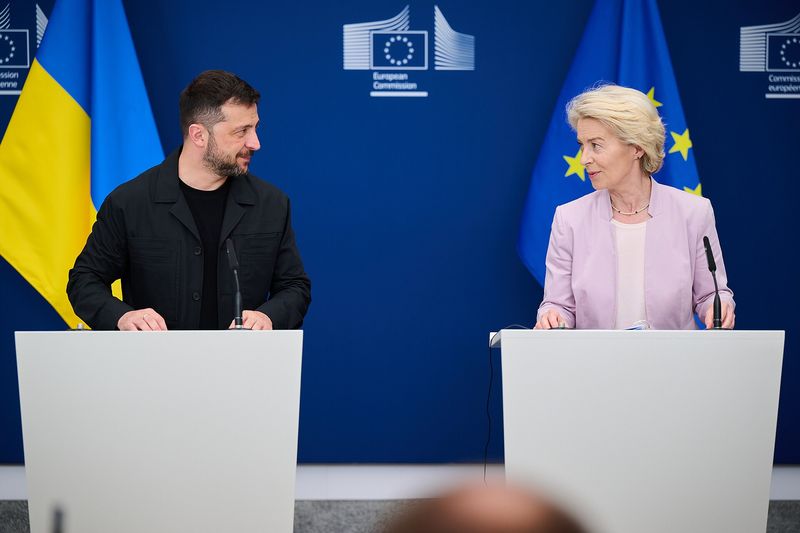
KYIV, November 14, 2026 — US negotiators have floated, for the first time, a direct link between NATO membership for Ukraine and a Ukrainian withdrawal from Donbas, President Volodymyr Zelenskyy said in remarks released by his office on Saturday and reported by Reuters from Kyiv. “The Americans raised a question: ‘What if Ukraine joins NATO? Would Ukraine withdraw from Donbas?’ This was the first time this had been raised,” Zelenskyy said. He was careful — and this article follows his wording exactly — to describe a question posed in talks, not a formal offer, not an agreed deal and not a Ukrainian concession. Kyiv, he repeated, is not ready to concede territory and does not recognise occupied land as Russian. What he added, and what gives the exchange its weight, is the mechanism: if a comprehensive package ever arrives — confirmed security guarantees, the right to a strong and well-funded army, and money to rebuild — he would put it to the Ukrainian people in a national referendum. “That is why I believe NATO is back on the agenda,” he said. “But you have also heard Putin’s signals, and this is an extremely difficult conversation.” There has been no US text and no US on-record confirmation of the exchange; Washington’s public description of the Abu Dhabi round, through Secretary of State Marco Rubio, was that the talks were constructive.
What the Americans asked
A question floated in Abu Dhabi, November 10–11
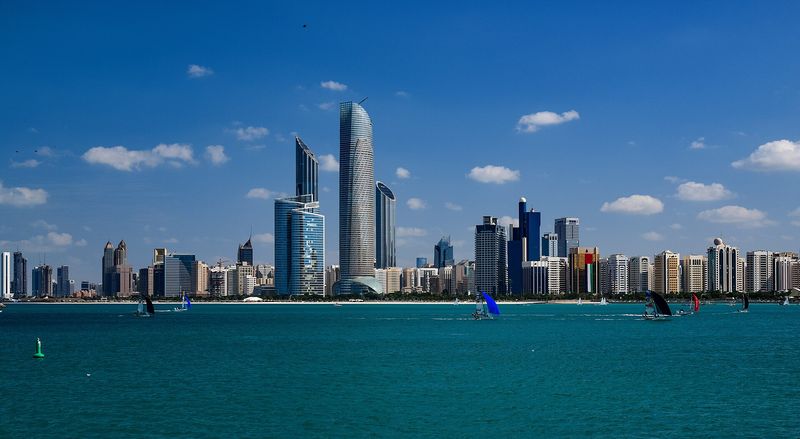
The setting was two days of US-brokered talks in Abu Dhabi on November 10–11, attended on the American side by envoys Steve Witkoff and Jared Kushner. The round produced no major breakthrough, and Rubio called the discussions constructive. It was in that setting, on Zelenskyy’s account, that the NATO-for-Donbas question was put for the first time. The precision of his phrasing is the story’s first fact: the Americans “raised a question.” No document changed hands that he described, no terms were tabled, and no Ukrainian answer was given in the room beyond the position he has now stated publicly. Readers should hold the exchange at exactly that size — a probe, significant because of who asked it and what it links, and nothing more yet.
Why the linkage itself is new
Territory and membership have circled each other for years without ever being joined in a single question. Moscow’s precondition, as this newsroom reported from the same Abu Dhabi track, has been a Ukrainian withdrawal from Donbas demanded before a ceasefire — the subject of our coverage of how Putin made Donbas the price of a ceasefire. NATO membership, meanwhile, had slipped off the public agenda for months, displaced by talk of lesser, bilateral guarantees. Zelenskyy’s account joins the two: Washington asking whether the thing Moscow demands (withdrawal) could be traded for the thing Moscow invaded, in part, to prevent (membership). Whether the probe survives contact with either capital is a separate question — but the linkage, once raised by the mediating power, is now part of the negotiation’s furniture.
Zelenskyy’s answer: conditions first, then a referendum
“I have no right to make that decision on my own”
Zelenskyy’s fullest answer came when he described what would have to exist before any Ukrainian decision could be taken. “If the American side confirms precisely this to us, together with other NATO partners, then I will ask our Ukrainian society what it thinks: do we accept it or not? I have no right to make that decision on my own. But we need specifics, and we don’t have them yet.” Each clause carries a condition. The package must be comprehensive: security guarantees, the right to maintain a strong and well-funded army, and funds to rebuild. It must be confirmed — by the American side together with other NATO partners, which is to say by the alliance whose membership is being discussed, not by Washington alone. And the decision, if those conditions are ever met, belongs to a national referendum, not to the president. Absent the specifics, he said, there is nothing to vote on: “we don’t have them yet.”
What Kyiv has not agreed to
Nothing in Saturday’s remarks moves Ukraine’s stated position on territory. Zelenskyy repeated that Kyiv is not ready to concede territory and does not recognise occupied Ukrainian land as Russian. The referendum he described is conditional twice over — on a full package arriving, and on its specifics being confirmed — and it is a mechanism for deciding, not a promise of the outcome. Any account that renders Saturday’s news as “Ukraine agrees to trade Donbas for NATO” inverts what he said: a question was floated by the Americans, and the Ukrainian president answered by naming the price of asking his public — guarantees, an army, reconstruction, in writing — while conceding nothing.
The guarantee gap: Article 5, or something less?
Kyiv’s floor: guarantees modelled on Article 5
The distance between the parties is widest on guarantees. Zelenskyy said he had asked for guarantees modelled on NATO’s Article 5 — the collective-defence clause — “as an absolute minimum.” Washington’s descriptions, by contrast, have pointed to a mix of Article 4-style consultation and Article 5-style commitments, or to Israel-style bilateral guarantees, and have been explicit that no US troops would be stationed in Ukraine. The specifics, on Zelenskyy’s account, remain vague: there is no US text, and no US on-record confirmation of the guarantee discussion at all. That gap is not a detail. A membership-linked settlement would ask Ukraine to trade the one asset it holds — territory its army still defends — against promises whose enforceability is the entire question; Kyiv’s insistence on Article 5 as the floor is its way of saying the promise must be the strongest one the alliance knows how to write.
The red line on the other side
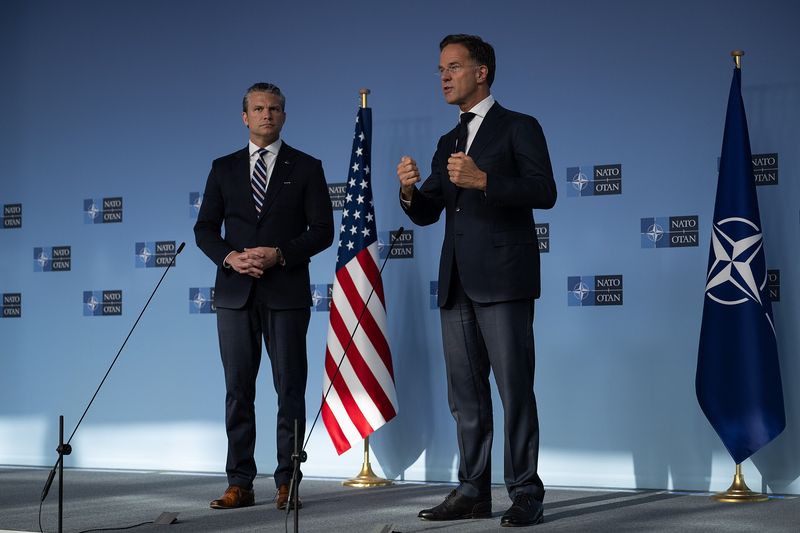
Against all of this stands the position that has not moved since before the invasion: President Vladimir Putin’s long-standing red line against Ukrainian NATO membership, which Moscow cited among its reasons for invading in 2022. Zelenskyy named the collision himself — NATO is back on the agenda, “but you have also heard Putin’s signals.” A settlement architecture that requires Moscow to accept the very membership it went to war to prevent is, on its face, the hardest version of the deal to close; it is also, from Kyiv’s side, the only version that insures against a second invasion once Ukrainian forces have withdrawn. Both of those sentences are true at once, and the negotiation lives in the space between them.
“This war must be ended first”
Against the architecture-first argument
Zelenskyy also dismissed Russia’s broader call — echoed by European leaders meeting in Dublin on Friday, as this newsroom reported in its coverage of the European talks and the Kremlin’s condition — that a new European security architecture must be settled as part of ending the war. His answer was sequencing, stated flatly: “This war must be ended first.” In Kyiv’s reading, architecture-first is delay dressed as design; the guns, the occupation and the strikes on the power grid are the present tense, and a continental redesign negotiated over them hands Moscow a veto measured in winters.
Kostiantynivka, and the ceasefire that isn’t
He was equally blunt about Putin’s suggestion of a humanitarian ceasefire around Kostiantynivka, the Donetsk-region city Russian forces have been pressing. “Putin simply wants us to leave Kostiantynivka so that they can move in and occupy the entire city that way,” Zelenskyy said. Ukraine, he noted, had listed seven or eight other settlements where a truce could apply — an offer that reframes the argument: Kyiv’s objection, on his account, is not to local truces but to a truce whose geography coincides exactly with the attacker’s next objective. Two adjacent items sit in the same file. Witkoff and Kushner pledged to raise an energy ceasefire when they go to Moscow on Thursday, and no progress has been reported; Zelenskyy’s summary was that “Putin personally does not support a ceasefire.” And on prisoners, an exchange has been agreed in principle involving more than 1,000 people, with the final numbers still under discussion — a file this newsroom has covered separately and which Saturday’s remarks did not change; no finalised number exists, and none is stated here. Moscow denies deliberately targeting civilians.
Why this matters
Analysis. Saturday’s remarks matter less for what was decided — nothing was — than for three structures they reveal.
Moscow would have to accept the thing it invaded to prevent
First, the shape of any endgame is now visible in a single sentence. If the Abu Dhabi probe is the embryo of a real framework, its logic is an exchange of the war’s two central objects: Ukraine gives ground in Donbas; Russia accepts Ukraine inside the Western alliance it invaded to keep it out of. Every previous framework fudged one side of that exchange — membership deferred into vagueness, or withdrawal demanded without compensation. A deal that prices both sides openly is more honest and, for the same reason, harder: each capital must sell its public the other’s prize.
A referendum is both a democratic lock and a lever
Second, the referendum. As a lock, it removes the decision from any president’s hands — including under pressure in a closed room — and anchors it in the society that has borne the war. As a lever, it strengthens Kyiv’s negotiators at every earlier stage: nothing can be agreed over Ukraine’s head, because nothing is agreed until Ukrainians vote, which means the specifics Zelenskyy keeps demanding are not pedantry but the actual ballot question. Critics of Kyiv’s position, in the attributed terms in which such arguments are usually made, will say a referendum requirement hands Moscow a reason to keep fighting for a better map before any vote. Supporters answer that a settlement imposed without one would not survive contact with Ukrainian politics. Both arguments are now live, and both were made possible by a president choosing to describe his own constraint in public.
Europe’s seat, and Shenzhen’s silence
Third, the widening table. Europe will have a seat in the forthcoming talks — Britain, France, Germany, Italy and Poland, plus the European Union — after a round in Abu Dhabi at which Europeans did not sit with Russia. That matters for the guarantee question, since any Article 5-modelled package confirmed “together with other NATO partners” needs those partners in the room. It throws the week’s other summit into relief: at the November 19 trilateral in Shenzhen, where Presidents Trump and Xi will meet President Putin, Washington says Ukraine is off the agenda — the context in this newsroom’s report on how China confirmed the Xi–Trump–Putin meeting. The war’s future is thus being discussed in two rooms at once: one where Ukraine sits and membership is back on the table, and one where it does not and, officially, is not discussed at all.
The ground beneath the diplomacy
Roughly a fifth of Ukraine, and a stalled offensive
The map explains the bargaining. Russia holds roughly a fifth of Ukraine, including most of Donbas; Ukraine still holds part of Donetsk and Luhansk regions — which is precisely the part a “withdrawal from Donbas” would surrender. Moscow’s Donbas offensive, meanwhile, has largely stalled: the territory it demands at the table is territory it has not been able to take at acceptable cost on the ground, which is why it is demanded at the table. That asymmetry cuts both ways in the argument. For Kyiv, withdrawing from defended ground in exchange for paper guarantees repeats the war’s oldest lesson. For Washington’s mediators, a front that barely moves is the definition of a war ripe for a frozen settlement. Zelenskyy’s conditions — Article 5 as the floor, a funded army, reconstruction money, a referendum — read as an attempt to make the paper worth more than the ground.
What happens next
Analysis — scenarios, not predictions. Four things to watch. First, paper: whether the United States ever converts the floated question into a text — Zelenskyy’s whole position is that specifics do not yet exist, and a written US proposal, confirmed with NATO partners, is the trigger for everything else he described. Second, Moscow on Thursday: whether the Witkoff–Kushner visit produces any movement on an energy ceasefire, the smallest test of whether any ceasefire is available at all. Third, the enlarged table: whether the European seat in the forthcoming round changes the guarantee drafting, where the Article 5 question will be decided in practice. Fourth, Shenzhen on November 19: Ukraine is officially off that agenda, but a week in which membership returned to one table will be read against whatever the three presidents say — or conspicuously do not say — at the other.
For now, the established record of Saturday, November 14, is a question and an answer. The question, floated by American negotiators in Abu Dhabi for the first time: what if Ukraine joins NATO — would Ukraine withdraw from Donbas? The answer, from Kyiv: NATO is back on the agenda; territory is not conceded and occupied land is not recognised; guarantees must be modelled on Article 5 as an absolute minimum; and if a complete, confirmed package ever exists, the Ukrainian people will decide it in a referendum, because their president says he has no right to decide it alone. Between that question and that answer sits everything the next round of talks has to build — or admit it cannot.
Related coverage: Europe–Ukraine Peace Talks and the Kremlin Condition, Dublin · Putin Demands Donbas as Ceasefire Precondition, Abu Dhabi · China Confirms Xi–Trump–Putin Meeting at APEC Shenzhen
Sources
- Reuters, Kyiv, November 14, 2026 (Olena Harmash) — “US floated idea of Ukraine ceding Donbas for NATO membership, Zelenskiy says”: the primary report of Zelenskyy’s remarks — the question floated in Abu Dhabi, the referendum conditions, the Article 5 floor, the dismissal of the architecture-first argument and of the Kostiantynivka suggestion, and the status of the prisoner exchange and energy ceasefire.
- CNN, November 14, 2026 — US–Ukraine–Zelenskyy–NATO coverage: corroborating report of the remarks released by Zelenskyy’s office on Saturday and the Abu Dhabi context.
- Australian Associated Press, November 14, 2026: wire coverage of the day’s Ukraine developments alongside the diplomatic reporting.
- Remarks by President Volodymyr Zelenskyy released by the Office of the President of Ukraine, Saturday, November 14, 2026, as reported by Reuters and CNN — the source of all direct quotations in this article, including “What if Ukraine joins NATO? Would Ukraine withdraw from Donbas?”, “NATO is back on the agenda”, “I have no right to make that decision on my own” and “This war must be ended first.”