World · Diplomacy
For the first time, Beijing has confirmed that a Xi Trump Putin meeting is under discussion — a trilateral that has never taken place, expected on the sidelines of the APEC leaders’ summit in Shenzhen on November 18–19, with no date, no agenda and no final decision yet announced by any of the three capitals.
Track it live: Live wars tracker
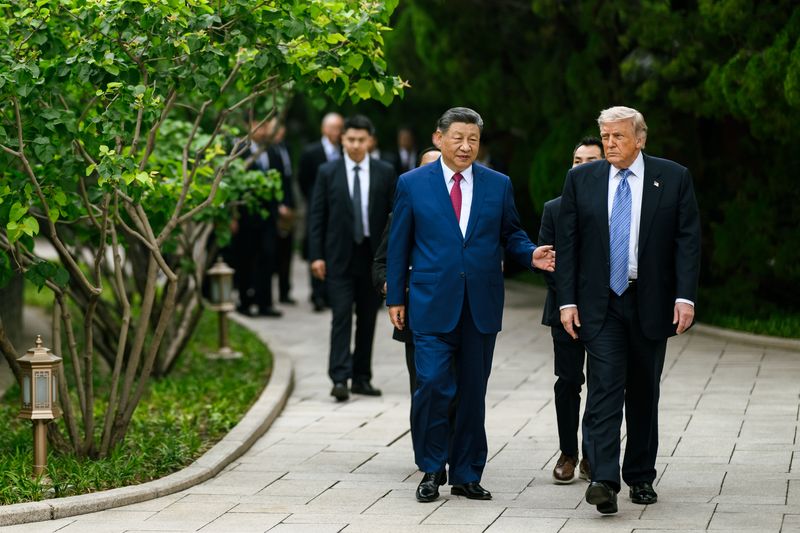
BEIJING, November 7, 2026 — China has confirmed for the first time that it is discussing a meeting of Chinese President Xi Jinping, US President Donald Trump and Russian President Vladimir Putin. Foreign Ministry spokesperson Mao Ning told a press briefing in Beijing on Wednesday, November 4, that China “is in communication with relevant parties regarding a meeting between the three heads of state,” according to reporting by Xinhua and AFP carried in The Guardian’s Ukraine war briefing. She gave no date, no agenda and no format, and Beijing has announced no final decision. It is a single, carefully limited sentence — but it is the first time any of the three governments has said on the record that the trilateral is being worked on at all.
The expected venue is the sidelines of the APEC leaders’ summit in Shenzhen on November 18–19, 2026, hosted by Xi and drawing the forum’s 21 member economies. The Financial Times reported on November 3 that officials of the three countries had held secret talks for two weeks about arranging the meeting. The Kremlin has spoken in similar terms; the White House has not confirmed the trilateral, and Moscow has not confirmed that Putin will attend APEC at all. Nothing is scheduled, and readers should hold the story in exactly those terms: a meeting that is confirmed to be under discussion, expected by officials in two capitals, and still capable of not happening.
What is not in doubt is the novelty. The three leaders have met in pairs many times — Trump and Xi repeatedly, Xi and Putin regularly, Trump and Putin by phone and in person — but they have never sat in one room together in a formal trilateral. The prospect alone has already reshaped a diplomatic week in which Ukraine and Europe are warning that the continent’s security is being rearranged over their heads, as Zelenskyy’s ‘Yalta 2.0’ warning over a Trump Europe–Russia security deal made plain on Friday.
What Beijing has — and has not — confirmed
Mao Ning’s formulation deserves to be read as precisely as it was written. What Beijing confirmed is the existence of communication: the three sides are talking about a meeting of the three heads of state. What it did not confirm is everything that would make the meeting real — no date within the November 18–19 summit window, no agenda, no format, no statement that Putin has accepted an invitation to Shenzhen, and no final decision by Beijing itself. The Associated Press, reporting China’s confirmation on November 7, carried the same limited claim: discussions, not a scheduled summit. In the choreography of Chinese foreign-ministry language, a spokesperson who wanted to kill the story had an easy denial available; Beijing chose instead to acknowledge the talks while keeping every substantive question open. That combination — confirmation of process, silence on outcome — is itself the news.
The other capitals fill in parts of the picture, asymmetrically. Kremlin spokesman Dmitry Peskov said on November 3 that work was under way to organise a meeting involving Putin, Trump and Xi, and that he hoped it would be finalised in the coming days; a bilateral Xi–Putin meeting in Shenzhen on November 18 was also being prepared, he said. From Washington, by contrast, there has been no confirmation of the trilateral at all. And Moscow, notably, has not confirmed the premise underneath the whole plan — that Putin will travel to APEC. So the public record, assembled capital by capital, is this: Beijing confirms communication, Moscow confirms work and hope, Washington confirms nothing, and nobody has published a schedule.
How the three-way meeting came together
The format did not originate in Beijing. Putin first proposed the trilateral in an October 9 phone call with Trump, reportedly aiming at an agreement ending the Ukraine war on terms favourable to Russia. The idea then went quiet in public while, according to the Financial Times, officials of the three countries spent two weeks in secret talks about arranging it — the reporting that Peskov’s November 3 remarks, carried by TRT World and Al Jazeera, in effect corroborated from the Kremlin side: preparations under way, a hope of finalising within days, and a Xi–Putin bilateral on November 18 being organised in parallel.
One further account, from a leader who has spoken to Xi directly, fills in the intended agenda — or rather its intended omission. German President Frank-Walter Steinmeier has said that Xi told him the three presidents would probably meet in Shenzhen, but not to discuss Ukraine, which Xi described as a European conflict. Reporting around the preparations points the same way: Beijing insists Ukraine is not on the table, while Trump, for his part, has been warned by his own advisers to steer clear of Ukraine in the talks. None of that makes the war absent from the meeting’s meaning, as the analysis below argues; it makes Ukraine the meeting’s defining non-subject — the issue the gathering would be organised, in part, not to settle.
Three leaders, three different meetings
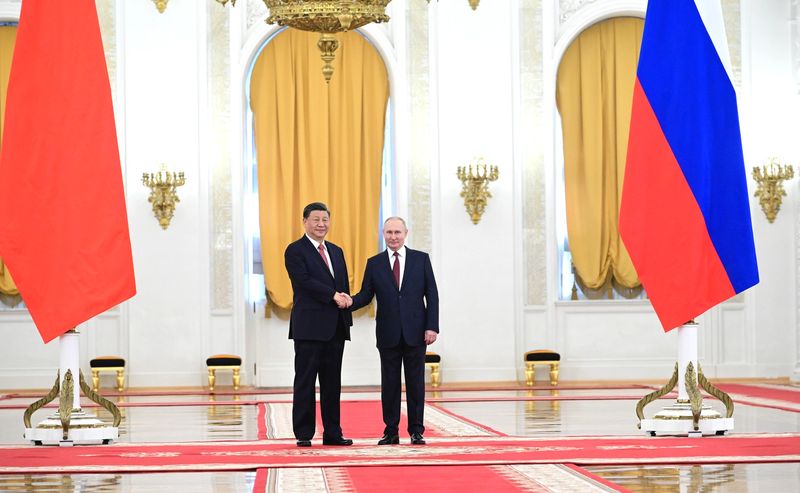
Each president would walk into the same room attending a different summit. For Putin, who proposed the format, the prize is the setting itself as much as any text: the Russian president photographed in a three-way meeting with the American and Chinese leaders, in China, on terms where — on the reporting so far — the Ukraine war he launched is not the agenda item. The October 9 call’s reported aim, an end to the war on terms favourable to Russia, remains Moscow’s objective whether it is pursued inside the room or around it. For Trump, the stated interest is narrower and different: he has said he is open to three-way talks focused on nuclear weapons — “If President Xi wants to have it, I’d have it” — and his Shenzhen trip already carries a second, arguably larger file, since it would be his third meeting with Xi this year with a fragile US–China trade truce set to expire in January. For Xi, the host, the meeting is an image before it is a negotiation: the convener of the world’s other two most powerful leaders, in a Chinese city, under an agenda Beijing has a hand in setting — including, on the reporting, the exclusion of Ukraine.
Those three purposes do not naturally compose into one agenda, which is why the analysts’ caution deserves its weight. Sun Yun, director of the China programme at the Stimson Center, told The Guardian that Russia would probably use the summit to nudge China and the US closer to Moscow’s positions on Ukraine — whether or not Ukraine is formally discussed. Other analysts go further in discounting the substance: on their account, the gathering may amount to mostly a photo opportunity, with little prospect of substantive agreements among three governments whose stated purposes for it barely overlap. Both readings can be true at once — a photo opportunity is precisely the instrument with which a government nudges, signals and normalises — and both are reasons to measure the meeting, if it happens, by its framing rather than by any communique.
Why this matters
Analysis. Start with the simplest fact: this format has no precedent. Summits among subsets of these powers are routine diplomatic furniture — bilaterals, G20 margins, BRICS and SCO tables where two of the three have sat together. A formal trilateral of the American, Chinese and Russian presidents, convened as its own event, would be a first, and firsts in summitry are never only procedural. They announce a claim about how the world is to be run: in this case, that the largest questions of war, nuclear weapons and trade are the business of three capitals, meeting as a concert of great powers. The echo European governments hear in that claim is not subtle, and this week it has been named out loud — the ‘Yalta 2.0’ warning is Kyiv’s and Europe’s shorthand for a settlement of their continent arranged by others, in their absence, along spheres-of-influence lines.
That is why a Ukraine-free agenda, far from emptying the meeting of meaning, would be its loudest message. Ukraine is the largest war in Europe since 1945, the subject of live trilateral peace talks of a different kind in Abu Dhabi this coming week, and the stated reason for the sanctions and alliance politics that structure all three governments’ relations. To convene the three presidents most able to end that war and to set it aside — on Beijing’s reported insistence, with Washington’s advisers reportedly counselling the same — tells Kyiv and every European capital that their war can be treated as somebody else’s regional file, to be managed around rather than settled with its participants. The counter-argument is real and should be stated: a first meeting overloaded with the hardest file in world politics might simply fail, and nuclear-arms discussion among the three largest arsenals is a legitimate, even overdue, subject in its own right. But sequencing is a choice, and the choice being reported — nuclear weapons and trade in, Ukraine out — will be read in Kyiv as a verdict, not a timetable.
There is also an authorship contest inside the story. Who convenes a meeting like this owns a piece of the order it symbolises. Beijing, as host and now as the capital that confirmed the talks, presents itself as the indispensable mediator of a new multipolar diplomacy. Moscow, as the format’s originator, claims the standing of a co-author rather than a defendant of the post-2022 order. Washington, which has confirmed nothing, keeps the option of owning the meeting later or disowning it cheaply — an ambiguity that is itself a negotiating asset, and one reason the White House’s silence should not be read as absence from the preparations. And even the least substantive outcome — the photo opportunity of the analysts’ warning — changes facts on the ground: the image of the three presidents together would outlast any readout, reset what allies and markets treat as normal, and establish a format that, once used, can be used again. None of that requires the meeting to succeed. It only requires it to happen — which is why the next eleven days of scheduling announcements matter more than the summit’s eventual communique may.
Who gains, who loses
If the meeting takes place, the clearest gains are positional. Putin gains the stage he proposed and a demonstration that Russia sits at the top table as of right. Xi gains the convener’s prestige and a working demonstration of Beijing’s mediator image, at a summit he hosts. Trump gains the deal-maker’s photograph and a nuclear-weapons conversation he has publicly welcomed, alongside leverage — or distraction — on his separate trade file with Xi. The losses fall mostly on those not in the room: Kyiv, whose war would be the meeting’s excluded centre, and European capitals, whose security architecture is the subtext of a format that seats none of them. The risks are distributed differently. If the talks collapse before any announcement, Beijing’s confirmation becomes a small embarrassment and Moscow’s hope a small rebuff; if the meeting happens and produces nothing beyond photographs, all three leaders will own the gap between the format’s symbolism and its output. And if it never happens at all, the episode still leaves a record — of who proposed the concert, who confirmed it, and who stayed silent.
The backdrop: 21 economies, a January deadline and a nearer test
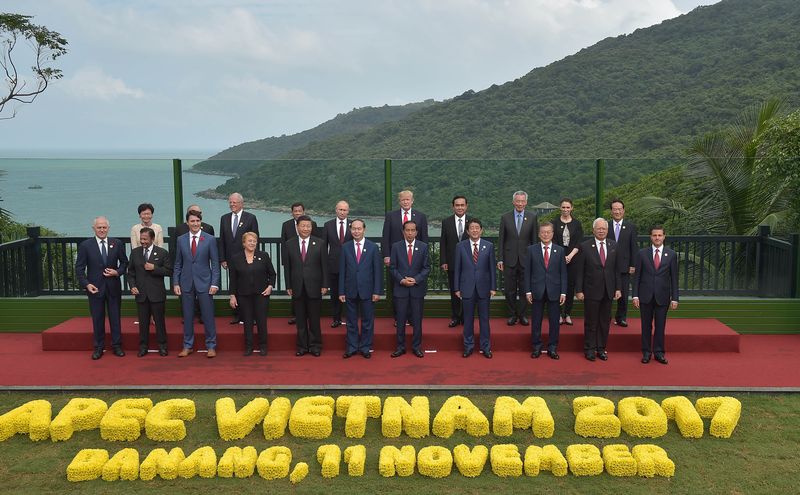
APEC is the frame that makes the sidelines possible. The Asia-Pacific Economic Cooperation forum groups 21 member economies, and its leaders’ summit in Shenzhen on November 18–19 — eleven and twelve days from today — puts all three presidents in the same city on the same dates without any of them having to issue or accept a bilateral invitation. The pair-meeting history shows how much of the triangle is already built: Trump’s Shenzhen appearance would be his third meeting with Xi this year, after a year of tariff escalation and truce; Xi and Putin meet with a regularity that has its own summit calendar; Trump and Putin have spoken and met across the year’s Ukraine diplomacy. The missing edge of the triangle is only the three-way one. APEC’s own rituals underline the point: at past summits the three have stood in the same leaders’ family photograph without ever converting proximity into a trilateral.
Two deadlines give the Shenzhen window its pressure. The first is commercial: the fragile US–China trade truce expires in January, which makes the third Trump–Xi meeting of the year a working negotiation in its own right, whatever else is scheduled around it. The second is nearer and sharper. On November 10–11, three days from now, Ukrainian, Russian and American delegations meet in Abu Dhabi for talks where Ukraine is unavoidably the subject — and where, as Signal Post News reported this morning, Putin’s Donbas ceasefire precondition sets the terms Moscow brings to Abu Dhabi. What happens in Abu Dhabi — movement, stalemate or breakdown — will set the weather in which a Ukraine-free Shenzhen trilateral would be photographed a week later, and European and Ukrainian officials will read the two rooms against each other.
What happens next
The watch list is short and concrete. First, a formal scheduling announcement from Beijing: a date, a time and a format would convert confirmation of communication into confirmation of the meeting itself. Second, a White House confirmation — Washington’s silence is currently the largest gap in the record, and Trump’s own words will matter more than any readout. Third, confirmation that Putin will attend APEC at all, without which the trilateral is arithmetically impossible whatever the other two capitals say. Fourth, any published agenda, and within it a single line to look for: whether Ukraine appears, in any formulation, or is confirmed by omission to be off the table, as Steinmeier’s account and the surrounding reporting suggest. Until some of those markers land, the accurate summary remains the one Beijing itself supplied: the three governments are in communication about a first meeting of their heads of state. It may be finalised in the coming days, as Peskov hopes; secret talks collapse often enough that it may also quietly dissolve. Either outcome will be reported here as it is confirmed.
If the three presidents do meet in Shenzhen with the largest war in Europe deliberately left off the agenda, what should the rest of the world read into that photograph — a pragmatic first step among nuclear powers, or a verdict on who gets a say in Ukraine’s future? If you find our reporting useful, like this story, follow Signal Post News for continuing coverage of the Shenzhen summit, the Abu Dhabi talks and the diplomacy around the war, and share your view in the comments.
Sources
The Guardian, Ukraine war briefing, November 6–7, 2026 (Guardian staff and agencies: Mao Ning’s November 4 confirmation, reported via Xinhua and AFP, that China “is in communication with relevant parties regarding a meeting between the three heads of state”; Sun Yun of the Stimson Center on Russia’s likely use of the summit; Frank-Walter Steinmeier’s account of his conversation with Xi). Associated Press, November 7, 2026 (reporting on China’s confirmation of the trilateral discussions). Financial Times, November 3, 2026 (two weeks of secret three-country talks on arranging the meeting; APEC leaders’ summit, Shenzhen, November 18–19, 2026). Kremlin spokesman Dmitry Peskov’s remarks of November 3, 2026, as reported by TRT World and Al Jazeera (work under way to organise a Putin–Trump–Xi meeting; hope of finalising within days; a Xi–Putin meeting in Shenzhen on November 18 also being prepared). Photos: The White House, kremlin.ru and the Presidency of the Mexican Republic, via Wikimedia Commons, as credited in the captions.