Speaking to reporters in Pryluky on Thursday, Ukrainian President Volodymyr Zelenskyy publicly pressed the United States to expand access to the Starlink satellite network. His argument was operational: Ukraine needs resilient communications to direct drones and other systems toward mobile Russian launchers before ballistic missiles leave the ground. It was also political. After two days of devastating attacks, he challenged Washington's description of the war as strategically stuck and argued that greater external help, rather than acceptance of a deadlock, could still change the balance.
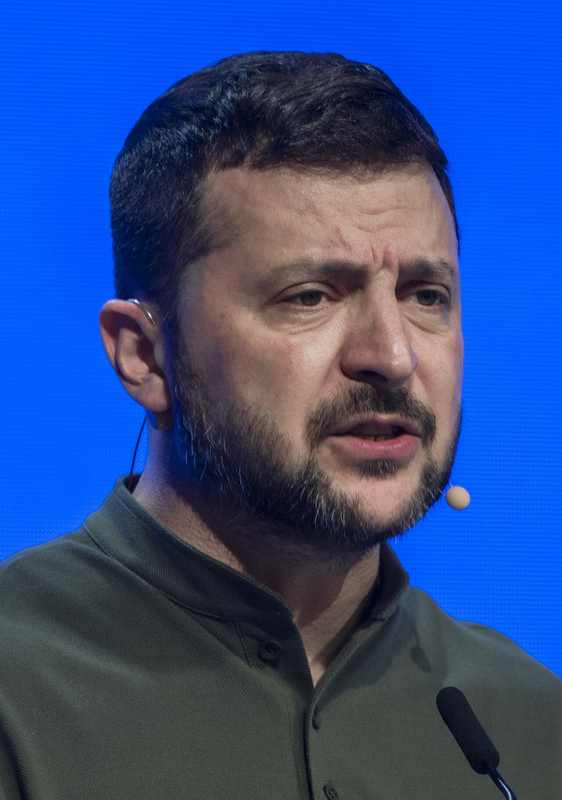
Zelenskyy criticises US support after the Pryluky missile attack
Zelenskyy's sharpest line was also his simplest: “Open Starlink for Ukraine.” He said Washington had enabled capabilities when responding to Iran and asked the United States to “help us defend our skies,” contending that improved access could help force Russian President Vladimir Putin toward negotiations. His comparison fused two separate questions — whether Washington possesses the technical means and whether it is willing to accept the strategic consequences of enabling them.
The remarks came in Pryluky, a northern Ukrainian city hit on Wednesday. Early accounts put the toll at 20 dead, including five children; later reporting raised it to 22, with 54 people injured. Zelenskyy said a Kh-101 cruise missile struck the city during a barrage involving roughly 70 missiles and dozens of Shahed-type drones. Ukraine's air force later said it intercepted at least 44 missiles and 117 of 130 drones. Those figures are claims by Ukrainian authorities, not an independently audited record of every weapon launched or destroyed, but they show the scale of the saturation problem facing air-defence crews.
Why this matters
The dispute is not really about whether Starlink helps Ukraine; it has long supported communications in a battlefield where fixed infrastructure is vulnerable. The dispute is about the boundary between defensive resilience and offensive targeting. Kyiv wants a network that keeps reconnaissance, command links and drone operations functioning near the front and potentially farther into contested space. Washington must decide how much operational reach to enable, under what controls, and with what assurance that the service remains available during a crisis.
That decision could affect both the battlefield and the negotiating room. Expanded access might improve Ukraine's ability to threaten launchers and complicate Russia's missile campaign. It could also reinforce Kyiv's claim that the front is not frozen by military inevitability but by insufficient resources. Refusal would signal that the United States sees escalation management and service-provider limits as more important than granting every capability Ukraine believes it needs.
How Starlink entered Ukrainian drone operations
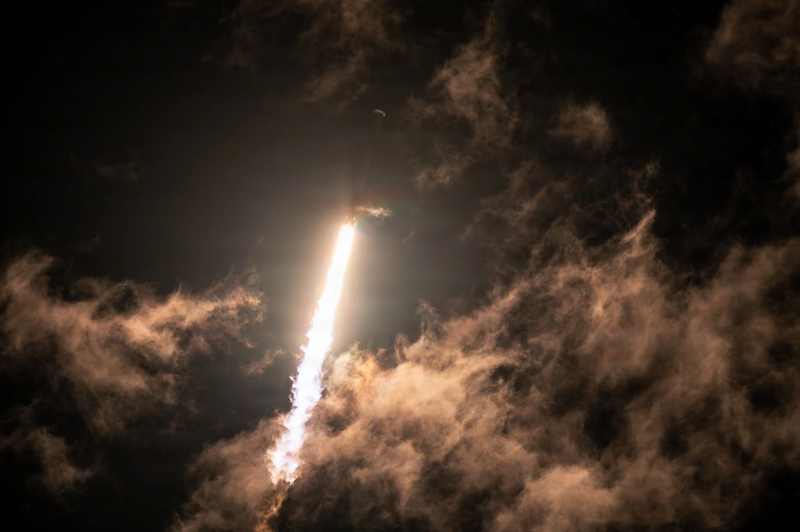
Starlink terminals became crucial after Russia's full-scale invasion because they could reconnect units and civilian institutions when terrestrial networks were damaged or jammed. On the battlefield, that connectivity can carry maps, imagery, targeting data and command traffic. Ukrainian units have also relied on satellite links in drone operations, although the exact configuration varies by platform and mission.
That history explains why Kyiv treats coverage rules as a military variable rather than a consumer-service question. A terminal that works reliably in one area but loses service near another can change which drones fly, how long operators maintain control and how quickly intelligence reaches a firing unit. SpaceX and U.S. officials, however, have previously drawn distinctions between communication support and use that directly enables offensive operations. Those distinctions matter because Starlink is privately operated infrastructure with geopolitical effects.
Starlink Ukraine missile launchers: who gains and who loses?
If access expands
Ukraine would be the immediate beneficiary. Better coverage and fewer operational restrictions could shorten the chain between detecting a mobile launcher and directing a drone or another weapon toward it. Civilians under missile threat could benefit indirectly if even a small number of launchers were disabled or forced to operate farther from effective firing positions. Washington could gain leverage by making the expansion conditional, reversible and tied to geographic or targeting rules.
Russia would lose some freedom to move launch systems and could spend more on concealment, decoys, air defence and electronic warfare. It would also gain a fresh argument that the United States is becoming more directly involved. Moscow has repeatedly presented Western weapons and intelligence support as evidence that it is confronting NATO-backed forces, while Washington and its allies describe their aid as support for Ukraine's right to defend itself.
If access remains limited
The United States and SpaceX would preserve tighter control over where and how the network is used. That could reduce the chance that a commercial system becomes the immediate trigger in an escalation. Critics of expansion also note that satellite links are not a cure-all: launchers are mobile, Russia can jam signals, and a communication advantage does not guarantee detection, identification or a successful strike.
Ukraine would bear the cost of those limits. Operators could face coverage gaps at precisely the moment a target becomes visible, while Russia would retain more room to disperse launchers. The political cost could be just as important: another denied request would strengthen Zelenskyy's case that allies are managing the war rather than enabling Ukraine to alter it.
Does the Iran comparison hold?
Zelenskyy's Iran analogy is rhetorically powerful because it points to a precedent for rapid American technical support against an urgent missile threat. Yet the comparison is incomplete. Different geography, command arrangements, adversaries and escalation ladders make any one-to-one transfer hazardous. A capability used during a contained response to Iran is not automatically equivalent to a persistent targeting architecture in a war involving Russia, a nuclear-armed state.
Still, the analogy exposes a real question for Washington: if a technology can help defend one partner's skies, what principle limits its use for another? The answer may rest less on the technology than on political control. A geographically bounded, time-limited expansion with U.S. oversight would be a different policy from unrestricted access. The administration could also approve connectivity for detection and warning while withholding features or coverage associated with long-range strikes.
The Ukraine stalemate debate: Rubio, the Kremlin and Kyiv
U.S. Secretary of State Marco Rubio has described the conflict as being at a strategic stalemate. The Kremlin publicly agreed. Zelenskyy rejected that shared diagnosis, saying the situation was not a stalemate but “a lack of will.” The clash is more than semantics: every description implies a policy.
If the war is truly stalemated, diplomacy and a negotiated trade-off look increasingly urgent. If it is instead constrained by withheld capability, then additional aid could change battlefield incentives before talks mature. Moscow benefits from the stalemate label if it persuades Ukraine's partners that further military investment will not improve Kyiv's position. Ukraine benefits from disputing it, because its case for air-defence missiles, intelligence support and expanded Starlink access depends on the proposition that outside choices still matter.
Our earlier analysis of the Kremlin's agreement with Rubio on the Ukraine stalemate found that shared language did not erase deep disagreement over the terms of a settlement. Moscow continues to seek a comprehensive deal reflecting its security and territorial demands; Kyiv insists any settlement protect sovereignty and be backed by enforceable guarantees.
The casualty data: two days of strikes, several moving counts
Zelenskyy said Russian attacks killed 78 people and wounded 215 across Ukraine over two days. That is a national aggregate attributed to the Ukrainian president, not a final case-by-case count. In fast-moving mass-casualty events, figures rise as rescue teams reach debris, hospitals report deaths and local authorities reconcile duplicate reports.
The Kramatorsk bus stop strike illustrates that problem. An initial Reuters report put the death toll at at least 12. Ukrainian reporting later said at least 30 people had been killed and 18 wounded, while CNN and The Times reported at least 33 dead. The responsible reading is therefore not to collapse the event into its earliest number, but to state that at least 30 were killed and that major outlets reported a toll of 33 as the count developed.
The United Nations offered a broader but differently bounded measure. UN rights chief Volker Türk said at least 85 civilians had been killed and 346 injured since Monday. His office called the scale and manner of attacks reprehensible while also expressing concern about reports of Ukrainian attacks causing civilian harm in Russian-occupied territory and inside Russia. The Volker Turk Ukraine civilian toll is not directly interchangeable with Zelenskyy's two-day figure because the periods and verification methods differ.
Ukraine air defence and ballistic missiles: the harder arithmetic
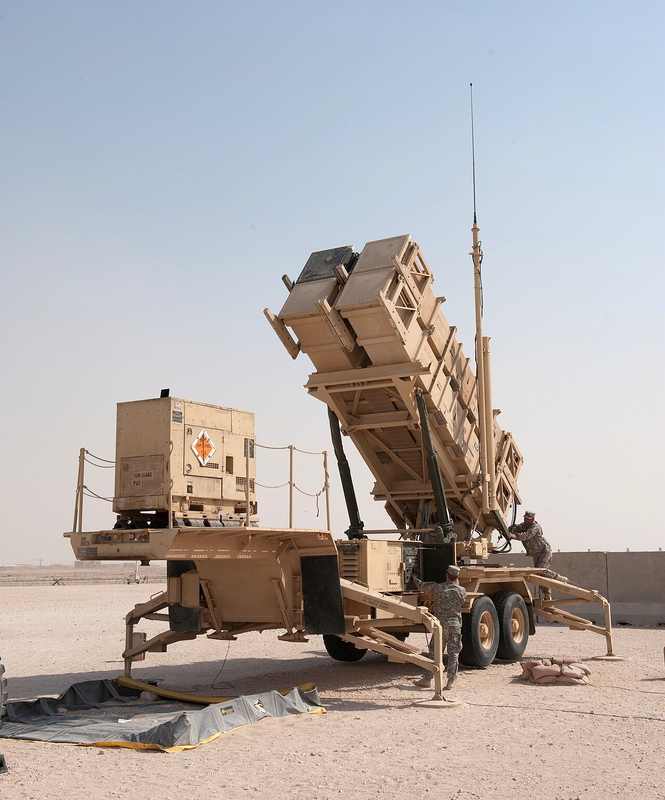
Interception percentages can obscure the operational challenge. If dozens of weapons are stopped but a handful reach dense urban areas, the human result can still be catastrophic. Ballistic missiles leave defenders less time than drones or many cruise missiles, while mixed barrages are designed to saturate radar, exhaust interceptors and force difficult choices about which sites receive protection.
Ukraine's request therefore combines offence and defence. Patriot and other air-defence systems attempt to stop incoming weapons. Expanded satellite connectivity, reconnaissance and drones aim to disrupt the launch cycle before those weapons become airborne. The first approach is expensive and reactive; the second carries greater escalation and targeting concerns. Kyiv argues that relying on interception alone means accepting repeated opportunities for missiles to get through.
Putin negotiating table: leverage or escalation?
Zelenskyy's theory is that greater Ukrainian reach would increase the cost of Russia's campaign and push Putin toward the negotiating table. There is logic to that: bargaining often accelerates when one side fears its position may worsen. Yet pressure does not always produce compromise. It can also lead an adversary to disperse forces, expand attacks or demand more before conceding anything.
Supporters of Kyiv's request argue that refusing tools out of fear of escalation rewards Russia for making threats and leaves Ukrainian civilians exposed. Critics argue that a U.S.-enabled network used to locate and strike Russian systems could blur responsibility and narrow room for crisis control. Both positions confront uncertainty. The relevant policy question is not whether risk can be eliminated, but which package of access limits, oversight and deterrent messaging carries the least dangerous balance of risks.
What happens next: Ukraine peace talks in Miami
Ukrainian negotiators were expected in the United States on Friday and Saturday, October 9 and 10, for talks involving Trump administration envoys Steve Witkoff and Jared Kushner. Our guide to the Ukraine peace talks in Miami examines the proposed energy and grain elements, security guarantees and the possibility that Witkoff and Kushner travel to Moscow later in October.
Starlink now becomes part of the leverage around those meetings, even if it never appears in a public communiqué. Three broad scenarios stand out.
Washington grants controlled expansion
The United States could authorize broader coverage under geographic, technical or mission limits. That would answer part of Kyiv's request while preserving a mechanism to prevent uses Washington considers escalatory. It might strengthen Ukraine's hand before any Moscow visit, but Russia could respond militarily or make the issue a condition in negotiations.
Washington approves defensive use but not launcher targeting
A narrower compromise could prioritize warning, command links and air-defence coordination without enabling operations intended to strike Russian launchers. This would reduce some civilian vulnerability but leave Zelenskyy's central demand unmet. Kyiv could accept the help publicly while continuing to press privately for broader authority.
Washington refuses
A refusal would protect current limits and avoid creating a precedent, but it would deepen the dispute over whether the war is strategically fixed or politically constrained. Ukraine would seek alternative communications, more autonomous drone systems and greater European support. Moscow would read the decision as evidence that escalation concerns can restrict Western assistance.
The immediate test is whether the Miami talks can connect military pressure to a plausible diplomatic sequence. A later Moscow trip may reveal whether the Kremlin's embrace of the word “stalemate” is preparation for compromise or simply an effort to lock in battlefield gains. Zelenskyy's Starlink appeal makes his counterargument unmistakable: Kyiv does not accept that the present balance is permanent, and it wants Washington to prove that assessment wrong.
Sources
- Reuters — Zelenskyy's Pryluky remarks and U.S. talks, October 8, 2026
- The Guardian — Ukraine war briefing on Starlink and the deadly strikes, October 8, 2026
- AnewZ — Ukraine war latest and casualty updates, October 8, 2026
- UN News — Volker Türk on civilian casualties in Ukraine and Russia, October 8, 2026
- Reuters — initial Kramatorsk strike report, October 8, 2026