Miami Ukraine peace talks
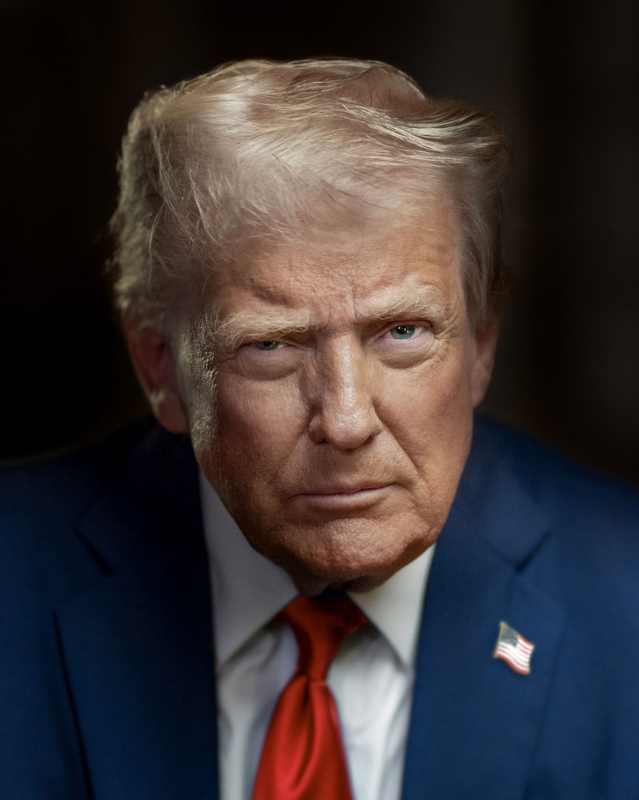
The Miami Ukraine peace talks opening Friday are the most serious American diplomatic push in months to end the war in Ukraine. US envoys Steve Witkoff and Jared Kushner will sit down with a Ukrainian delegation in Miami on Friday and Saturday to discuss new ideas and try to produce a unified proposal, an American source said — hours after the two men briefed President Donald Trump on the latest US plan at the White House. The talks land on one of the war's deadliest weeks, with both Washington and Moscow now publicly describing the conflict as a stalemate.
Axios reported Thursday that Witkoff and Kushner met Trump at the White House to present the latest American proposal and get his input ahead of the Miami sessions, which are expected to last two days. Treasury Secretary Scott Bessent and Deputy National Security Adviser Mike Needham also attended, according to the Axios account. The working agenda, the American source said, covers proposed security guarantees for Ukraine, a postwar prosperity plan, and other aspects of the conflict — and one concrete item under discussion is a partial ceasefire that would halt attacks on energy infrastructure and grain shipments.
Why this matters
Three things make this round different from the many diplomatic efforts that have come and gone over four and a half years of war.
First, the president is personally engaged at the working level. Trump did not merely bless a process; he sat through a presentation of the proposal on Thursday and, by Axios's account, gave his input before the envoys fly to Miami. He has also said he plans to speak with Russian President Vladimir Putin by phone soon. When the principal reviews the paper himself, the envoys carry real authority into the room — and the other side knows it.
Second, the format is enlarged. Washington has invited the national security advisers of Britain, France and Germany, plus NATO and EU officials, to join. That answers one of Kyiv's loudest demands — Zelenskyy said Thursday that Ukraine expects its European partners at the table — and it spreads ownership of whatever emerges. A deal negotiated with Europe in the room is harder for any party to walk away from later.
Third, there is a concrete, testable deliverable on the agenda. A partial ceasefire covering energy infrastructure and grain shipments would be limited, verifiable in its own way, and immediately felt by civilians facing winter blackouts. Ukraine has indicated willingness, Axios reported; Russia has shown little willingness so far. That asymmetry is the whole negotiation in miniature.
The timing sharpens everything. The US midterm elections are weeks away. Winter is approaching with Ukraine's energy grid under heavy attack. And for the first time, both the American secretary of state and the Kremlin spokesman used the same word — stalemate — in public on the same day. When both sides admit neither can win outright, the space for a deal is at its widest. It is also when miscalculation is most dangerous: Rubio warned Thursday that escalation could spill into a sabotage campaign in NATO's neighboring countries.
What’s on the table
According to the American source familiar with the plan, the Miami sessions are built around three baskets: proposed security guarantees for Ukraine, a postwar prosperity plan, and other aspects of the conflict.
Security guarantees are the load-bearing element. Kyiv's consistent position — repeated by Zelenskyy on Thursday when he said Ukraine's negotiators would raise air defences — is that no settlement survives without credible protection against a renewed Russian offensive. What form those guarantees take, and who underwrites them, is the question the Miami format is designed to answer, with European security chiefs in the room.
The postwar prosperity plan is the economic complement: a framework for reconstruction and investment meant to give all sides something to sell at home. American officials have previously linked economic cooperation to diplomatic progress — Zelenskyy himself pushed back Thursday on the idea of negotiating future economic projects with Russia while the war grinds on, calling it incompatible with talk of a diplomatic impasse.
The most immediate item is the proposed partial ceasefire on energy infrastructure and grain shipments. It would pause strikes on the power grid both sides have targeted and protect the grain corridor that feeds global markets. Zelenskyy confirmed Thursday that Kyiv is discussing the idea with Washington, but he cautioned against assuming Russia would agree — and Axios's reporting suggests Moscow has shown little interest so far. A limited truce of this kind has an obvious humanitarian logic; it also has an obvious verification problem, since energy strikes are easy to deny and hard to attribute in real time.
Beyond Miami, Axios reported that Witkoff and Kushner could travel to Moscow later in October for further talks with Putin — a sign the administration sees the Florida sessions as the start of a shuttle, not a one-off.
Who’s in the room
Ukraine's delegation, as named by Zelenskyy, is heavyweight: presidential chief of staff Kyrylo Budanov, Foreign Intelligence Director Rustem Umerov, diplomatic adviser Sergey Kyslytsia, and parliament member Davyd Arakhamia. Budanov and Umerov are two of the most powerful figures in Ukraine's wartime state; their presence signals Kyiv is treating Miami as decision-making talks, not a listening exercise.
The American side centers on Witkoff, Trump's special envoy, and Kushner, the president's son-in-law, who have operated as a pair since their joint visits to Moscow and Kyiv in early September. Representatives of the White House National Security Council and the Treasury Department will join the working sessions — a notable detail, since Treasury's presence hints at sanctions relief and economic instruments being part of the discussion.
The invited Europeans — national security advisers from Britain, France and Germany, plus NATO and EU officials — change the geometry. Past US-led efforts ran largely as bilateral channels with each party; an enlarged table makes it harder to present anyone with a finished text, but easier to enforce one. Zelenskyy said Thursday he is counting on a European team to join his negotiating group.
How we got here
Witkoff and Kushner visited Moscow and Kyiv in early September and have been developing an updated peace initiative since — the “new ideas and proposals” the American source says Miami will take up.
The backdrop to Thursday's announcements was one of the war's bloodiest weeks. On October 7, Russia launched massive strikes on Ukraine's power grid. On October 8, a Russian bomb struck a bus stop in Kramatorsk, killing 33 people — the deadliest single attack of the year. The same day, Ukraine said it struck the Omsk refinery, Russia's largest, in a long-range drone attack.
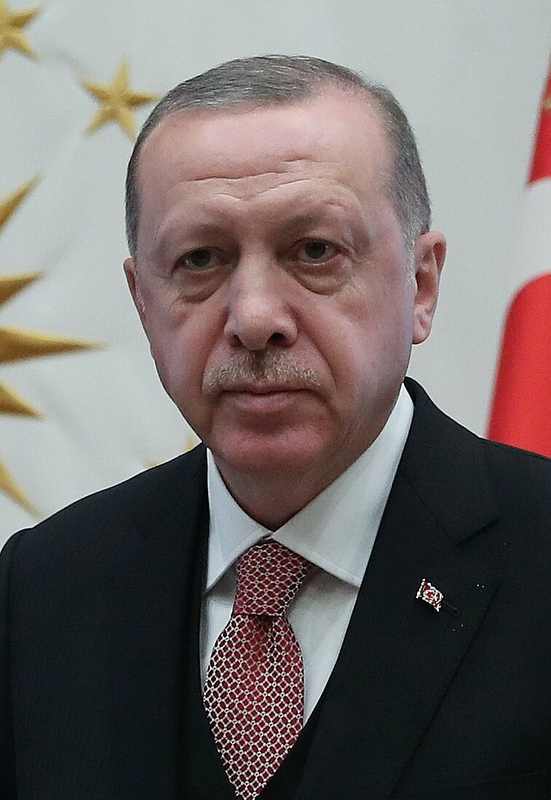
The diplomacy moved in parallel. In Lisbon on Thursday, Secretary of State Marco Rubio called the war a “dangerous stalemate,” said the United States would keep working toward a negotiated settlement, and warned that escalation could become a sabotage campaign in NATO's neighboring countries. In Turkmenistan the same day, Kremlin spokesman Dmitry Peskov agreed the conflict is in a stalemate and said it is up to diplomats to find a way onto a peaceful track — but restated that Russia wants a comprehensive solution, not fragmented temporary measures, and saw no immediate prospect of a three-way Putin-Zelenskyy-Trump summit.
Zelenskyy, speaking in Pryluky after a deadly Russian attack there, urged Trump to step up pressure on Moscow and appealed for American help defending Ukraine's skies — arguing that only strengthened air defence will bring Putin to negotiate. “One cannot, on the one hand, negotiate with the Russians about future economic projects, whilst on the other hand say that we find ourselves in some sort of diplomatic stalemate,” he said, according to Reuters.
Who benefits, who loses
Ukraine: a winter lifeline — with strings attached
An energy ceasefire before winter would be the most tangible gain: fewer blackouts, fewer frozen apartment blocks, less strain on an air-defence network Zelenskyy says is running short. The risk is the familiar one — that a pause freezes the front lines in Russia's favor and trades territory for quiet, with guarantees that prove hollow later.
Russia: the leverage of saying no
Moscow benefits from being courted: a possible envoy visit to the Russian capital later in October, a seat at every table, and the ability to set the price of its cooperation. Peskov's insistence on a comprehensive solution rather than “fragmented” measures is both a negotiating position and a veto threat over the partial ceasefire. The cost to Russia of engaging is low; the cost of being seen to block a humanitarian pause could be higher, especially with European publics watching energy prices.
Europe: a seat it demanded
The invited British, French and German security advisers get what European capitals have asked for since the war began: not to be presented with an American-Russian fait accompli. The American source's note that Europeans voiced frustration over high energy costs and the war's financial toll suggests the economic argument for settlement is doing quiet work in European capitals. The risk for Europe is being drawn into underwriting guarantees it cannot credibly enforce.
Washington: a midterm-season test
For the White House, Miami is a chance to show movement on a war Trump promised to end quickly — weeks before midterm elections. A visible process, European buy-in, and even a limited ceasefire would all be presentable wins. The danger is overpromising: past rounds have produced headlines and little else, and a collapse in Miami would hand critics fresh evidence that the diplomacy is theater.
What critics say
Skeptics of the Miami round make three arguments. First, that partial ceasefires are pauses that favor the attacker: Russia has used past lulls to regroup, rearm and reposition, and an energy truce could simply bank Moscow's gains through winter. Second, that the verification problem is fatal — energy infrastructure is struck by drones and missiles whose origin can be muddied, and grain-shipment guarantees depend on Black Sea behavior neither side fully controls. Third, that the “comprehensive solution” language from Moscow is a tell: the Kremlin has historically used maximalist framing to pocket incremental concessions while conceding nothing.
Supporters of engagement answer that the alternative — no talks while cities lose power — is worse, and that small, verifiable steps are how larger settlements begin. They point to the enlarged format as the real innovation: with European security chiefs and NATO in the room, commitments gain witnesses.
Zelenskyy's own caution Thursday is the note both camps should heed: Kyiv is discussing the energy and grain ceasefire with Washington, he said, but no one should assume Russia will agree. That is not pessimism; it is the negotiating reality, stated plainly.
The numbers
33 killed in a single strike
The Kramatorsk bus-stop bombing on October 8 killed 33 people, making it the deadliest single attack of the year. It is the kind of casualty event that hardens publics against compromise — and the reason the Miami talks open under a cloud of grief and anger. Our reporting on the attack examines the Kramatorsk bus stop bombing in detail.
Weeks to the midterms
The US midterm elections are weeks away. Every diplomatic initiative in an election season carries a double audience: the negotiating table and the voters. That can concentrate minds — or produce performative urgency. Watch whether Miami yields working groups and follow-on dates, which signal seriousness, or only communiqués, which signal the opposite.
A winter campaign already underway
Russia's October 7 strikes on Ukraine's power grid were a preview of the winter campaign: degrade heating and electricity, pressure civilians, force Kyiv to divert air defences from the front. An energy ceasefire would interrupt exactly this strategy — which is why Moscow's lack of enthusiasm, per Axios, is strategically legible. The stalemate both Rubio and Peskov now acknowledge has not stopped either side from trying to improve its position before the cold sets in.
Two days in Miami, then maybe Moscow
The Florida sessions are expected to last two days. If they produce a unified proposal, the reported next step — Witkoff and Kushner traveling to Moscow later in October — would test whether the paper survives contact with the Kremlin. Shuttle diplomacy only works if each stop narrows the gap. Notably, Kushner has been exploring a separate economic channel with Moscow's envoy Kirill Dmitriev around Nord Stream gas infrastructure, as Signal Post News previously reported — a reminder that energy and diplomacy are being negotiated on parallel tracks.

What happens next: three scenarios
A partial energy and grain ceasefire holds
The best near-term outcome: both sides stop hitting energy infrastructure and grain shipments, notification or monitoring mechanisms stand up, and Ukraine's grid survives winter with fewer blackouts. A working truce would build confidence for wider talks and give the Moscow trip something concrete to discuss. The precondition is Russian buy-in that currently shows little sign of existing — which is why Zelenskyy's caution matters more than the optimists' talking points.
The Moscow trip moves the needle
Witkoff and Kushner carry a unified US-Ukrainian-European proposal to the Kremlin later in October. Putin engages on the comprehensive settlement Moscow says it wants, and the partial ceasefire becomes a confidence-building first step rather than a standalone fragment. This requires the Miami table to agree on terms specific enough to survive Russian scrutiny — the hardest diplomatic lift, and the one most past rounds have failed.
The talks collapse and the winter campaign intensifies
Miami produces no unified proposal, Moscow pockets the engagement without conceding, and both sides return to battlefield logic: Russia's winter strikes on the grid, Ukraine's long-range strikes on refineries like Omsk. Rubio's warning about sabotage in NATO's neighboring countries would look less like rhetoric and more like forecast. In this scenario, the stalemate both sides now admit becomes the permanent condition — until the costs force a return to the table. The Kremlin's position, as Peskov laid it out Thursday, leaves the door open but sets the bar at a comprehensive deal few analysts consider close.
For now, the measurable questions are concrete: whether Friday's sessions produce a written unified proposal, whether European security chiefs actually attend, whether the energy and grain ceasefire moves from “under discussion” to agreed — and whether the Moscow trip materializes. Those answers will show whether Miami was a turning point or another Thursday in a long war.
Sources
- Reuters — Witkoff, Kushner to meet Ukrainians in Miami on Friday, says US source
- Reuters — Ukrainian negotiators to visit US for talks on Friday, Zelenskiy says
- Reuters — Kremlin: Russia agrees with Rubio that Ukraine conflict is in a stalemate
- Axios reporting on the White House meeting, as carried by Newsmax, October 8, 2026 — Witkoff and Kushner brief Trump ahead of Miami talks