Kramatorsk bus stop bombing
Kramatorsk bus stop bombingRussian bomb attack KramatorskKramatorsk bus attack casualtiesDonetsk fortress belt citiesRussian guided-bomb strikes UkraineVadym Filashkin Kramatorsk attackUkraine power grid barrage October 7Ukraine winter campaign 2026Kramatorsk civilian infrastructure strike
KRAMATORSK, Ukraine — The Kramatorsk bus stop bombing killed at least 12 people and wounded 14 during the Thursday morning commute, according to Donetsk regional authorities and Ukrainian police. Reuters reported that a Russian bomb struck a street where two city buses were operating. President Volodymyr Zelenskyy described the location as a bus stop. Police images showed debris and the burned shell of a bus.
The numbers must be attributed carefully. They come from Governor Vadym Filashkin and Ukrainian police, not from an independent on-site count by Signal Post News. Sweden Herald separately reported the same figures and said photographs released by the governor showed a burned-out bus beside the road. Neither report included a Russian response, and neither established a detailed public chain of evidence for the exact bomb type.
Those limits do not erase what is known. A crowded civilian transport point was hit in the morning; people were killed and wounded; and the strike landed in the administrative center of Ukraine's remaining defenses in northern Donetsk. What remains unverified is the precise munition model, the target Russia may have intended, and whether commanders had current information about civilians and buses at the site.
What happened in the Russian bomb attack on Kramatorsk
Kramatorsk bus attack casualties: what authorities have confirmed
Filashkin said at least 12 people were killed. Police said 14 were wounded. Reuters described the site as a street used by two city buses, while Zelenskyy called it a bus stop. The difference in wording is not a factual conflict: both accounts place civilian public transport at the center of the scene.
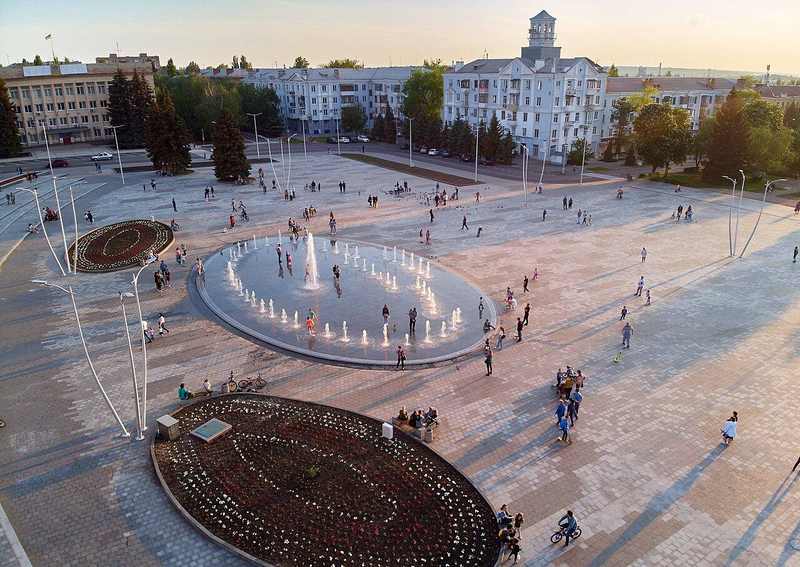
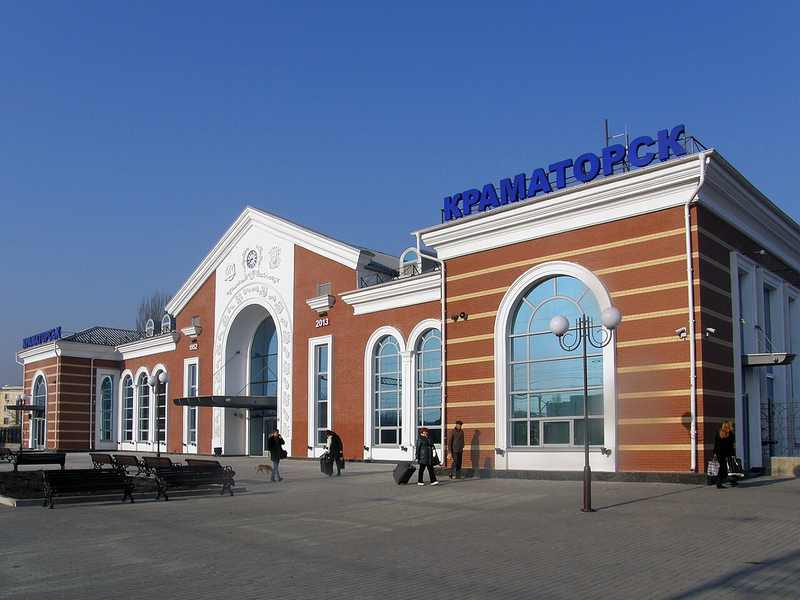
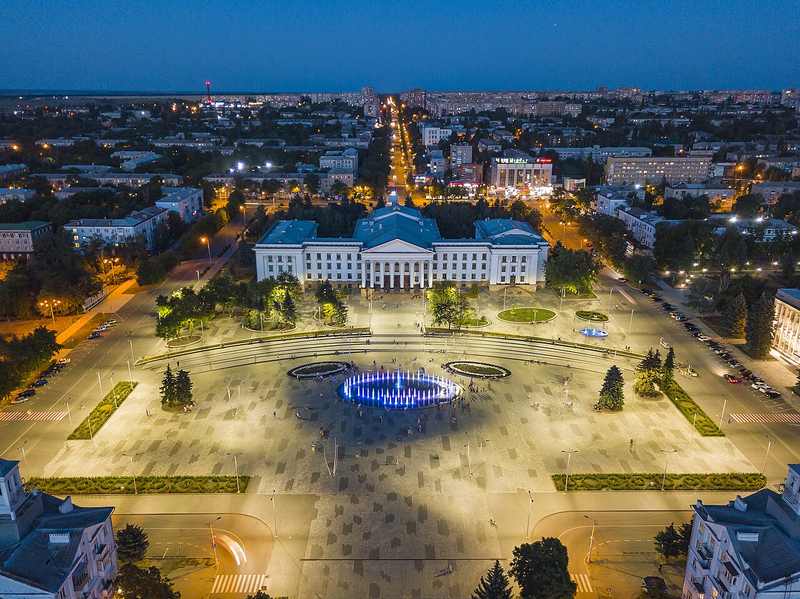
The immediate visual record is consistent with a powerful blast. Police photographs, as described by Reuters, showed scattered debris and a charred bus shell. Sweden Herald reported images of a burned-out bus beside the road. Signal Post News is not reproducing graphic casualty imagery; the photographs used here are clearly labeled file images of Kramatorsk and do not depict the October 8 victims or aftermath.
Filashkin framed the victims as individuals rather than statistics, saying they were people killed by the Russian army. He added: “Russia comes to Ukrainian land with death.” His statement is an official Ukrainian accusation. The two source reports did not carry a response from Moscow, so this article cannot present Russia's explanation, denial or claimed target because none was reported there.
What is still unverified about the Kramatorsk civilian infrastructure strike
The reporting establishes a Russian bomb attack, but it does not publish the forensic evidence needed to identify the munition with certainty. Kramatorsk has increasingly been hit by guided bombs, and this incident sits inside that pattern. Still, pattern is not the same as proof. A responsible account separates the verified casualty scene from the likely-but-not-fully-documented weapon assessment.
Nor do photographs alone settle intent. International humanitarian law distinguishes between a deliberate attack on civilians, an attack on a military objective that causes disproportionate civilian harm, and a strike based on faulty targeting information. The available reporting establishes grave civilian consequences; it does not provide enough evidence to assign one of those legal categories conclusively.
Why this matters
Donetsk fortress belt cities are becoming a contest over daily life
Kramatorsk is more than a place on a map. It is a logistics, medical, administrative and rail hub for Ukrainian-controlled Donetsk. Together with Sloviansk, Druzhkivka and Kostiantynivka, it forms part of the so-called fortress belt — the chain of cities that anchors Ukraine's remaining defenses in the region.
That makes transportation nodes doubly important. They support military and emergency movement, but they also carry workers, older residents, families, patients and evacuees. When a bus stop or a street used by city buses becomes lethal, the effect extends beyond the immediate casualty count. People change routes, employers lose staff, hospitals absorb blast injuries and residents reconsider whether staying is still possible.
Russia benefits militarily if persistent strikes make the fortress belt harder to supply and govern. Ukraine loses when civilian systems thin out around the defensive line. But tactical benefit should not be assumed from the existence of destruction alone. The sources do not report that the October 8 strike hit a military objective, and the visible consequence described by authorities was civilian death around public transport.
Russian guided-bomb strikes in Ukraine compress the warning time
Guided aerial bombs have become one of the defining threats to frontline and near-frontline cities. They pair a large explosive payload with guidance and glide kits that can allow launch aircraft to release weapons from beyond some short-range defenses. For civilians, the practical problem is warning time: a city can face repeated alerts without knowing which strike is aimed nearby or whether a reinforced shelter is reachable.
Kramatorsk has increasingly absorbed that pressure as the ground war moves closer to the fortress belt. Repetition matters. One strike closes a street; a campaign alters behavior across a city. Shops shorten hours, buses become less predictable, municipal repair crews work under continuing risk and families split between those who leave and those who cannot.
How the October 8 toll compares with recent strikes
From Pryluky to Kharkiv: three attacks, 30 reported deaths
The Kramatorsk toll sits inside a brutal four-day sequence. Ukrainian authorities said 13 people were killed in Pryluky during the massive October 7 attack across Ukraine. Five were reported killed in a Kharkiv residential bombing on October 5. Add the at least 12 reported dead in Kramatorsk and the three incidents account for at least 30 deaths.
That comparison is not a national total and should not be read as one. It uses three prominently reported strikes to show pace and scale. The sites, weapons and targeting circumstances differ. What connects them is the repeated exposure of civilians in homes, transport corridors and urban infrastructure to high-explosive attacks over a short period.
The casualty pattern also shows why daily headlines can understate cumulative pressure. A city may appear in the news for one morning, while ambulance crews, trauma wards, bereaved families and utility workers carry the consequences for weeks. The real measure of an air campaign is not only the number of weapons launched but the civilian systems repeatedly forced to absorb them.
Ukraine power grid barrage October 7 changed the context overnight
The previous day's nationwide barrage primarily targeted Ukraine's power grid, according to Reuters, and killed dozens. That sequence matters because Kramatorsk entered October 8 already under the strain created by attacks on electricity and other essential systems. A transport strike after a grid attack multiplies risk: communications can be less reliable, hospitals may depend on backup power and evacuation planning becomes more fragile.
For Moscow, coordinated pressure on energy and fortress-belt cities can serve a coercive strategy: increase the economic and human cost of holding territory through winter. For Kyiv, the response requires two different defenses at once — interceptors and dispersed protection against national barrages, plus shelters, warnings and redundancy for local guided-bomb attacks that may be much harder to stop.
Who benefits, who loses, what critics say
Vadym Filashkin's Kramatorsk attack statement centers civilian loss
Ukrainian officials benefit politically when the human cost of strikes is visible to foreign partners deciding on air-defense aid and sanctions. That does not make the casualties less real; it explains why governments document and publicize attack scenes quickly. Filashkin's language deliberately rejects the idea that deaths can be reduced to an abstract consequence of war.
Russia may benefit if the attack contributes to fear, depopulation and pressure on Ukrainian logistics. But it also faces diplomatic and legal costs when civilian casualties dominate the record. Without a Russian comment in the cited reports, it is not possible to test any claim about a military target against the location, weapon or proportionality of the strike.
The people who lose most are civilians who depend on ordinary public systems. Bus riders, drivers, municipal workers and nearby residents have no practical control over military targeting decisions. Ukraine also loses scarce emergency capacity and the economic activity needed to keep a frontline city functioning.
Critics warn against turning incomplete evidence into certainty
Critics of official wartime reporting note that initial casualty figures can change and that each side has incentives to shape international perception. That warning is valid. The answer is not to ignore official data but to label it: the figures here are attributed to Ukrainian authorities, corroborated across Reuters and Sweden Herald, and subject to revision as identification and medical reporting continue.
The same caution applies to legal and strategic conclusions. Civilian deaths require investigation; they do not, by themselves, prove every element of a war-crimes allegation. Conversely, the absence of a public Russian explanation does not create evidence of a legitimate target. It leaves an evidentiary gap that Moscow could address and independent investigators should examine.
What this signals for the Ukraine winter campaign in 2026
Winter pressure may combine grid attacks with fortress-belt bombing
The October 7 grid barrage and the October 8 Kramatorsk strike suggest a campaign operating at two levels. Nationally, attacks on power generation and transmission can reduce heat, industry and public confidence. Locally, repeated bombing of fortress-belt cities can erode the transport, governance and civilian presence that sustain Ukraine's defense of Donetsk.
The most important indicator is whether this becomes a sequence rather than an isolated pair of days. Watch the frequency of guided-bomb strikes on Kramatorsk and Sloviansk, attacks on substations and rail infrastructure, evacuation orders, and the rate at which local utilities can restore service. Those measures will show whether pressure is intended to produce a winterwide systems crisis.
The Trump-pushed trilateral talks now face a harsher battlefield clock
The Trump administration has pushed for trilateral talks among the United States, Ukraine and Russia before the end of October. Every mass-casualty strike raises the political cost of compromise. Kyiv will face public pressure not to negotiate under bombardment; Moscow may believe military pressure improves its bargaining position; Washington risks presenting a deadline that battlefield actors can use rather than obey.
That does not make diplomacy futile. It makes sequencing decisive. A limited agreement on strikes near civilian transport, energy facilities or evacuation corridors could be tested before broader territorial negotiations. But such an arrangement would require definitions, monitoring and consequences for violations. Without those, a pledge may become another disputed statement after the next explosion.
The Kramatorsk attack therefore matters beyond one terrible morning. It shows how the war is being fought through the systems that keep a city alive and how quickly civilian deaths can narrow the diplomatic space. The casualty toll may be revised, the munition may be identified more precisely and Russia may later issue a response. What should not be revised away is the central fact now supported by both reports: public transport was operating, civilians were killed, and Kramatorsk's margin of safety has narrowed again.
Sources and verification
Casualty figures are attributed to Ukrainian authorities. Both reports carried the same toll; neither included a Russian comment. The precise munition, target and legal characterization remain unverified in the cited reporting.
- Reuters, October 8, 2026 — casualty figures, two buses operating on the street, police imagery, Zelenskyy's bus-stop description and fortress-belt context.
- Sweden Herald — independent publication of the same casualty figures and the governor's burned-bus photographs.