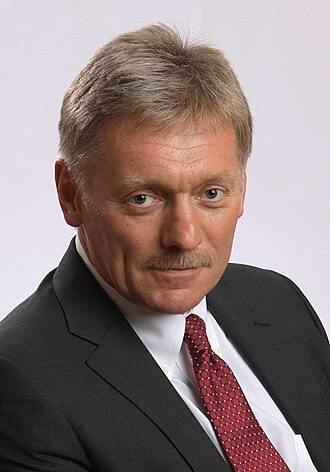
The Kremlin has publicly agreed with U.S. Secretary of State Marco Rubio that the war in Ukraine is locked in a stalemate. “Yes, we agree with him,” Kremlin spokesman Dmitry Peskov told reporters on Thursday on the sidelines of a gathering of ex-Soviet leaders in Turkmenistan, according to Russian news agencies. The endorsement — reported by Reuters and carried by CNN — marks a striking reversal from November 2023, when Peskov insisted the war was “not in a stalemate,” and it lands just one day before U.S. envoys Steve Witkoff and Jared Kushner sit down with Ukrainian negotiators in Miami.
What Peskov actually said
Peskov's remarks, quoted by the Russian state news agency RIA, went beyond a simple nod to Rubio's assessment. He said it was up to diplomats to find a way forward: “The art of diplomacy precisely involves finding some way out that would allow moving onto a peaceful track.” But he paired the conciliatory language with two hard lines.
First, he said he saw no immediate prospect for a three-way summit between Russian President Vladimir Putin, Ukrainian President Volodymyr Zelenskyy, and U.S. President Donald Trump — effectively cooling expectations that the Miami talks could quickly escalate to a leaders' meeting.
Second, he restated Moscow's long-standing position that Russia wants an overall settlement, not a pause: “We are not for a fragmented solution, we are for a comprehensive solution that will allow for sustainable settlement for many, many years, for decades.”
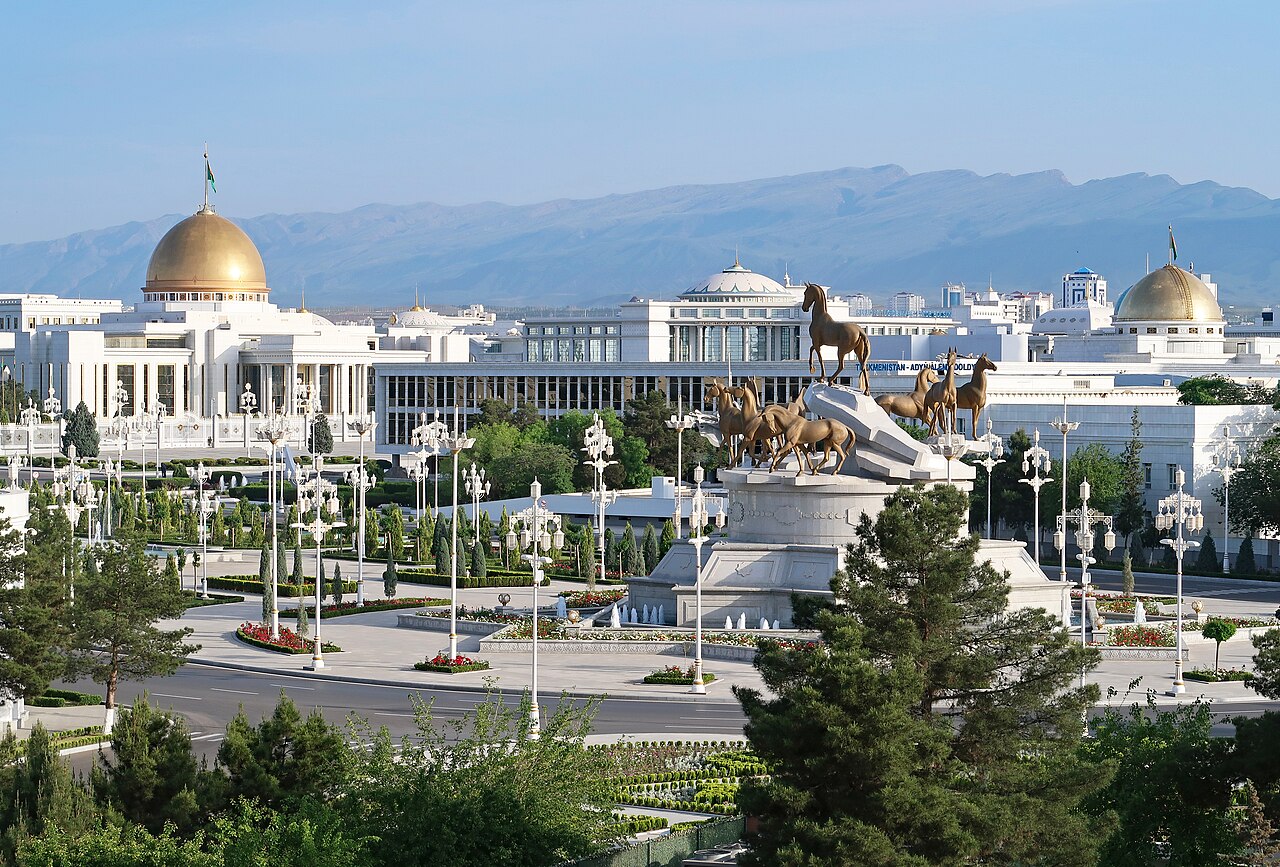
The setting mattered. Peskov spoke in Turkmenistan at a meeting of leaders of former Soviet states — a venue where Moscow traditionally projects confidence, not concession. Choosing that stage to endorse an American diplomat's framing was a deliberate signal.
Why this matters
This is the first time Moscow has publicly adopted Washington's own description of the war. That matters for three reasons.
Language is leverage
For years, the Kremlin has described the conflict in its own terms. By borrowing Rubio's word “stalemate,” Moscow is telling the Trump administration: we see the battlefield the way you do. That is the language of a party preparing to negotiate, or at least preparing to be seen as reasonable while negotiations happen around it.
The settlement language carries the conditions
The “comprehensive solution” line is doing the real work in Peskov's statement. A ceasefire freezes the front lines; a “comprehensive solution” — in Moscow's vocabulary — has consistently meant Ukrainian neutrality, limits on its military, and recognition of Russia's territorial claims. Peskov was endorsing Rubio's diagnosis while quietly rejecting the treatment a mere truce would imply. Anyone reading the headline as a peace breakthrough is missing the sentence that matters most.
The timing is not accidental
Peskov spoke one day before Witkoff and Kushner meet Ukraine's negotiators — Rustem Umerov and Kyrylo Budanov — in Miami on Friday, with Zelenskyy saying Thursday he expects European partners to join. Moscow is positioning itself before the talks produce anything: agreeable on the description, immovable on the terms.
How we got here: from “not a stalemate” to “yes, we agree”
The reversal is worth spelling out, because it measures how far the ground has shifted. In November 2023, Peskov said the war was “not in a stalemate” and that Russian troops would keep fighting until their goals were fulfilled. As recently as July 2026, he rejected a proposal from Kazakhstan's president to freeze the conflict, calling a freeze impossible given Kyiv's position and insisting Russia's operations could end only if Ukraine made the “appropriate decisions.”
This week, Rubio — speaking in Lisbon — called the war a “dangerous stalemate” and described it bluntly as a proxy war between nuclear powers, the United States backing Ukraine and Russia on the other side. That framing was itself a shift in American rhetoric: an admission that neither side is winning.
Peskov's response completes the arc. The Kremlin now agrees with the American assessment it would have dismissed as defeatism two years ago. What it has not changed is the price of peace.
Who gains, who loses, and what the critics say
Moscow gains the most from this exchange in the short term. Endorsing Rubio's framing costs the Kremlin nothing on the battlefield while buying goodwill with an American administration that prizes dealmaking. It also sets the terms of the coming argument: if everyone agrees the war is stalemated, the question becomes what kind of settlement ends a stalemate — and Moscow's answer, a “comprehensive” one, is code for its maximalist demands.
Kyiv, meanwhile, is working a different track. Zelenskyy said Thursday that Ukraine expects its European partners to join the talks with the United States in the coming days, and that his negotiators would put air defenses at the top of the agenda — a direct response to the week's carnage. He also confirmed Ukraine is answering Russian strikes in kind, noting that Ukraine had “mirrored” Russian attacks on data centers with its drone strike on a Yandex facility: “We always respond in mirror-like fashion.”
Washington's position, as Rubio stated it in Portugal, is a “negotiated settlement to this war that is permanent, enduring, and fair.” The adjectives matter: “permanent” and “enduring” echo Moscow's “comprehensive,” but “fair” is doing quiet work for Kyiv.
The critics' warning is straightforward: a shared “stalemate” narrative can become the justification for a frozen conflict that locks in Russia's territorial gains under the banner of realism. Ukrainian officials have spent the war arguing that a ceasefire without security guarantees simply schedules the next invasion. Peskov's rejection of a “fragmented solution” will read in Kyiv as confirmation of that fear — not as an opening, but as a demand.
The analysis has to be honest about what is known and what is not. What is known: both Washington and Moscow now use the same word for the war's condition. What is not known: whether that shared vocabulary leads anywhere, because the two capitals still mean different things by “settlement.”
The numbers behind the stalemate
The word “stalemate” describes the front lines, which the Associated Press notes remain largely deadlocked more than four and a half years into Russia's full-scale invasion. It does not describe the air war, which is escalating sharply.
On Thursday morning, a Russian guided bomb struck next to a bus stop in Kramatorsk, in the Donetsk region, killing at least 33 people and wounding 18 — the deadliest single attack on Ukraine this year, according to CNN. The strike hit two city buses; local authorities suspended public transit in the area.
It followed a massive overnight assault on Wednesday that killed at least 28 people across Ukraine, including 20 — five of them children — when a Russian missile obliterated a five-story residential building in Pryluky, in the Chernihiv region. Zelenskyy said more than 70 people were killed in strikes over the two days.
The pattern is deliberate and legible: with ground offensives stalled, Russia is intensifying its aerial campaign against Ukrainian cities and infrastructure as winter approaches — energy systems, railways, and now public transport. Ukraine, for its part, is striking back deep inside Russia, hitting refineries and, this week for the first time, a major technology target in the Yandex data center. A stalemate on the ground is producing an escalation in the air.
What happens next: Miami, the Europeans, and the summit that isn't happening
Friday's Miami meeting is the near-term test. Witkoff and Kushner will sit with Umerov and Budanov to discuss what Reuters described as “new ideas” aimed at producing a unified proposal for resolving the war. Zelenskyy has said he expects European allies to join the process — a significant detail, since European participation has been the missing piece in U.S.-led efforts so far.
Air defenses will dominate the Ukrainian side of the agenda; after this week's death toll, Kyiv's ask will be interceptor missiles, not talking points. Peskov has already tried to manage expectations: no three-way summit is imminent, and in the Kremlin's telling, summits without expert-level groundwork are “a waste of time.” That is consistent with Moscow's long-standing tactic of slowing diplomacy while accelerating on the battlefield.
Three scenarios now compete
In the first, Miami produces a genuine framework — European buy-in, a unified Western proposal — and the pressure shifts to Moscow to show its “comprehensive solution” is more than a slogan. In the second, the talks produce process without substance, and the winter air campaign grinds on with rising civilian casualties. In the third — the one to watch — the diplomatic fight of the coming months becomes the definition of “comprehensive”: Moscow's version, which bakes in its war aims, versus a Western version built around Ukrainian sovereignty and enforceable guarantees.
The honest assessment: agreement that the war is stalemated is the easiest concession in diplomacy, because it commits no one to anything. The hard part — what a settlement actually contains — has not moved a centimeter. Peskov's statement is best read not as a breakthrough but as a positioning move before the real argument begins.
Sources
- Reuters — “Kremlin: Russia agrees with Rubio that Ukraine conflict is in a stalemate,” October 8, 2026
- CNN — “Russian strike kills at least 33 in eastern Ukraine in deadliest single attack this year,” October 8, 2026
- Reuters — “Zelenskiy says Ukraine expects Europeans to join talks with US,” October 8, 2026