War · Middle East · Iran · Shipping
A Strait of Hormuz ship fire was reported by the UK Maritime Trade Organisation (UKMTO) on Thursday — a vessel seen burning 9 nautical miles north of Khasab, Oman, its crew’s status unknown — on the same morning that Iran’s Islamic Revolutionary Guard Corps (IRGC) Navy claimed, without independent verification, that three tankers had exploded after striking mines in the strait. What is confirmed so far is one reported fire, one investigation and no established cause. Everything beyond that is contested.
Track it live: https://signalpostnews.com/tracker/iran-war
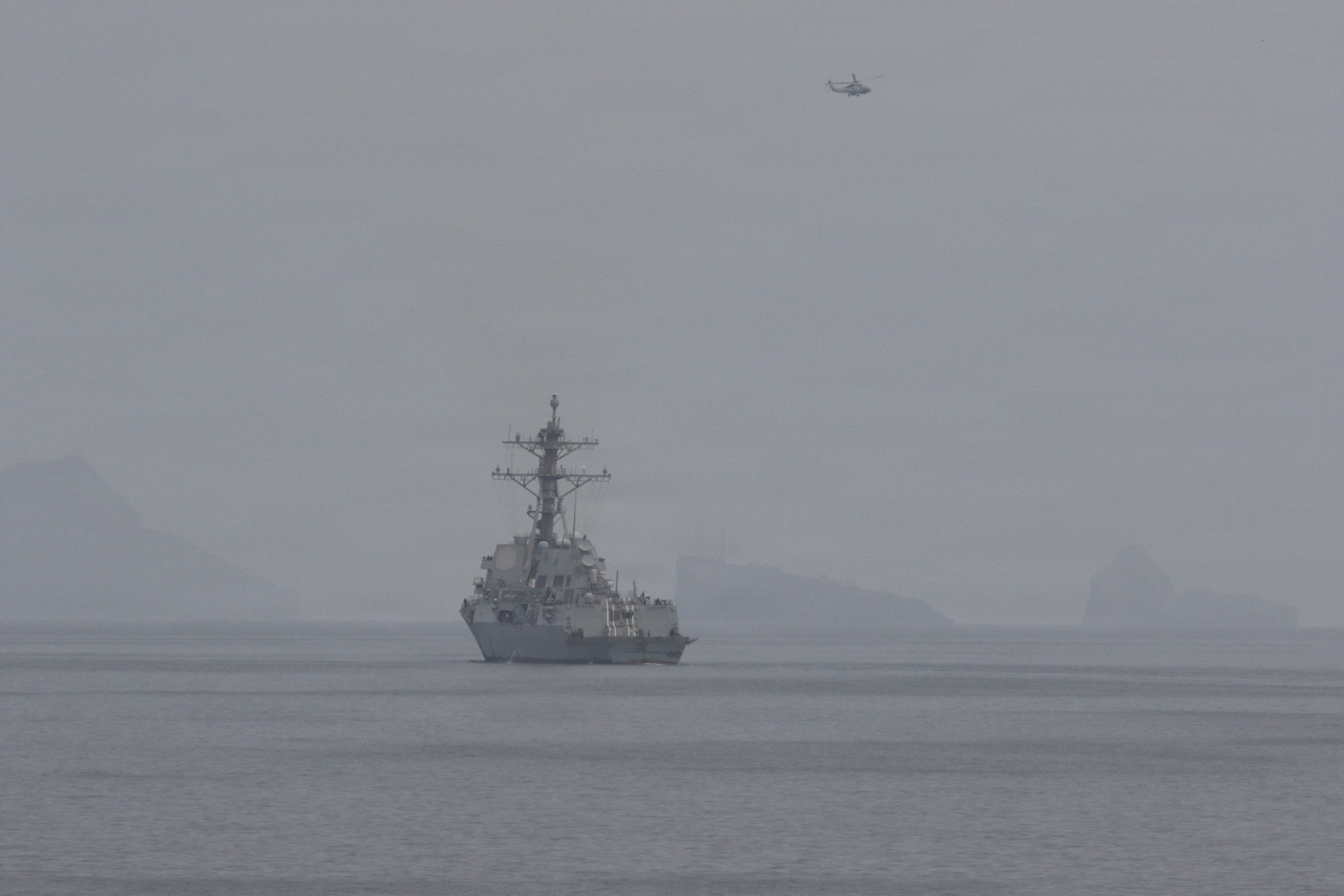
The report that anchors Thursday’s story is deliberately narrow. UKMTO, the Royal Navy-linked reporting centre that acts as the merchant fleet’s point of contact in the region, said it had received a report of a vessel on fire in the Strait of Hormuz, 9 nautical miles (17 km) north of Khasab, Oman. The burning vessel was sighted not by its own crew but by the master of a third-party vessel passing the scene — a detail that explains both why the report exists and why it contains so little else. The crew’s status is unknown. There is, as of publication, no damage assessment and no environmental impact report. UKMTO advised vessels in the area to transit with caution and to report any suspicious activity, and said authorities were investigating. The cause of the fire has not been established.
Set against that narrow, sourced report is a much larger claim. Through the Tasnim news agency and Iranian state media, the IRGC Navy said that over the past 24 hours three tankers had exploded and caught fire after striking mines on what Tehran calls the unauthorised southern route through the strait. The two accounts may describe overlapping events, or they may not. UKMTO has not confirmed that the burning vessel it reported is one of the three tankers in the Iranian claim, no vessel in either account has been named, and the mine claim is not independently verified. This article keeps those two ledgers — the confirmed and the claimed — separate throughout, because on Thursday morning the distance between them is the story.
What is confirmed about the vessel on fire in the Strait of Hormuz — and what is only claimed
Start with what a reader can treat as established. A UKMTO incident report exists: a vessel on fire, at a stated position north of Khasab, sighted by a third-party master, reported by Reuters and AFP from the UKMTO advisory. The position places the incident off the Musandam Peninsula, the Omani exclave that forms the strait’s southern shore; Khasab is its main port. The strait at its narrowest is about 34 km wide, and the reported position sits inside one of the most closely watched stretches of water on earth, through which roughly a fifth of global petroleum liquids trade normally passes. None of that context, however, answers the questions that matter most about the burning ship itself: what vessel it is, what flag it flies, what cargo it carries, whether anyone aboard has been hurt, and why it is burning. On each of those points, the public record on Thursday morning is silent, and the honest sentence is the one UKMTO’s advisory supports: crew status unknown, cause not established, investigation under way.
Everything else in circulation is claim, and the claims should be labelled with their source each time they are repeated. The mine account comes from the IRGC Navy, an interested party in an active conflict, relayed by Tasnim and Iranian state media. The United States, the other principal party, denied similar Iranian mine claims only a day earlier, on October 28, through US Central Command (CENTCOM) — a denial that also comes from an interested party and that addressed earlier claims, not Thursday’s fire specifically. Neither side’s say-so, on its own, establishes what happened 9 nautical miles north of Khasab. That is not fence-sitting; it is the evidentiary position the available sourcing supports, and it is the position UKMTO itself has taken by reporting a fire without assigning a cause.
The IRGC mine claim: three tankers hit mines in Hormuz, Tehran says
The Iranian account, as reported by Tasnim and state media, is specific in its narrative and empty in its particulars. The IRGC Navy said three tankers, over the past 24 hours, struck mines on the southern route, exploded and caught fire. It said the tankers had switched off their radar and navigation systems, had ignored IRGC Navy warnings, and had been abandoned along the southern shores of the strait. It said the route is mined, that shipowners and crews bear responsibility for what happened, that crews should ignore CENTCOM, that pollution resulted from the incidents, and that provocative action would meet a decisive response. Those are the claims, attributed here to the service that made them.
What the claim does not contain is equally notable: no vessel names, no flags, no IMO numbers, no crew nationalities, no casualty figures, no photographs or coordinates that outside analysts could check against satellite imagery or shipping data. A claim of three burning tankers is, in principle, highly verifiable — tankers are large, tracked and insured, and three fires in the world’s most surveilled chokepoint would leave traces in half a dozen independent data sets. None of that corroboration had appeared in the sources reviewed by publication time. Signal Post News’s earlier coverage of the October 17 claim — in which the IRGC said two tankers hit mines in Hormuz — records the same pattern: a detailed narrative from Tehran, and no independent confirmation afterwards.
A pattern of claims: October 17, October 18 and October 22
Thursday’s claim is the third of its kind in under two weeks. On October 17, the IRGC claimed two tankers had hit mines in the strait; that claim was never independently confirmed. On October 22, a larger claim — seven vessels — was disputed. Between them, on October 18, came an incident of a different and firmer character: a tugboat struck by two unknown projectiles near Khor Fakkan, on the UAE’s Gulf of Oman coast — an attack with a named type of vessel, a location and physical impacts, but with the attacker unidentified. The sequence matters for how Thursday should be read. The strait has produced both real attacks on shipping and unverified claims about shipping, sometimes within days of each other, and the region’s confirmed incident toll — set out below — has climbed to record levels even counting only what can be verified, as Signal Post News reported in its tally of how Hormuz ship attacks reached a record high. A new claim therefore lands on ground that is genuinely dangerous and genuinely disputed at the same time.
A separate, unverified claim: a US MQ-1 drone near Sirik
Unverified claim, reported separately: Iranian outlets including ISNA also reported on Thursday an IRGC claim that a US MQ-1 drone had been downed east of the strait near Sirik, on Iran’s coast. No US confirmation of that claim appeared in the sources reviewed, and it is unconnected, on the available evidence, to the vessel reported on fire off Khasab. It is recorded here, in one paragraph and clearly labelled, because it forms part of the same day’s information contest around the strait — and for no stronger reason than that.
Two traffic regimes in one strait: the IRGC authorised-route doctrine vs the US blockade and JMIC regime
To understand why a mine claim — proven or not — does work in the world, it helps to see that the Strait of Hormuz is currently governed by two rival traffic regimes, each with its own rules, its own enforcers and its own account of what a lawful transit looks like.
The first is Tehran’s. In the IRGC Navy’s doctrine, as expressed in its statements this month, there is an authorised route through the strait and an unauthorised southern route, and vessels are expected to heed IRGC warnings, keep their navigation systems on and follow Iranian direction. Thursday’s claim was framed entirely inside that doctrine: the tankers, Tehran said, were on the wrong route, dark and unresponsive, and what befell them was the consequence the doctrine predicts. Whether or not any mine was struck, the statement functions as an enforcement notice for that regime — a warning to every master planning a transit that the southern route, in Tehran’s telling, is mined and sailed at the crew’s own risk, and that CENTCOM’s guidance should be ignored.
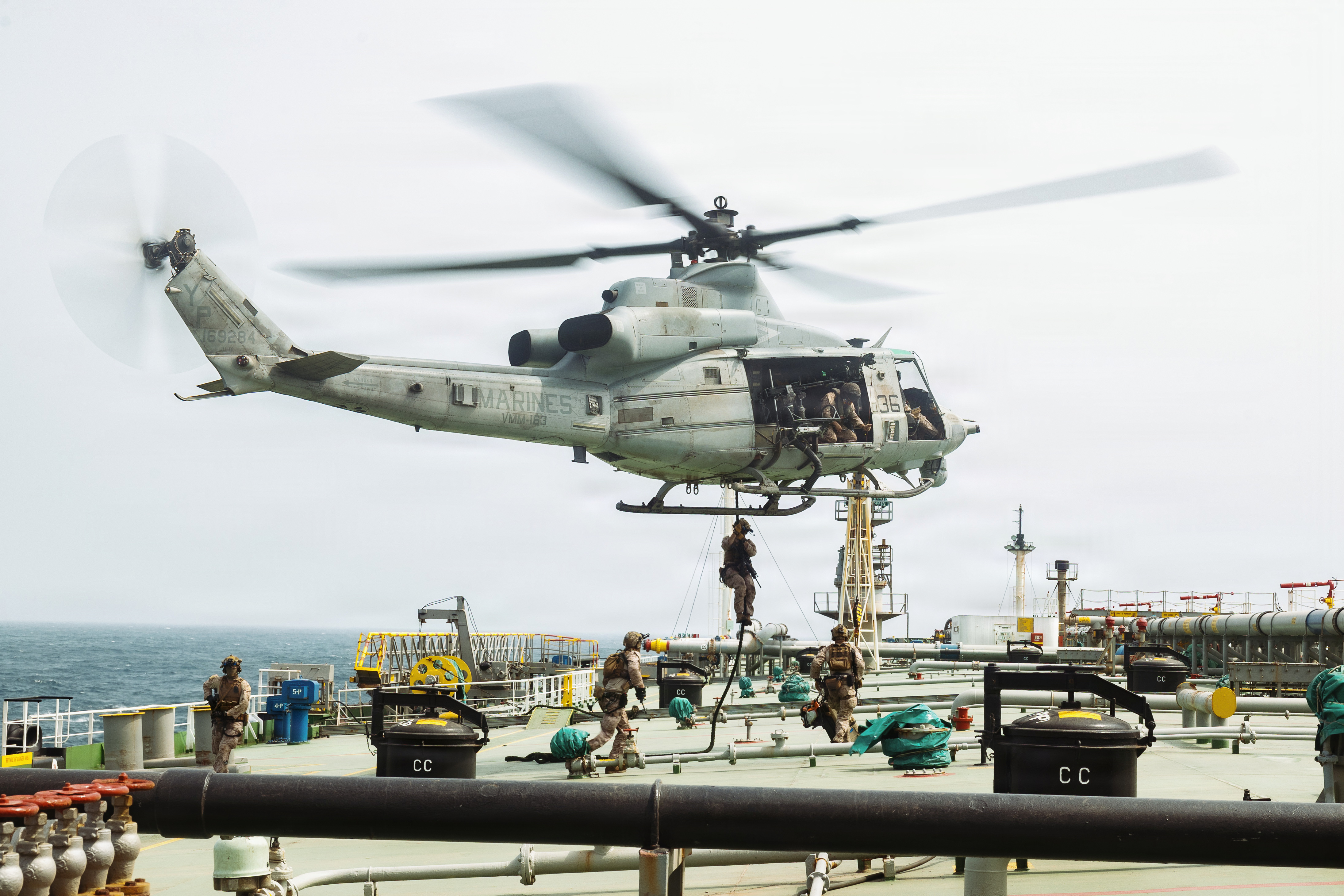
The second regime is Washington’s, and it was restated the day before the fire. In an advisory dated October 28, the Joint Maritime Information Center (JMIC) — the US-led body that issues guidance to merchant shipping in the region — said the United States is enforcing a blockade of all Iranian ports and coastlines. Neutral vessels travelling between neutral ports in the Gulf of Oman and the strait, the advisory said, may be questioned, boarded and searched. It told ships to keep a listening watch on VHF Channel 16, the international distress and calling frequency, and to carry signed and stamped paperwork: port clearances, the bill of lading, the vessel’s registry, an agent’s letter and a terminal booking. The blockade is also the backdrop to the procurement war documented in Reuters’ investigation of Iran’s secret MOD sanctions-evasion network, which found military cargo still moving past it.
Merchant crews are thus being given two incompatible sets of instructions by two armed authorities in the same 34-kilometre channel. Follow Tehran’s route discipline, and a vessel may present itself for American boarding as a suspected blockade runner; follow Washington’s documentation and inspection regime, and a vessel may be treated by the IRGC as defying the strait’s self-declared manager. The JMIC paperwork list and the IRGC’s route warning are, in effect, competing constitutions for the same water. Thursday’s fire — whatever caused it — occurred inside that constitutional collision, and every claim made about it since is also a bid to govern the traffic that follows.
Why this matters: an unproven mine claim still moves Hormuz oil shipping risk
It would be a mistake to conclude that because the mine claim is unproven, it is inconsequential. Shipping does not wait for proof; it prices risk. The moment a strait is said — by the navy of one of its littoral states — to be mined on a named route, war-risk insurers reprice transits, owners reroute or pause, charterers renegotiate, and masters demand clearer orders before entering the channel. A mine, uniquely among weapons, does not need to be believed in by a government to be believed in by an underwriter: the cost of being wrong about a mine is a hull, a cargo and a crew, so the prudent commercial response to even a doubtful mine claim is to treat the water as suspect until someone with survey capability says otherwise. Tehran does not need to lay a single additional mine, on this logic, for the claim of mining to raise the cost of every transit — which is precisely why such claims are made, and precisely why Washington answers them within a day, as CENTCOM did on October 28.
The human arithmetic runs underneath the commercial one. The International Maritime Organization (IMO) counted, as of October 27, 121 confirmed incidents in this crisis and 24 confirmed seafarer fatalities — confirmed being the operative word, in a week when thousands of mariners remained effectively trapped in the Gulf by the fighting, as Signal Post News reported in its account of the 6,000 seafarers trapped by the Hormuz crisis and the IMO’s warning. IMO Secretary-General Arsenio Dominguez has said the organisation’s channels with Iran remain open — a line of communication that matters on days like Thursday, when the first unanswered question about a burning ship is whether its crew is alive. Every unverified claim that raises the risk premium also raises the temperature for the crews already inside the strait, who cannot diversify, reroute or log off.
The numbers in context: 121 confirmed incidents, 24 dead, and a $20 Brent crude Hormuz war premium
Three sets of numbers frame Thursday, and keeping them apart is the whole discipline. The first is the verified toll: 121 confirmed incidents and 24 confirmed seafarer fatalities, per the IMO as of October 27. Those figures are floors, not totals — they count only what the IMO could confirm — but they are built incident by named incident, and they exclude every claim, including Thursday’s, that has not met that standard. The second set is the claimed toll: two tankers on October 17, seven vessels on October 22, three tankers on Thursday — twelve hulls in twelve days in Tehran’s telling, none of them independently confirmed, none of them named. Readers presented with a single merged number for “ships hit in Hormuz” should ask which ledger it came from; the two ledgers currently differ by exactly the claims.
The third set is the market’s, and it is notably calmer than either. Brent crude futures stood at $114.10 a barrel at 0351 GMT on Thursday, down 1.1 percent on the day, after rising 1.3 percent on Wednesday, as hopes for peace talks offset fears about supply, Reuters reported. JPMorgan puts Brent’s fair value near $94 a barrel — implying that roughly $20 of the current price is war premium, the market’s own running estimate of what the Hormuz crisis adds to a barrel. The same bank calculates that crude delivered to Asia has averaged $131 a barrel in October, a measure of what the region that most depends on Gulf supply has actually been paying. Read together, the prices say something neither capital’s statements do: traders are charging heavily for this war, but on Thursday morning they were charging slightly less than the day before — a reminder that an unverified claim moves insurance and rhetoric faster than it moves the oil price, and that peace-talk headlines remain the premium’s other great driver.
Who benefits, who loses — and who bears the risk in the Khasab Oman vessel fire story
The claim, if it is a claim made for effect, benefits its maker in several currencies at once. For Tehran, an unverified mine narrative advertises deterrence at no material cost: it asserts control over the strait’s geography, punishes the idea of the southern route, warns crews off CENTCOM’s guidance, and does so in a form — mines, the anonymous weapon — that is hard to disprove quickly. It also speaks to a domestic audience and to the wider region about Iranian resolve while the blockade tightens around Iranian ports. Critics of Tehran, in Washington and in Gulf capitals, answer that a state which claims its own declared shipping routes are mined is advertising a hazard to neutral commerce that international law and basic seamanship oblige it to prevent, not publicise — and that a pattern of unconfirmed claims corrodes the credibility Iran would need on the day it reports something real.
Washington’s position carries its own exposures, and its critics make them plainly. The blockade regime restated by JMIC on October 28 subjects neutral shipping between neutral ports to questioning, boarding and search — measures the United States defends as enforcement against a sanctioned war economy, and that critics, including in Tehran and among shipping interests, describe as a superpower asserting a right to police other nations’ trade in an international strait. A burning, unnamed vessel off Khasab is, for those critics, the blockade’s fog made visible: a sea so crowded with rival enforcers that a ship can be reported on fire with no authority able or willing to say whose it is, or why. Defenders of the US posture reply that CENTCOM’s prompt denial of Wednesday’s mine claims, and JMIC’s published, paperwork-based rules, are what transparency looks like next to anonymous mine claims — and that the confirmed incident record, not the claim record, is what the blockade exists to answer.
The losers’ ledger is less contested. Shipowners lose either way: premiums and delays rise on claims alone. Insurers and charterers absorb volatility they cannot verify. Gulf exporters watch the premium on their lifeline widen; Asian refiners, paying an average $131 a barrel for delivered crude in October on JPMorgan’s figures, absorb the strait’s risk in their input costs. Oman, whose Musandam exclave hosts the reported position off Khasab and which has kept its own counsel through the crisis, acquires another incident in its waters without having made any of the claims about it. And at the bottom of every ledger stand the crews — the unknown complement of one burning ship, and the thousands of seafarers the IMO counts as trapped — who bear, in person, risks that are argued about in the language of doctrine by authorities on both shores. Whatever is eventually established about Thursday’s fire, that distribution of risk is already a fact.
What happens next for the UKMTO Hormuz incident today
The claim now meets a short list of tests, and readers will be able to grade it against each. First, a UKMTO update: the organisation that reported the fire can be expected to say more as authorities investigating report back, and a UKMTO notice that names the vessel, its flag and its crew’s condition would convert Thursday’s central unknown into fact — including the pivotal question of whether the burning ship is one of Tehran’s three tankers or a fourth, separate casualty. Second, the data trail: three exploded tankers cannot hide from AIS records, satellite fire and oil-slick imagery, port-state reports and insurers for long; corroboration, or its continued absence, will speak. Third, a CENTCOM response addressed to Thursday’s specific claim, following its denial of similar claims on October 28: a denial with evidence, a confirmation, or silence each carries a different meaning. Fourth, the IMO channel: with Secretary-General Dominguez’s lines to Iran open, any coordinated accounting of the three claimed tankers’ crews would be hard evidence of a kind no press statement is.
Two dated pressures hang over all of it. In the United States, the November 3 midterm elections sit five days out, and the administration’s Hormuz posture — blockade, denials, and a president who has publicly tied his hands on new strikes before the vote — will be read through that calendar by every capital watching the strait. In the Gulf, Qatari mediators are circulating a draft aimed at ending the war, and every incident at the chokepoint is simultaneously a battlefield event and a negotiating fact: leverage for whoever can credibly claim to control the strait’s safety, and a liability for whoever is blamed for endangering it. A verified mine strike would harden positions; a claim that dissolves under scrutiny would weaken its maker’s hand in the same talks. Which of those Thursday produced is not yet known. What is known — one ship reported burning off Khasab, its crew unaccounted for, in a strait carrying a fifth of the world’s petroleum under two rival sets of rules — is enough to make the verification, when it comes, matter well beyond one hull.
Signal Post News will update this story when UKMTO, the IMO or the parties to the claims publish information that confirms or refutes them.
Sources
- Reuters via Devdiscourse — UKMTO received a report of a vessel on fire in the Strait of Hormuz, 9 nautical miles north of Khasab, Oman, sighted by the master of a third-party vessel; crew status unknown; UKMTO advised caution and reporting of suspicious activity, and authorities are investigating.
- AFP via Pakistan Point — wire reporting of the UKMTO advisory of a ship catching fire near Oman in the Strait of Hormuz.
- Safety4Sea — the UKMTO vessel-fire report set alongside the US enforcement of a blockade of Iranian ports, the JMIC advisory of October 28 (questioning, boarding and searching of neutral vessels; VHF Channel 16 watch; signed and stamped documentation), and the IRGC claims reported by Iranian state media, including the Tasnim account of three tankers and the separate claim of a US MQ-1 downed near Sirik.
- Reuters (oil markets) via WNCY — Brent futures at $114.10 a barrel at 0351 GMT Thursday, down 1.1 percent after a 1.3 percent rise Wednesday, as peace-talk hopes offset supply fears; JPMorgan’s Brent fair value near $94, implying roughly a $20 war premium, and its figure of $131 a barrel as October’s average for crude delivered to Asia.