Tankers hit mines in Hormuz is the claim Tehran made twice on Saturday: Iran's Revolutionary Guards Navy said two oil tankers, each carrying about two million barrels of crude, struck naval mines while crossing the Strait of Hormuz on unauthorised routes and caught fire — a claim Reuters reported with the explicit caution that there was no independent confirmation of it.
Two Burning Supertankers, One Claim — and No Independent Proof Yet
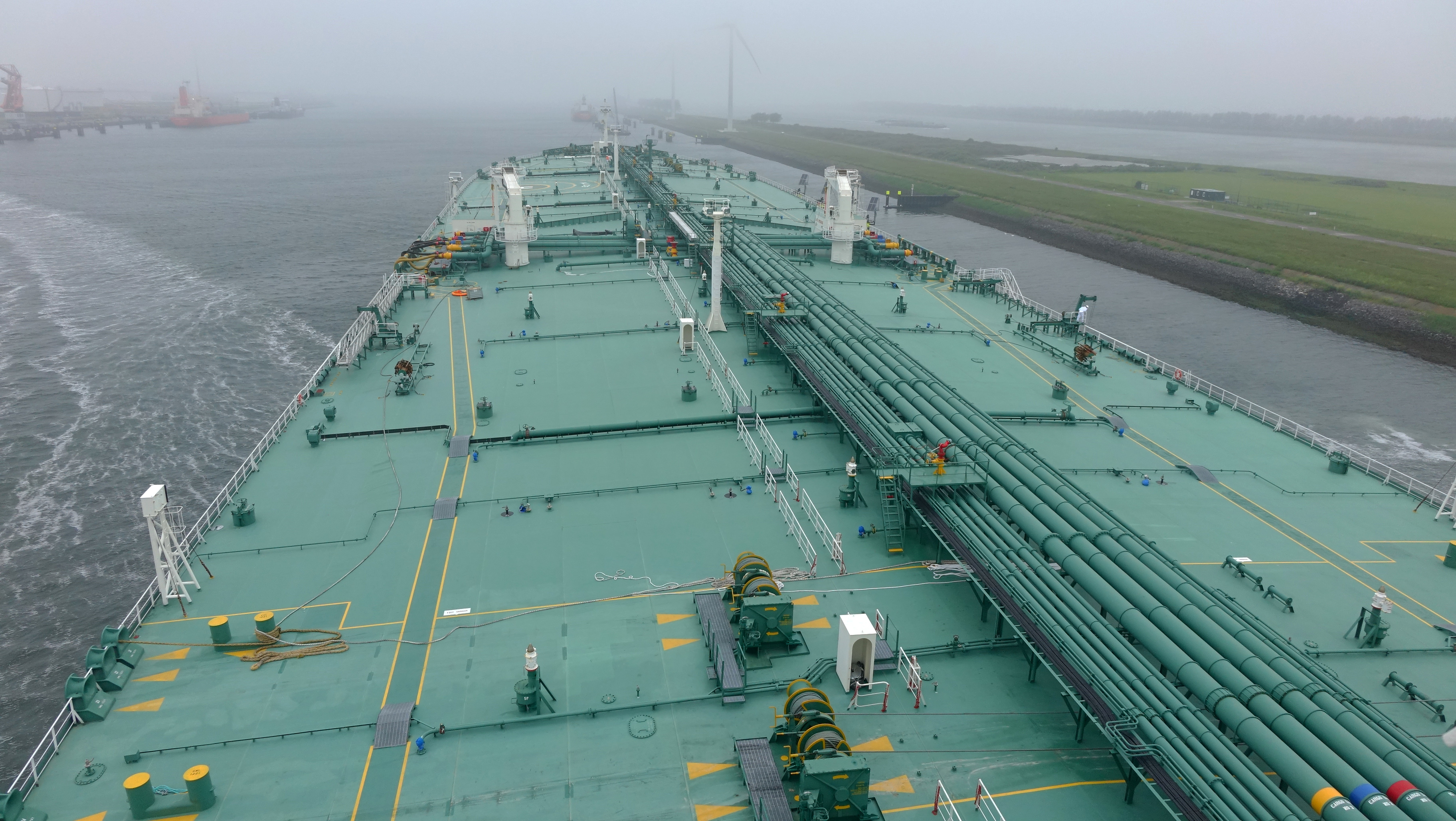
STRAIT OF HORMUZ — Tankers hit mines in Hormuz twice on Saturday, if Iran's account is true. The Islamic Revolutionary Guard Corps (IRGC) Navy said on Saturday that two oil tankers had caught fire after hitting naval mines while crossing the Strait of Hormuz, the official Iranian news agency IRNA reported, in a dispatch carried by Reuters. State media said both tankers were carrying about two million barrels of crude oil — the standard cargo of a very large crude carrier, among the biggest ships afloat. The second vessel, IRNA reported, was left immobilised after striking a mine. In a fuller account carried by Xinhua via IANS, the IRGC Navy said the second tanker's explosion occurred on Saturday morning, caused a "huge" fire, and blew out in the vessel's engine room, bringing the ship to a halt. Hours earlier, the same force had announced the first claimed strike of the day: a supertanker that, it said, struck a mine, triggered an explosion and caught a "fierce fire" while attempting the strait on an unauthorised route.
Reuters' caution belongs in the first paragraphs, not the last: there was no independent confirmation of the reports. No vessel name, flag, owner or cargo has been published for either ship. No crew casualties have been reported by any shipping company, flag state or maritime authority. The United Kingdom Maritime Trade Operations centre (UKMTO) — the Royal Navy-run hub that documented Friday's tanker attacks off Saudi Arabia within hours — had issued no advisory describing a mine strike in the Strait of Hormuz on Saturday in the reporting available by Saturday afternoon. And the United States military, which says it and its partners — not Iran — control the strait, had not confirmed any mine incident. What follows is an accounting of the claim, the counter-claim, and why the gap between them is itself the story.
Track it live: Live global wars tracker · Iran war tracker · Middle East war map
What the IRGC said, in its own terms
Both claimed incidents follow an identical script in Tehran's telling, and the repetition is deliberate. IRNA reported that the vessels had switched off their positioning and radar systems — their AIS transponders and navigation aids — and attempted to use an unauthorised route through the strategic waterway. The IRGC Navy's statement on the first tanker, carried by its official outlet Sepah News and reported by Xinhua, said the ship was seeking to cross through an "unauthorised" route "within the preceding hours," that the explosion resulted in a "massive" fire, and that the waterway was closed. Iran's Fars news agency released a video that appears to show a vessel engulfed in flames; the footage has not been independently verified, and it carries no visible name, location or timestamp that would tie it to a specific ship on Saturday.
The IRGC Navy's framing, quoted by the Brussels Reporter from the force's statement, was openly threatening: "The Strait of Hormuz is closed, and the consequence of defying Iranian regulations in the Strait of Hormuz is burning in the fire of trust in the terrorist US army." Speaking to state-run IRIB TV on Tuesday, IRGC Navy Commander Ali Azmaei had already laid the predicate for Saturday's claims, saying his troops control the Persian Gulf and the Strait of Hormuz "round the clock," that the Gulf of Oman is under the control and supervision of Iran's navy, and warning that those violating shipping rules under U.S. "deception or provocation" would face a decisive response. On Wednesday, the same force said a "violating" container ship attempting an unauthorised, high-risk route sank after hitting a naval mine south of the waterway — the vessel maritime officials and CENTCOM's subsequent accounting identified in connection with the Singapore-registered container ship GFS Pride, whose crew was safely evacuated and whose sinking Washington attributed to Iran itself, a dispute we covered in our reporting on the GFS Pride sinking in the Strait of Hormuz.
The counter-claim: Washington says the strait is open
The American position, stated before Saturday's claims and not withdrawn after them, is the mirror opposite of Tehran's. U.S. Central Command commander Admiral Brad Cooper said in an update on Friday that U.S. forces are working with regional allies and partners in the shipping industry to keep vessels safe in the strait. "Let me be clear, the Strait of Hormuz is controlled by the United States and our regional partners, not Iran," he said. "It remains open for business." The U.S. military has consistently refuted claims that the IRGC controls the strait, asserting that commercial vessels continue to navigate the region despite what it calls unwarranted IRGC aggression.
Both claims cannot be wholly true, and Saturday's tanker reports sit exactly on the seam between them. If two laden supertankers really struck mines and burned, the strait is not "open for business" in any sense a shipowner or insurer would recognise — a mined waterway is closed by definition until it is swept, and no navy can escort a ship past a weapon it cannot see. If, on the other hand, no ship struck a mine on Saturday, then the IRGC has manufactured — or radically embellished — a maritime disaster in the world's most important oil chokepoint, and that too is a fact of the first importance, because claims alone move insurance rates, freight markets and oil prices whether or not anything burned. What the evidence published by Saturday afternoon supports is narrower than either capital's version: an Iranian state claim, reported accurately by two international wires, Reuters and AFP, with no independent confirmation behind it.
A Saturday that began off Jubail, not Hormuz
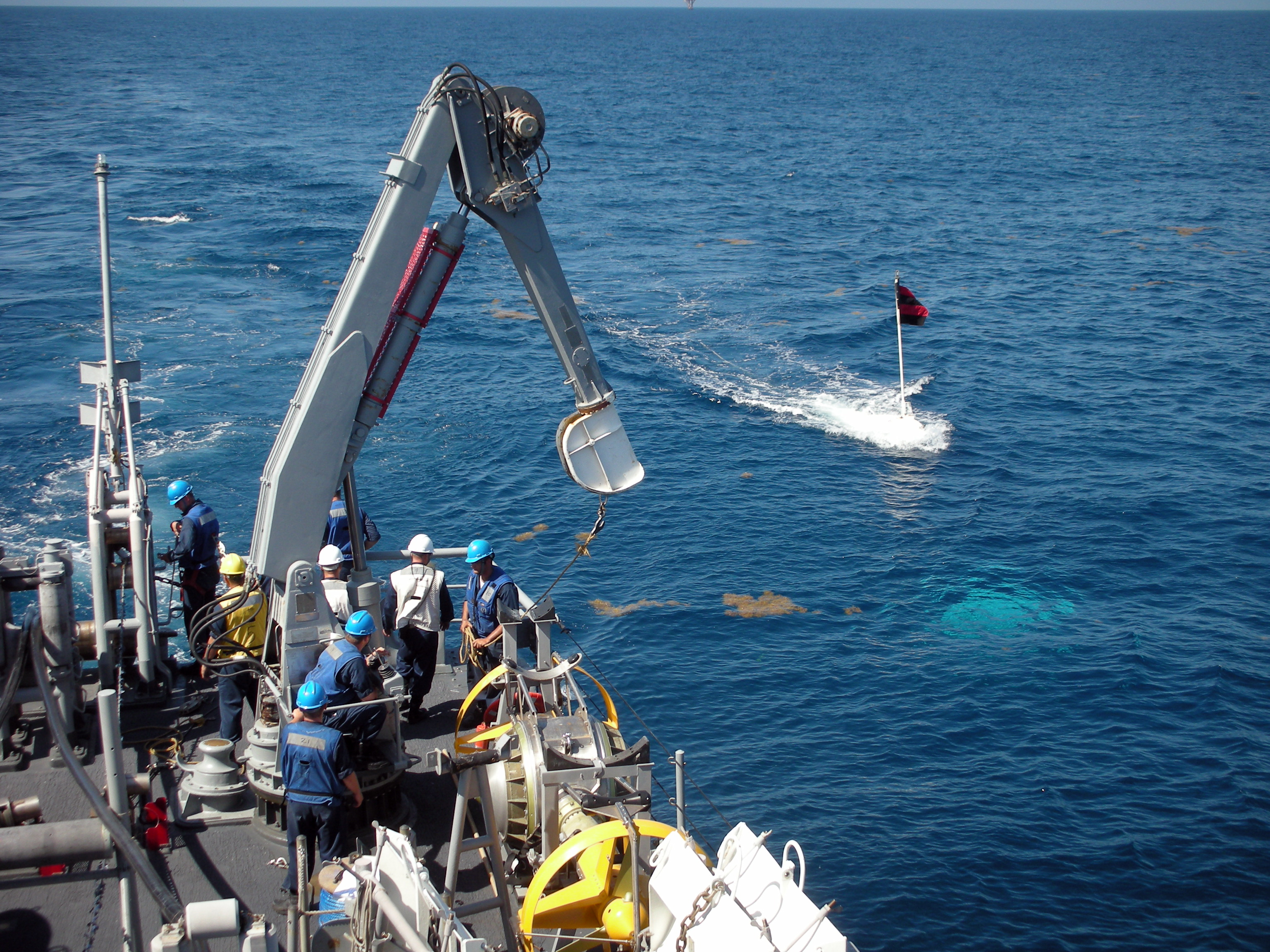
Saturday's claimed mine strikes did not arrive in a quiet news cycle; they arrived at the end of the most incident-dense 24 hours of the shipping war so far, and the documented incidents are the necessary baseline against which the undocumented ones must be weighed. On Friday, two tankers were attacked deep inside the Persian Gulf off Saudi Arabia's Jubail port — one struck by an unknown projectile 68 nautical miles northeast of the port, its crew evacuated, and a second hit by a rocket-propelled grenade fired from a small boat 78 nautical miles out — both reported by UKMTO with times, distances and weapons, as we reported in our coverage of the two tankers attacked off Jubail. That article already noted, with the same caution applied here, Tehran's first Saturday claim of a single supertanker mine strike in Hormuz, which UKMTO had not reported. The second claimed strike, and IRNA's consolidation of the two into a single "two tankers" account, is what is new on Saturday afternoon.
The same Saturday brought one more UKMTO-documented incident at the strait's other end: a small skiff carrying seven people approached an LNG tanker 140 nautical miles southeast of Yemen's Al Mukalla, in the Gulf of Aden approaches, fired two shots at the ship, and was driven off when the tanker's armed security team fired two warning shots, UKMTO said, in an advisory reported by ANI and Anadolu. No one was reported hurt. The pattern across the documented record — projectiles off Jubail, small-arms fire off Mukalla, projectiles and a sinking near Hormuz on Wednesday — is of a shipping war being fought with visible, attributable-in-principle weapons. Naval mines are different: they leave no launch signature, no claimant is required, and a mine claim can be made about a stretch of water no camera is watching. That is precisely why the mine claims demand the strictest evidence standard of all — and why, on Saturday's evidence, they do not yet meet it.
Why this matters
The Strait of Hormuz normally carries about a fifth of the world's oil consumption — roughly a quarter of global seaborne oil trade — through a shipping channel a few miles wide at its narrowest. That arithmetic is why a claim, even an unverified one, is an economic event. Brent crude briefly touched $110 a barrel on Friday for the first time since May, as we reported in our account of Brent at $110 and WTI at $101, driven by exactly this accumulation of tanker incidents; a confirmed double mine strike on laden supertankers would be the kind of fact that takes prices through that level rather than to it, because it would tell every insurer and charterer that the strait's remaining traffic is moving through a live minefield. Track prices live: Live oil price tracker.
There is also a legal and strategic dimension that outlasts Saturday's news cycle. Mining an international strait — or credibly claiming to have done so — is a claim of sovereignty by other means. Iran's "authorised route" language asserts a right to license transit through a waterway that international law treats as open to transit passage; the American "open for business" language asserts the opposite. Every unverified mine claim that goes unanswered nudges the practical reality toward Tehran's version, because shipping behaves according to risk, not law: a strait that masters believe is mined is closed in practice whatever any admiral says. Conversely, every claimed burning supertanker that turns out not to exist devalues the next, possibly real, warning. Both sides therefore have an interest in the fog, and readers — and markets — are left pricing a claim neither side has proved.
What the numbers actually imply
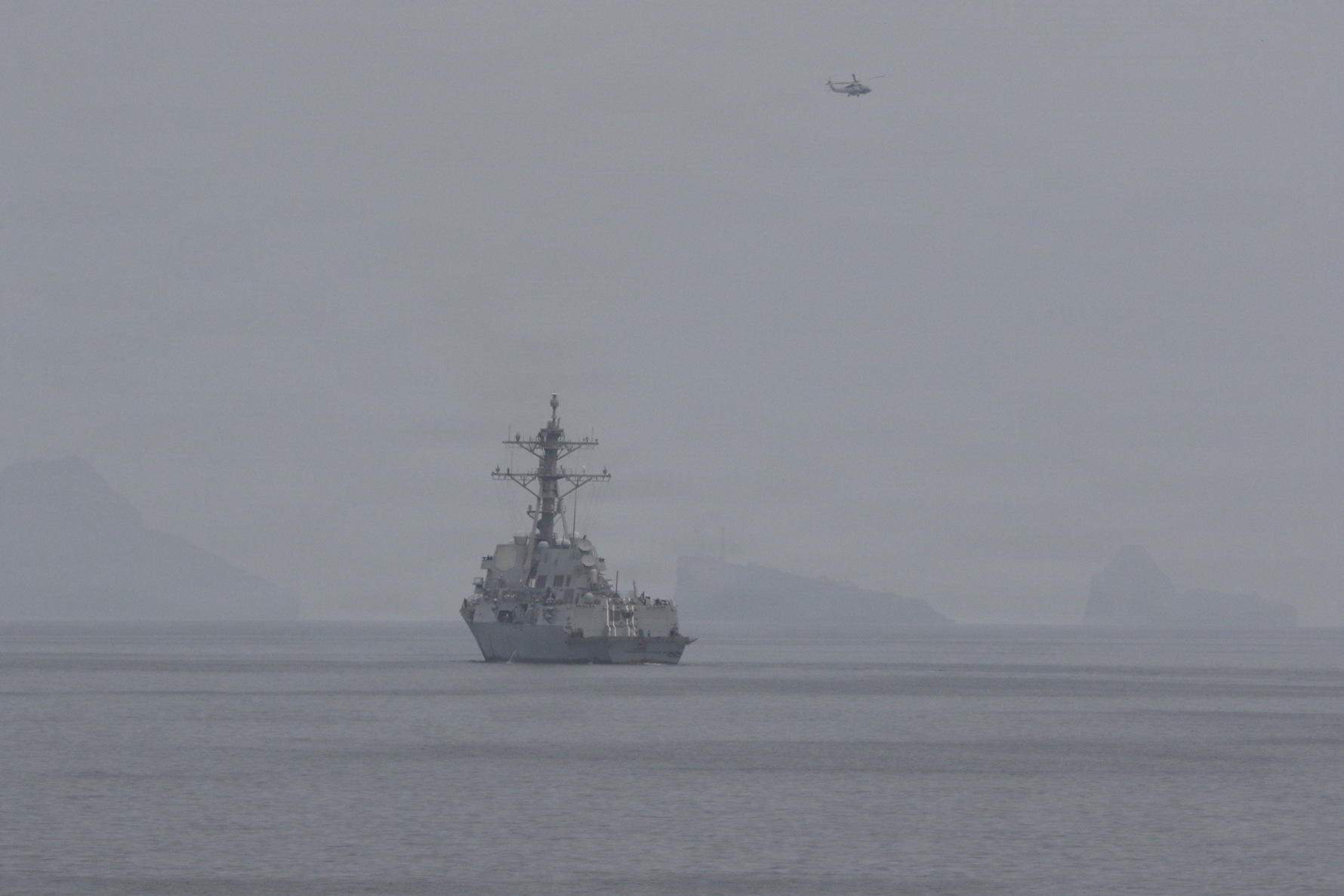
Two supertankers at about two million barrels each is roughly four million barrels of crude — on the order of a fifth of a normal day's entire Hormuz flow — allegedly burning or immobilised in a single morning. If true, the environmental stake alone is historic: a laden VLCC breaking up in the strait would threaten the desalination intakes and coastlines of every Gulf state, including Iran's own. If the second tanker's engine-room explosion and immobilisation are accurate, the ship is a drifting or anchored hazard in a traffic separation scheme other vessels must still use. Those are the implications of the claim taken at face value, and they are the reason independent verification — a named ship, a flag state, a distress call, a satellite image, an oil-slick report from any of the states ringing the strait — would ordinarily follow within hours. Its absence by Saturday afternoon does not prove the claim false; wartime reporting from the strait has lagged before. But each hour without it lowers the claim's evidentiary weight, and this article will be updated in the live tracker coverage if confirmation, or a denial with evidence, emerges.
What happens next
Three tracks will decide what Saturday's claims become. First, verification: UKMTO, the IMO, flag registries and the shipping press identify vessels relentlessly; if two VLCCs burned, names will surface, and if none do, that silence becomes the story. Second, the American response: CENTCOM disputed Tehran's account of Wednesday's sinking with its own attribution, and a U.S. statement addressing the mine claims directly — confirming, denying or ignoring them — will signal how Washington wants the strait's control narrative to stand. Third, the market and insurance reaction when Asian trading opens: war-risk premiums and Hormuz transit decisions by the major tanker owners will show, in money rather than words, whether the industry believes Saturday happened. Until one of those tracks produces evidence, the accurate headline remains the one on this article: Iran says two tankers hit mines in the Strait of Hormuz. Nobody else has yet said so.
Sources: Reuters (Oct 17, reporting IRNA, with no independent confirmation stated), AFP (Oct 17, via Pakistan TV live blog), IANS/Xinhua (Oct 17, reporting Sepah News), UKMTO advisories (Oct 17), U.S. Central Command (Adm. Brad Cooper, Oct 16 update, via Brussels Reporter).