Strait of Hormuz ship attacks have hit a record high in October — 28 attacks in a single month, 11 supertankers damaged, and the war's damaged VLCC fleet now equal to about 3.5 percent of every very large crude carrier on earth.
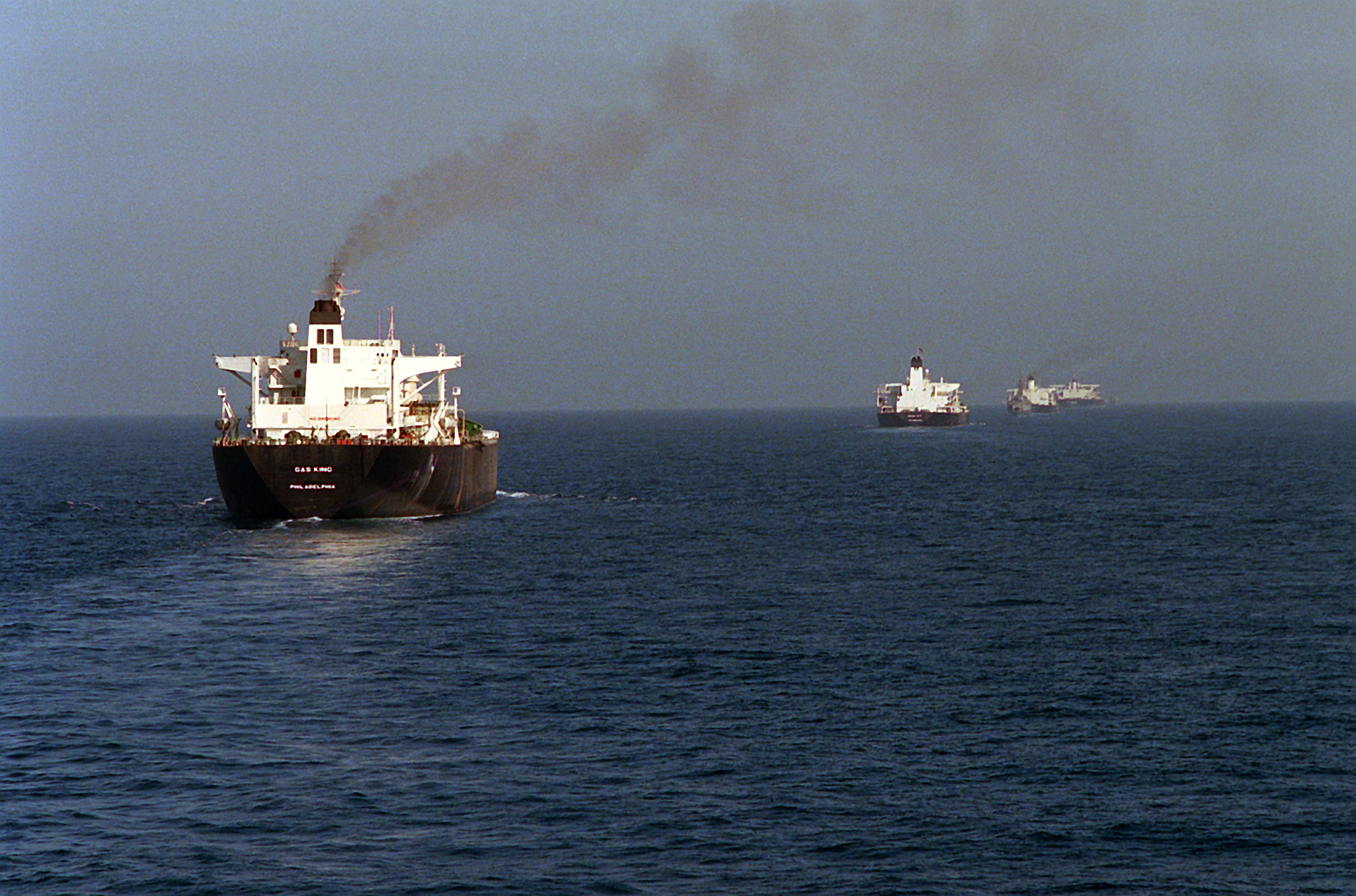
OSLO — Strait of Hormuz ship attacks hit a record high in October, the worst month for violence against merchant shipping in the waterway since the Washington Institute for Near East Policy began compiling its data in 2017. “October has seen the highest number of ship attacks on record,” said Noam Raydan, a senior fellow at the institute. His interactive map records 28 confirmed and reported attacks in October, and 113 since the U.S.-Israeli war with Iran began on February 28. The tally broadly aligns with the International Maritime Organization, which counts 120 incidents in the Strait of Hormuz and the wider Middle East since the conflict started. Within that count sits the figure that defines the month: the IMO lists more than 30 VLCC supertankers damaged, including 11 in October alone. Each of those ships carries about two million barrels of crude. Taken together — in a review by Reuters of the IMO list and MarineTraffic data — the damaged vessels amount to roughly 3.5 percent of the global VLCC fleet of more than 900 ships.
Track it live: Wars — live tracker · Oil prices — live tracker
The numbers behind the record month
Three organisations count this war's shipping casualties, and their headline numbers differ because their definitions do. The Washington Institute's map — 28 attacks in October, 113 since February — counts confirmed and reported attacks on vessels in and around the strait. The IMO's 120 counts incidents across the strait and the wider Middle East over the same period: a wider net, cast over a wider map. UKMTO, the British maritime security service that merchant ships call when something explodes nearby, had recorded 135 incidents related to the conflict as of October 16 — the highest tally of the three, because an “incident” in its ledger sweeps in suspicious approaches and near-misses alongside completed attacks. Read properly, the three figures do not contradict one another; they measure the same war at three different widths.
Two cautions follow from that, and both point the same way. UKMTO itself says that reporting by shipowners is voluntary and insufficient, so not every attack is captured — even the largest tally is a floor, not a ceiling. And the trend inside each count agrees: UKMTO's data shows a sharp rise in actual ship damage in October, not merely in reported scares. The Greece-based consultancy Marisks, which tracks the same waters, concluded that “October 2026 has emerged as the most intense period of maritime attacks in and around the Strait of Hormuz since the escalation of hostilities in March” — and counted a dozen ships attacked between October 5 and 11 alone, the highest weekly toll of the conflict.
The month's victims were not abstractions. They included the tanker Acers, struck off Qatar in an episode we reported earlier this month as the pattern of attacks widened beyond the strait's narrowest waters. But it is the VLCC arithmetic that concentrates minds in the oil market. Eleven supertankers damaged in a single month is eleven ships, each built to move roughly two million barrels, that must be inspected, repaired, reinsured and argued over before they load again — a measurable slice of the world's heavy-lift oil capacity removed not by embargo or decree, but by cumulative damage, one hull at a time.
Why owners kept sailing into danger
The obvious question about October is not why so many ships were attacked. It is why so many were there to attack. The answer is that October was also the month the money came back. Daily freight rates for the largest tankers operating in the Gulf exceeded $1 million — earnings at a level where a single voyage can absorb a war-risk insurance premium, a crew danger bonus and a lengthy delay, and still return a sum owners describe, in the industry's understated way, as compelling. At those rates, the strait's risk stopped being a reason to stay out and became a cost to be priced in.
The second pull was the oil itself. Regional producers, needing their crude to keep moving, steepened the discounts they offer buyers against dated Brent, the benchmark price — in effect, paying the market to come and load inside the Gulf. Reuters reports that owners became more willing to load cargoes inside the Gulf in response to the combination: seven-figure daily rates on one side of the ledger, cheaper barrels on the other. Traffic that had thinned earlier in the conflict recovered through the autumn, and the recovery itself put more hulls, more predictably routed, within reach of anyone minded to strike them. October's record is therefore two records at once — of attacks, and of exposure.
The industry's defence of the trade is practical: the world's oil has to move, crews volunteer for danger pay, and a ship that stays out earns nothing while its competitor loads. The critics' answer is equally concrete: the arithmetic works only because the gravest risks are carried by other people — by the seafarers on the bridge when something hits, and by energy consumers who will pay for every damaged hull in the delivered price of fuel. Both arguments can be true at once, and in October both were. What neither side disputes is the mechanism: risk in Hormuz is now a priced commodity, and this month the market cleared at a price owners were willing to pay.
Why this matters
The Strait of Hormuz is not one oil route among many. In normal times it carries about a fifth of the world's oil supply, plus a significant share of its liquefied natural gas, through a channel whose shipping lanes are, at their narrowest, a couple of miles wide. A record month of attacks there is therefore not a regional security story with an energy angle; it is an energy story with a security cause. More than 30 damaged VLCCs since February is the physical residue of that story — and the important word in the figure is “damaged,” because damage compounds. A holed or fire-scarred supertanker does not return to service when the headlines move on. It queues for a yard, for parts, for surveyors and for an insurer willing to write it again, and in a specialised repair market those queues are measured in months.
Context sharpens the point rather than softening it. Eleven VLCCs hit in October, set against a world fleet of more than 900, sounds like a rounding error — 3.5 percent of the fleet damaged across the whole war, not destroyed. But the fleet is not a shelf of spares. The damaged ships are concentrated on exactly the routes and loadings that serve Gulf exports, and they are removed from a market with little slack at the top end: when rates exceed $1 million a day, it is because available VLCC capacity is already tight. Each additional casualty tightens it further, raising the price of moving crude everywhere, including on routes nowhere near the Gulf, and raising the temptation for the next owner to sail into danger at the new, higher price. That is the feedback loop October exposed: attacks lift rates, rates attract ships, ships attract attacks.
For consumers, the transmission is slower but just as real, and it lands at the worst point in the calendar. Heading into the northern-hemisphere winter, when heating and power demand peak, the world's most important oil artery is at its most dangerous in recorded history, its insurance costs are set by a market repricing risk monthly, and its throughput depends on owners continuing to volunteer. None of that guarantees a price spike on any given day — oil markets have repeatedly absorbed Hormuz shocks with unnerving calm this year. What a record attack tempo changes is the margin for error: the system now runs with less spare capacity, less insurance appetite and less slack, so that a single catastrophic hit — a VLCC sunk in the lane, a strait closed for a week — would arrive on top of an already-drawn-down cushion.
Context
None of this began in October. The war that put these ships in the line of fire started on February 28, 2026, when the United States and Israel went to war with Iran; the maritime campaign escalated sharply in March, which Marisks still uses as its benchmark for intensity, and the attacks have since concentrated, through September and into October, in and around the strait itself. The pattern across those months matters for reading the record: this was not a single spasm but a ratchet. Each month of the autumn brought the tempo closer to the shipping, until October — when owners returned in force for the rates — supplied the targets that made the record possible.
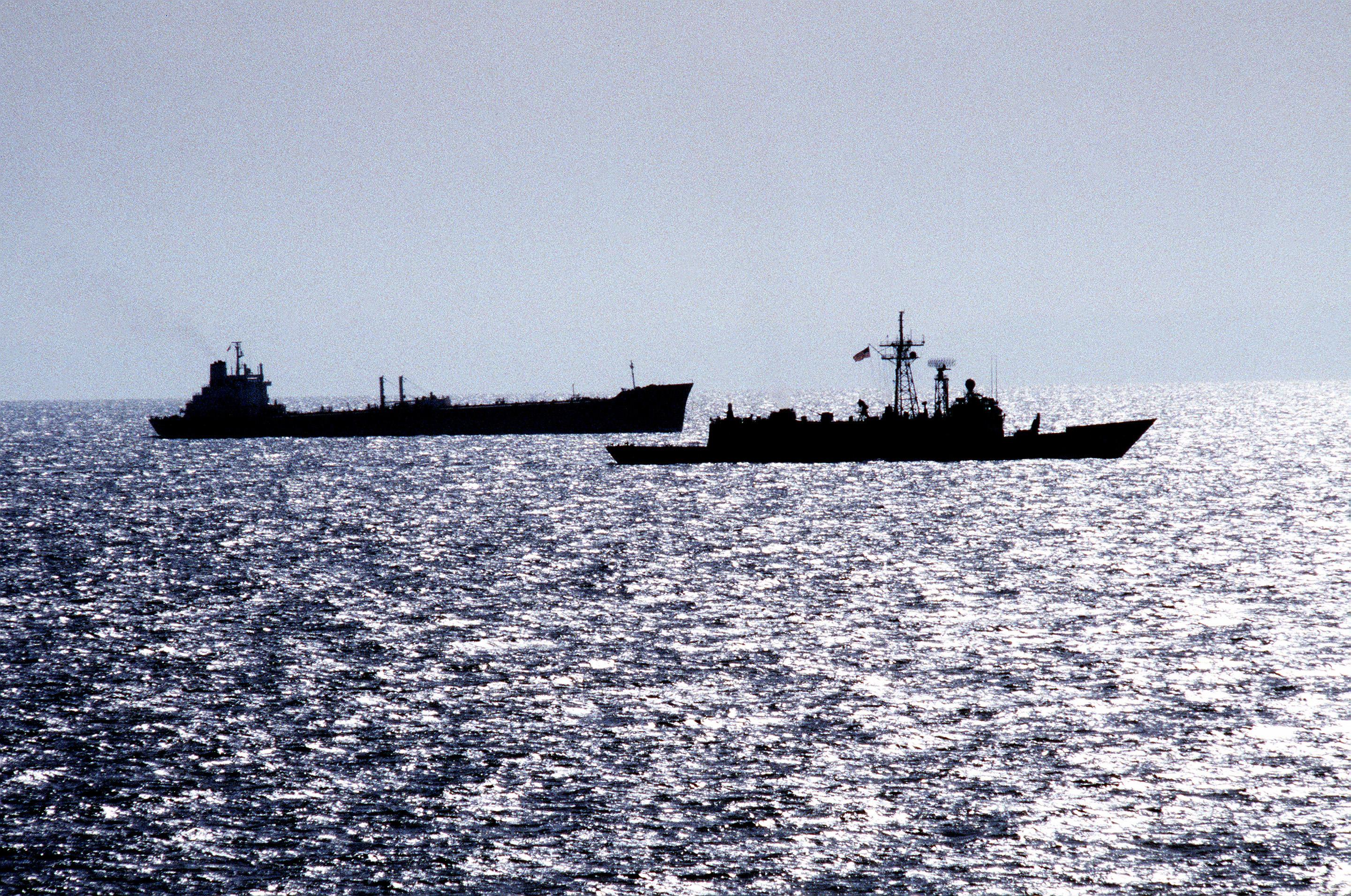
The comparison every shipping historian reaches for is the Tanker War of the 1980s, when Iran and Iraq attacked each other's shipping during their long land war, Kuwaiti tankers were reflagged under the American flag, and U.S. warships ran the Operation Earnest Will convoys through these same waters. The parallel is real, and worth labelling precisely as a parallel rather than an equivalence. The 1980s campaign unfolded over years, between two regional states; the 2026 campaign has compressed a comparable intensity into months, is tracked incident-by-incident in public data, and involves the United States as a direct belligerent rather than an escorting neutral. What the two eras share is the underlying geometry: a strait too narrow to avoid, oil that has to move, and the discovery — made again this month, at record scale — that the world's energy supply can be held at risk by weapons far cheaper than the ships they strike.
What happens next
The near-term question is whether the tempo survives the calendar. Raydan's analysis is that the tempo is the point: by intensifying its attacks, he argues, Iran is seeking to slow the recovery in shipments and to maintain pressure on global energy markets ahead of November's U.S. midterm elections. Reuters has previously reported Tehran adopting such tactics, citing two senior Iranian officials. That assessment is presented here as what it is — attributed analysis, from named analysts and officials — because Tehran does not publish its targeting logic, and the same data can support other readings, including a simpler one: that more ships came back, so more ships were hit. The attacks have in any case become an argument in Washington in their own right, where claims that some reported strikes were fabricated have trailed the incidents for weeks, as we reported in our coverage of the dispute over “fake” Hormuz attacks, oil prices and the midterms.
For owners, the fork is the same one they faced in October, with worse inputs. Pull back, and the Gulf's crude strands while competitors collect the rates; stay in, and each week at October's tempo takes another slice out of the fleet. The industry's recent behaviour suggests the rates will keep winning the argument until something breaks the arithmetic — a sinking rather than a damaging, a crew killed in numbers that change the politics of manning, or an insurance market that declines to write Hormuz risk at any premium. Structural relief is being built in plain sight: Abu Dhabi's crude pipeline to Fujairah, on the Gulf of Oman outside the strait, already lets a large share of Emirati oil load beyond the danger zone, and the bypass build-out we reported earlier this month is expanding the storage and berths behind the “zero Hormuz” strategy. But pipelines and bypasses carry a fraction of the strait's normal flow; they are a hedge, not a substitute, and everyone in the market knows it.
What would change the calculus is a movement in one of three variables: the attack tempo itself, the freight rates that compensate for it, or the insurance market's willingness to underwrite it. Until one of those moves, October's lesson stands as the war's clearest maritime fact. The Strait of Hormuz has just had its most violent month on record — and the tankers, at a million dollars a day, are still sailing into it.
Sources: Reuters (Oslo, October 23, 2026), reporting by Nerijus Adomaitis — October 2026 the worst month on record for attacks on shipping in the Strait of Hormuz; Washington Institute for Near East Policy — Noam Raydan, senior fellow, and the institute's interactive map of maritime incidents, tracking since 2017 (28 attacks in October; 113 since February 28, 2026); International Maritime Organization — 120 incidents in the Strait of Hormuz and wider Middle East since the conflict began, and its list of more than 30 damaged VLCCs including 11 in October, reviewed by Reuters with MarineTraffic data; UK Maritime Trade Operations (UKMTO) — 135 conflict-related incidents as of October 16, 2026, a sharp rise in ship damage in October, and its caution that voluntary reporting understates the toll; Marisks — October 2026 the most intense period of attacks since the March escalation, with a dozen ships attacked October 5–11. Assessments of motive are attributed to their authors throughout; Iran's intentions are presented as analysis, not established fact.