Hormuz / 6,000 sailors are trapped — and the world's shipping chief says stay away
Track it live: Live Middle East tracker
'Do not transit': what the IMO chief actually said
Dominguez's warning, given to Fox News Digital and reported by the New York Post on October 19, was unusually direct for a UN agency head. "The situation continues to be severe and critical when it comes to international shipping," he said. "There is a double blockade and too many vessels have been attacked, particularly in recent days. Seafarers have continued to perish in these attacks and around 6,000 seafarers remain trapped since the beginning of the conflict." His message, he added, was "not to transit the Strait of Hormuz or put seafarers at risk until we have guarantees." The numbers behind the warning, published on the IMO's own site and summarised in his Xinhua interview, describe an escalation, not a stalemate: more than 110 vessels hit since the US–Israeli conflict with Iran began in late February, at least 24 seafarers confirmed dead, and 12 attacks in the single week of October 5–11 — the highest weekly figure of the war, six of them on October 11 alone. The Financial Times count cited alongside his remarks put 24 ships attacked in roughly the past two weeks. Dominguez also noted, pointedly, that too many owners and operators are still taking the risk anyway.
A double blockade, and a fight over a radio channel
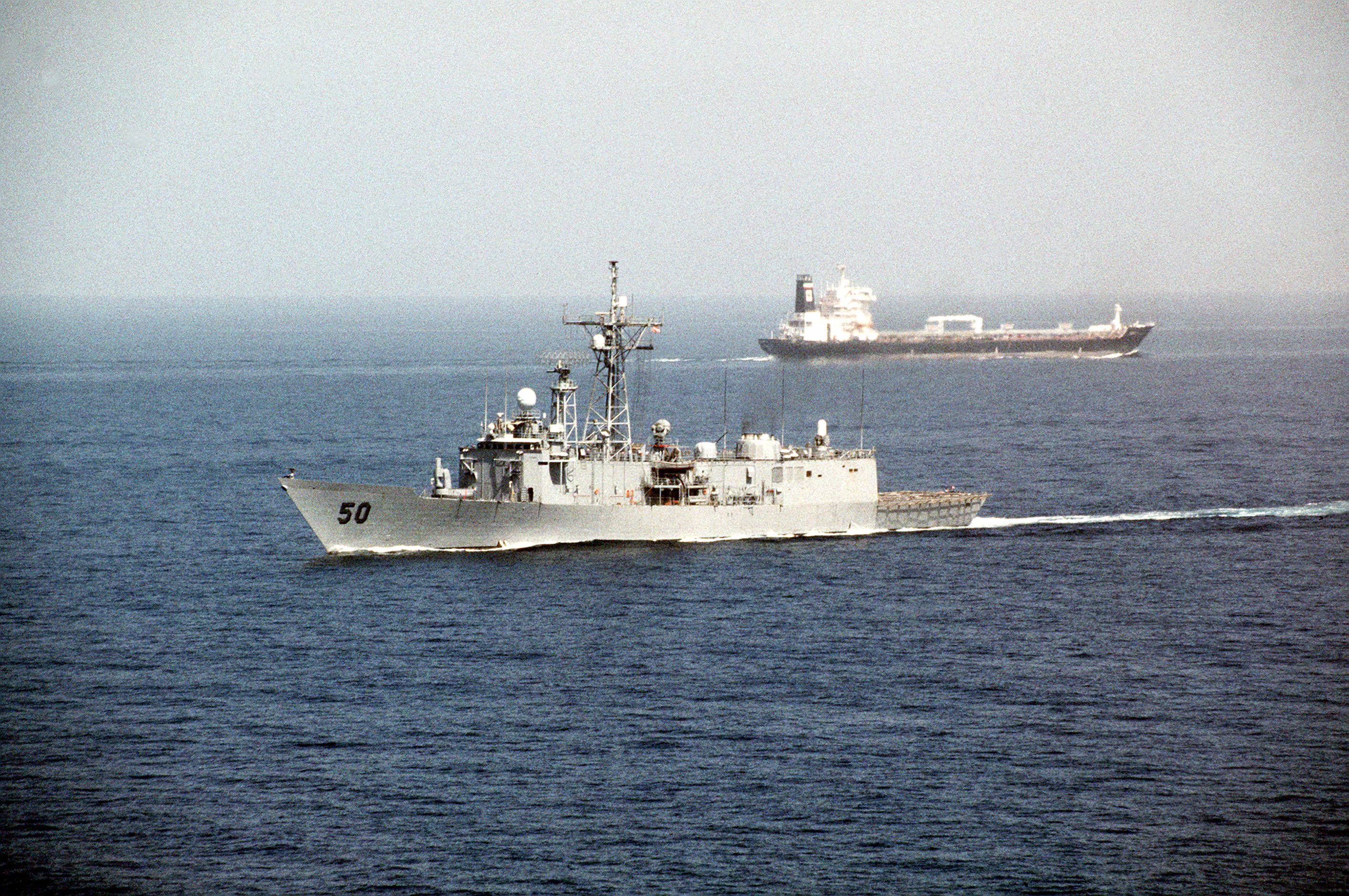
The phrase "double blockade" carries the whole geometry of the trap. On one side, US forces enforce a naval blockade of Iranian ports; US Central Command told Fox News Digital the blockade "has been in place for months and is professionally communicated to all international mariners," with multiple warnings and ample opportunity to comply. On the other side, Iran treats the strait itself as leverage — the response, in Tehran's stated position, to the US–Israeli war against it — and vessels have been attacked, seized and, on repeated claims, mined in and around the waterway. Between the two sits a third dispute that shows how far trust has collapsed: in an October 9 letter to the IMO, Iran alleged that US forces had repeatedly occupied VHF Channel 16 — the international distress and safety frequency — for prolonged periods, addressing Iranian crews in Persian with "threatening, abusive and provocative language" and urging them to abandon their vessels. Washington, through CENTCOM's statement, defends its broadcasts as professional blockade enforcement. Both accounts cannot be wholly right, but both sides agree on the underlying fact that matters to a trapped crew: the channel meant for emergencies has become an instrument of the confrontation.
Life aboard a ship that cannot move
What does "trapped" mean in practice? A merchant crew is typically 15 to 25 people on a contract of fixed months. The crews inside the strait have now been aboard far beyond those contracts, in a war zone, on vessels that cannot safely leave and cannot reliably be reached. Crew rotation — the industry's basic welfare mechanism — requires a port, a launch boat and paperwork from flag states and coastal states that are parties to a war. Resupply of food and fresh water becomes a negotiation rather than a routine. Medical emergencies have no simple evacuation. And the psychological load is the one welfare organisations flag most: the same ships being warned about attacks are the ones listening to them happen nearby, week after week, with no date for relief. Dominguez said the IMO is continuing to support the trapped seafarers, but the organisation's tools are coordination, data and pressure — it commands no navy, no coast guard and no evacuation fleet. The comparison the industry keeps making is to the COVID-era crew-change crisis, when hundreds of thousands of seafarers were stranded by closed ports; this time the cause is not bureaucracy but live fire, and the numbers, while smaller, involve a danger no port closure ever posed.
Oil, insurance and the rerouting economy
The trapped crews are also the reason the oil market cannot simply route around the problem. Brent crude spiked to $110 a barrel intraday on Tuesday, October 20, before pulling back — a price that embeds the strait's risk in every cargo still moving. Our earlier reporting on Brent at $110 and WTI above $101 traced how each attack wave reprices the benchmark; the IMO warning adds the missing variable, because war-risk insurance, not just missiles, is what ultimately stops ships. When underwriters price a transit as uninsurable, or crews' unions invoke contractual rights to refuse a war zone, the strait closes in practice whatever any navy declares. Owners who still transit are, in effect, arbitraging the risk premium — which is why Dominguez's remark about operators continuing to take risks matters: the market currently pays a bonus for exactly the behaviour the IMO is asking the industry to stop. The earlier phase of this crisis, when the strait was closed outright and traffic defied the closure anyway, is covered in our report on Hormuz closed again as Iran defied Trump and ships were attacked.
Why this matters
The Hormuz trap matters far beyond its 6,000 people — though it should matter for them alone — because it reveals what the world's shipping system actually runs on: not treaties, but the willingness of about a million and a half merchant seafarers, most of them from the Philippines, India, Indonesia and other labour-supplying states, to sail where they are told. The IMO can warn, publish and convene; it cannot order a flag state to evacuate its crews, compel a coastal state to open a corridor, or indemnify an owner who stops trading. Every party with real power has a reason the crews wait. For the US and its partners, the blockade is leverage against Tehran, and its enforcement is defended as lawful and professionally communicated. For Iran, control of the strait is leverage in return — its stated answer to a war it says was imposed on it — and the ships inside are, in the coldest reading, part of the pressure that leverage creates. For owners, a trapped ship still earns, and a transiting ship earns more. The losers are the people with the least power in the system and the most exposure to it, and the historical parallel is uncomfortable: in the 1980s Tanker War, the answer eventually built was convoying and reflagging — states putting their own flags and warships between crews and missiles. No equivalent scheme exists today, on Dominguez's own account, because no one will offer the guarantee. That is the sentence in his warning that should travel furthest: not the 6,000 figure, but "until we have guarantees" — an admission, from the official charged with global shipping safety, that the guarantee system itself has failed. If it stays failed, the consequences compound quietly: seafarers will refuse Gulf postings long after the war ends, crewing costs on the route will stay elevated, and the $110 oil spike of October 20 will look less like a spike than a floor.
What happens next
Watch three things. First, the IMO's next steps: whether the warning hardens into a formal recommendation against transit by flag states and insurers, which would close the strait by paperwork even where navies keep it nominally open. Second, the corridor question: any negotiated safe-passage or evacuation arrangement — the only mechanism that has ever actually freed trapped crews — would surface through the IMO or the Gulf states, and its absence after this warning would confirm that neither side is offering one. Third, the attack tempo: the October 5–11 rate of 12 attacks in a week is the number that decides whether "trapped" becomes "targeted" faster than diplomacy can move. Until one of those changes, 6,000 people remain where the war put them in February — aboard, waiting, and now, at least, named by the one official whose job is to speak for them.
Sources: Daily Brief, Oct. 20, 2026 (Dominguez 6,000-seafarers warning; Day 235 framing); New York Post, Oct. 19, 2026 (Dominguez via Fox News Digital; Financial Times 24-ship count; Iran October 9 IMO letter; CENTCOM statement); Fox News, Oct. 19, 2026 (Dominguez warning; CENTCOM blockade defence); Xinhua via Global South Focus, Oct. 2026 (IMO data: 110+ vessels hit, at least 24 seafarers dead, 12 attacks October 5–11). Related on Signal Post News: Hormuz closed again as Iran defied Trump and ships were attacked · Brent at $110 and WTI above $101.