US Politics
Five days before the midterm elections, Hennepin County Attorney Mary Moriarty charged conservative activist James O'Keefe and influencer Cam Higby with felony unlawful voting and identity theft, accusing them of using real voters' names — some belonging to people who had died — at Minneapolis polling places during the August primary. Both men are presumed innocent, neither is in custody, and Higby has called the case “lawfare.”
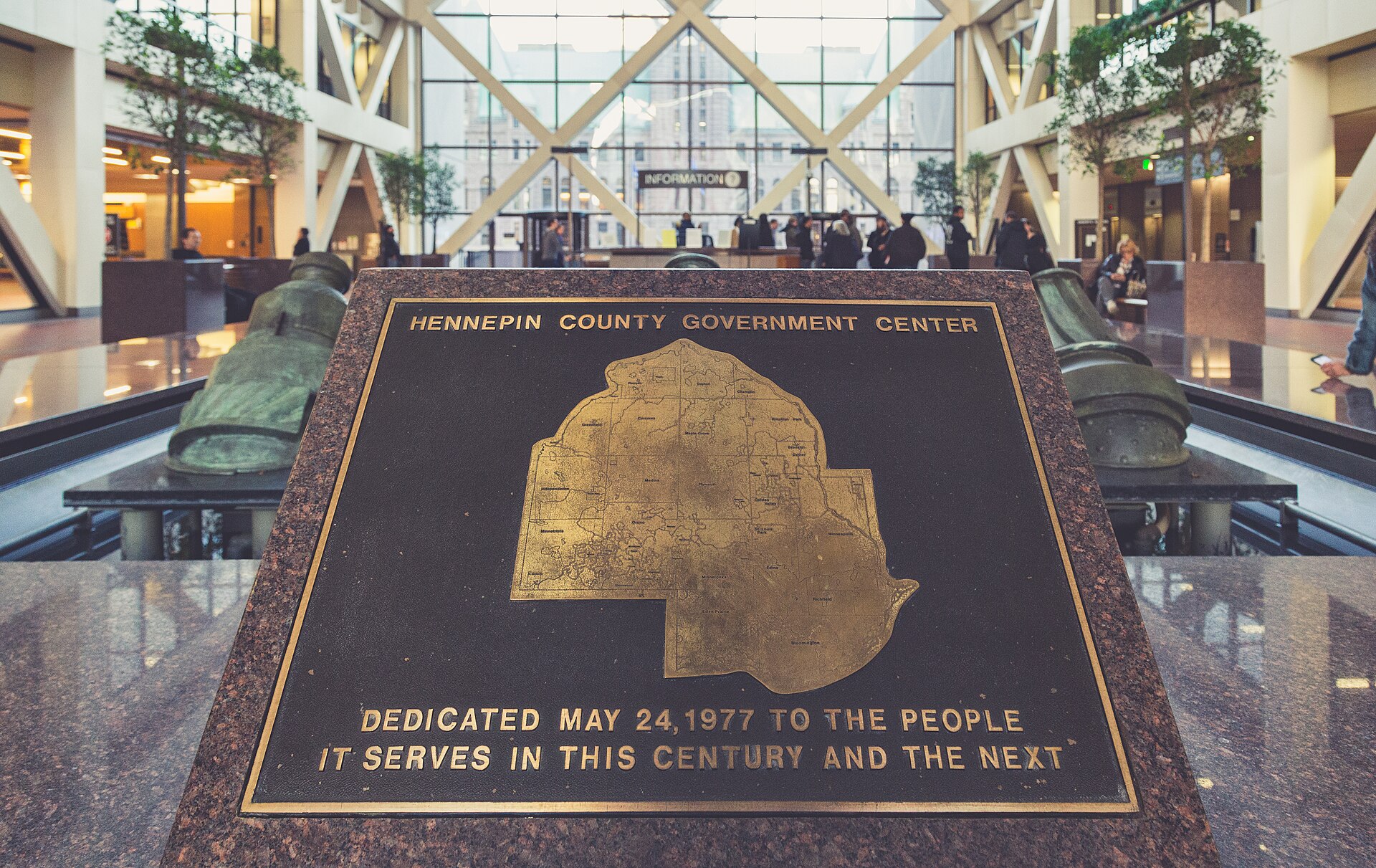
The James O'Keefe charged Minnesota case is now the election-law fight of the final week of the midterms. On Wednesday, October 28, 2026, Hennepin County Attorney Mary Moriarty announced felony charges against James O'Keefe, 42 — the founder of Project Veritas, who now runs the O'Keefe Media Group — and Cam Higby, 26, a conservative social media influencer. Each man is charged with felony unlawful voting and identity theft, arising out of visits to Minneapolis polling places during Minnesota's August 11 primary election. According to the county attorney's office, each charge is punishable by up to five years in prison. The charges are accusations set out in criminal complaints, not findings of a court: neither man has been convicted of anything, both are presumed innocent, and neither has yet had the opportunity to answer the complaints in a courtroom.
What the complaints allege is a stunt built for cameras. Prosecutors say the two men went to several Minneapolis precincts during the primary carrying hidden cameras and gave election judges the names of real registered voters — people who, according to the complaints, had not given them permission and did not know their names were being used. Some of the voters named, the complaints say, were dead. The purpose, prosecutors say, was to test Minnesota's voter vouching system, which lets a registered voter swear to a newcomer's residency. Videos of the encounters were later posted online; USA Today reported the footage drew more than 10 million views on X alone.
Neither man is in custody. Both were issued summonses, according to The Wall Street Journal, the standard mechanism for defendants the court does not treat as flight risks. Moriarty, announcing the charges, framed the case as a defence of the machinery of voting itself. “Elections are the bedrock of democracy and their protection is one of our highest priorities,” she said. “Individuals engaging in unlawful conduct related to our elections will be held accountable.” Higby, for his part, later posted on social media that the charges were “lawfare” and that he did not break any laws. The O'Keefe Media Group did not respond to requests for comment from Reuters or CNN when the charges were announced.
What the criminal complaints allege
The Cam Higby charged counts and the counts against O'Keefe rest on the same alleged course of conduct, reconstructed by investigators after the videos circulated. According to the complaints, as described by Moriarty's office and reported by Reuters, CNN, USA Today and The New York Times, the pair visited several Minneapolis precincts on primary day, August 11, and approached election judges as if they were voters seeking to register and vote. At the check-in tables, the complaints allege, they supplied the names of people who are — or were — registered voters in those precincts. The named voters, prosecutors say, had no knowledge of the encounters and had not consented to the use of their identities. In some instances, according to the complaints, the name supplied belonged to a voter who had died.
The complaints also describe disguises: the men allegedly presented themselves in traditional Muslim attire and used fake accents while interacting with election workers. Moriarty addressed that element directly and took it off the table as a basis for the prosecution: the charges, she said, are unrelated to the men's political views or to the disguises described in the complaints. The legal theory is narrower and, prosecutors argue, simpler. Minnesota law prohibits intentionally misrepresenting one's identity in applying for a ballot, and the complaints allege that giving an election judge another person's name at the point of seeking a ballot is exactly that misrepresentation — whether or not a ballot was ever completed.
That qualification matters, because of what the complaints concede the men did not do. Neither O'Keefe nor Higby voted, and neither signed the vouching oath that would have completed a registration. According to CNN's account of the complaints, the encounters stopped when election judges explained that the men would have to sign oaths. Moriarty argued that the stopping point does not save them: intent to vote, she said, is irrelevant under the statute. “You cannot begin to apply for a ballot and misrepresent yourself,” she said. On that reading, the alleged offence was complete at the check-in table, in the false name itself — a theory the defence can be expected to contest, since it asks a court to punish an application for a ballot that was never finished and a vote that was never cast.
How Minnesota's voter vouching system works
To understand why two men with hidden cameras would drive to Minneapolis precincts, it helps to understand the Minnesota voter vouching law they say they were testing. Minnesota has allowed Election Day registration for half a century, and vouching is one of its oldest mechanisms. A person who arrives without the documents needed to prove residency can still register and vote if a registered voter from the same precinct vouches for them — swearing, under oath, that the person lives in the precinct. A single voucher may vouch for up to eight people. The oath is the safeguard: the voucher signs a sworn statement, creating a paper record and exposing themselves to legal liability if it is false.
Moriarty described the system's ordinary users, and they are not operatives. Vouching, she said, is most often used by seniors who have moved into nursing homes without updating their licences — people whose lives have changed faster than their paperwork. Its scale in practice is small: vouching accounted for 0.6 percent of votes cast in the 2024 general election, according to USA Today. Critics see a system that runs on an honour pledge in an era of organised suspicion; defenders see a marginal, oath-bound tool that enfranchises some of the state's most vulnerable voters and has generated vanishingly little documented abuse relative to its use.
Why this matters
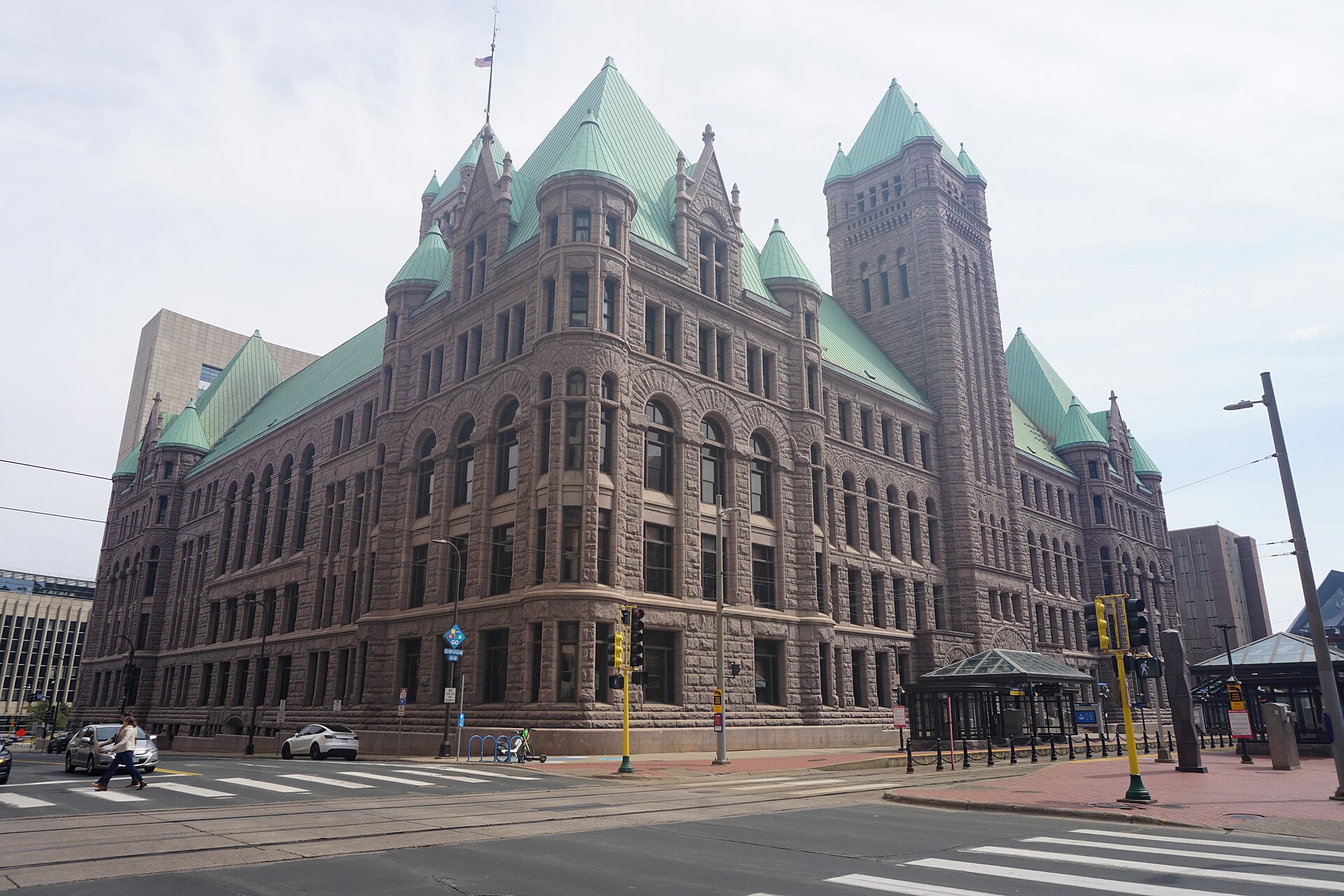
The timing is the first reason this case will be fought over far beyond Hennepin County. The charges were filed on October 28, five days before the November 3 midterm elections, in a year when voter rolls and the legitimacy of election administration have been central national arguments. The Trump administration has pressed states over the maintenance of their rolls and the citizenship of their registered voters, pressure that has already produced court fights: a federal judge this month blocked Homeland Security field investigations of suspected noncitizen voters in nine states. The president has personally raised the stakes, offering a $1 million reward for voter-fraud tips a week before the midterms. Administration officials say the push is about ensuring only eligible citizens vote; voting-rights groups counter that eligible voters risk being swept up in purges built on unreliable data. Into that argument now lands a county prosecutor's felony case against two of the fraud narrative's most prominent content producers.
Minnesota has spent this election cycle at the intersection of the country's hardest fights. Federal immigration enforcement in the state has driven deportation orders sharply upward — removal orders against Somali nationals in Minnesota have surged tenfold — and the complaints' description of disguises meant to evoke Muslim identity will be read, fairly or not, against that backdrop, even though Moriarty insists the disguises are not what the case is about. Legally, the case poses a question with consequences for activists across the spectrum: where does testing an election system end, and where does the alleged crime of misrepresenting yourself to it begin? Election officials answer that a polling place is not a laboratory, and that the names of real voters — including the dead, whose families may learn of the stunt from a viral video — are not props. A Hennepin County jury may eventually be asked to draw that line.
There is also a quieter institutional stake. Election judges in Minnesota are largely temporary workers and volunteers. Prosecutors argue that stunts of this kind consume those workers' attention and force officials to treat every confused interaction as a possible provocation. The counterargument is that no vote was cast and the system worked as designed: the oath requirement stopped the registrations cold. Both descriptions can be true of the same afternoon, which is why the case will turn on the statute's text — on whether beginning an application with a false name, and abandoning it at the oath, completes the offence prosecutors have charged.
The prosecutor's case — and the response
Moriarty's public position is that the law is clear and the conduct, as alleged, falls squarely within it. Minnesota bars intentionally misrepresenting identity in applying for a ballot; the complaints allege the men did that repeatedly, in several precincts, on camera they themselves controlled. She has stressed what the case is not: not about the men's conservatism, not about the videos' viewpoint, not about the disguises. The felony unlawful voting Minnesota statute, on her reading, does not require a completed vote, and the identity-theft count follows from the alleged use of real people's names without consent. Her office's framing treats the named voters — living people who did not agree to take part, and the families of those who had died — as the victims at the centre of the case.
The response so far has come from Higby. After not responding to Reuters' and CNN's requests for comment at the time of the announcement, he posted on social media calling the charges “lawfare” and saying he did not break any laws, according to The Wall Street Journal. That single word frames the prosecution as a partisan use of criminal law, filed by a Democratic county attorney days before an election in which election integrity is a live issue. Supporters of the two men are likely to add that the men stopped precisely where a genuine fraudster would have signed. The O'Keefe Media Group charges response, so far, is silence: the organisation did not respond to comment requests from Reuters or CNN, though the primary videos have already reached an audience far larger than any courtroom's. Both men, it bears repeating, are presumed innocent; the complaints are one side's sworn account, and the defence account has yet to be filed anywhere.
What the numbers say
Three numbers organise the factual argument. The first is 0.6 percent: vouching's share of all votes in Minnesota's 2024 general election, per USA Today — a practice operating at the margins of turnout, serving a population among the least able to absorb new documentary hurdles. The second is eight: the maximum number of voters one person may vouch for, the ceiling on abuse by a single bad actor at a single precinct. The third is ten million: the approximate views the stunt's videos accumulated on X, according to USA Today. Set side by side, they describe the modern shape of an election-integrity dispute — a practice used by a fraction of one percent of voters, tested in an afternoon, and converted into content seen by more people than voted in Minnesota. Prosecutors would add a fourth figure: up to five years in prison on each felony charge, the penalty the county attorney's office says the statutes carry.
What happens next
Because both men were summoned rather than arrested, the case now moves at the pace of the Hennepin County court's calendar. Each defendant will be required to appear, be formally advised of the charges, and enter a plea; nothing is expected to conclude before Tuesday's election, and a trial, if the case reaches one, would be months away. The defence can be expected to argue that the statute requires more than an abandoned attempt — that without a signed oath or a cast ballot, no unlawful vote occurred — and to raise the argument Higby has already previewed: that the prosecution is selective and political. Prosecutors will answer with the statute's text and Moriarty's principle that an applicant cannot misrepresent himself at the threshold and claim the doorway as a defence.
Politically, the case will run on two tracks that barely intersect. In the conservative media ecosystem where O'Keefe and Higby work, the charges are already being absorbed into the lawfare narrative Higby named. Among election administrators, the case is being watched as a test of whether existing law can reach conduct that stops one signature short of a ballot. What neither track changes is the underlying record: two men charged, on a county attorney's allegations, with felonies arising from an August afternoon in Minneapolis polling places; two men who say, in Higby's words, that they broke no laws; and a vouching system, used by six voters in every thousand, that will be operating as usual when Minnesota votes on November 3.
Sources
- Reuters, October 29, 2026 — the charges and the complaints' allegations; Moriarty's statements on vouching and intent; the lack of response from the O'Keefe Media Group and Higby at announcement.
- CNN, October 28, 2026 — neither man voted or signed the vouching oath; the disguises described in the complaints and Moriarty's statement that the charges are unrelated to political views or disguises.
- USA Today, October 28, 2026 — vouching's 0.6 percent share of votes in the 2024 general election; more than 10 million views of the stunt videos on X.
- The Wall Street Journal, October 28, 2026 — both men were issued summonses and are not in custody; Higby's subsequent “lawfare” response. Reporting by The New York Times, October 28, 2026, was consistent with the accounts above. The charges described are allegations, and both defendants are presumed innocent.