War · Middle East · Iran
An Iran sanctions evasion network of more than 5,000 secret military agencies — each named simply “MOD” followed by a number — imported at least $2 billion worth of missile and drone hardware, explosives and heavy-duty trucks past the US naval blockade and Western sanctions, according to a Reuters investigation published with the research firm 240 Analytics.
Track it live: https://signalpostnews.com/tracker/iran-war
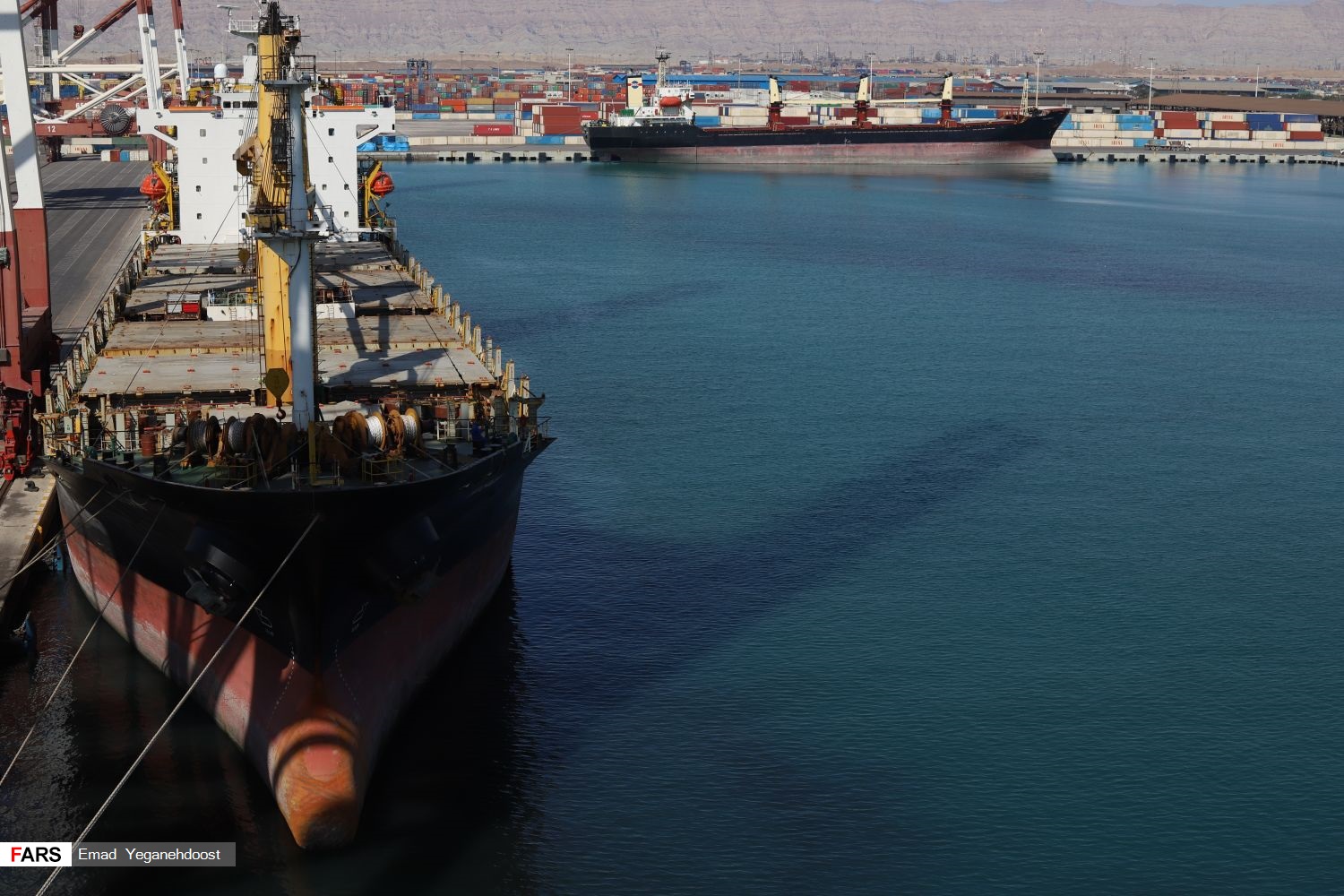
The Iran sanctions evasion network described by Reuters and 240 Analytics was not a single front company or a handful of smugglers. Reporters found more than 5,000 secret Iranian military agencies, every one of them sharing the Tehran address of the Ministry of Defense and Armed Forces Logistics, known as MODAFL, and every one of them named the same way: the letters “MOD” and a number. Since January 2025, according to the investigation, those numbered agencies have imported at least $2 billion in hardware, explosives and heavy-duty trucks, in defiance of Western sanctions and despite a US naval blockade imposed during the war that began in February.
The findings, published on October 29, rest on thousands of Iranian bank and government records, corporate filings and about 19,000 import records, cross-checked against shipping documents, social-media footage and state media. Four outside experts reviewed the findings, and the Wall Street Journal independently reported some of the China shipments on September 23. What emerges is less a smuggling route than a parallel procurement state — one no Western government had publicly noticed, let alone designated.
What the investigation found
Start with the shape of the network itself. Each agency carries the name “MOD” plus a number, and each lists the same Tehran address as MODAFL, the defence ministry body responsible for arming Iran’s military. Most were established in 2013, according to the records Reuters reviewed, while listing February 11, 1979 — the date of the Islamic Revolution — as their incorporation date. Some are tied to the Islamic Revolutionary Guard Corps and to bonyads, the powerful religious foundations inside Iran’s economy. Despite the scale of the trade, Reuters said it found no evidence that any numbered agency has been designated by a Western government.
One agency shows what that invisibility made possible. MOD 346428, a single numbered entity, imported $2.3 billion of military hardware between January 2025 and June 2026, Reuters reported. Its buying had climbed well before the war, from $442 million in the 12 months ending in March 2023 to $988 million the following year — making this one anonymous agency one of Iran’s top 10 importers of any kind. “The amount of money going through these agencies is staggering, and no one has noticed them before,” said Noam Binstok of 240 Analytics, who first spotted the pattern in June 2025 in Bank Sepah documents that had surfaced through WikiIran and Telegram.
Miad Maleki, a former associate director of the US Treasury’s Office of Foreign Assets Control, put the significance bluntly after reviewing the findings. “This is the complete ecosystem of the Iranian military’s trade business,” he said, calling the network “the regime’s military lifeline during this conflict.” Peter Salisbury of Columbia University described what the records show as “an industrial-scale effort to rebuild or expand Iran’s existing fleet” of drones and missiles. Those assessments are the experts’, offered to Reuters; the records themselves establish the volume, the cargo and the money trail set out below.
The plumbing: how the money moves
The network’s fuel, according to the investigation, is oil. Proceeds from illicit Iranian oil sales are spent through frontmen and trustees and through foreign shell companies, so that the entity paying for a shipment of detonators or truck parts is, on paper, several removes from the Iranian state. The settlement pattern is the tell: of the shipments Reuters reviewed, 97% were settled “without currency transfer” — value moved, but no traceable payment crossed a border in the ordinary way.
The balances were large long before the war. At the end of 2024, just 36 agencies held $1.2 billion in foreign-exchange accounts at Bank Sepah, Iran’s oldest bank and a longstanding channel for military finance, while the rest held about $1.8 billion in local currency, Reuters reported. The personnel links run in the same direction: phone numbers registered to 91 of the agencies also appear in Bank Sepah records of IRGC personnel. The numbered agencies, on this evidence, were not improvised under wartime pressure: they were capitalized, staffed and banking inside the military’s own financial house years before the first shipment in the dataset arrived.
The cargo: what came in, and by which routes
Wartime cargo, in bulk
In the first six months of 2026 alone, the agencies imported $1.9 million worth of detonators, tonnes of explosives, aircraft engine parts, rocket-fuel ingredients and heavy-duty launch vehicles, according to the investigation. The end users named in the records include the unit that oversees Iran’s ballistic missile program and Sahara Thunder, the Iranian company the United States sanctioned in 2024 for manufacturing drones and supplying them to Russia. Much of this material is dual-use — chemicals, machine tools and vehicles with ordinary civilian applications as well as military ones — which is precisely what has made it movable through commercial channels, and readers should hold that distinction alongside the end users the records identify.
The Bandar Abbas chemicals and the April 2025 explosion
Some of the most consequential cargo arrived before the war. Between January and April 2025, MOD 346428 imported 886 tonnes of chemicals from China into Bandar Abbas under a customs code that includes sodium chlorates and perchlorates — the oxidizers at the heart of solid rocket fuel. Three days after the final shipment arrived, on April 26, 2025, a massive explosion tore through the port, killing at least 70 people and injuring more than 1,200. Two people with knowledge of the matter told Reuters that sodium perchlorate ignited in dockside containers. Reuters could not determine whether the final 75-tonne shipment caused the blast, and that uncertainty matters: the sequence is documented, the ignition account is attributed, and the direct causal link remains unproven on the public record.
Titanium, nitrocellulose and the run-up to war
The buying accelerated as war approached. On February 9, 2026, a ship delivered 93 tonnes of unwrought Chinese titanium to Bandar Abbas; titanium is used in missile airframes and rocket motor casings. In the month before the war began on February 28, ships also brought 268 tonnes of nitrocellulose and 276 tonnes of other chemicals under perchlorate customs codes from China, Reuters reported. Read together, the chemical imports and the February 2026 metals describe a stockpiling pattern — propellant ingredients and airframe metal arriving in bulk in the weeks before the shooting started.
A wartime dip, then a recovery
The blockade bit, but it did not close the tap. Monthly military import volumes fell 47% to $54 million in March 2026, the war’s first full month, then recovered to $77 million by May, according to the investigation. Russian supply lines kept running throughout: a June 2026 shipment of $1.9 million in Russian detonators was the last of five Russian detonator shipments totalling $7.6 million since the start of 2025. The goods came from China, Russia, Germany and elsewhere in the European Union — including $34 million of Iveco trucks listed as EU origin — and $27 million of military goods have been recorded as UAE origin since the war started, nearly all of it arriving by sea. The most recent shipment in the records was listed on June 27, nine days after the United States announced it was suspending its blockade; the blockade resumed in mid-July and remains in effect. The routes were as varied as the origins: across the Caspian Sea from Russia, by truck from Central Asia, and by freight plane from China. Precision machinery moved along them too — computer-controlled lathes, electron-beam furnaces and particle accelerators, all dual-use equipment, all with roles in advanced weapons manufacturing.
Trucks: launchers on civilian chassis
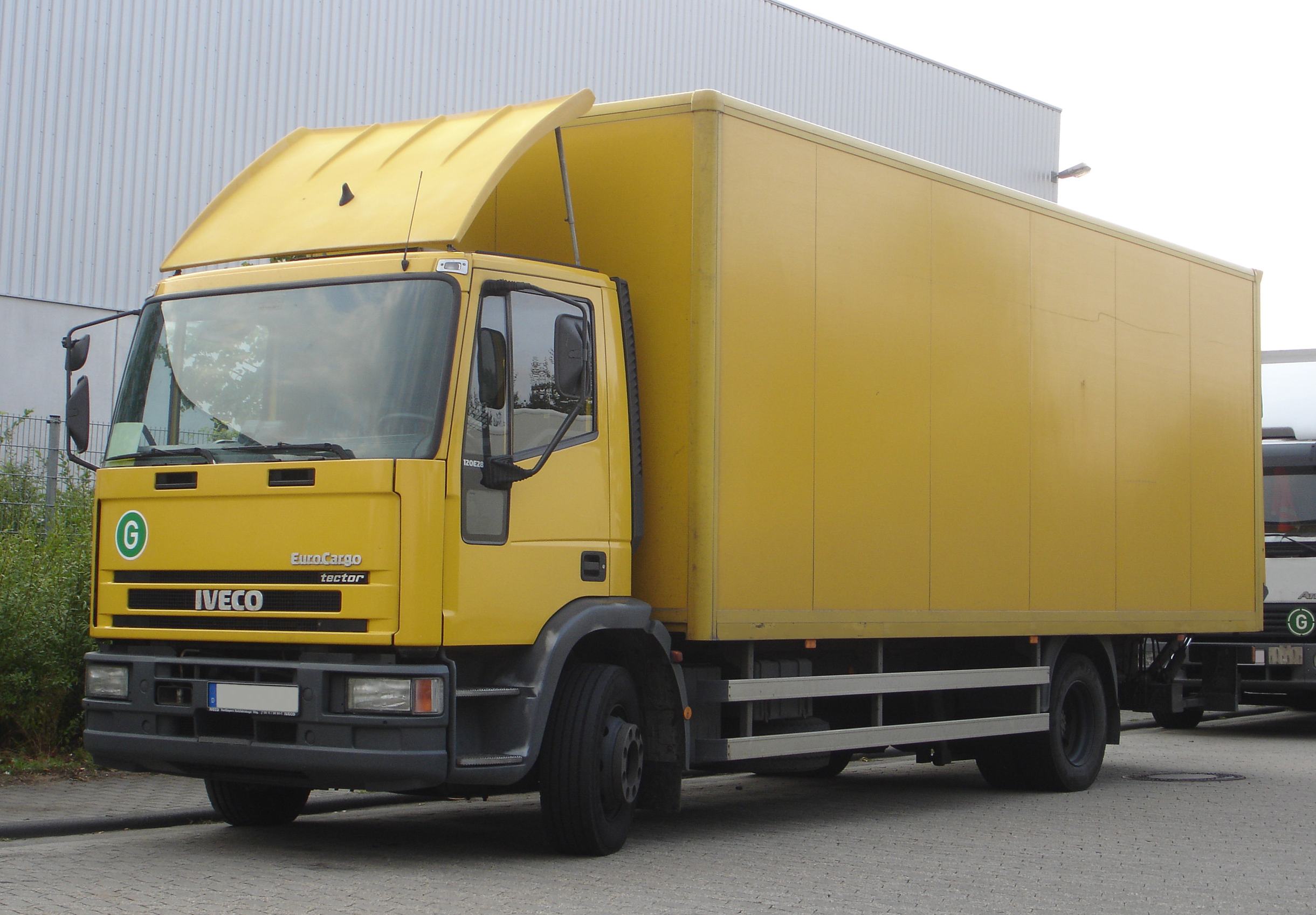
The agencies imported 435 Iveco trucks between January 2025 and June 2026, plus thousands of Toyota Hilux pickups and Land Cruisers and four Toyota Tundras, Reuters found. Iran’s military uses trucks of these types as camouflaged mobile launchers and drone haulers — weapons that look, from a satellite or a roadside, like ordinary freight. One earlier purchase shows the end of the chain: in 2022, six Iveco Eurocargo trucks bought for 426,000 euros through an Iranian dealer in Italy and Dubai’s Deilami Trading Co. were ultimately delivered to Sahara Thunder. And in March, US Central Command released footage of a strike on a disguised Iranian mobile launcher of an Iveco type that Iran had imported, according to Janes analysis cited by Reuters — though Reuters could not determine whether that vehicle had come through MOD 346428, and this article does not claim it did.
Why this matters
Sanctions, as Western governments practise them, are a weapon aimed at names. A company, a bank, a ship or a person is designated, and the financial system is told to freeze that name out. The MOD network is built to defeat exactly that weapon: more than 5,000 undesignated, numbered shells, sharing one ministry address, most of them formally dating to the same year, none of them individually important enough to have attracted a listing. Designating this network would not mean sanctioning a company. It would mean sanctioning a pattern — treating the numbering scheme itself, the shared address and the Bank Sepah accounts as the designation target. That is a different kind of enforcement act, and the investigation’s central implication is that nothing less is likely to reach the trade it documents.
The findings also supply a missing explanation for the war’s logistics. Iran’s ability to keep firing ballistic missiles and supplying drones — including to Russia, through Sahara Thunder — has depended on replenishment of exactly the categories in these records. A network importing $54 million to $77 million of military goods a month, even under blockade, is what that replenishment looks like from the customs side. It is also the backdrop against which the blockade’s wider pressure on Gulf shipping — including the strike on the tanker Acers near Qatar — has played out.
Diplomatically, the timing is awkward in two directions at once. Qatar’s mediators are working on a new draft deal to end the war, and any settlement will eventually have to reckon with how Iran rebuilds the arsenal the war has consumed — a question these records answer in uncomfortable detail. And on October 12, President Trump posted that he did not believe China and Russia were providing support to Iran: “If they are, it’s at a very low level, but I don’t believe they are at all.” The import records Reuters assembled tell a different story about volume, whatever label is put on it — one that sits alongside his parallel decision ruling out a new attack on Iran before the midterms. The claim and the customs data now exist in public at the same time, and officials will be asked about both.
Reactions and denials
The US Treasury, asked about the findings, did not dispute the trade directly. A spokeswoman said the United States “has severed the regime’s economic lifelines” and is “always 10 steps ahead.” China’s Foreign Ministry said it was “unaware of the situation you describe” and firmly opposed attempts to maliciously link regional hostilities to China. Iveco said any presence of its vehicles in Iran occurred beyond its control and responsibility, citing the contractual safeguards in its sales. Toyota said it does not conduct business in Iran and had no knowledge of the purchases. An EU spokesperson said member states enforce EU sanctions and that the European Union “continues to assess very carefully” information related to Iran’s drone and missile programs. Iran’s government, Russia’s Defense Ministry, and the governments of Germany and Italy did not respond to requests for comment.
What happens next
Four scenarios follow, in no fixed order. The first is mass designation: the Treasury and its allies list the numbered agencies wholesale, or designate the pattern itself through the shared MODAFL address and Bank Sepah accounts — the only response scaled to a 5,000-entity problem, and one that would test how designation law handles entities whose offence is belonging to a scheme. The second is follow-on action in Europe and Britain, where the EU’s stated careful assessment, and the EU origin recorded for $34 million of trucks, give Brussels and London their own hooks. The third is interdiction: customs and naval enforcement aimed at the documented routes — the Caspian crossings, the Central Asian truck corridors, the China freight flights and the sea lanes into Bandar Abbas — which would have to work shipment by shipment against a network that has already shown it can reroute. The fourth is the quietest and, on the record of sanctions evasion everywhere, the most likely accompaniment to any of the others: re-numbering. Agencies established in a single year can be replaced the same way, and the measure of any crackdown will be whether the money at Bank Sepah and the cargo at Bandar Abbas actually stop, or simply start arriving under fresh numbers.
What is already established is narrower. According to Reuters and 240 Analytics, more than 5,000 numbered Iranian military agencies sharing their defence ministry’s address imported at least $2 billion in military hardware from January 2025 onward, through a war and a blockade, without one of them appearing on a Western designation list. The governments and companies asked about it have denied knowledge, denied responsibility, or declined to comment. The next move belongs to the governments that write the lists.
Sources
- Reuters, October 29, 2026 — “Iran’s hidden web of military agencies is slipping hardware past US blockade,” the investigation reported with 240 Analytics: the 5,000-plus numbered MOD agencies and their shared MODAFL address; at least $2 billion in imports since January 2025; MOD 346428’s $2.3 billion in purchases; the Bank Sepah accounts and the 97% settled without currency transfer; the Bandar Abbas chemical shipments and the April 26, 2025 explosion, including Reuters’ inability to determine whether the final 75-tonne shipment caused the blast; the February 2026 titanium, nitrocellulose and perchlorate deliveries; the wartime import volumes; the Russian detonators; the Iveco and Toyota truck imports and the 2022 Eurocargo delivery to Sahara Thunder; the expert assessments of Miad Maleki, Peter Salisbury and Noam Binstok; President Trump’s October 12 post; and the on-the-record responses of the US Treasury, China’s Foreign Ministry, Iveco, Toyota and the European Union, and the non-responses of Iran, Russia’s Defense Ministry, Germany and Italy. The investigation is based on thousands of Iranian bank and government records, corporate filings and about 19,000 import records, cross-checked against shipping documents, social-media footage and state media; Reuters reported that the Wall Street Journal independently reported some of the China shipments on September 23, 2026, and that four sanctions and weapons experts reviewed the findings.