War · Iran · Nuclear
Iran nuclear inspections at the country’s three bombed enrichment sites are closed until the war has permanently ended and the United States meets Tehran’s conditions, Deputy Foreign Minister Kazem Gharibabadi said in a televised interview late on Sunday, November 15. The statement, reported by Agence France-Presse and carried by CBS News, France 24 and The Straits Times, came two days after the International Atomic Energy Agency told its member states it can no longer verify what has happened to Iran’s stock of highly enriched uranium — and does not even know the exact location of a declared enrichment plant at Isfahan.
Track it live: Iran war tracker
TEHRAN, November 16, 2026 — The world’s nuclear watchdog asked, again, to be let back in. On Sunday night, Iran answered, on television, in one sentence: “We will not grant the IAEA access to the facilities until Iran’s conditions are met and the war has permanently ended.” The speaker was Kazem Gharibabadi, Iran’s deputy foreign minister and a former ambassador to the International Atomic Energy Agency itself — a man who knows precisely what the sentence closes off. The facilities he meant are Natanz, Fordow and Isfahan, the three sites struck by the United States and Israel that the IAEA has been pressing to visit. Inspectors last entered an Iranian nuclear site in September, when they visited the Bushehr power plant. The three bombed sites have stayed shut, and on Sunday Tehran removed the ambiguity about when that might change: not during this war, and not on the agency’s timetable.
Gharibabadi, in the account of Iran’s semi-official Tasnim news agency, said Tehran’s approach to cooperation with the agency would not change until “the security and political conditions necessary for resuming inspections” exist. He questioned the purpose of the request itself, saying the agency’s wish to inspect the damaged facilities was “likely aimed at assessing the effectiveness of American weaponry,” and he criticised Director General Rafael Grossi for not taking what he called an appropriate position on strikes against sites that had been under the agency’s supervision. He repeated Iran’s position that it remains a party to the Nuclear Non-Proliferation Treaty, that it had declared every site it was required to declare, and that it rejects the US and Israeli allegation that it is seeking a nuclear weapon. Those obligations, in Tehran’s account, are reciprocal — they cannot be demanded in full while the facilities they cover are being attacked. None of this is a claim Signal Post News can verify or refute from outside; it is the stated reasoning of one party to an active war, and it is reported here as such.
The three closed doors
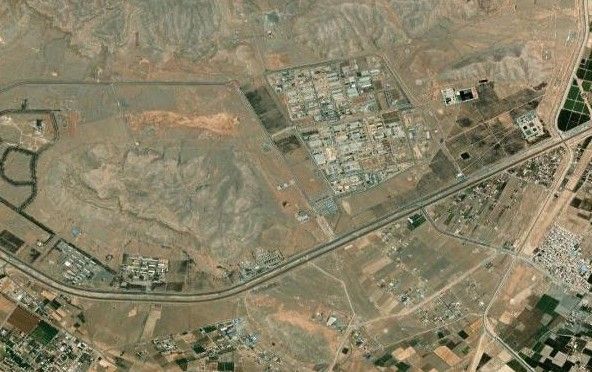
The geography of the refusal matters, because the three named sites are not interchangeable. Natanz, in Isfahan province, is Iran’s main uranium enrichment complex — a largely underground fuel enrichment plant, with a smaller pilot plant above ground, that before the wars held the bulk of the country’s centrifuge capacity. Fordow, built deep inside a mountain near Qom, was designed to survive exactly the kind of attack that eventually came, and housed advanced centrifuges enriching to higher levels. Isfahan hosts the uranium conversion facility that turns raw uranium into the feedstock enrichment plants consume — and, separately, the Isfahan Fuel Enrichment Plant, a newer facility Iran declared to the agency in June 2025. All three were struck in June 2025, during the twelve-day war in which the United States joined Israeli attacks, and again in the current war, which began on February 28, 2026, with US-Israeli strikes that killed Supreme Leader Ayatollah Ali Khamenei. Routine inspections have been suspended since the 2025 war. The September Bushehr visit — to a Russian-built power reactor using low-enriched fuel, carried out over September 12–15 according to the agency’s latest report as cited by the Associated Press — is the single exception, and it proves the rule: the one site inspectors may see is the one site nobody bombed.
What the agency said on Friday
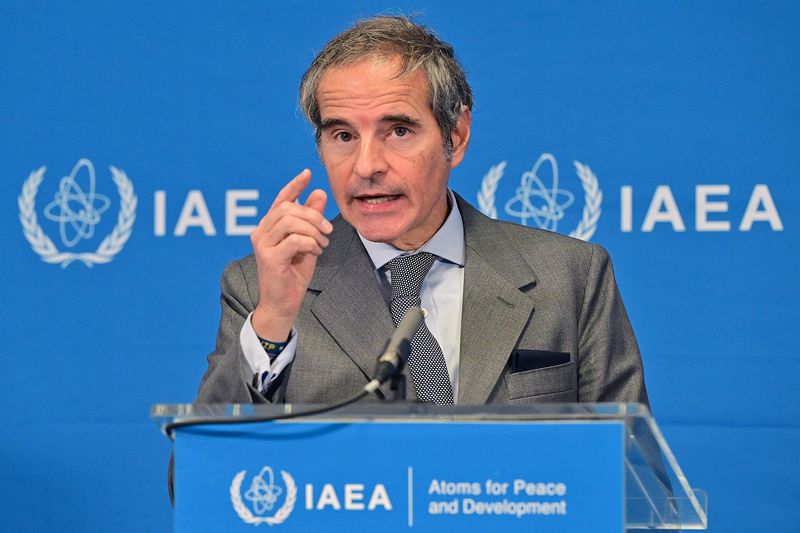
Sunday’s refusal did not arrive in a vacuum. On Friday, November 13, the IAEA circulated a confidential quarterly report to member states — seen by Reuters and Bloomberg — whose findings are the starkest the agency has published on Iran. Grossi wrote that it is “more than a year since the agency lost continuity of knowledge” over Iran’s declared inventories of highly enriched uranium. The last verified figure dates from June 13, 2025: 440.9 kilograms of uranium enriched up to 60 percent — a short technical step from the roughly 90 percent considered weapons-grade. The agency said it is “not able to conclude that there has been no diversion of declared nuclear material from peaceful nuclear activities,” described its lack of information as a matter of “serious proliferation concern” that “needs to be rectified with the utmost urgency,” and said it is “fully prepared to resume its safeguards activities in Iran at short notice.” On the Isfahan plant, the report was blunter still: “The Agency does not know IFEP’s exact location, status for safeguards purposes or whether it contains nuclear material.” Iran, for its part, told the agency this month that discussions on resuming inspections cannot proceed amid what it called “persistent, explicit, and public threats” by the President of the United States to attack it again — while reaffirming, in the agency’s account, a commitment to resume full safeguards implementation once conditions permit. The Iran file is on the agenda of the IAEA Board of Governors when it meets in Vienna next week.
Why this matters
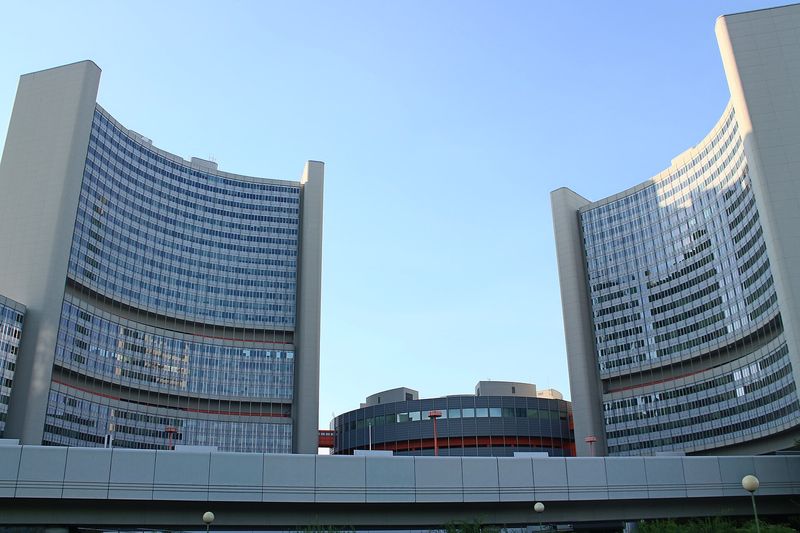
Inspections are easy to mistake for a bureaucratic subplot of the war. They are, in fact, the war’s information system. Every consequential decision around Iran’s programme — whether the strikes of 2025 and 2026 set it back months or years, whether Tehran is racing toward a weapon or rebuilding leverage, whether any eventual settlement is verifiable or merely declared — depends on facts that, since June 2025, only Iran possesses. A monitoring blackout of more than a year does not freeze the programme; it freezes everyone else’s knowledge of the programme, while the programme itself continues in the dark. That asymmetry is precisely what Grossi’s formulation captures. The agency has not accused Iran of diverting material. It has said something more destabilising: that it can no longer certify the negative. In safeguards, the inability to conclude that nothing has been diverted is not a technical footnote — it is the finding on which threat assessments, strike decisions and sanctions debates all silently rest.
The second significance is the linkage Tehran has now made explicit. Inspections were once treated, by all sides, as a technical track that could move independently of the politics — inspectors returned under ceasefires, under interim deals, even under sanctions. Gharibabadi’s sentence abolishes that separation. Access is now priced in the currency of the whole war: a permanent end to hostilities on all fronts, the lifting of the US economic blockade and of sanctions including those on oil, a settlement of Iran’s frozen assets abroad, and American guarantees that the conditions will be honoured. In separate remarks reported from the same interview cycle, he described three scenarios Tehran is preparing for — diplomacy, economic blockade and military aggression — warned that Iran would not wait for an American attack before responding, and said Iran had proposed a seven-day timeline for ending the war and reopening the Strait of Hormuz. Whether those conditions are a negotiating opening or a wall is a judgement readers should hold open. What is not open is the sequence: the nuclear file, Tehran says, comes later — after the war file. The inspectors are therefore hostages to a settlement that does not yet exist.
Context: how the doors closed
The present blackout has a dated beginning. Before June 2025, Iran’s declared facilities operated under the safeguards agreement attached to its NPT membership — imperfect, disputed, but functioning: inspectors visited, cameras recorded, inventories were verified, and the 440.9-kilogram figure could be stated as a fact rather than a memory. The twelve-day war of June 2025 broke that system in days. Israeli strikes opened the campaign on June 13; American B-2 bombers and submarine-launched missiles followed on June 22, hitting Fordow, Natanz and Isfahan. Iran suspended cooperation, and the argument over access has run ever since along a single groove: Tehran says safeguarded facilities were attacked in violation of the system’s premises, and that the agency failed to condemn it; the agency says safeguards obligations do not lapse because a state is at war, and that its mandate is verification, not adjudication. The current war, from February 28, 2026, struck the same sites again — satellite imagery published in March confirmed fresh damage at Natanz, whose entrance buildings the IAEA said had suffered the most significant harm — and each new strike has been followed by the same exchange, at higher stakes. Sunday’s interview is best read as the formal closing of a door that has, in practice, been shut for seventeen months: the difference is that Tehran has now named its price for reopening it, in public, on the record.
Who gains, who loses, what critics say
Tehran’s calculation is visible in the structure of the demand. An unmonitored programme is, for a state under attack, both a shield and a chip: a shield, because uncertainty about what survived the strikes complicates an adversary’s planning; a chip, because restored access is one of the few concessions Iran can sell that costs it nothing it currently enjoys. Supporters of the agency’s position answer that this is exactly backwards — that a state confident its programme is peaceful gains deterrence, not risk, from inspectors who can certify it, and that seventeen months of darkness will be read in Washington and Jerusalem as evidence in itself. Critics of the strikes make a third argument, directed at the war’s architects: that bombing safeguarded facilities predictably destroyed the verification system that made the programme legible, trading a monitored 440.9 kilograms for an unmonitored unknown, and that no damage assessment delivered by the bombers’ own side can substitute for inspectors on the ground — the very point Gharibabadi, self-servingly but not illogically, turned back on the agency. Gulf states, meanwhile, absorb the risk without a vote in any of it: the war’s continuation was visible again this weekend, when Bahrain said its air defences intercepted Iranian aerial attacks and the Revolutionary Guards said six drones had targeted a US air-defence radar at the Al-Riffa helicopter base — claims the US military’s account of Friday’s earlier exchange, in which it said it intercepted two drones without damage, shows are contested in every particular. Signal Post News reports both accounts as claims; neither the radar strike nor a clean interception has been independently confirmed.
What the numbers actually mean
Three figures carry this story, and each needs its context. The first is 440.9 kilograms — uranium enriched to 60 percent, last verified on June 13, 2025. Enrichment is not linear in effort: the work required to go from natural uranium to 60 percent is the overwhelming majority of the work required to reach 90 percent, which is why stocks at 60 percent compress breakout timelines from years to weeks in most published estimates. But the figure is a photograph, not a feed. Material may have been destroyed, buried, dispersed or moved — Iranian officials told the agency they were taking protective measures, Grossi has said publicly — and after seventeen months without verification, every use of the number should carry its date. The second figure is one: the single site, Bushehr, that inspectors have entered since June 2025, a power reactor whose fuel arrives from Russia at 4.5 percent enrichment and whose inspection, however welcome, verifies nothing about the enrichment programme at issue. The third figure is zero — the number of the three bombed sites the agency has entered, and, on the Isfahan plant, the amount it can state about location, status or contents. Set against the pre-war baseline, in which the agency verified inventories routinely and could certify the absence of diversion, the numbers describe not a degraded monitoring regime but its absence — and a Board of Governors that must now deliberate, next week, over a file it cannot see.
What happens next
The calendar offers three near-term tests. The first is Vienna: the Board of Governors meets next week with the November 13 report before it, and the choice between a resolution of censure, a referral path toward the Security Council, and a negotiated call for “technical and gradual measures” — the incremental steps Grossi has proposed, such as safety surveys and declarations preceding full inventory verification — will signal whether the agency’s members intend to pressure Tehran or to keep a channel warm. The second is the war itself: Tehran has tied access to a permanent end to hostilities and to a Hormuz settlement it says could be sequenced in seven days, which makes the inspections file a trailing indicator of diplomacy conducted elsewhere — including this week’s great-power meetings in China, at which Iran’s war sits just off the agenda’s centre. The third is quieter: whether any party proposes the kind of limited, single-site visit — Bushehr was the template — that would let both sides claim the principle survived. On Sunday’s wording, Tehran has left itself that much room: the bar was stated for “the facilities” that were bombed, under conditions of active war. What would change the story is not another statement. It is an inspector, at a gate, being waved through — and until that happens, the most important sentence in the Iran file remains the agency’s own: it is not able to conclude that there has been no diversion. A programme no one can see is a programme everyone must imagine, and imagination, in this region, has a record of starting wars rather than ending them.
Related reading: Hormuz Closed Again as Iran Defies Trump and Ships Are Attacked · Iran Offers to Reopen the Strait of Hormuz in Seven Days · Track it live: Iran war tracker
Sources
Agence France-Presse (AFP), November 16, 2026, via The Straits Times, CBS News live reporting and France 24: Deputy Foreign Minister Kazem Gharibabadi’s televised interview late Sunday, November 15 — “We will not grant the IAEA access to the facilities until Iran’s conditions are met and the war has permanently ended”; the “assessing the effectiveness of American weaponry” remark; inspectors’ September visit to Bushehr; no access to Natanz, Fordow or Isfahan. Tasnim News Agency, via AFP and CBS reporting, November 15–16, 2026: the “security and political conditions necessary for resuming inspections” formulation; criticism of Director General Grossi; Iran’s position that its sites were declared and under supervision before the attacks. International Atomic Energy Agency, confidential quarterly report circulated November 13, 2026, as seen and reported by Reuters and Bloomberg and summarised by the Associated Press: loss of continuity of knowledge for more than a year; last verified figure of 440.9 kg enriched up to 60 percent dated June 13, 2025; “not able to conclude that there has been no diversion of declared nuclear material”; “serious proliferation concern” requiring rectification “with the utmost urgency”; “The Agency does not know IFEP’s exact location, status for safeguards purposes or whether it contains nuclear material”; Bushehr visit September 12–15; agency “fully prepared to resume its safeguards activities in Iran at short notice”; Iran file before next week’s Board of Governors. Fars News Agency via Reuters, November 15, 2026, and Reuters, November 15, 2026: Bahrain’s interception statement and the Revolutionary Guards’ six-drone Al-Riffa claim, with the US military’s denial of damage in Friday’s exchange — all carried in this article as attributed claims, none independently confirmed. Additional interview detail (three scenarios; seven-day Hormuz timeline; conditions including a permanent end to the war on all fronts, lifting of the blockade and oil sanctions, and the frozen-assets question) via Fars-reported remarks summarised in November 16 coverage; Tehran’s conditions are reported as Tehran states them and have not been accepted by Washington. Signal Post News has not independently verified damage at any Iranian nuclear site; strike-damage characterisations follow IAEA statements and dated satellite-imagery reporting cited in the text.