Politics · US Courts
A Miami judge has ended President Donald Trump's lawsuit against The Wall Street Journal for the second and final time — ruling that the case over the Epstein birthday letter never cleared the First Amendment bar every president, and every public figure, has to clear.
MIAMI — A federal judge on Saturday dismissed President Donald Trump's defamation lawsuit against the publisher of The Wall Street Journal with prejudice, ruling that Trump failed to plead that the newspaper acted with actual malice when it reported on a birthday letter bearing his name in Jeffrey Epstein's 50th birthday album. U.S. District Judge Darrin Gayles, sitting in Miami, threw out the amended complaint in a 20-page order in Trump v. Dow Jones & Co., No. 1:25-cv-23232 — and because the dismissal is with prejudice, Trump cannot refile the case in district court. His legal team says he will appeal.
It is the second time Judge Gayles has dismissed the suit. He first threw it out in April, finding that Trump had come nowhere close to pleading actual malice, but gave the president leave to try again with an amended complaint, which was filed in May. This time the door is closed. "The amended complaint falls short of pleading actual malice," Gayles wrote, adding, in the Associated Press's account of the order, "As with his first attempt, he has failed."
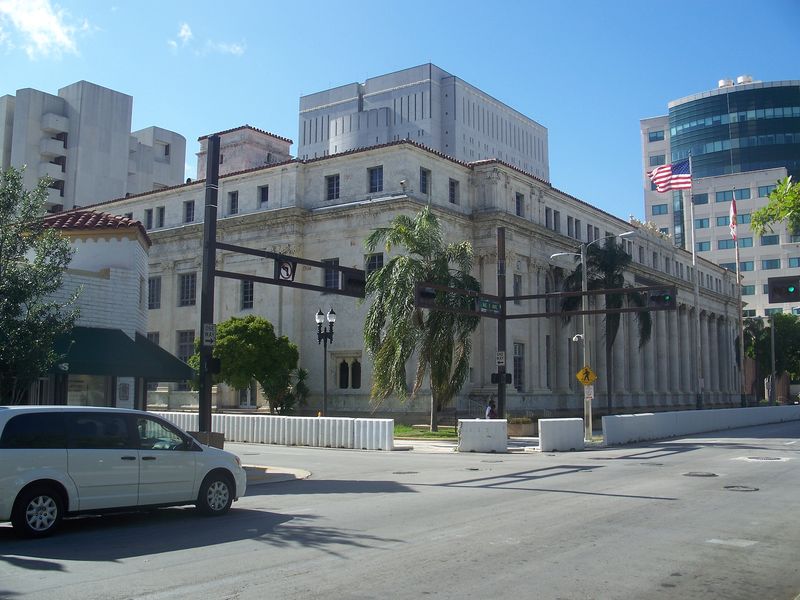
What the judge actually said
Gayles described Trump's allegations as "conclusory, vague, sometimes inconsistent with the article, and often irrelevant" to the only question the law allowed him to ask: whether the complaint plausibly alleged that the Journal knew its reporting was false or acted with reckless disregard for the truth. "The Court agrees that President Trump's defamation claims lack merit," he wrote. Summaries of the order describe the lawsuit as "grasping at straws" in an attempt to "manufacture" flaws in the Journal's investigative reporting.
The defendants were Dow Jones, the Journal's publisher; its parent company News Corp; News Corp chief executive Robert Thomson; chairman emeritus Rupert Murdoch; and the two Journal reporters who wrote the story, Khadeeja Safdar and Joseph Palazzolo. The amended complaint brought two defamation claims, and in each Trump asked for at least $10 billion in damages. A Dow Jones spokesperson said the company was pleased with the decision. A spokesman for Trump's legal team said the president would appeal, adding: "The President will continue to hold those who mislead the American People with Fake News and smears accountable for their actions."
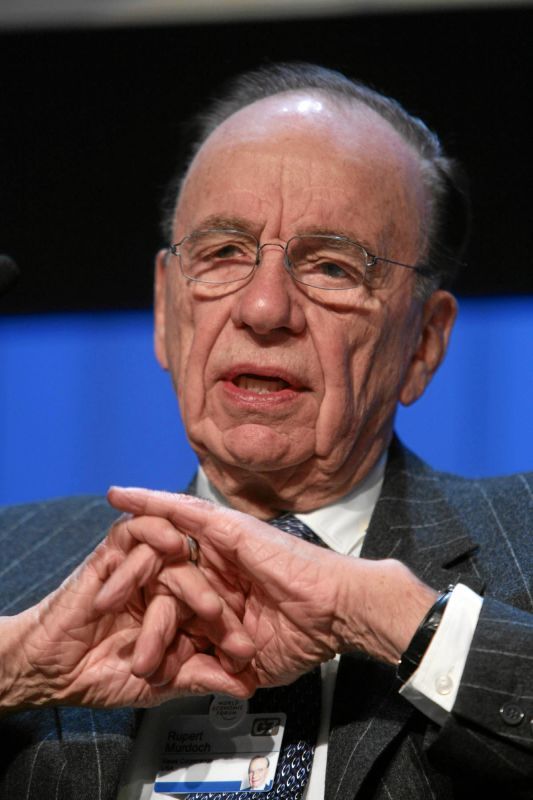
The story Trump sued over
The Journal reported in July 2025 that a book given to Epstein for his 50th birthday in 2003 included a letter with typewritten text framed by the outline of a naked woman, signed "Donald." The story was headlined "Jeffrey Epstein's Friends Sent Him Bawdy Letters for a 50th Birthday Album. One Was From Donald Trump." According to the reporting, the album was compiled by Ghislaine Maxwell, and the letter's text included the phrase "enigmas never age" and ended, "Happy Birthday — and may every day be another wonderful secret." The article carried Trump's comments at the time, including his assertion that the letter was "a fake thing" and his threat to sue. Trump has denied writing or signing the letter throughout, and he still disputes it.
Two facts that are often blurred in arguments about this case need to stay separate. First, after the Journal's story, members of the House Oversight Committee received a copy of the birthday book from lawyers for Epstein's estate, and it contained a letter matching the Journal's description. Second, Judge Gayles did not decide whether Trump wrote or signed that letter. Saturday's ruling decides a narrower legal question — what Trump's complaint alleged about the Journal's state of mind — and decides it against him.
The August hearing foreshadowed the ending
At a hearing in August, Trump's lawyer Alejandro Brito argued that the reporters had failed to conduct the investigation necessary to determine whether Trump signed the letter, and that the headline itself amounted to a statement that Trump wrote and signed it. The judge was openly skeptical. "I don't see those words specifically used in the article," Gayles said of Brito's reading. Lawyers for Dow Jones argued that the article did not actually say Trump wrote the letter himself, and that the refiled lawsuit, like the original, did not establish actual malice. Saturday's order adopts that logic: a complaint that attacks the thoroughness of a newsroom's investigation, without plausibly alleging the newsroom knew better, is not an actual-malice case.
Why this matters
The standard that defeated Trump is New York Times Co. v. Sullivan, the Supreme Court's 1964 ruling that a public figure suing for defamation must prove actual malice — knowledge of falsity, or reckless disregard for the truth. It is deliberately hard to meet, and it is the reason American presidents, candidates and celebrities so rarely win libel cases against news organisations. Gayles's order is a reminder that the rule does not bend for the most powerful plaintiff in the country: a sitting president gets the same Sullivan test as any other public figure, and conclusory allegations get the same dismissal.
The deeper significance is about what lawsuits like this do even when they lose. A $10-billion claim against a publisher, its parent company, its chief executive, its chairman emeritus and two named reporters imposes years of legal cost and personal exposure on everyone named, whatever the outcome. Trump's supporters read that as accountability — a president using the courts, as any citizen may, against reporting he calls fabricated, and his team has already promised to keep fighting on appeal. The Journal's defenders read the same facts the other way: as a test the First Amendment just passed, in a case where the underlying document later surfaced in a congressional subpoena return matching the reporting's description. Both readings can be argued honestly. What cannot be argued is the scoreboard: two complaints, two dismissals, and the second one final.
The ruling also lands inside a wider pattern readers of this site will recognise. Trump is pursuing other media litigation in parallel, including his case against the BBC — see our coverage of the Trump deposition set for December 11 in the BBC lawsuit. Each case will turn on its own facts, but Saturday's order is now the freshest statement of how a federal court handles a presidential defamation claim built on disputed authorship: the fight is over the publisher's knowledge, not the plaintiff's denial.
Background: the Epstein shadow over the case
Epstein pleaded guilty in state court in 2008 to charges of solicitation of prostitution and procuring a minor for prostitution, and died in a New York jail in 2019 while awaiting trial in a federal sex-trafficking case; the medical examiner ruled his death a suicide. Trump has said he cut ties with Epstein long before his initial 2006 arrest. The birthday album at the centre of the case dates to 2003, before any of that. The litigation was never, legally, a trial about Epstein — but his name is why a dispute over a two-decade-old birthday letter drew a $10-billion claim, a congressional subpoena and two rounds of federal litigation. For the continuing Epstein fallout, see New Mexico's suit against Epstein's lawyer and accountant and our report on what the Times reported about Trump, Epstein and models.
What happens next
With prejudice means exactly one road remains: an appeal to the U.S. Court of Appeals for the Eleventh Circuit, which Trump's spokesman has already said is coming. Appeals of dismissals are reviewed fresh, but the Eleventh Circuit would be applying the same Sullivan standard to the same amended complaint, and it would have to find that Gayles misread what that complaint plausibly alleges. That is possible — appellate courts do reverse dismissals — but the order's language ("lack merit," "grasping at straws") was written by a judge who had already given the plaintiff a second chance to plead his case properly, which historically makes reversal harder, not easier. Expect the appeal to take months, expect both sides to claim vindication in the meantime, and expect the birthday book itself — now a congressional record — to remain the document neither side can make go away.
Sources
- Reuters — "US judge dismisses Trump's lawsuit against Wall Street Journal with prejudice" (October 31, 2026).
- The Wall Street Journal — "Judge Dismisses Trump's Lawsuit Against Wall Street Journal Publisher Again" (October 31, 2026).
- Associated Press — reports of the October 31, 2026 order dismissing the First Amended Complaint, Trump v. Dow Jones & Co., No. 1:25-cv-23232 (S.D. Fla.), via CourtListener.