US / In the first law-enforcement action against Jeffrey Epstein's two closest advisers, New Mexico's attorney general has sued lawyer Darren Indyke and accountant Richard Kahn — the co-executors who control Epstein's estate — accusing them of facilitating, financing and concealing his sex trafficking, and asking a court to stop the estate's trust, holding more than $100 million, from paying out.
The New Mexico Epstein lawsuit filed on Wednesday is different from the many civil claims that have followed Jeffrey Epstein since his death in a Manhattan jail cell in 2019. This one was brought by a state — New Mexico, where Epstein owned the vast Zorro Ranch outside Santa Fe — and it is aimed not at Epstein himself but at the two men who stood closest to his money for decades: Darren Indyke, his longtime personal attorney, and Richard Kahn, his longtime accountant. Attorney General Raúl Torrez accuses both men of having facilitated, financed and concealed Epstein's sex trafficking operation, including at the ranch, and he wants the court to freeze the spending of Epstein's private trust, created days before his death and still holding more than $100 million, so that none of it reaches the two advisers before survivors are paid.

What the lawsuit alleges
Torrez announced the civil suit at a press conference in Albuquerque on Wednesday, flanked by two survivors of Epstein's alleged abuse, Julia Molchanova and Anouska De Georgiou. "Jeffrey Epstein did not operate alone, and his death does not end the pursuit of accountability for the people who helped make his crimes possible," he said. According to the attorney general's office, the case is the first law-enforcement action ever brought against Indyke and Kahn.
The complaint, filed Wednesday in federal court in New Mexico, alleges that the two men were, in the lawsuit's word, "enmeshed" in the criminal activity — with personal involvement in countless transactions that facilitated the trafficking and sexual abuse. The Wall Street Journal's account of the filing adds the division of labour the state alleges: Indyke, as Epstein's personal lawyer, arranged payments to victims that left them indebted to Epstein; Kahn, as his accountant, monitored the spending of victims and even prepared tax returns for some of them. The suit alleges that several Jane Does, including minors, were abused at the ranch, and that new information about the two men's roles came to light after the Epstein files were released late last year and this year.
It also alleges a motive for silence. The state says Indyke and Kahn received several benefits for "remaining silent" about Epstein's crimes — their salaries, gifts, and, ultimately, their places as beneficiaries of his estate. Under Epstein's will, as CNN has previously reported, Indyke was left $50 million and Kahn $25 million. Both men are co-executors of the estate, which means the two people accused of helping conceal the crimes are also the two people who control the money left behind by them — including a private trust, created days before Epstein died by suicide in 2019, that still holds more than $100 million. The lawsuit names the Estate of Jeffrey Epstein as well, and asks the court to prohibit the trust from spending that money while the case proceeds, to strip the men of their gains from their association with Epstein, and to ensure what remains goes to victims.
The denial: "categorically false"
Both men deny everything, in the strongest terms available to them. In a statement, Daniel Weiner, a lawyer for Indyke and Kahn, said they "emphatically reject the New Mexico Attorney General's allegations that they were complicit in or in any way knowingly facilitated Mr. Epstein's sexual abuse or trafficking — conduct that by all accounts occurred behind closed doors, in secluded locations, and at times when neither Mr. Indyke nor Mr. Kahn was present." Weiner described the allegations as "categorically false" and the lawsuit as "baseless," and said both men have cooperated with all investigations — while pointedly noting that no one from the attorney general's office reached out to speak with them before filing.
The two men made the same case under oath earlier this year, in closed-door depositions before the House Oversight Committee. Indyke, who began working for Epstein in 1996, said: "Let me be clear: I had no knowledge whatsoever of Jeffrey Epstein's wrongdoings. My complete lack of involvement in that misconduct is a matter of record. Not a single woman has ever accused me of committing sexual abuse or witnessing sexual abuse." Kahn, who began in 2005 and said he saw Epstein only about every three weeks, told lawmakers: "We did not interact socially, and I never attended any of his parties or his social functions. While Epstein was alive, I never observed any sexual abuse or trafficking of women and girls and never received a complaint." Both said they would have cut ties immediately had they known. They have also told Congress they have not received any money for overseeing the estate, and their lawyers say any fees or bequests would come only after creditors and claimants are compensated and probate is concluded. Those are the competing accounts a jury will now be asked to weigh: the state says proximity plus paperwork equals complicity; the men say proximity is all the state has, and paperwork is what lawyers and accountants are for.
Why New Mexico, and why now
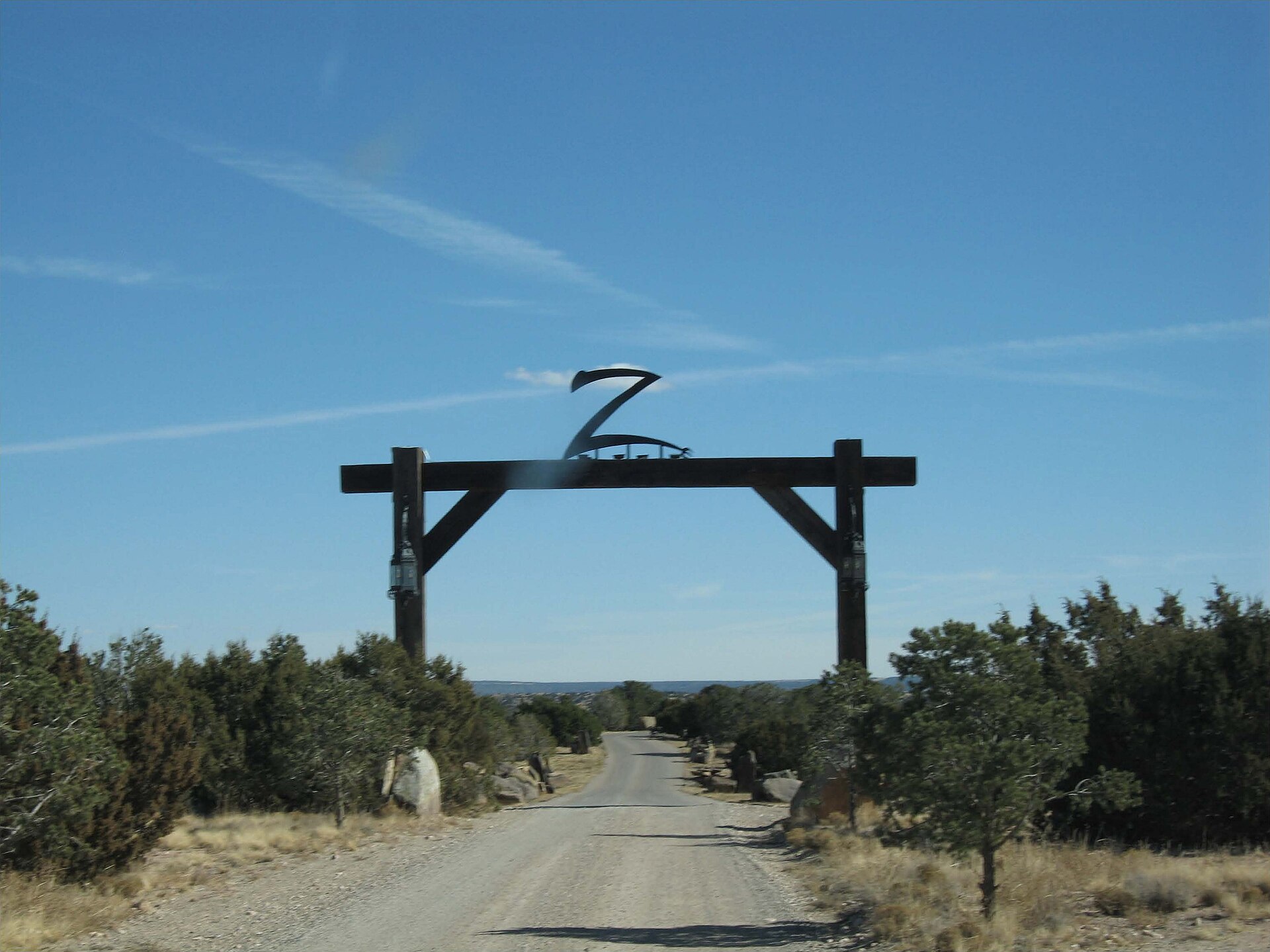
New Mexico's claim to this case is geographic and, increasingly, institutional. Epstein owned Zorro Ranch, near the community of Stanley about 30 miles south of Santa Fe, and the state says he is accused of abusing women and girls there for nearly three decades — yet he was never charged with any crime in New Mexico while he was alive. In February, Torrez reopened the state's criminal investigation into the ranch, after the Justice Department's file releases surfaced a 2019 email received by a local radio host alleging that two foreign girls had been buried in the hills outside the ranch on the orders of Epstein and "Madam G" — an unverified tip the state has treated as a reason to look, not as a finding. Authorities have since searched the property.
The state has built machinery around the case that no other state has. New Mexico is the only state to launch a legislative "truth commission" — a bipartisan commission of lawmakers — to investigate Epstein's alleged links with local politicians and government officials; it has issued multiple subpoenas, though not, so far, to Indyke and Kahn. And Torrez has already sued the U.S. Department of Justice and Attorney General Todd Blanche for access to unredacted Epstein files, accusing the department of "hiding information about Epstein and his co-conspirators" and stonewalling the state's investigation; the DOJ says it provided some files but was prevented from handing over most material by privacy protections. Wednesday's lawsuit is therefore the third front of a single campaign: a criminal investigation at the ranch, a truth commission in the legislature, and now a civil case against the estate's gatekeepers in federal court.
Why this matters
Every Epstein case since 2019 has run into the same wall: the principal is dead, his convicted accomplice Ghislaine Maxwell is in prison, and accountability has mostly meant money moving from an estate to survivors through settlements negotiated by the very executors now being sued. This lawsuit attacks that structure directly. If the state can show that a lawyer's payment arrangements and an accountant's transaction monitoring were not neutral professional services but part of the machinery of trafficking, it establishes a principle with consequences far beyond Epstein: that the professional infrastructure around a wealthy abuser — the people who moved the money, structured the entities, and kept the books — can be held liable for what that money was doing. That is why the case asks for disgorgement and a freeze, not just damages: the state's theory is that the $75 million in bequests to Indyke and Kahn are themselves proceeds of silence, and belong, if to anyone, to survivors.
The defence's strongest counter is also the case's central difficulty. Lawyers arrange payments and accountants monitor spending for clients every day, including clients who turn out to be criminals; liability has to turn on knowledge, and knowledge is exactly what both men deny, under oath, with the observation — hard to dismiss and hard to prove false — that abuse happens behind closed doors. The state's answer, built into the complaint, is that the volume and intimacy of the involvement ("countless transactions," tax returns prepared for victims, payments structured to leave victims in debt) crosses the line from service into participation. Where that line sits, for professional advisers, is genuinely unsettled law — which is why this case will be watched by every law firm and accounting practice that serves difficult rich clients, not only by Epstein watchers.
There is also a plainer, financial reason the case matters. The trust holds more than $100 million. Indyke and Kahn control it, are owed bequests from it worth $75 million on paper, and have already been named in survivor suits — including a complaint last month seeking damages for people pictured in Epstein's collection of child sexual-abuse material — and are reportedly under federal investigation as well. Wednesday's filing is, in effect, a race to the courthouse over the last Epstein money: the state wants a judge, not the executors, deciding who gets paid first.
What happens next
The immediate fight will be procedural: whether the court grants the state's request to stop the trust spending its funds while the case moves forward, and whether Indyke and Kahn can get the claims dismissed on the ground that the complaint alleges services, not knowledge. Torrez has framed the destination plainly, telling CNN the two men are "going to have every opportunity to come here to the state of New Mexico, appear before a jury, and explain to them exactly what they knew, when they knew it." A survivor who was at Zorro Ranch told CNN she is "grateful" for the effort: "Darren Indyke and Richard Kahn know the truth, and so do we. I'm ready and willing to help this truth come to light."
Three outcomes are now in play. The state could win or settle, in which case the bequests are likely gone and the remaining estate flows to survivors under court supervision — the first time the Epstein endgame has been run by a public authority rather than the executors themselves. The men could win dismissal, which would strengthen the professional-services defence everywhere and leave New Mexico's campaign resting on its criminal investigation and truth commission. Or the case could do what complex civil cases usually do — grind on for years, its factual record growing subpoena by subpoena, while the federal investigation and the survivor suits proceed in parallel. What is already settled is the shift it represents: seven years after Epstein's death, the legal argument is no longer only about what he did. It is about who made it possible, who got paid, and who decides what happens to the money.
Read next: Trump, Epstein and the models introduction reported by The Times and Prince Andrew faces legal action as the Epstein warrants fight widens.
Sources
Reuters, "New Mexico sues Jeffrey Epstein's former lawyer and accountant" (October 21, 2026): reuters.com. CNN, "New Mexico attorney general files civil lawsuit against two Epstein advisers" (October 21, 2026): cnn.com. The Wall Street Journal, "New Mexico Sues Jeffrey Epstein's Lawyer and Accountant" (October 21, 2026): wsj.com. BBC News, "New Mexico sues Epstein lawyer and accountant, accusing them of hiding his sex crimes" (October 21, 2026, homepage listing). All allegations in this article are the claims of the New Mexico attorney general's lawsuit, which are unproven; Darren Indyke and Richard Kahn deny them. No criminal charges against either man are reported in these sources.