Six Introductions in 1990s New York: What the Times Report Shows — and What It Does Not Claim

The New York Times reported on Saturday that in the 1990s, when Jeffrey Epstein and Donald J. Trump moved in overlapping New York social circles, Epstein introduced at least six modeling agents and executives to Trump. The introductions, as the Times characterises them, were a feature of a social world the two men shared more than three decades ago — years before Epstein's crimes made his name a byword, before the two men fell out, and long before Trump entered politics.
Precision matters on this story, because the Epstein file has become one of the most politically explosive subjects in American public life, and because almost every new detail in it is instantly weaponised by all sides. So, at the top: an introduction is not an allegation. The Times report, as published, describes social introductions to people in the modeling business. It does not accuse Trump of wrongdoing, and Trump has never been charged with any offence connected to Epstein. The two men later fell out. Epstein died in a Manhattan jail cell in 2019 while awaiting trial on federal sex-trafficking charges. Those are the fixed points, and everything else in this article is arranged around them.
What the Times reported
According to the Times, the introductions number at least six, and the men and women on the receiving end were agents and executives in the modeling industry — the gatekeepers of a business that, in 1990s New York, sat at the centre of the city's nightlife, fashion and celebrity economy. Trump was then a real-estate developer and tabloid fixture who owned the Plaza Hotel and, from 1996, the Miss Universe pageants; Epstein was a money manager cultivating a persona as a financier to the very rich, collecting famous acquaintances in New York, Palm Beach and beyond.
That the two men knew each other socially in that era is not itself a revelation — it has been documented for years, in photographs, in flight records released in litigation, and in Trump's own words at the time. In a much-quoted 2002 profile in New York magazine, Trump described Epstein as a "terrific guy" and added, in a line that has shadowed him ever since, that Epstein liked beautiful women as much as he did, "many of them on the younger side." In 2019, after Epstein's arrest, Trump said the opposite in substance: that he had had a falling out with Epstein long before, that he was "not a fan," and that he had not spoken to him in many years.
What the Times has added is a specific, sourced reconstruction of one channel of that social overlap: the modeling world, and the introductions Epstein made within it. Reporting of that kind does not allege a crime. It maps a network — and in the Epstein saga, networks are the story, because the central unanswered public questions have always been about who knew Epstein, how he gained access to the rooms he moved in, and what the people in those rooms did or did not understand about him at the time.

Why the modeling detail carries weight
The reason a 30-year-old set of social introductions makes news in 2026 is the documented shape of Epstein's offending. Court records, guilty-plea proceedings and victims' civil suits over two decades have described a pattern in which young women and girls were approached with promises connected to modeling and careers, and drawn into Epstein's orbit through intermediaries. Ghislaine Maxwell, his former girlfriend and associate, was convicted in federal court in 2021 of conspiring with him to recruit and abuse minors, and is serving a 20-year sentence. Against that record, Epstein's access to the modeling industry's gatekeepers is a legitimate subject of historical reporting — because the industry was one of the doors into his world.
None of that, on its own, says anything about what Trump knew, and it is essential to keep the categories separate. Being introduced to modeling agents in the 1990s is not evidence that a person understood what Epstein was doing, then or later. No victim has accused Trump of abuse in connection with Epstein, no prosecutor has charged him, and the Times report does not claim otherwise. The scrutiny question and the culpability question are different questions, and the first does not answer the second.
The falling out, and what is actually documented
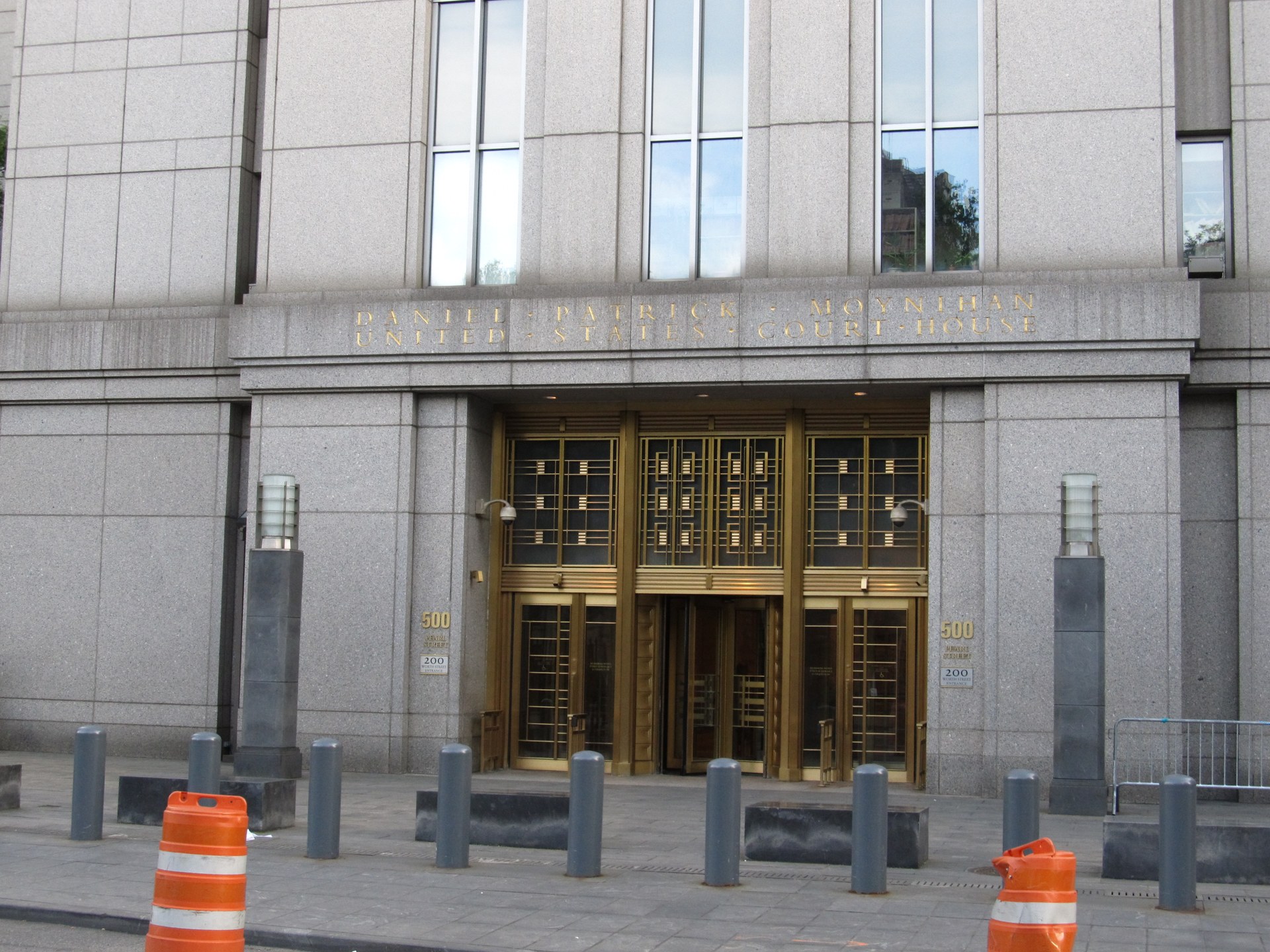
The relationship ended in the mid-2000s. The commonly reported account, drawn from people around both men, involves a Palm Beach real-estate dispute in 2004 and, separately, Epstein's behaviour at Mar-a-Lago; Trump has said Epstein was barred from the club, and associates have said the ban followed a complaint about Epstein's conduct toward a member's teenage daughter — an account reported by multiple outlets but never tested in court. What is documented is the sequence: Epstein pleaded guilty in Florida in 2008 to state charges including soliciting prostitution from a minor, in a plea deal that drew years of criticism; he was arrested again in July 2019 on federal sex-trafficking charges in the Southern District of New York; and he was found dead in his cell at the Metropolitan Correctional Center on 10 August 2019. New York City's chief medical examiner ruled the death a suicide by hanging; Epstein's family disputed the finding, and the circumstances — broken cameras, sleeping guards, a removed cellmate — produced official investigations and enduring public suspicion that no subsequent review has fully dispelled.
Why this lands in the middle of a live political fight
The Times report arrives while the Epstein file is already a running battle in Washington. The Justice Department and FBI concluded in a July 2025 memo that Epstein died by suicide, that no incriminating "client list" existed, and that no further charges would be brought — a conclusion that satisfied almost no one. It set off a revolt inside Trump's own coalition, where prominent supporters had spent years demanding the files be opened, and it powered a bipartisan push in the House, led by Representatives Thomas Massie and Ro Khanna, to force the release of the government's Epstein records by law. The fight has continued into 2026, and it has repeatedly collided with other branches of the saga: this month, British police attention turned again to Prince Andrew, whose association with Epstein cost him his titles and public role — a reminder that the file is still producing consequences for the famous men in Epstein's address book, on both sides of the Atlantic. Read our coverage of the latest legal pressure on Prince Andrew.
The White House's position throughout has been that Trump cut ties with Epstein decades ago, that he has been transparent, and that continued coverage of their 1990s social overlap is guilt by association — a charge his allies level at the Times report as well. His critics argue the opposite: that the length and closeness of the overlap is itself a matter of public record the public is entitled to have mapped, and that the administration's handling of the files has deepened, not settled, the suspicion around them. Both of those arguments can be engaged without distorting what the Times actually published — and both will distort it anyway, within hours, on every platform. Readers are better served by the narrower discipline: this report maps six introductions in a 1990s social world. It is a piece of the historical record, not a charge sheet.
What to watch next
Three things will decide whether Saturday's report is a one-day story or another turn of the ratchet. The first is corroboration: whether other outlets can name the agents and executives involved and confirm the introductions on the record, which would move the story from reconstruction to documentation. The second is response: whether the White House treats the report as beneath comment or as another occasion to attack the press, a choice that has reliably determined how long previous Epstein stories have lived. The third is the files themselves: every new piece of Epstein reporting now functions as an argument in the unresolved fight over the government's records, and each round of that fight has so far produced more pressure, not less. The introductions the Times describes happened in a New York that no longer exists. The argument about what they mean is happening in a Washington that cannot seem to put the Epstein file down — and on the evidence of this week, will not be putting it down soon. For more of today's Trump coverage, read our report on the president's push to get Republicans voting by mail.
Sources: The New York Times, "reporting on Jeffrey Epstein's introductions of modeling agents and executives to Donald Trump in the 1990s," October 17, 2026; New York magazine Trump profile (2002); federal court records, U.S. District Court for the Southern District of New York (Epstein 2019; Maxwell 2021); U.S. Department of Justice / FBI memorandum on the Epstein file (July 2025).