War · Middle East · Gaza
The Nasser hospital strike condemnation widened into a joint diplomatic front on Saturday, as 18 foreign ministers said the strike on southern Gaza’s main hospital broke the law that protects medical care in war — and tied the attack, and the restrictions choking aid, directly to the survival of the ceasefire.
Track it live: Israel war map
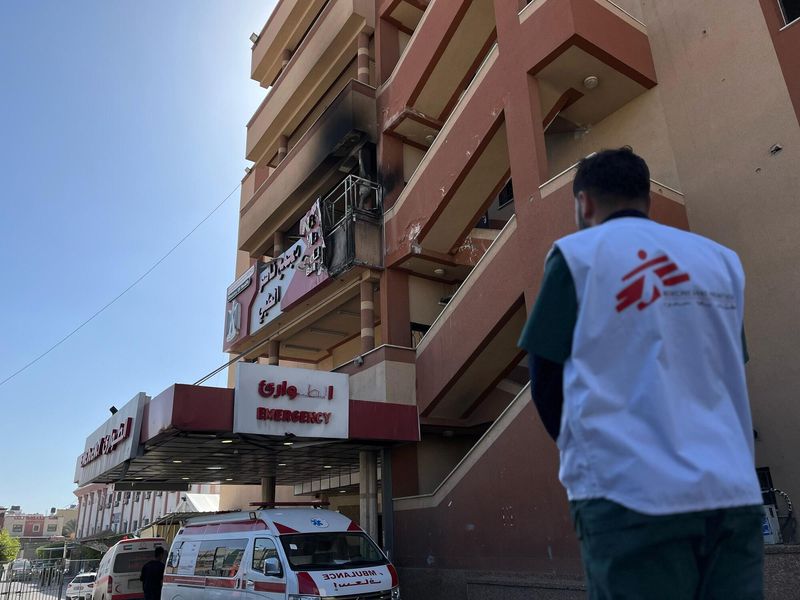
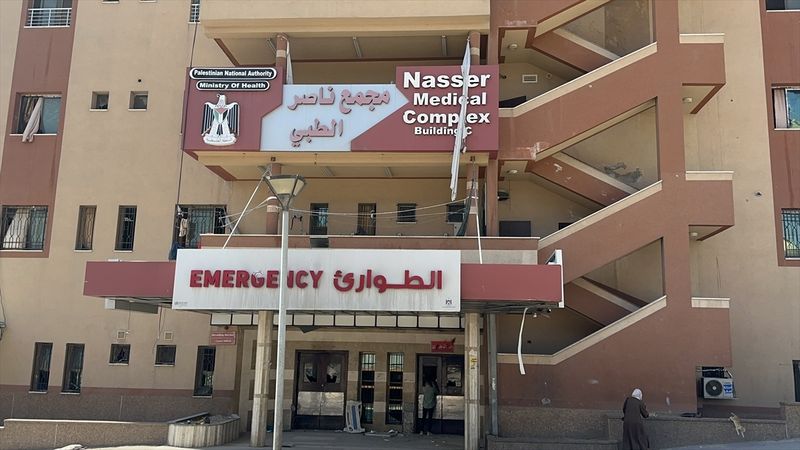
KHAN YOUNIS, Gaza Strip, November 14, 2026 — The foreign ministers of 18 Arab and Islamic countries issued a joint statement on Saturday condemning in the strongest terms the Israeli airstrike on the Nasser Medical Complex in Khan Younis, saying the strike caused casualties among patients and medical personnel and violated international humanitarian law, which affords special protection to medical facilities and healthcare workers. The statement, published by the United Arab Emirates’ Ministry of Foreign Affairs and carried by Jordan’s Petra news agency, went well beyond the hospital: the ministers condemned continued Israeli attacks on Palestinian civilians, warned that restrictions on humanitarian aid are deepening Gaza’s catastrophe as winter approaches, and called on Israel to fulfil immediately and in full its obligations under the Sharm El-Sheikh Agreement, President Trump’s Comprehensive Plan and UN Security Council Resolution 2803 (2025). No Israeli government response to Saturday’s joint statement had been published in the sources checked at the time of writing; what Israel has said about the strike itself — its stated target, given on November 12 — is set out, dated and attributed, below.
What the joint statement says
The 18 signatories, as listed by the UAE Foreign Ministry
The 18 countries listed by the UAE Foreign Ministry are the United Arab Emirates, Saudi Arabia, Oman, Qatar, Kuwait, Jordan, Lebanon, Egypt, Algeria, Palestine, Libya, Mauritania, Djibouti, Somalia, Türkiye, Pakistan, Indonesia and Sudan. Some wire headlines rendered the count differently — Petra’s headline, for example, counted 17 Arab and Islamic nations alongside Jordan — but the ministry’s own published list names 18, and it is that list this article follows. The group spans the Gulf states, the two Arab states that border Gaza and Israel most directly in this war’s diplomacy — Egypt and Jordan — North and East African states, and the two largest Muslim-majority countries outside the Arab world, Türkiye, Pakistan and Indonesia among them.
An Israel hospital strike international law claim, stated in the strongest terms
The statement’s first and sharpest passage addresses the hospital strike itself. The ministers condemned it in the strongest terms, said it caused casualties among patients and medical personnel, and said it violated international humanitarian law — the body of law that affords special protection to medical facilities and healthcare workers even in armed conflict. That is the ministers’ legal characterisation, stated here as their claim: whether a specific strike breaches that law turns on the facts of the target and the precautions taken, questions that Saturday’s statement asserts but does not itself adjudicate. What is not in dispute is the underlying event: an Israeli strike hit the Nasser Medical Complex on November 12, and people inside the hospital were killed and wounded, as this newsroom reported at the time.
Attacks on civilians and tents: “inconsistent with President Trump’s Comprehensive Plan”
The second passage widens the charge. The ministers condemned continued Israeli attacks on Palestinian civilians, including strikes on tents and other sites sheltering displaced persons. Such attacks, they said, undermine the ceasefire and the efforts to restore security and stability in Gaza, and are inconsistent with President Trump’s Comprehensive Plan — the framework under which the current ceasefire was built. The wording matters: the ministers did not frame the strikes only as humanitarian wrongs, but as breaches of the political deal itself, which places the argument on the desk of the plan’s author in Washington as much as in Jerusalem.
Gaza humanitarian aid restrictions and the approach of winter
The third passage turns to aid. The ministers expressed grave concern that continued Israeli restrictions on humanitarian aid — including shelter materials such as tents, caravans and mobile homes, and medical supplies — are deepening what they called Gaza’s humanitarian catastrophe as winter approaches. With inadequate shelter and deteriorating water, sanitation and healthcare, they said, children and infants are at risk of dying from exposure to freezing temperatures. The warning lands days after the season’s first winter storm flooded displacement camps across the territory, a development covered in this newsroom’s reporting on the storm that flooded 70,000 tents and left displaced families with nowhere dry to sleep.
The demands: Sharm El-Sheikh Agreement Gaza commitments, in full and without delay
The statement’s operative section calls on Israel to fulfil immediately and in full its obligations under three named instruments: the Sharm El-Sheikh Agreement, President Trump’s Comprehensive Plan, and UN Security Council Resolution 2803 (2025). In the ministers’ summary, those obligations include upholding the ceasefire; protecting civilians and medical facilities; ensuring the safe, sustained and unimpeded delivery of humanitarian aid in sufficient quantities, including shelter materials and the early-recovery supplies and equipment needed to restore essential infrastructure; and allowing UN agencies and humanitarian organisations to work without obstruction.
Two further points sharpen the demand. First, timing: the ministers said the first-phase commitments under the agreements were due on signature, must now be implemented without further delay and without additional political or security conditions, and that urgent aid must proceed independently of progress on later phases — a direct rejection of any linkage between today’s aid and tomorrow’s negotiations. Second, the addressees: the ministers called on the United States and the Board of Peace to intensify their efforts to ensure full implementation and the lifting of aid restrictions, arguing that doing so preserves the credibility of the agreements and consolidates the ceasefire. They closed by reaffirming that they will keep working with regional and international partners to consolidate the ceasefire, implement all phases of the plan and scale up aid.
The strike the statement answers: November 12 at Nasser
What happened at the Nasser Medical Complex Khan Younis, on this newsroom’s reporting
The strike being condemned hit the surgery department of the Nasser Medical Complex — the second floor of the Al-Yasin building — shortly after midnight on Thursday, November 12, as Signal Post News reported in its coverage of the Nasser Hospital strike that killed six people and shuttered the surgical ward. Six people were killed, among them a surgeon at the hospital and a 13-year-old boy who had been waiting for surgery, and the surgical ward was put out of service. Reported counts of the wounded differed across the wire reporting, ranging from more than 20 to 40; Türkiye’s foreign ministry, in its separate condemnation on November 13 and citing Gaza Civil Defense, put the injured at at least 30. Those figures are attributed here as they were reported; Saturday’s joint statement added no new casualty toll of its own, and none is presented here as one.
Israel’s stated rationale — for the strike, dated November 12
Israel’s account of the November 12 strike, given at the time, was that it targeted the commander of Hamas’s Khan Younis Brigade. That commander’s death has not been confirmed, and the claim is presented here exactly as that: the military’s stated rationale for the strike itself, issued on November 12. It is not a response to Saturday’s 18-country statement, and readers should not mistake it for one — no Israeli reply to the joint statement was in the sources checked for this article. The distinction matters because the diplomatic question the ministers have now posed — whether the strike and the wider pattern comply with the ceasefire framework — is a different question from the targeting claim Israel made on the night, and only the second of those has an Israeli answer on the record so far.
Earlier, separate condemnations: Türkiye and the GCC on November 13
Saturday’s statement was not the first condemnation of the strike, and the sequence is worth keeping straight. Türkiye condemned the strike separately on November 13, and the Gulf Cooperation Council condemned it the same day. Those were individual and bloc statements issued a day earlier. What changed on Saturday was the format: a single joint text, signed by 18 foreign ministers at once, that folds the hospital strike into a broader indictment of ceasefire implementation and aid access — and addresses its demands not only to Israel but to Washington and the Board of Peace.
Why this matters
Analysis. Four features make Saturday’s statement more than a routine condemnation, and each can be tested against what happens next.
A ceasefire credibility test, not only a protest
First, the statement is drafted as an implementation audit. It names the governing instruments — the Sharm El-Sheikh Agreement, the Trump plan and Resolution 2803 — and measures current conduct against them: ceasefire upheld or not, aid flowing or not, agencies obstructed or not. That framing raises the cost of the next incident. A protest can be noted and filed; an audit creates a checklist against which the United States, as the plan’s sponsor, and the Board of Peace, as its overseer, can be asked what they intend to do. The ministers made that explicit by calling on both to intensify their efforts — moving the argument from whether the facts are bad to whether the guarantors will act on them.
The UN Resolution 2803 Gaza framework meets its first winter
Second, timing. The statement arrives as Gaza enters winter with its displaced population still largely in tents and makeshift shelter — the same population whose tents flooded in the season’s first storm, as this newsroom reported on November 7. Shelter is the one aid category where delay is measured in exposure: a food convoy delayed is a hunger problem, but caravans and tents delayed into freezing weather become, in the ministers’ words, a risk of children and infants dying of exposure. By insisting that urgent aid proceed independently of progress on later phases, the 18 are arguing that the plan’s sequencing cannot be allowed to set the pace of winter relief.
Why 18 signatures carry different weight than one
Third, the format. Single-country condemnations — Türkiye’s on Friday, for instance — register one government’s position and can be answered, or ignored, bilaterally. A joint statement by 18 foreign ministers, including states that mediate between the parties (Egypt and Qatar), states whose normalisation and security relationships with Israel are central to regional diplomacy (the UAE and Saudi Arabia), and the two most populous Muslim-majority states (Indonesia and Pakistan), is harder to route around: it signals that the position is a regional consensus rather than one capital’s talking point, and it gives every signatory a shared text to cite in its own dealings with Washington. That is also its limit — a statement, however broad, changes nothing on the ground unless the guarantors it names choose to press it.
Who gains and loses leverage
Fourth, the leverage map. The signatories gain a collective instrument: Egypt and Qatar, as mediators, can now point to an 18-country text rather than their own bilateral asks when pressing on aid access. The United States gains a problem and an opportunity — its plan’s credibility is now publicly tied, by friendly and partner governments, to implementation it does not fully control; acting on aid access would let Washington show the plan working, while inaction lets the audit’s findings accumulate. Israel loses room to treat each incident as an isolated military matter, because the statement binds the hospital strike, strikes on displaced people’s shelters and aid restrictions into a single pattern and attaches it to agreements Israel signed up to. Critics of the ministers, for their part, can note — as an attributed argument, not a finding of this article — that joint statements have proliferated throughout this war without enforcement mechanisms of their own, and that the statement’s legal conclusion on the hospital strike is asserted by governments rather than established by any court or inquiry. Both readings are available in the text; the facts it rests on are the ones set out above.
The context in numbers, as reported
Southern Gaza’s main hospital, with its surgical ward out of service
The Nasser Medical Complex is the largest hospital in southern Gaza and the referral centre for Khan Younis and Rafah — the facility to which the south’s most serious cases are sent. The November 12 strike put its surgical ward out of service, on the hospital’s and civil defence’s accounts as reported on the day, which means the region’s principal operating capacity was closed by the same strike that produced casualties needing it. Saturday’s statement did not update the ward’s status, and this article does not either: what is established is the closure reported on November 12 and the ministers’ demand, two days later, that medical facilities be protected and medical supplies let through.
A Gaza winter shelter crisis already under way
The shelter emergency the ministers describe was visible before they wrote. In this newsroom’s November 7 reporting, Gaza’s first winter storm flooded some 70,000 tents, displaced families described having nowhere dry to sleep, and civil defence crews fielded roughly 1,500 distress calls. The ministers’ list of restricted items — tents, caravans and mobile homes — maps directly onto that gap: the materials that would move families out of flooded canvas are the materials they say are being held back. With water, sanitation and healthcare deteriorating, they argue, the margin between a flooded tent and a medical emergency narrows as temperatures fall. Those are the conditions into which Saturday’s argument about aid sequencing lands.
What happens next
Analysis — scenarios, not predictions. Three tests will show whether Saturday’s statement changed anything. The first is a reply: whether Israel responds to the joint statement itself — it had not, in the sources checked, by publication — and whether any response addresses the implementation checklist or only the November 12 targeting claim. The second is Washington: the ministers addressed their central ask to the United States and the Board of Peace, so the visible movement to watch is any US step on aid access, crossing throughput or shelter-material approvals, and any Board of Peace statement that goes beyond the formula it used on November 12 of calling on both sides to uphold the plan. The third is the ground: whether shelter and medical consignments move at a scale and speed that changes conditions in the camps before the next storm, and whether the ceasefire’s ledger of strikes — the pattern this newsroom tracked in the November 1 strikes that killed eight people in Khan Younis and Gaza City — grows or stops.
For now, the established record of Saturday, November 14, is this: 18 foreign ministers, listed by name of country in a statement published by the UAE, condemned the November 12 strike on the Nasser Medical Complex in the strongest terms as a violation of the law protecting hospitals; condemned continued attacks on civilians, including on tents sheltering the displaced, as inconsistent with President Trump’s Comprehensive Plan; warned that aid and shelter restrictions are deepening a humanitarian catastrophe as winter approaches; and demanded immediate, full implementation of the Sharm El-Sheikh Agreement, the Trump plan and Resolution 2803, with first-phase aid unlinked from later phases and the United States and the Board of Peace pressed to ensure it. What the statement asserts as law, this article has labelled as the ministers’ claim; what it demands, it demands of named governments by name. Whether it is answered in kind — in policy, not prose — is the story that follows.
Related coverage: Nasser Hospital Strike in Khan Younis Kills Six, Shutters Surgical Ward · Gaza’s First Winter Storm Floods 70,000 Tents and Leaves Displaced Families With Nowhere Dry to Sleep · Israeli Strikes Kill Eight in Gaza, Including Five Police Officers in Khan Younis, Medics Say
Sources
- UAE Ministry of Foreign Affairs — Joint Statement by the Foreign Ministers of Several Arab and Islamic Countries, Saturday, November 14, 2026: the joint statement itself — the condemnation of the Nasser Medical Complex strike, the list of 18 signatory countries, the passages on attacks on civilians and tents, the grave concern over aid, shelter and medical restrictions as winter approaches, and the calls for full implementation of the Sharm El-Sheikh Agreement, President Trump’s Comprehensive Plan and UN Security Council Resolution 2803 (2025), addressed to Israel, the United States and the Board of Peace.
- Petra news agency, via Fana News, November 14, 2026 — “Jordan, 17 Arab and Islamic Nations Condemn Israeli Strike on Gaza’s Nasser Medical Complex”: Jordanian carriage of the joint statement; its headline counts the signatories as 17 plus Jordan, while the UAE ministry’s published list names 18 countries, which this article follows.
- Daily Sabah summary via EuropeSays, November 14, 2026 — “Türkiye, 17 others denounce Israeli attack on Gaza medical complex”: summary of the joint condemnation and its ceasefire and aid demands.
- EuropeSays, November 13, 2026 — “Türkiye condemns Israeli strike on Gaza hospital”: Türkiye’s earlier, separate condemnation of the November 12 strike, in which its foreign ministry, citing Gaza Civil Defense, put the injured at at least 30 — reported here as an attributed figure from that statement, not as part of the November 14 joint statement.
- Signal Post News, November 12, 2026 — Nasser Hospital Strike in Khan Younis Kills Six, Shutters Surgical Ward: this newsroom’s reporting of the strike on the Al-Yasin building’s surgery department, the six killed including a surgeon and a 13-year-old boy awaiting surgery, the surgical ward put out of service, the differing wounded counts in wire reporting, and Israel’s statement that it targeted the commander of Hamas’s Khan Younis Brigade, whose death has not been confirmed.
- Signal Post News, November 7, 2026 — Gaza’s First Winter Storm Floods 70,000 Tents: this newsroom’s reporting of the first winter storm, the flooded tents and the shelter gap facing displaced families.