Israel revokes Dutch diplomats Ramallah

JERUSALEM — Israel revokes Dutch diplomats Ramallah status in a dispute that began with trade rules and has now moved into diplomatic accreditation. Israel's foreign ministry said Sunday that diplomats serving at the Netherlands' Representative Office in Ramallah must return their Israeli-issued credentials within seven days. Once the deadline passes, privileges and immunities granted by Israel will expire. The ministry described the action as retaliation for a Dutch ban on settlement-origin goods that took effect September 22, Reuters reported.
What Israel ordered, and what Sa'ar said
The measure applies to Dutch personnel attached to the Ramallah office, which handles the Netherlands' relations with the Palestinian Authority. It does not, on the information made public Sunday, amount to a break in diplomatic relations with the Netherlands or the closure of the Dutch embassy in Israel. Its immediate effect is narrower but still consequential: the officials lose the status Israel issued for work that often requires movement through Israeli-controlled crossings and territory.
Foreign Minister Gideon Sa'ar said the officials had seven days to return their documentation. In a statement posted on X, he argued that if the Netherlands wanted to continue representing its interests with the Palestinians, it could do so “from Palestinian Authority territory, rather than from the territory of the State of Israel.” The distinction presents a workaround, but it also transfers practical and political weight to Ramallah while making access beyond Palestinian Authority-administered areas more complicated.
Sa'ar linked the decision to what he called “hostile and unilateral” Dutch conduct. “Israel will not ignore measures intended to harm it,” he said, adding that a country acting in that manner would “lose influence and relevance in the region.” Those are Israel's characterizations of Dutch policy, not neutral descriptions of it. The Dutch government has framed its action differently: as compliance with international-law obligations and an effort not to contribute to what it describes as an unlawful situation involving Israeli settlements.
Why this matters: trade policy becomes diplomatic leverage
Governments routinely protest sanctions, labeling rules and import restrictions. Stripping diplomats of accreditation in response to a trade measure is a sharper rung on the escalation ladder. It uses access and official status—not a matching tariff—to deter other governments from adopting similar restrictions. The message is aimed beyond The Hague: European capitals weighing national or EU-wide settlement-trade measures are being shown that the cost may reach their diplomatic presence and influence with Israel.
The Netherlands matters disproportionately because it is a major European transport and distribution gateway. A national prohibition can affect logistics, wholesalers and service providers whose networks reach well beyond the Dutch consumer market. The breadth of the measure also matters. Reports describing the policy say it bars the import, purchase and sale of goods originating in Israeli settlements in the West Bank, East Jerusalem and the Golan Heights, and prohibits services that facilitate that trade. That service component reaches deeper into the commercial chain than a simple retail ban.
The seven-day period is another signal. It starts a visible clock, but it is not an instantaneous expulsion. That preserves room for clarification, reciprocal diplomatic contact or a negotiated administrative arrangement before credentials lapse. Neither government had announced such an off-ramp by Sunday evening, and Reuters reported no immediate public Dutch response.
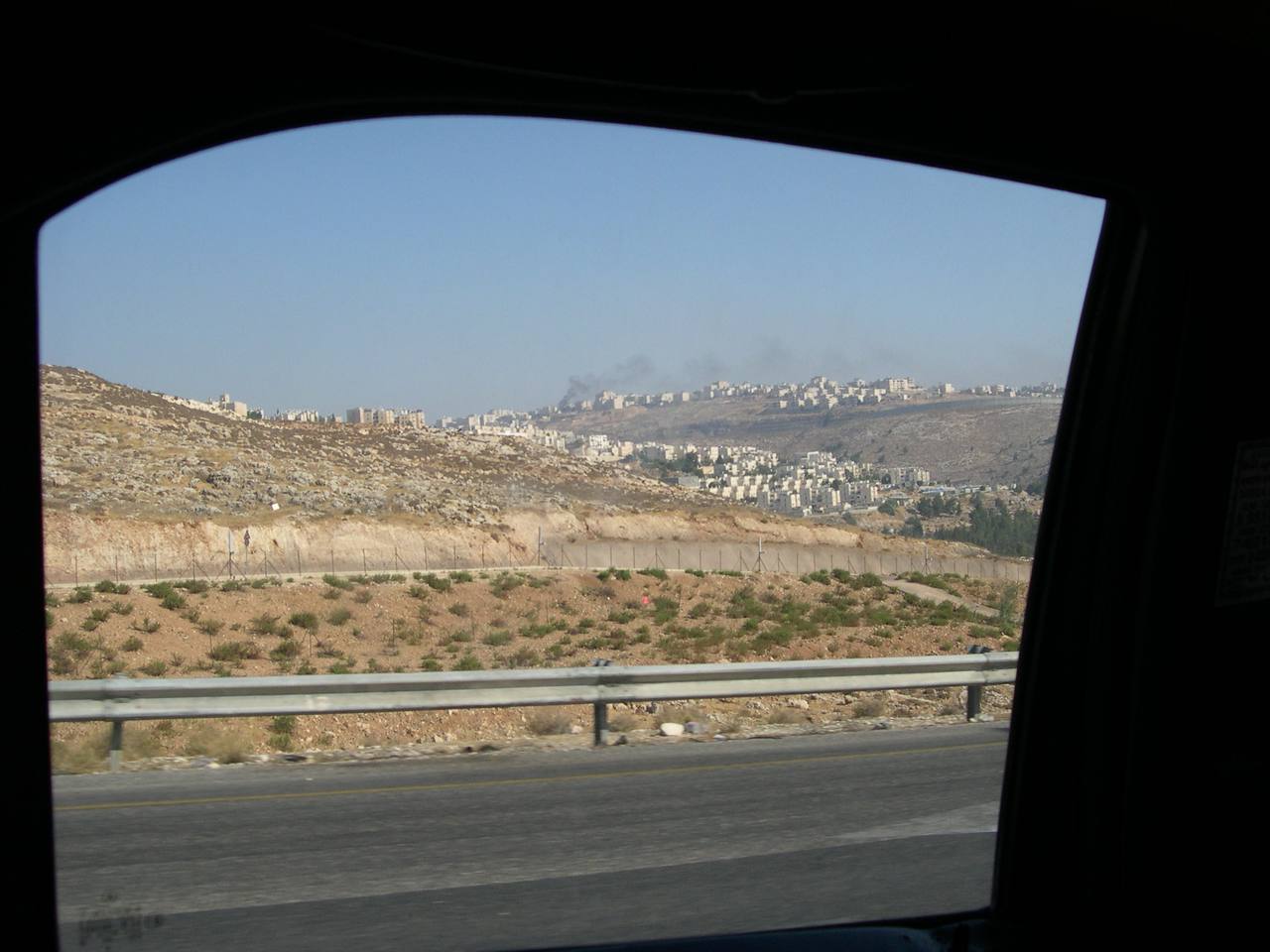
The Dutch ban and Israel's retaliation series
The Netherlands' settlement-goods ban entered into force on September 22. Dutch officials have said the distinction between Israel and territories occupied since 1967 follows the country's view of international law. Israel rejects measures that single out settlement commerce and argues that such actions are discriminatory and politically damaging. The dispute therefore turns on two incompatible claims of legitimate state conduct: the Netherlands says it is preventing participation in an unlawful situation; Israel says it is defending itself against unilateral pressure.
Sunday's order is part of a pattern rather than an isolated response. In August, Israel barred Dutch representatives from an international coordination centre for Gaza in Kiryat Gat after earlier Dutch measures. Earlier in September, Israel announced the closure of the British Consulate in East Jerusalem and imposed a seven-day deadline connected to British action on settlement-produced goods. Reports have also described Israeli countermeasures involving France and Canada. The cumulative doctrine is clearer than any single step: settlement-related sanctions can trigger restrictions on a country's regional diplomatic role.
Who gains, who loses, and what critics will test
Israel's government gains a deterrent signal. It can show domestic supporters and settlement constituencies that external pressure will receive a concrete response. The policy also warns other governments that access to Israeli institutions and territory is not insulated from economic disputes.
The Palestinian Authority gains a symbolic hosting role. Sa'ar's proposed arrangement places Dutch representation explicitly in Palestinian Authority-administered territory. Yet that symbolism comes with practical constraints: diplomats may find travel, consular work and contact with Israeli officials harder without Israeli accreditation.
Settlement exporters and Dutch businesses face the direct commercial burden. A report carried by Dominican Republic Post put total Netherlands–Israel trade at about $4.8 billion last year. The same report cited the legal nonprofit Global Echo as estimating that the Netherlands accounted for about one-third of agricultural exports from Israeli settlements and nearly half of those sent to the European Union. Those figures are secondary-source estimates rather than Dutch customs data published with Sunday's decision, but they illustrate why the Netherlands is more than a symbolic market.
European unity faces a test. If EU governments coordinate, Israel's bilateral retaliation becomes harder to calibrate without widening the dispute. If they act separately, Israel can answer country by country. Critics of the Israeli move will argue that punishing a diplomatic mission makes practical dialogue harder precisely when Gaza, the West Bank and regional security require more contact. Israel's defenders will answer that accreditation is a sovereign privilege and that governments cannot expect to impose economic penalties without consequences.
The numbers in context
The immediate timetable is seven days: a deadline to return credentials, after which Israeli-granted privileges and immunities expire. The triggering Dutch policy had been in force for five days when Israel announced its response. The reported $4.8 billion in bilateral trade covers the broader economic relationship, not merely settlement goods. The Global Echo shares—one-third of settlement agricultural exports moving through the Netherlands and nearly half of those bound for the EU—refer to a much narrower category and should not be confused with total Israeli exports to the country.
What happens next
Three paths are plausible. The first is escalation: the Netherlands could coordinate a response with EU partners, defend the ban through international-law mechanisms or consider reciprocal restrictions. A broader European settlement-trade policy would make the confrontation less bilateral and raise the economic and diplomatic stakes.
The second is managed separation. Dutch officials could continue operating from Palestinian Authority-administered territory under the workaround Sa'ar described, while both governments preserve embassy-level relations elsewhere. That would avoid a formal rupture, but it could leave the Ramallah office with reduced reach and make daily diplomacy more cumbersome.
The third is a negotiated pause during the seven-day window—perhaps over the treatment of specific personnel, travel arrangements or the ban's implementation. No public evidence on Sunday showed that such talks had begun. The next signals to watch are a formal Dutch response, any coordinated EU statement, whether the credentials are actually surrendered, and whether other European governments move toward their own restrictions. The larger question is whether Israel's deterrence strategy stops the policy from spreading or convinces Europe that only collective action can withstand bilateral retaliation.
Sources
- Reuters — “Israel revokes diplomatic status of Dutch diplomats in Ramallah”
- The Info Page News — reporting on the credential deadline, the Dutch ban's scope and the Palestinian Authority-territory workaround.
- Scott News Online — reporting on Sa'ar's notice to the Dutch embassy and the earlier Gaza coordination-centre restriction.
- Paragon International News — corroborating report on the foreign ministry decision.
- Dominican Republic Post — wire report carrying Sa'ar's statement and the cited trade estimates.
- Gideon Sa'ar statement on X, September 27, 2026 — official statement quoted and attributed above.