Russia drones strike Kyiv Ukraine
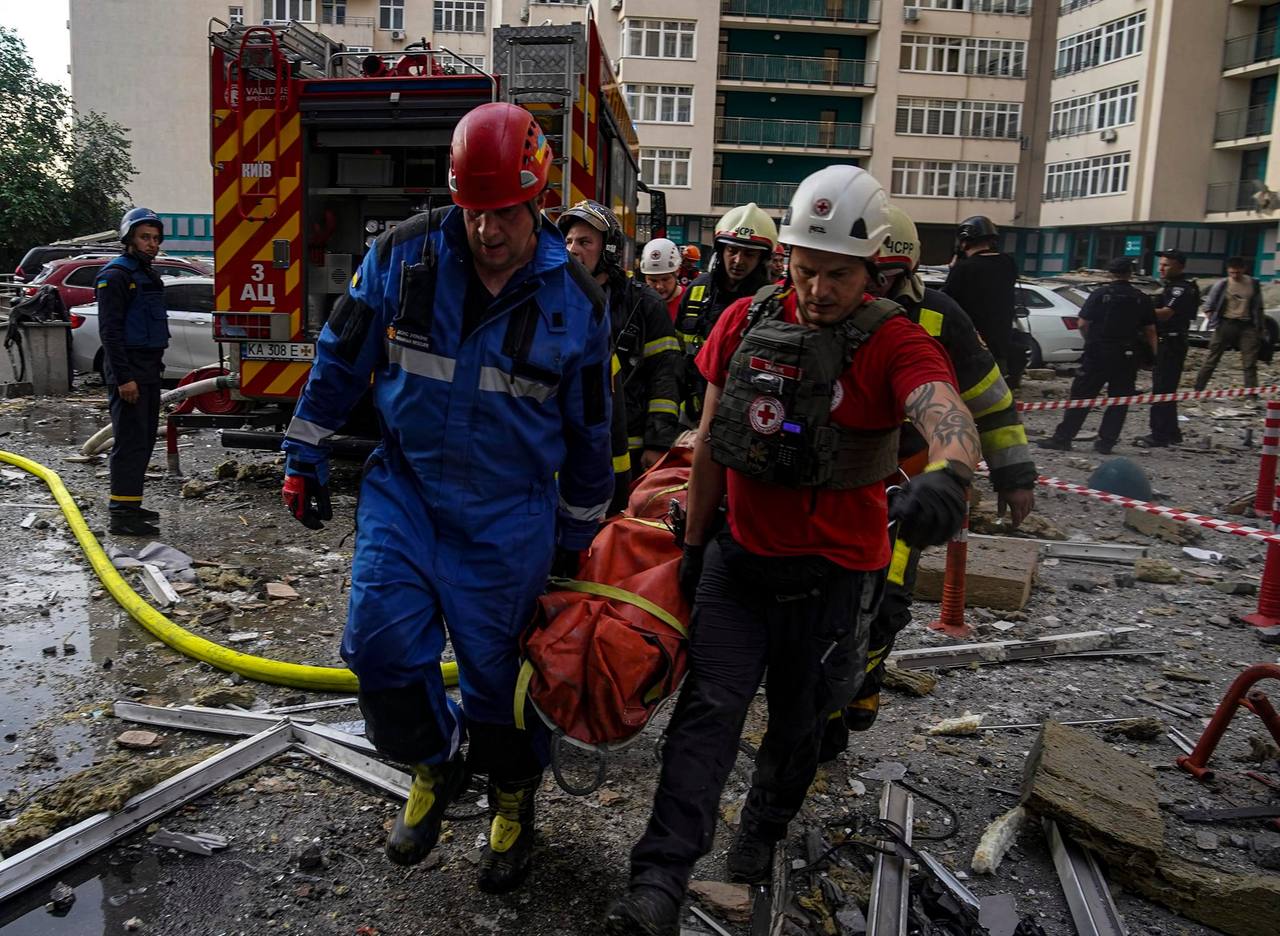
KYIV — On Sunday, September 27, Ukrainian President Volodymyr Zelenskyy published his weekly accounting of the air war, describing the heaviest tally he has put in writing in recent weeks. Russia, he said on Telegram, launched more than 2,200 strike drones, roughly 1,650 aerial bombs and 38 missiles of various types at Ukraine over the previous seven days, according to Anadolu Agency reporting carried by Europe Says. The figures put the Russia drones strike Kyiv Ukraine campaign at the center of a widening contest over air-defense capacity.
The tally arrived as Kyiv endured a third consecutive night of Russian drone attacks. Zelenskyy said one man was killed in the capital after the previous night's strike, three people were injured when a data center was hit twice in the morning — two of them children — and three people were killed in the Zaporizhzhia region during the week. Those casualty figures are attributed to the Ukrainian president and local officials; they were not independently verified by Signal Post News.
“Obviously, the Russians are not preparing to stop their war, at least for now,” Zelenskyy said in his nightly address. He called for enforcement of recently passed U.S. sanctions legislation and other pressure mechanisms on Moscow. His argument was aimed beyond Ukraine: if the volume of attacks is rising, he contends, the diplomatic and economic cost imposed on Russia must rise with it.
Kyiv's Third Night Under Fire — Kyiv Drone Strikes in September 2026
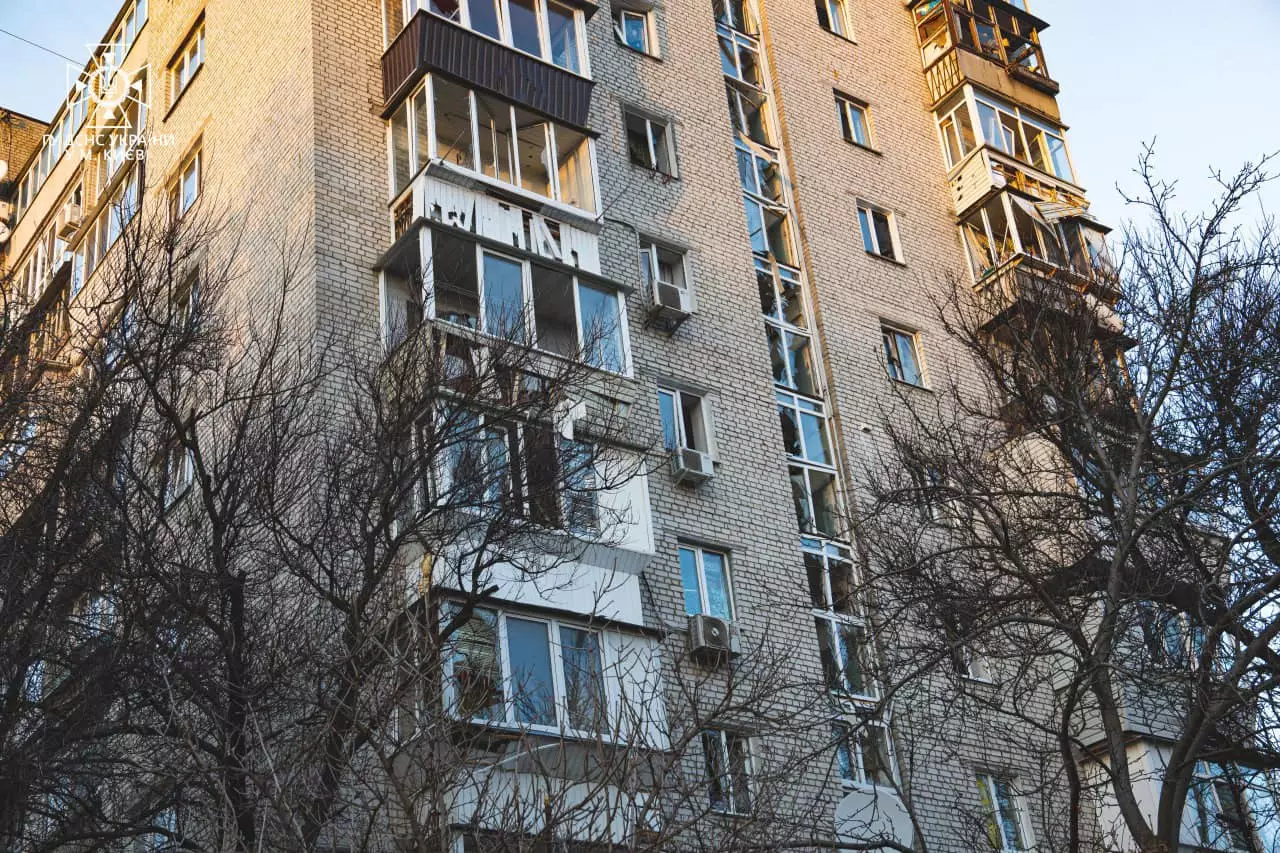
At about 10 p.m., a drone struck an uninhabited residential building in Kyiv's Shevchenkivskyi district and started a fire, according to the Ukrainian account compiled by EA WorldView in “Ukraine War, Day 1,676”. In the Solomianskyi district, officials said a drone fell in an open area and its blast wave damaged a five-story residential building. A warehouse and a car service center also caught fire.
Early Sunday morning, local officials said a woman and two 16-year-old children were injured in a strike on a non-residential building in Shevchenkivskyi. EA WorldView reported that at least one civilian was killed and four were injured overnight in Kyiv. These figures remain provisional and attributed to Ukrainian officials; wartime access and the pace of rescue work can change the count.
Saturday's attacks killed four people elsewhere in Ukraine, according to Associated Press reporting republished by The Daily Reflector: two women were reported trapped under the rubble of a destroyed home in Zaporizhzhia, while two people were killed in Sumy. The Zaporizhzhia drone attack deaths and the wider Ukraine–Russia aerial-war casualties show how quickly national barrages become local emergencies.
Why This Matters — The Air War Is Now the War
The front lines move in kilometers; the air war moves the strategic balance by the week. A campaign averaging more than 300 drones a day is not consistent with a conflict winding down. For Russia, the logic is attritional in two directions: force Ukraine war air defenses to spend interceptor after interceptor, then use the gaps to damage infrastructure ahead of winter.
For Ukraine, publishing the tally is also a strategic act. Coming during the United Nations General Assembly season, the Zelenskyy 2,200 drones week figure is designed for Western capitals as much as for a domestic audience. Kyiv is arguing that battlefield intensity is rising and that sanctions, interceptor supplies and defense-production decisions should respond to that trajectory rather than to diplomatic rhetoric alone.
The Numbers in Context — What 2,200 Drones Actually Means
A pace above 300 drones a day would imply more than 100,000 drone sorties a year if sustained. That is an extrapolation, not a forecast: a single week can represent a surge, and launch rates vary with weather, stockpiles, targeting cycles and operational priorities.
The weekly total comes from Ukrainian military reporting and cannot be independently verified. Moscow publishes mirror-image figures about Ukrainian attacks, and the two data sets exist in parallel without a shared audit trail. Neither side's claims should be accepted at face value. What independent reporting does support is the direction of travel in the Russia–Ukraine war in September 2026: more unmanned systems, more frequent launches and strikes spreading across cities, logistics hubs and infrastructure.
Infrastructure and Information — The Data Center Kyiv Strike
Russia's Defense Ministry claimed that a strike in Kyiv damaged a data center supporting mobile internet and Starlink satellite communications. The Associated Press reported the claim but said it could not independently confirm it. A Starlink Kyiv strike claim carries military significance because satellite connectivity supports both battlefield coordination and civilian communications, but Ukraine has not publicly confirmed the extent of the alleged damage.
Reuters reported on September 24 that Moscow said its forces struck military-linked facilities and vessels. In a separate September 25 report, Reuters said Russia claimed attacks on Ukrainian defense-industry facilities, telecom centers, Odesa port logistics hubs and vessels; Reuters noted that it could not independently verify those assertions.
If accurate, that target set reaches beyond weapons production into communications — the nervous system of military command and civilian life. Yet the uncertainty matters. An unverified targeting claim can shape public perception even when physical effects remain unclear, while Ukraine must still decide which assets merit scarce air-defense coverage.
The Ground War Grinds On — Kharkiv Front and Khrypuny
Russia's Defense Ministry also claimed that its Northern Group of Forces took control of Khrypuny in the Kharkiv region, according to Anadolu. Ukrainian officials had not confirmed the Kharkiv front Khrypuny claim. Territorial announcements are routine and routinely contested; both governments use claimed advances to shape the narrative of momentum while independent verification can lag by days.
The ground claim and the aerial tally serve different strategic messages. Moscow emphasizes movement and strike capacity. Kyiv emphasizes the scale of attack and the international resources needed to withstand it. The divergence is why precise attribution matters: these are claims by belligerents, not a reconciled account of the battlefield.
The Diplomacy Problem — Ukraine Sanctions, Russia Pressure and Patriots
President Donald Trump confirmed that Patriot systems were discussed with Zelenskyy in New York, but he did not confirm a production license. Instead, Trump said he wanted Zelenskyy to “settle” with Russian President Vladimir Putin, according to the Associated Press report. Zelenskyy's parallel appeal for domestic air-defense production underscores the arithmetic: repeated weeks of 2,200-drone barrages would consume interceptors faster than current Western production lines can replace them.
That creates a triangular standoff. Russia is escalating the volume and variety of attacks; Ukraine is asking for more defenses and stronger sanctions; Washington is also pressing for negotiation. Those tracks can coexist, but they pull policy in different directions when speed matters.
Who Gains, Who Loses — Reading the Escalation
Russia's potential gain is leverage ahead of winter. The cost asymmetry between comparatively cheap drones and expensive interceptors is real, although actual unit costs vary and not every drone requires the most sophisticated missile. A mass launch can force defenders to reveal positions, ration ammunition and protect a widening circle of assets.
Ukraine's losses are immediate: lives, infrastructure and the erosion of ordinary life under repeated alerts. Its strategic card is the claim that every escalation strengthens the case for sanctions and air defenses rather than concessions. Russia risks overreach if sustained bombing hardens Western resolve; Ukraine faces a material risk that no interceptor stockpile is infinite.
What Happens Next — Three Scenarios
- A winter campaign. The target set could shift further toward energy infrastructure, raising the civilian cost as temperatures fall.
- The air-defense equation. Outcomes will depend on interceptor supply, lower-cost counter-drone systems and the unresolved Patriot-production question.
- A diplomatic split. Sanctions enforcement and pressure to “settle” pull in opposite directions; the U.N. General Assembly produced statements, not an agreement.
The most plausible near-term course is not a clean breakthrough but heavier air campaigns and harder diplomacy, with weekly tallies climbing until production, stockpiles or political tolerance constrain one side's arithmetic.
What to Watch This Week
- Whether Moscow sustains a tempo near 300 drones a day or the latest week proves to have been a surge.
- Whether independent reporting confirms the data-center damage and the Starlink-related Russian claim.
- Whether Washington clarifies the Patriot license and whether recently enacted sanctions are enforced in practice.
- The civilian toll in Zaporizhzhia and Sumy, where casualties accumulate away from the Kyiv cameras.
Sources
- Anadolu Agency via Europe Says — Zelenskyy's weekly strike tally and sanctions appeal
- EA WorldView — Kyiv's third consecutive night of attacks
- Associated Press via The Daily Reflector — casualties and diplomacy
- Reuters, September 24 — Russian military-target claims
- Reuters, September 25 — defense-industry, telecom and port claims