Ukraine’s president used his Tuesday statement to turn one local ceasefire into a negotiating programme. At the centre of it sits the Zelenskyy humanitarian missions proposal: ten more locations in the temporarily occupied parts of Kherson and Zaporizhzhia regions where operations modelled on the Oleshky humanitarian mission would evacuate and assist civilians, alongside prisoner-exchange proposals to be put to the American side within weeks, a push to free civilian hostages held since before the full-scale invasion, a formal place for Europe at the table, and a framework for ending the war. The sites have not been named publicly. Russia, as of Tuesday’s reporting, had not commented. What follows is what was actually proposed, what is claimed by each side about the precedent it builds on, and what would have to happen next for any of it to move.
Track it live: Ukraine war map · Wars tracker
KYIV, November 17, 2026 — President Volodymyr Zelenskyy set out the package in a statement on X on Tuesday, after a meeting with his diplomatic team, his intelligence chiefs and the commander-in-chief at which he received the report on the Oleshky humanitarian mission — the six-day local ceasefire in October that allowed civilians to leave a town that had been cut off, in large part, from the outside world. His conclusion from that report was not that Oleshky should remain a one-off. It was that it should become a template. Ukraine, he said, has proposed ten more locations in the temporarily occupied Kherson and Zaporizhzhia regions for similar humanitarian operations, and his negotiation team will discuss them with the US side. He approved the team’s assignments for the coming weeks, and he organised the work under five priorities that reach well beyond the missions themselves — from prisoner exchanges conducted through intelligence channels to the framework for ending the war outright.
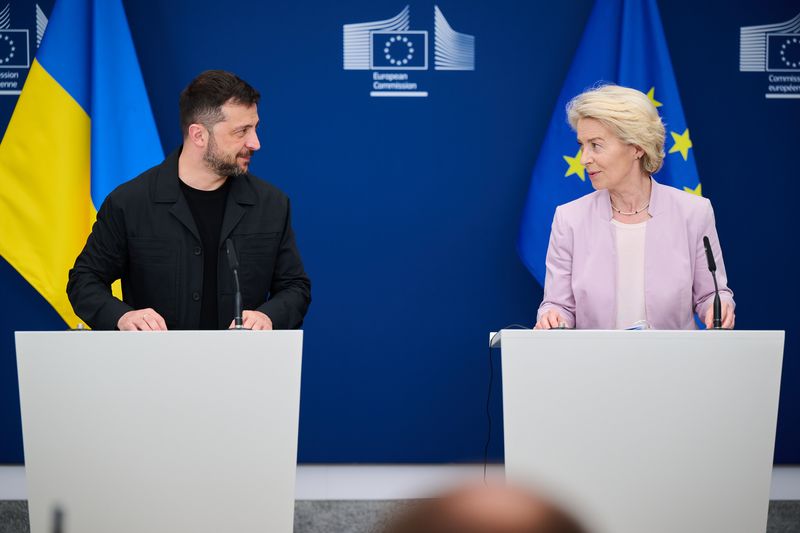
What happened
The sequence matters. Zelenskyy did not announce the ten locations in isolation; he announced them as the operational output of a working meeting. The diplomatic team, the intelligence leadership and the commander-in-chief reported on the completed Oleshky mission, and the president’s response was to scale it. The ten proposed locations are in territory Ukraine does not currently control — the occupied parts of Kherson region, on the Dnipro’s east bank and beyond, and of Zaporizhzhia region, in the south — which is precisely why they cannot be done unilaterally. Each one requires what Oleshky required: a locally agreed pause, safe passage, and a counterpart willing to hold fire long enough for buses to move. The sites themselves were not named publicly; Zelenskyy said the negotiation team would discuss them with the US side, which keeps Washington in the broker’s role it played, through First Lady Melania Trump’s involvement, in the original mission.
Two precision points belong at the top of any account of Tuesday. First, per Anadolu’s reporting, Russia had not yet commented on Zelenskyy’s November 17 remarks — there is, as of publication, no confirmed Russian response to the ten-locations proposal itself. Second, readers will encounter a Newsmax headline characterising Moscow as having rejected ten Oleshky-style missions. That characterisation is Zelenskyy’s own, given in his interview with Shelby Wilder: it is the Ukrainian president’s description of the Russian position, reported here as his claim, not as an independently confirmed Russian decision. The distinction is not pedantry. A proposal that has drawn no public answer, a proposal its author says has been rebuffed, and a proposal formally rejected are three different diplomatic objects, and they lead to three different next steps.
The five priorities
Zelenskyy framed the missions inside a wider set of instructions for the coming diplomatic contacts, across the American, European and Russian formats. In his ordering, they are:
First, prisoner exchanges. Ukraine will submit its prisoner-of-war exchange proposals to the US side, communicating through intelligence channels, and Zelenskyy said the team is “ready to deliver results in the coming weeks.” He was equally explicit about the constraint: the timing of any swap depends on the speed of the Russian side and on American communication. A figure discussed over the weekend — a large-scale exchange on the order of 1,200 to 1,300 people per side, aired in connection with the Abu Dhabi talks — should be read at exactly that weight: a discussion figure, with parameters not yet determined, not an agreed or finalised number. Exchanges of that scale have been negotiated before in this war and have also collapsed before; nothing about Tuesday’s statement changes the status of the number from discussed to decided.
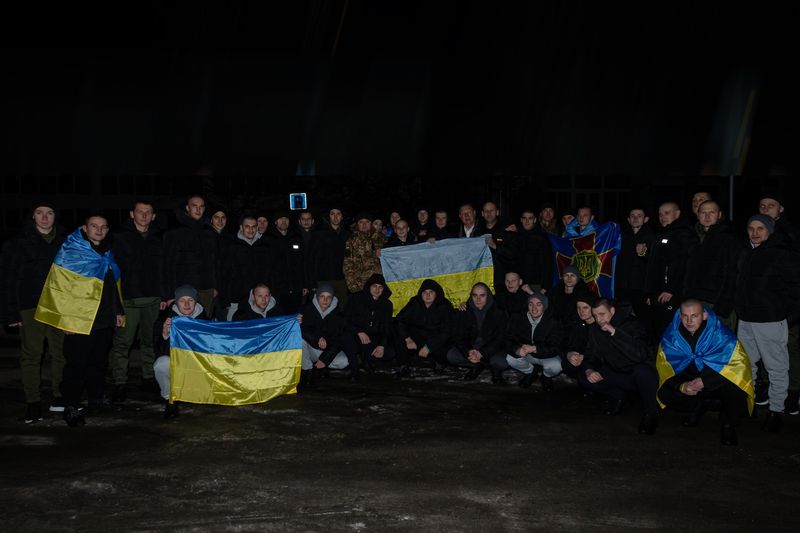
Second, civilian hostages. Separate from uniformed prisoners, Zelenskyy set the release of civilian hostages as its own priority — including people held since before the full-scale invasion began, which reaches back to detentions in occupied Crimea and the Donbas dating to 2014 and after. He said the parameters of this track have been discussed. Civilian detainees are the hardest category in any exchange architecture: they sit outside the prisoner-of-war framework, their numbers and even their locations are contested, and their release has historically lagged every military swap. Giving them a standalone priority, rather than folding them into the POW file, is a statement about sequencing as much as about sympathy.
Third, humanitarian operations. This is the ten-locations proposal itself: Oleshky-style missions, repeated across occupied Kherson and Zaporizhzhia. Its placement third — after the two people-recovery tracks and before the political architecture — describes how Kyiv sees the ladder: lives and movement first, frameworks after.
Fourth, Europe as a strong participant. Zelenskyy said Europe should take part in the negotiations as a strong participant, as agreed with America. That phrasing does two things at once: it asserts a European seat that is substantive rather than ceremonial, and it grounds that seat in an understanding with Washington rather than in a demand addressed to Moscow. The diplomatic choreography around his recent talks is covered in our report on the Zelenskyy–Witkoff–Kushner talks and Europe’s place in them.
Fifth, the framework for ending the war. The final priority is the largest: the framework for ending the war, security guarantees, a lasting peace and recovery capabilities. Zelenskyy listed it last and in the most general terms, which is consistent with how every party has handled the endgame questions in public — the framework is the destination the other four priorities are meant to make reachable, not a text anyone has yet put on the table in full.
Context: the Oleshky precedent and the Kostiantynivka counter-proposal
Everything in Tuesday’s proposal leans on one precedent, and the precedent is contested. The Oleshky ceasefire — a six-day local pause that began on October 27, brokered by Melania Trump — allowed a humanitarian operation in the occupied Kherson-region town, and by the First Lady’s account roughly 800 people were evacuated. How that pause ended, and the dispute over extending it, is detailed in our report on the end of the Oleshky ceasefire; the First Lady’s role in brokering it is covered in our account of the Melania Trump Oleshky ceasefire. For Kyiv, Oleshky proved a mechanism: a named place, a fixed window, international sponsorship, civilians out. Tuesday’s proposal is that mechanism, multiplied by ten.
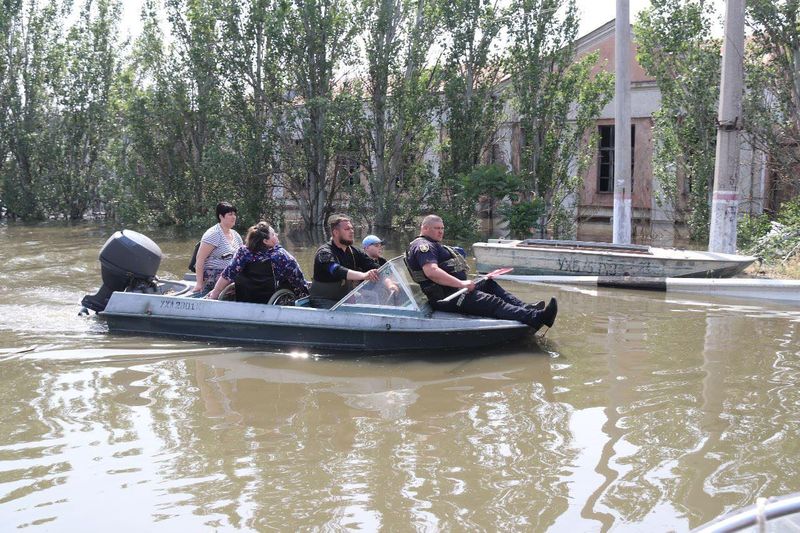
The counter-precedent arrived from Moscow. President Vladimir Putin counter-proposed a humanitarian mission at Kostiantynivka, a settlement the Kremlin says is under Moscow’s control, raised at the Witkoff–Kushner meeting in Moscow. Kyiv’s response was a warning, not an acceptance: presidential adviser Dmytro Lytvyn cautioned that Russia could use such a mission to move troops and equipment under humanitarian cover. The Kremlin rejected that claim, arguing that any such movement would be detectable by satellites and drones. Both positions are on the record; neither has been independently resolved, and the argument between them — verification by observation versus risk by precedent — is the exact argument that will greet each of the ten proposed locations.
The sharpest external assessment comes from the Institute for the Study of War’s November 14 analysis. ISW reported Zelenskyy’s November 14 statement that Kyiv had already given the United States a list of seven to eight settlements for similar missions and that the Kremlin had rejected the alternatives, and ISW assessed that Russia used the Oleshky ceasefire period to rotate and fortify its positions. Those are ISW’s assessment and Zelenskyy’s claims, and they are presented here as such. But they explain the arithmetic of Tuesday’s announcement: a list that stood at seven or eight settlements on November 14 is now ten locations on November 17. Whether that growth signals momentum, frustration, or a negotiating anchor set deliberately high is a judgement the next round of contacts will have to supply.
Why this matters
The proposal matters first at ground level. Occupied Kherson and Zaporizhzhia contain towns that have lived for years with the war’s least visible hardships: restricted movement, intermittent supplies, medical care at a distance, and no reliable corridor out for the elderly, the sick and families who want to leave. Oleshky’s roughly 800 evacuees, on the First Lady’s account, are the proof of concept and the measure of the need at the same time — one town, six days, hundreds of people who chose to go. Ten more locations, if even some proceed, would be the largest organised civilian-movement effort in the occupied south since the war’s first year. If none proceed, the proposal still does work: it fixes, in public, a list of places whose conditions Kyiv can keep returning to.
It matters second as negotiating design. Read the five priorities as a single document and a theory of sequencing emerges: exchanges through intelligence channels, because those channels have delivered before; hostages as a separate track, because they otherwise disappear inside the military file; humanitarian operations as the confidence-building layer, because they are the one thing both sides have recently shown they can, briefly, do; Europe inside the room, because any guarantee architecture without Europe is unenforceable; and the end-of-war framework held last, because it cannot be settled until the machinery beneath it exists. One may doubt any element of it — Moscow’s incentives, Washington’s bandwidth, Europe’s unity — without doubting that it is, as a structure, coherent. Tuesday’s statement is less a headline than a table of contents for the next phase of talks, published by the party that wants to set the agenda for them.
It matters third because of the verification dispute at its core. The Kostiantynivka argument and the ISW assessment pose the same question from opposite ends: can a humanitarian pause be trusted not to become a military opportunity? The Kremlin’s answer — that satellites and drones would see any abuse — is, in effect, an offer of transparency as the guarantee. Kyiv’s answer, via Lytvyn’s warning and the ISW assessment it echoes, is that observation after the fact is not prevention. Every one of the ten missions will be negotiated inside that disagreement, and the mission designs that emerge — who monitors, who is present on the ground, what moves and what is inspected — will show which answer prevailed, place by place.
Multiple angles
From Kyiv’s side, the proposal converts a defensive asset into an offensive one. Oleshky happened to Ukraine as much as it was made by Ukraine; the ten-locations plan makes the initiative Kyiv’s, on a timetable Kyiv announced, in a format — named places, humanitarian purpose, American sponsorship — that is difficult to oppose in public without cost. The intelligence-channel design for exchanges likewise plays to a channel Kyiv regards as functional.
From Moscow’s side, nothing had been said publicly about Tuesday’s remarks as of Anadolu’s reporting, and that silence is itself a position: the Kremlin has, in the Oleshky sequence, preferred to answer with counter-proposals (Kostiantynivka) rather than acceptances, and to contest the premise that pauses are abused. A Russian response, when it comes, will likely be legible against that pattern — engagement with the format, resistance to the specific list.
From Washington’s side, the proposal routes nearly everything through the United States: the ten locations go to the US side for discussion, the exchange proposals go to the US side for transmission, and Europe’s seat is described as agreed with America. That is a deliberate architecture. It makes the administration the indispensable intermediary of the next phase — flattering, burdensome, and, if the missions proceed, credit-bearing in the way Oleshky was for the First Lady.
From the ground, finally, the angle that outlasts the diplomacy: for a family in an occupied Zaporizhzhia town, the difference between a proposal and a mission is a bus, a date and a corridor that holds. The history of this war’s humanitarian agreements is a history of both — corridors that moved thousands and corridors announced and never opened — and no statement from any capital changes which of those the ten locations become. Only the negotiation Zelenskyy has now tasked, in public, will do that.
What happens next
The near-term sequence is visible. Ukraine’s negotiation team takes the ten locations to the US side; the exchange proposals move through intelligence channels on a timeline Zelenskyy himself tied to Russian speed and American communication; and the first test of seriousness is whether any single location graduates from list to logistics — a named place, a window, a monitoring arrangement. Watch, in order: a US acknowledgment of the list; any Russian response, which had not come by Tuesday; and whether Kostiantynivka is revived as a counterweight or quietly dropped.
Three scenarios cover the plausible range. In the first, the mechanism replicates: one or two locations proceed quickly on the Oleshky template, an exchange follows through the intelligence channel, and the five priorities acquire the momentum of demonstrated function. In the second, the list becomes the argument: the parties negotiate the missions rather than run them, Kostiantynivka and the ten locations trade places in statements for weeks, and the exchange track — the priority with the clearest channel and the shortest timeline — is where whatever progress exists actually happens. In the third, the verification dispute hardens into a veto: no monitoring formula satisfies both the Kremlin’s transparency argument and Kyiv’s prevention argument, the missions stall unnamed, and Tuesday’s statement reads in retrospect as agenda-setting for a phase of talks that has not yet begun. Which scenario obtains will be decided less by the statement itself than by the channel work Zelenskyy says is already assigned — and the first evidence, one way or the other, should arrive within the weeks he named.
Sources
Sources: President Volodymyr Zelenskyy, statement on X, November 17, 2026 (meeting with the diplomatic team, intelligence chiefs and the commander-in-chief; Oleshky mission report; ten proposed locations; five priorities); Anadolu Agency, November 17, 2026, via europesays (europesays.com) — including that Russia had not yet commented on the November 17 remarks; ANI, November 17–18, 2026 (five priorities, ten locations); Kyiv Post, November 17, 2026 (kyivpost.com) — ten additional locations, sites not identified; Newsmax, November 17, 2026 (newsmax.com) — Zelenskyy’s characterisation, in his interview with Shelby Wilder, of the Russian position on Oleshky-style missions, attributed to him; Institute for the Study of War, Russian Offensive Campaign Assessment, November 14, 2026 (understandingwar.org) — the seven-to-eight-settlement list, the Kostiantynivka warning and the assessment of Russian use of the Oleshky ceasefire, presented as ISW assessed and Zelenskyy stated. The figure of roughly 800 Oleshky evacuees is per First Lady Melania Trump’s account; the weekend figure of 1,200–1,300 per side for a large-scale exchange is a discussion figure whose parameters have not been determined. Photographs are file photos via Wikimedia Commons and do not depict the events of November 2026.