War / Ukraine
Track it live: Ukraine war map — follow the front lines and strike reports on our live tracker
Oleshky ceasefire ends tonight: the six-day local ceasefire around the Russian-occupied town of Oleshky in Ukraine’s Kherson region expired at 22:59 Kyiv time on Sunday (21:00 GMT), after Ukrainian officials said Russia refused an offer to extend it, and no extension was announced. The pause — in effect from October 27 to November 1, later expanded across the wider Kherson region — was, according to Reuters, the longest local pause since Russia’s full-scale invasion began in 2022. Its end returns one of the war’s most exposed riverfront communities to the threat of strikes, and Kherson’s authorities spent the ceasefire’s final hours moving civilians out of the danger zone and warning those who remain to stay away from the river.
Ukraine’s human rights commissioner, Dmytro Lubinets, confirmed that the ceasefire in effect from October 27 to November 1 “has ended.” Both sides said the truce held without violations for its full six days — a claim neither side’s account contradicts, though it cannot be independently verified in every particular along a front line that runs through marshes, islands and ruined suburbs. Moscow has not publicly explained its refusal of an extension, and the Kremlin has previously said that planned trilateral talks do not restrict military action. What is not in dispute is the sequence: an offer to prolong the pause was made, it was not accepted, and at one minute before eleven on Sunday night the guns around Oleshky were, formally, free to fire again.
Six days that held
The ceasefire began on October 27 around Oleshky, the town on the left bank of the Dnipro River directly across from Ukrainian-held Kherson city, and was later expanded across the wider Kherson region. It was mediated with the involvement of U.S. First Lady Melania Trump and Pope Leo XIV — an unusual pairing of channels that reflected how difficult direct contact between Kyiv and Moscow has become, and how much of this war’s humanitarian diplomacy now runs through intermediaries. The truce had a practical purpose: to let aid convoys reach a community largely cut off from regular supply, to allow de-mining work on routes civilians actually use, and to evacuate people who had been living within range of both sides’ artillery, drones and glide bombs.
By the measure that matters most to the people involved, it worked. Both governments said the pause held without violations. Aid moved. Mines were cleared from at least some routes. And on the Ukrainian side of the river, evacuees from Oleshky were reunited with relatives — some for the first time since the occupation began — in scenes Signal Post News covered as the first groups arrived. A local ceasefire that survives its full term is rare in this war; several previous humanitarian pauses elsewhere collapsed within hours amid mutual accusations. Six days is not peace, but in the context of a front that has been continuously fought over since 2022, Reuters’ description of it as the longest local pause of the full-scale war is a measure of how exceptional it was.

The final day: 167 more people out
The ceasefire’s last day was its busiest. Ukraine’s General Staff said 167 civilians were evacuated on Sunday from threatened areas near the Dnipro — among them 22 children and 21 people with limited mobility, the two groups for whom a return to shelling is most dangerous and escape hardest. The evacuations were the final movement of a six-day operation that, according to Melania Trump’s post on X, delivered critical aid and evacuated nearly 800 people in total. Trump commended both Ukraine and Russia for honouring the arrangement — language that underlined the central fact of the week: for six days, two armies that have shelled this river line for years both chose, and managed, not to.
For those who stayed, the warnings were blunt. Kherson regional governor Oleksandr Prokudin urged residents to keep away from the “red zones” near the Dnipro, citing the high intensity of strikes the area normally endures. The riverfront districts of Kherson city and the settlements along the banks have been among the most heavily struck civilian areas of the war, hit by artillery, mortars, drones and glide bombs launched from the occupied bank. With the ceasefire over, Ukrainian officials expect that pattern to resume — the question residents were asking on Sunday night was not whether, but how quickly, and whether the first strikes would come before the last evacuees had settled.
A town across the river
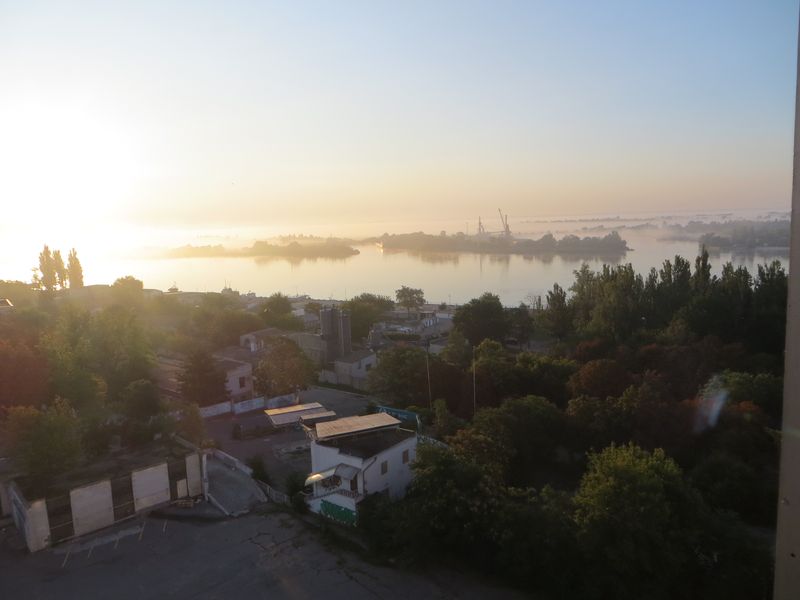
To understand why six quiet days in Oleshky drew mediation from a U.S. first lady and a pope, it helps to understand the town’s war. Oleshky has been under Russian occupation since the opening phase of the full-scale invasion in 2022. It sits on the low, flood-prone left bank of the Dnipro, across the water from Kherson city — close enough that the front line here is measured in hundreds of metres of river, islands and reed beds, and close enough that neither side can move near the bank without being seen. When Ukrainian forces liberated Kherson city in November 2022, the river became the front, and Oleshky became a town stranded on the wrong side of it.
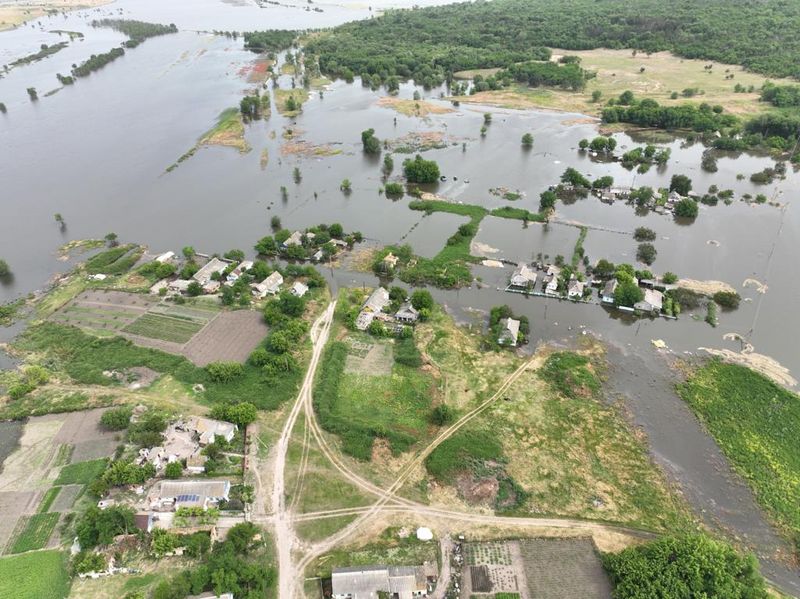
In June 2023, the destruction of the Kakhovka dam upstream sent floodwater through the left-bank settlements, inundating homes in and around Oleshky and contaminating wells and farmland. Residents and aid groups have since described severe shortages of food, clean water and medicine, compounded by the dangers of moving along roads exposed to drones and shelling — dangers that made ordinary supply runs a military problem and turned a humanitarian corridor into something that required a ceasefire to arrange at all. That is the context in which the October truce was negotiated: not as a step in a peace process, in the first instance, but as the only practical way to feed a town, clear its mines and get its most vulnerable people out.
The war did not pause elsewhere
The Oleshky truce was local, and the rest of the war made that plain on its final weekend. Overnight from Saturday into Sunday, Russia launched 433 drones at Ukraine, according to Ukraine’s air force, which said 371 were shot down or suppressed. The strikes hit energy infrastructure in the Dnipro, Vinnytsia, Zhytomyr and Khmelnytskyi regions and cut power to hundreds of thousands of people; more than 60,000 customers were still without electricity in Dnipropetrovsk region on Sunday evening. Deaths were reported in Sumy and Vinnytsia regions, where the State Emergency Service said a strike killed two people, including a 13-year-old girl. Signal Post News reported the barrage and the outages in full in our coverage of Russia’s 433-drone attack on Ukraine’s power grid.
Ukraine, for its part, said it struck the Kamensky missile-component plant in Russia’s Rostov region, and Russian officials reported major damage to an industrial site in Nizhny Novgorod region after a large Ukrainian drone attack. President Volodymyr Zelenskyy said Russia is exploiting Ukraine’s shortage of ballistic-missile interceptors — the scarcest and most expensive layer of its air defence — and Kyiv repeated its position that it supports a full ceasefire on energy targets, which it says Moscow will not agree to. Russia has not accepted that characterisation, and neither side’s battlefield figures can be independently verified in full. But the juxtaposition defined the weekend: at one small stretch of the Dnipro, a negotiated silence held to its final minute; across the rest of the country, the air war ran at near-record intensity.
Why this matters
The Oleshky ceasefire matters, first, because it demonstrated something the war has rarely allowed anyone to test: that a local pause between these two armies can be agreed, policed by nothing more than the parties’ own restraint, and held for its full term. Nearly 800 evacuations and six days of aid deliveries are concrete gains for concrete people, whatever happens next. It matters, second, because of what its ending says. Ukraine’s foreign minister, Andrii Sybiha, said Ukraine is ready for an immediate full-front ceasefire if Russia reciprocates, and presented Oleshky as a possible step toward rebuilding trust. Russia’s refusal to extend even this limited, functioning arrangement — offered without public explanation — is the fact diplomats will weigh against that proposal. A government that will not prolong a six-day humanitarian pause around one town is, on the evidence of this week, a long way from accepting a ceasefire along a thousand-kilometre front.
There are, however, two cautions against reading too much into either the truce or its end. The first is that local pauses serve military purposes as well as humanitarian ones: Ukrainian officials alleged that Russia used the six days for logistics and troop rotations on the left bank — an allegation Moscow has not publicly addressed and that cannot be independently verified, but one that captures why commanders on both sides treat every quiet day as a resource the other side may be spending. The second is that the Kremlin has said planned trilateral talks do not restrict military action, which means the diplomatic track and the battlefield track are, in Moscow’s stated position, unconnected: talks can proceed while strikes continue, and a refused extension at Oleshky does not, by itself, close any negotiating door. What it closes is narrower and more immediate — the corridor through which aid reached Oleshky and through which 167 people, on the last day alone, got out.
Who gains, who pays
The clearest gainers are the nearly 800 people evacuated and the families reunited across the river; no subsequent development takes that back. Ukraine gains a documented example of a ceasefire it honoured and offered to extend, which strengthens the diplomatic argument Sybiha is making. Russia gains whatever military advantage its commanders extracted from six days without Ukrainian fire on the left bank — the substance of Kyiv’s logistics allegation — at the price of owning the refusal. The clearest losers are the civilians who remain in Oleshky and along the Dnipro’s red zones, for whom Sunday night restored the ordinary arithmetic of the river front: stay away from the water, listen for drones, and wait to learn whether the quiet was an exception or a precedent.
What happens next
Three developments will show what the Oleshky week actually changed. The first is the tempo of fire along the Kherson river line in the coming days: a rapid return to the previous intensity of strikes would confirm that the ceasefire was a bounded humanitarian episode, while a slower resumption might suggest — though it would not prove — that both sides see value in keeping this stretch quieter. The second is whether the channel that produced the truce survives its ending. The mediation roles played by Melania Trump and Pope Leo XIV were built for a specific, limited task; if either intermediary now proposes a renewed or widened pause, the speed and terms of Moscow’s answer will say more about the prospects for any broader arrangement than any statement of principle. Trump’s closing message, commending both sides, kept that door visibly open.
The third is the wider war’s calendar. Winter is beginning, the energy campaign is intensifying — 433 drones in a single night, hundreds of thousands without power — and Kyiv’s stated offer of a full-front ceasefire, and of an energy ceasefire, now sits on the record next to Moscow’s refusal of a far smaller one. None of that makes a general ceasefire likely on any near horizon; the gap between a six-day pause around one occupied town and silence along the whole front remains enormous, and both armies are still striking deep targets nightly. But Oleshky has given both capitals, and their intermediaries, a working template and a measured result: six days, no violations, nearly 800 people out. Whether it is remembered as a one-off or as the first draft of something larger depends on decisions that, as of Sunday night, had not been announced by either side. What did you make of the six-day pause — should local ceasefires like Oleshky be pursued even without a wider deal? Tell us in the comments, and follow Signal Post News for updates as the Kherson front reactivates.
Related coverage
Melania Trump-Brokered Oleshky Ceasefire Expanded Across the Kherson Region
Reunited After 1,711 Days: Oleshky Evacuees Return Under the Melania Trump-Brokered Ceasefire
Russia Fires 433 Drones in One Night, Cutting Power to Hundreds of Thousands Across Ukraine
Sources
Reuters, “Ukraine evacuates civilians from parts of Kherson region as expiry of Oleshky ceasefire nears,” November 1, 2026 — reuters.com · Reuters, “Russian strikes cut power to thousands in Ukraine as drones damage Russian facility,” November 1, 2026 — reuters.com · AnewZ, “Oleshky ceasefire ends: what happens to civilians now?,” November 1, 2026 — anewz.tv