
Track it live: Ukraine war map and latest developments
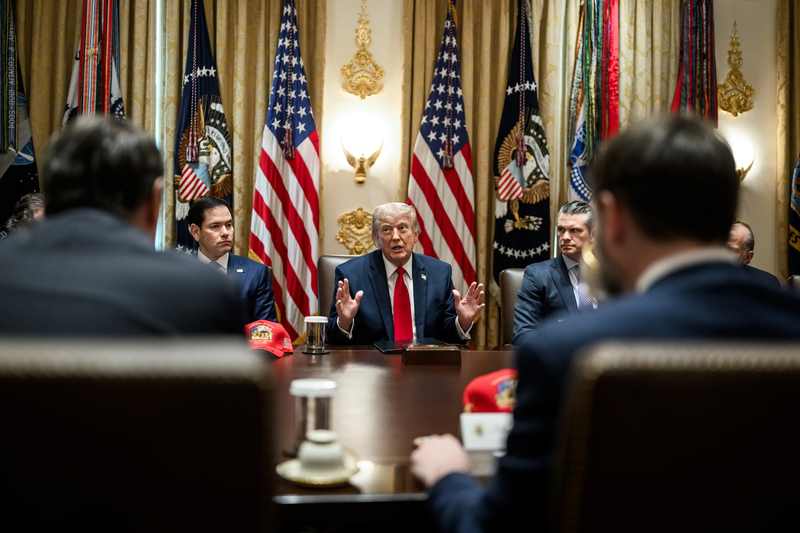
Zelenskyy blasts Trump diesel deal as a “weak decision” and a “gift to Putin,” turning a fuel-price intervention into an open dispute over whether the United States is easing pressure on Moscow before Russia has agreed to stop fighting. President Donald Trump announced the arrangement Friday after a phone call with Vladimir Putin; within minutes, the Treasury Department authorized Russian-origin diesel transactions through April 7, 2027. The timing sharpened the confrontation: Steve Witkoff and Jared Kushner were meeting Ukrainian officials in Miami the same day to discuss a plan for ending the war.
The public disagreement is no longer over whether diesel prices are painful. They are. It is over which leverage matters more now: the ability to push down transport and food costs quickly, or the ability to deny Russia energy revenue until a durable settlement exists. The administration says more barrels can stabilize markets and strengthen the economic environment for diplomacy. Kyiv says relief granted first is leverage spent, not leverage held.
What changed on Friday
Trump Putin phone call diesel announcement sets four supply tranches
Trump said the two presidents had what he called a highly successful discussion and that Russia would supply more than 300,000 tons immediately, another 500,000 tons in November, 1 million tons immediately after that, and then 3 million tons within a short period if refinery conditions permit. The sequence matters. The first three tranches total 1.8 million tons; the full announced package approaches 4.8 million tons, but the largest piece depends on Russian refining capacity that has been repeatedly hit by Ukrainian strikes.
The Associated Press reported that the White House had not immediately explained who would pay for the fuel, when specific cargoes would arrive or whether November deliveries could reach consumers before the Nov. 3 midterms. Those unanswered commercial details separate an announced supply commitment from a market-moving delivery schedule.
US lifts Russian diesel sanctions through a six-month window
The legal change followed the political announcement. Treasury authorized transactions involving the sale, delivery, offloading and importation of Russian-origin diesel until 12:01 a.m. EDT on April 7, 2027, according to the authorization text reported by PTI in The Hindu BusinessLine. That is far longer than the short waivers Washington had used earlier in the energy crisis and long enough to span the midterms and much of the winter heating and freight season.
The practical effect is targeted rather than a wholesale removal of Russia sanctions: qualifying diesel transactions can proceed during the license period, while other restrictions remain. Politically, however, the distinction may be harder to sustain. Energy revenue sits at the center of Western pressure on Moscow, so even a bounded exception carries a larger diplomatic signal than its legal scope alone suggests.
Zelenskyy's case: sanctions relief without de-escalation
Zelenskyy gift to Putin warning focuses on money and leverage
Zelenskyy's objection is strategic rather than symbolic. His argument is that fuel sales provide Moscow new revenue while Russia remains at war, and that easing pressure before a verifiable de-escalation agreement rewards endurance. In the Ukrainian Embassy statement reported by Great Yorkshire Radio, he said his negotiating team was being used as a smokescreen and described the arrangement as unfair between partners.
The phrase “gift to Putin” captures Kyiv's deeper fear: once buyers, shipping arrangements and payment channels restart, reversing them can become politically and commercially difficult. A temporary license can create constituencies for extension. If prices fall, Washington will face pressure not to reimpose restrictions; if prices do not fall, Russia may still have earned revenue while the coalition absorbed the credibility cost.
Zelenskyy weak decision charge lands during Miami talks
Newsmax's account of the AP reporting says Zelenskyy framed the move as a weak decision by strong partners. The sharper point is sequencing: Kyiv expected negotiations to test whether Moscow would trade de-escalation for relief. Washington granted a meaningful form of relief before the Miami process had produced a public settlement.
That does not prove the talks are cosmetic. It does mean Ukrainian officials enter them with less confidence that sanctions escalation remains automatic. For a government fighting a larger adversary, allied expectations are themselves an asset; uncertainty about those expectations can narrow Kyiv's room to negotiate.
The Trump administration's case: prices, supply and political time
Diesel prices record 2026 levels put freight economics under pressure
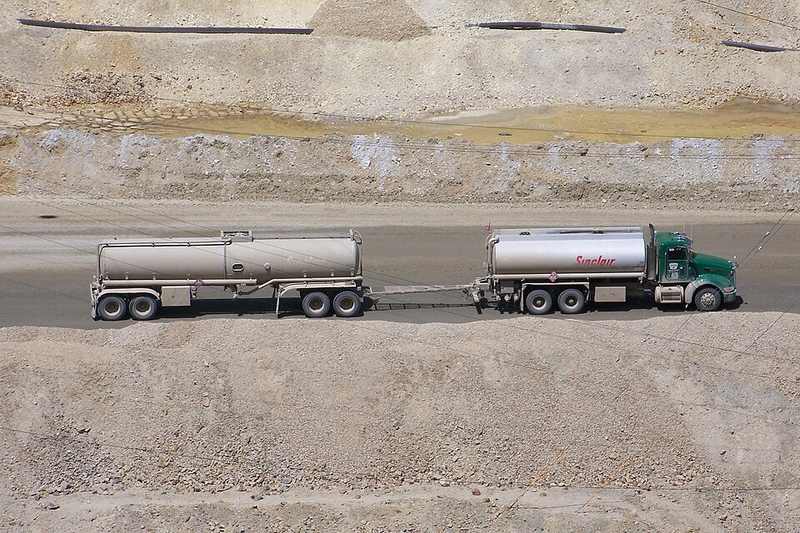
U.S. diesel averaged $6.23 a gallon Friday, near the record $6.52 reached Sept. 22 and roughly 70% higher than when the Iran war began, according to AAA and Reuters figures cited in the reporting. The 29-cent retreat from the record is only about 4.4%. For a long-haul truck using 20,000 gallons a year, every 10-cent move changes annual fuel expense by about $2,000 before surcharges or hedging. At $6.23, diesel remains an economy-wide cost, not merely a price displayed at truck stops.
Trump has made lower prices for farmers, ranchers and truckers his stated priority. The administration's strongest argument is immediate harm reduction: diesel moves food, construction materials, parcels and industrial goods. If extra global supply lowers wholesale prices, some benefit can reach households even if they never buy diesel directly. A government that can relieve a transport-cost shock may reasonably decide that waiting for a perfect diplomatic package imposes too high a domestic price.
The leverage argument from Washington
Administration supporters can also argue that a time-limited license is reversible leverage rather than a permanent concession. The April expiration creates a decision point. If Moscow obstructs diplomacy, Washington can allow the authorization to lapse; if Russia cooperates, the license can become part of a broader bargain. Lower prices could reduce political pressure on the White House and give negotiators more freedom than they would have during a domestic fuel crisis.
That case depends on enforcement and signaling. Moscow must believe the waiver can end, markets must believe alternative supply can emerge, and allies must understand the exception's boundaries. Without those conditions, a deadline can turn into an expectation of renewal.
Why this matters
The diesel dispute compresses the central problem of economic statecraft into one commodity. Sanctions work by making commerce expensive, scarce or risky. Energy affordability works in the opposite direction: it rewards whoever can put supply into a tight market. The United States is now trying to use the same Russian barrels both as a source of price relief and as potential future leverage. That balance is possible in theory, but difficult to maintain in a crisis.
The deeper significance is alliance credibility. Ukraine does not control American midterm politics, and Washington does not experience the war's battlefield costs as Kyiv does. Partners can therefore agree on an end state while disagreeing sharply about timing. Trump is optimizing for near-term price relief and negotiating flexibility. Zelenskyy is optimizing for sustained pressure until Russian behavior changes. Neither objective is imaginary; they simply produce opposite answers about when sanctions relief should occur.
Background: sanctions history, the refinery war and the price spiral
From the 2022 import ban to diesel sanctions April 2027
The United States stopped importing Russian oil and gas after the 2022 invasion, while later sanctions targeted officials, banks, sovereign finance and Russia's shadow fleet. Congress expanded that pressure last month with legislation aimed at energy revenue and major third-country buyers. Friday's diesel exception therefore reverses the direction of travel even if it does not dismantle the wider regime.
The duration is notable. A license lasting until April 7 covers roughly six months—far more than a 30-day emergency bridge. It gives refiners, traders, shipowners and insurers time to establish routes and contracts. That makes the sunset meaningful: businesses may front-load purchases before expiration, while Russia gains an incentive to prove it can supply the promised volumes despite damaged refineries.
The refinery war tightened both Russian and global supply
Ukraine's long-range strikes have cut into Russian refining capacity, while Houthi attacks on Saudi facilities added another source of disruption. Russia had restricted diesel exports to protect its domestic market. According to AP reporting, the International Energy Agency estimated Russian diesel output had fallen by about 30%. That makes the final 3 million-ton tranche conditional for a reason: the seller is promising exports while repairing the infrastructure needed to produce them.
The arrangement can therefore work only if three links hold: Russia restores enough refinery throughput, export restrictions are lifted without triggering domestic shortages, and shipping and payment channels move cargo efficiently under the Treasury license. A political announcement removes legal friction; it does not repair a refinery or shorten a voyage.
Who benefits, who loses and what critics say
Potential beneficiaries: truckers, farmers, buyers and Russia's budget
American trucking fleets and farms gain if landed supply pushes diesel prices down. Global buyers could benefit from a larger pool of tradable fuel, while refineries and traders gain a temporary window for transactions previously blocked or chilled by sanctions risk. Russia gains potential export revenue and a diplomatic opening that presents it as indispensable to market stability.
The benefits will not arrive evenly. Wholesale futures can react before physical cargoes arrive, but retail prices depend on transport, inventories, taxes and competition. Large fleets may hedge quickly; small operators often buy at posted prices. Russian producers could secure revenue sooner than American consumers see full pump-price relief.
Potential losers: Ukraine's leverage and sanctions-coalition credibility
Ukraine loses if the waiver reduces pressure without producing reciprocal restraint. Allied credibility also suffers if exceptions appear driven by domestic political calendars rather than stated conditions. Critics say that makes future threats less persuasive: Moscow may decide it can wait for the next supply shock.
The counterargument is that credibility also suffers when sanctions impose visible costs on the sanctioning public and then become politically unsustainable. A narrower, time-bound exception may preserve the broader coalition better than insisting on maximum pressure through a price emergency. The test is not rhetoric but what happens at expiration—and whether any diplomatic gains can be tied to the relief already granted.
What the numbers mean
The announced 4.8 million tons should not be treated as one immediate shipment. Only 300,000 tons was described as immediate. The next 500,000 tons is scheduled for November; 1 million follows; and 3 million depends on refinery conditions. More than 62% of the headline total sits in that final conditional tranche. Markets may price the promise now, but consumers receive the benefit only as actual cargoes enter supply chains.
The price comparison is equally important. Friday's $6.23 average is below the Sept. 22 record but still only modestly lower and dramatically above the pre-Iran-war level implied by a 70% increase. A reduction from $6.52 to $6.23 is relief at the margin, not normalization. The April 2027 window gives the policy enough time to affect winter logistics, but it also gives Russian revenue flows time to compound.
What happens next
Miami Ukraine peace talks Witkoff Kushner: three scenarios
A bargain emerges. Washington uses the temporary authorization as proof that sanctions can be relaxed in exchange for reciprocal steps, and the Miami discussions produce a framework linking further relief to a ceasefire, monitoring or limits on attacks against energy infrastructure. This is the administration's best-case path.
The tracks split. Diesel commerce proceeds while peace negotiations stall. Prices may ease, but Kyiv's accusation that talks were cover for a separate U.S.-Russia arrangement gains force. Congress and allies then press the White House to define what Moscow must do before April.
The supply promise disappoints. Refinery damage or domestic Russian demand limits exports, leaving the largest tranche undelivered. The United States absorbs the diplomatic cost of sanctions relief without receiving enough fuel to materially change retail prices.
Midterm politics and Russia's next move
With voting set for Nov. 3, even a small price decline gives the administration a concrete economic message. But a shipment arriving after Election Day has less immediate political value, which is why delivery dates will matter as much as announced tonnage. Opponents will frame the deal as war financing; supporters will frame it as practical relief for working Americans.
Russia's incentive is to deliver early enough to validate Trump's claim while seeking an extension beyond April. It may also push to broaden the exception to other petroleum products. Ukraine, meanwhile, is likely to ask for explicit conditions, automatic snapback provisions and compensating military or financial support. Oil and diesel markets will watch cargo tracking, refinery repairs and Treasury guidance more closely than speeches.
Related coverage
- The original Trump-Putin diesel announcement and first market reaction
- Inside the Witkoff-Kushner Miami peace-plan talks
- Ukraine-Russia strikes hit Belgorod and Zaporizhzhia
Sources
- Associated Press via NPR Illinois — deal, prices, sanctions and Ukraine response
- PTI / The Hindu BusinessLine — U.S. Treasury authorization text and April 7, 2027 deadline
- Newsmax — AP account of the Ukraine response and policy shift
- Great Yorkshire Radio — Ukrainian Embassy statement and price context
- Reuters — Zelenskyy's public response and market context
The U.S. Treasury notice and Ukrainian Embassy statement are cited through published reports because standalone official URLs were not available in the source results reviewed for this article. Analysis and scenarios are clearly separated from reported facts.