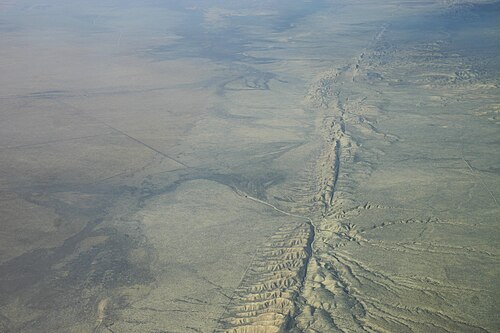
US earthquake risk: Hours after a 7.7 earthquake rattled Panama, the question ricocheting across American social media was simple: will the US have an earthquake like that? The short answer from the U.S. Geological Survey is that it's not a matter of if, but when — and the agency has put actual numbers on it. Four seismic zones keep American earthquake scientists up at night, and each one comes with a probability, a history, and a very different kind of danger.
1. California's San Andreas and the Bay Area's rising odds
California is America's earthquake capital, and the numbers just got worse. Federal scientists recalculated the Bay Area's earthquake odds in 2026 at the request of the San Francisco Chronicle, and for the first time in over a decade, the risk went UP: there is now a 74.1 percent chance of a magnitude 6.7 or stronger earthquake striking the Bay Area within the next 30 years, up from 72 percent in the previous forecast. The reason is brutally simple — another 12 years passed without a major rupture, and tectonic strain kept building the whole time.
The biggest single worry is the Hayward–Rodgers Creek fault system, which runs from Fremont through Hayward and Oakland, beneath San Pablo Bay toward Santa Rosa — straight through some of the most densely populated ground in America. Its chance of producing a magnitude 6.7+ quake in the next 30 years now stands at 34.3 percent. Scientists have warned the Hayward and Rodgers Creek faults could rupture together in an earthquake as powerful as magnitude 7.4. The San Andreas Fault itself carries a 25.5 percent chance of a major Bay Area quake in the same window, up 3.6 percentage points.
The last "Big One" on the southern San Andreas was in 1680. The fault is, in the dry words of seismologists, late.
2. Cascadia: the Pacific Northwest's sleeping giant
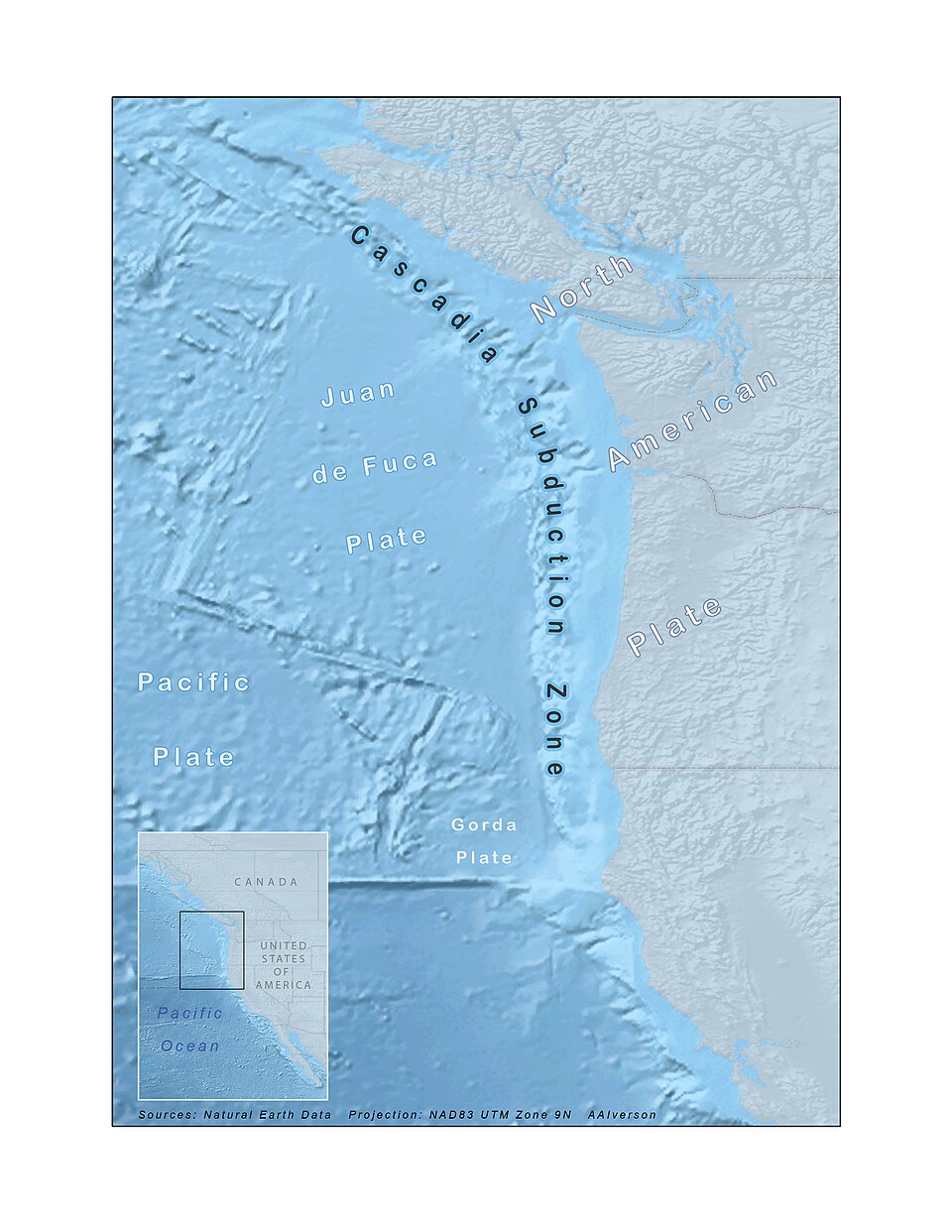
If California's faults are the country's most famous threat, the Cascadia Subduction Zone is its most terrifying. Running 700 miles from Northern California to Vancouver Island, this is where the Juan de Fuca plate dives beneath North America — the same kind of plate boundary that produced Japan's 2011 magnitude 9.0 disaster. The last full Cascadia rupture was on January 26, 1700 — dated precisely from drowned coastal forests and Japanese tsunami records — and it was a magnitude 9.
The USGS puts the chance of another magnitude 9 megathrust at 10 to 15 percent in the next 50 years, with some research suggesting a 37 percent chance of a significant Cascadia earthquake somewhere along the fault in that window. A full-margin rupture would mean minutes of violent shaking across Washington and Oregon, coastal land dropping several feet, and tsunamis up to 100 feet hitting the shoreline within 15 to 30 minutes. Unlike Japan, the Pacific Northwest has far less tsunami infrastructure and far less public awareness — a gap emergency planners openly worry about.
3. New Madrid: the earthquake zone America forgot
The most dangerous US earthquake zone most Americans have never heard of sits under Missouri, Arkansas, Tennessee, Kentucky, and Illinois. In the winter of 1811–1812, the New Madrid Seismic Zone unleashed four earthquakes of magnitude 7+, one of which famously rang church bells in Boston — 1,000 miles away — and temporarily reversed the flow of the Mississippi River.
Here's what makes New Madrid uniquely dangerous: the cold, rigid continental crust of the central US transmits seismic waves up to 10 times farther than California's fractured rock. A repeat of 1811 would be felt from Chicago to New Orleans. And the buildings in the path are the problem — the Mississippi Valley is full of unreinforced brick and masonry construction that predates modern seismic codes, in cities like Memphis that have done far less retrofitting than Los Angeles or San Francisco.
The USGS says there is a 7 to 10 percent chance of an 1811-scale repeat in the next 50 years, and a 9-in-10 chance of a magnitude 6 to 7 quake in the zone in that time. "Strong earthquakes in the New Madrid seismic zone are certain to occur in the future," the agency states flatly.
4. Alaska: where America's biggest quakes already happen
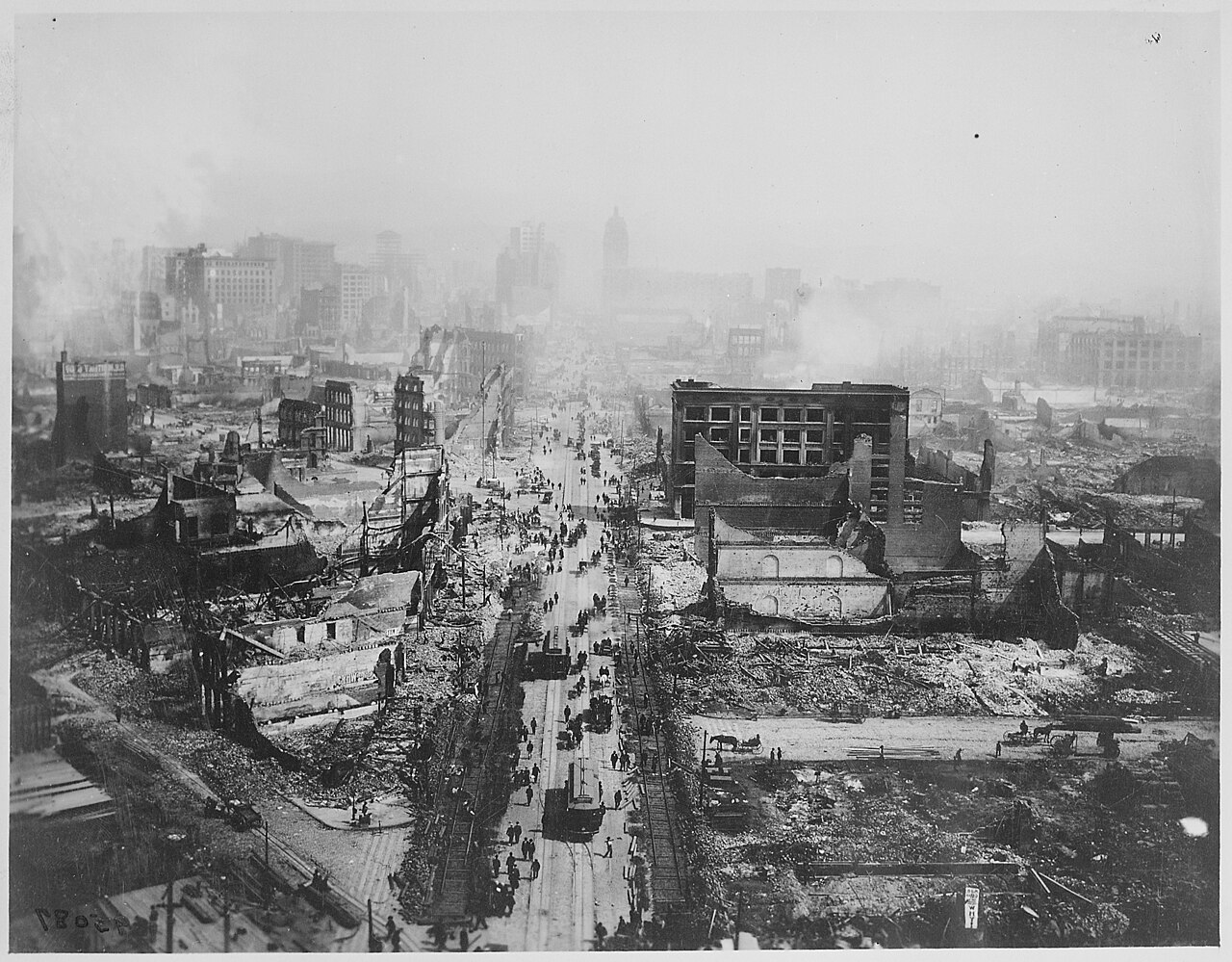
Alaska is the overlooked answer to "will the US have an earthquake" — it already has them, constantly. The 1964 Great Alaska Earthquake, magnitude 9.2, remains the largest earthquake ever recorded in North America and the second-largest in world history. Alaska's Aleutian subduction zone keeps producing magnitude 8+ events, including several in the last decade. The state's sparse population keeps the human toll low, but its quakes generate Pacific-wide tsunami threats — the reason the US tsunami warning system exists in the first place.
What the Panama quake has to do with America
Panama's 7.7 and America's seismic threats share the same engine: the Pacific Ring of Fire, the horseshoe of plate boundaries responsible for roughly 90 percent of the world's earthquakes. Panama sits where the Cocos and Nazca plates dive under the Caribbean plate; Cascadia and Alaska are the same kind of subduction boundary wearing a different coastline. A big quake in Panama doesn't trigger one in California — faults don't work that way — but it is a live demonstration of exactly the physics American cities are built on top of.
What you can actually do
Scientists can't predict earthquakes, but the preparation advice is the same whether you live in Oakland, Seattle, Memphis, or Anchorage: Drop, Cover, and Hold On during shaking; secure heavy furniture and water heaters; keep two weeks of water, food, and medication; know whether you're in a tsunami zone and your evacuation route. California's ShakeAlert system can now give seconds to tens of seconds of warning — enough to duck under a desk, stop a train, or halt surgery. Check whether your state is covered at shakealert.org.
The honest version of "will the US have an earthquake" is this: the US has earthquakes every single day — the USGS locates thousands a year. The question is only when the next big one finds a city. Panama just got its reminder. America's faults are still waiting.
Read our Panama coverage: Massive Earthquake Strikes Panama — USGS Downgrades Initial 8.0 Report to 7.7 as Tsunami Threat Is Issued and Panama Earthquake: What Is an Earthquake, What to Do When One Hits, and Will There Be a Tsunami?