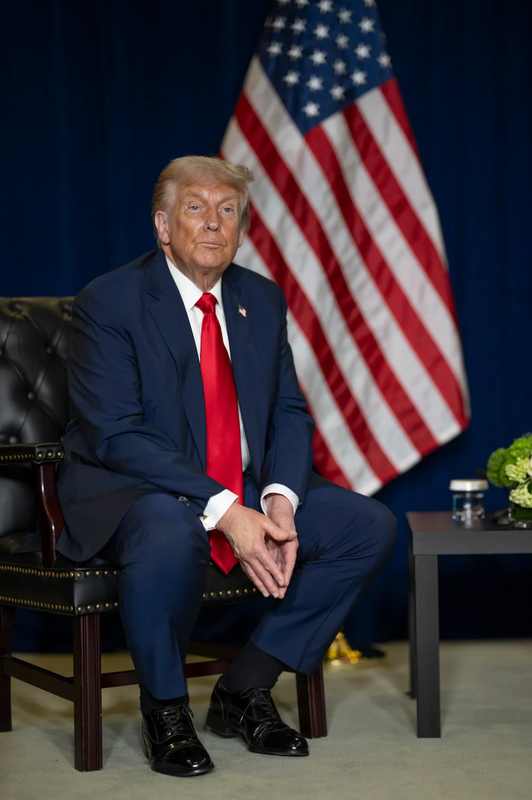
President Donald Trump said Friday that Russia had agreed to supply diesel to the United States and world markets after what he called a “highly successful” phone call with Russian President Vladimir Putin. The announcement came as U.S. diesel averaged $6.28 a gallon, according to AAA, amid the U.S.–Iran war and disruption around the Strait of Hormuz.
Trump presented the agreement as a rapid answer to high fuel costs. Ukrainian President Volodymyr Zelensky answered shortly afterward on X, warning that sales income would prolong Russia’s war. The competing claims expose the central tension: Russian barrels could ease a global supply squeeze, but purchases may also weaken the pressure that energy sanctions are intended to impose on Moscow.
What the Trump Putin diesel deal announced
Trump wrote on Truth Social that Russia would deliver more than 300,000 metric tons immediately, another 500,000 tons during November, 1 million tons immediately after that and then 3 million tons “within a short period of time.” The final schedule is conditional on the state of Russia’s diesel refineries.
He said diesel prices would come down “in record numbers, and fast,” linking the Russian energy announcement to what he called U.S. “TOTAL CONTROL” of the Strait of Hormuz. That was Trump’s claim, not an independently established description of control over the waterway.
“Lower prices for Americans, especially our Great Farmers, Ranchers, and Truckers, is my Greatest Priority.”
Donald Trump, in his Truth Social announcement
The Kremlin said Putin was ready to supply oil to the United States and global markets and believed that step would help the world economy. According to the Kremlin account, the leaders also discussed possible resolutions to the wars in Ukraine and Iran.
Why a Russia diesel supply to the U.S. matters
The proposed trade would make energy both a diplomatic instrument and a sanctions test. Washington and its partners have restricted Russian energy flows to reduce Moscow’s war revenue. Buying Russian diesel to calm prices therefore risks creating a visible exception at the moment the economic pressure is supposed to shape negotiations.
Supporters of the move can argue that diesel shortages are an immediate economic problem: trucking, agriculture, construction and emergency logistics all depend on distillate fuel, and a global shortage raises prices even where Russian molecules never physically reach the United States. Critics can argue that revenue is fungible; money earned from civilian fuel exports can still support Russia’s federal budget and, indirectly, its military effort.

How the Iran war and $6.28 diesel set the stage
The agreement follows a sharp fuel-price shock tied to the U.S.–Iran war and danger to shipping near Hormuz. The interruption has hit diesel especially hard because the market depends not just on crude oil but on refinery capacity, product specifications and tankers positioned in the right places.
Governments have already turned to emergency measures. The G7 and Europe approved a strategic diesel-reserves release, while Trump previously raised the possibility of a U.S. diesel export ban. Separately, sanctions relief and energy assets had already entered U.S.–Russia diplomacy, including talks involving Lukoil’s international oil business.
Those steps point in different directions: reserves and export controls treat the shortage as a crisis to be managed among allies, while direct Russian purchases treat Moscow as a supplier needed to stabilize the same market. The Valdai-era discussion of sanctions relief made that contradiction increasingly visible before Friday’s announcement.
Who benefits, who loses and what critics say
Consumers, farmers and truckers
If the fuel arrives and adds genuinely new supply, U.S. consumers and diesel-intensive businesses could benefit. Farmers and ranchers face fuel bills across planting, harvesting and transport; trucking firms pass much of their fuel cost through surcharges, so a sustained decline could also reduce pressure on freight rates.
Russia’s budget, refineries and the global market
Russia would gain export revenue and another route into a high-price market. Its refineries could benefit from dependable buyers, but they also face physical risk and maintenance constraints. Domestic refiners elsewhere could see product margins narrow if Russian cargoes arrive in volume, while import-dependent regions could gain from looser global supply even without buying the Russian fuel directly.
Ukraine and sanctions credibility
Zelensky said on X: “Gifts to Putin will not bring peace or any benefit to the civilized world. Russia will ‘repay’ the diesel with further terror and perfidy.” He argued that the earnings would prolong the war and called instead for “real de-escalation with Russia on a reciprocal basis.”
That is both a security argument and a sanctions-credibility argument. If a sanctioned supplier can win a major deal when prices surge, other governments and traders may discount future threats to restrict Russian energy. Conversely, if the arrangement becomes part of a reciprocal de-escalation package, its diplomatic meaning would depend on what Russia gives in return.

The numbers in context: large cargoes, limited price certainty
Using a rough industry conversion of about 7.4 to 7.5 barrels of diesel per metric ton, the four announced tranches total approximately 36 million barrels. Against a U.S. distillate-consumption benchmark near 4 million barrels a day, that is roughly nine days of U.S. demand. The first 300,000-ton tranche is closer to half a day.
That does not mean the United States would suddenly gain nine extra days of supply. Some cargoes may serve other markets; volumes may displace rather than supplement existing trade; and timing matters. Prices reflect expected global balances, so even credible future deliveries can move futures and wholesale benchmarks before the barrels arrive. But refinery outages, shipping insurance, sanctions compliance and distribution costs can blunt the effect at the pump.
The 3 million-ton final tranche matters most for market psychology, yet it is also the least precise. “Within a short period of time” is not a loading calendar, and the refinery-condition caveat gives Moscow room to revise the volume or schedule.
What happens next
The first test is documentation: sales contracts, loading terminals, tanker nominations, payment channels and named buyers. Announcements can shift prices quickly; sustained supply requires a chain of commercial and legal steps.
Russia’s refinery condition is a genuine constraint. Ukrainian drones have repeatedly targeted Russian refining infrastructure, including Lukoil’s Ukhta complex. New damage, repairs or domestic Russian shortages could reduce the amount available for export even if the political agreement holds.
Sanctions law may be the decisive hurdle. U.S. agencies would need to clarify whether licenses, waivers or enforcement guidance permit the transactions, and banks, insurers and shipowners would need confidence that participation is lawful. A direct U.S. purchase could require a clearer legal pathway than cargoes sold into the broader world market.
Three scenarios now stand out. In the first, the initial cargoes load quickly and prices ease as traders price in the larger tranches. In the second, only the early volumes arrive and the deal becomes a temporary signal rather than a structural supply change. In the third, refinery damage, sanctions disputes or renewed military escalation block the trade before it materially affects consumers.
Sources
- Reuters: Trump says Russia will immediately supply 300,000 tons of diesel
- Daily Caller: Trump announces Russian diesel supply after Putin call
- The U.S. Sun: Zelensky responds to Trump–Putin diesel announcement