Hans Grundberg told the UN Security Council on Friday that September's Houthi offensive has ended four years of relative calm — while government forces say they retook the port of Mocha and Saudi airports come under renewed attack.
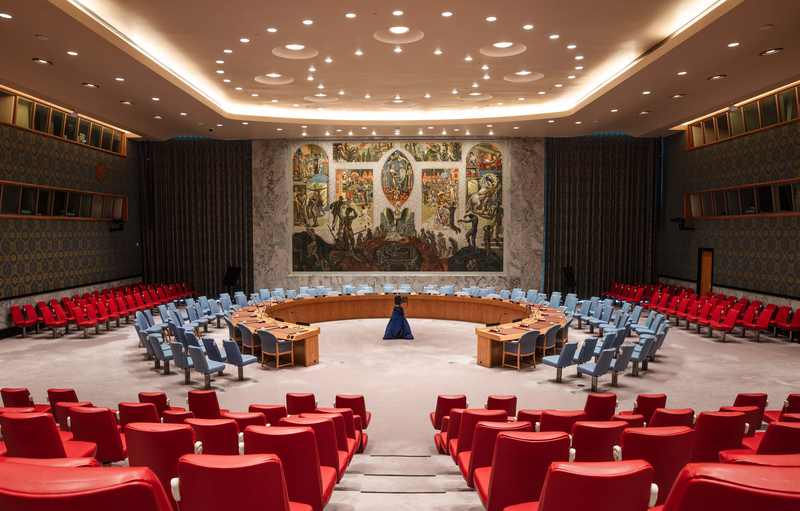
The United Nations envoy for Yemen delivered the bluntest assessment of the country's war in years on Friday, telling the Security Council that Yemen has "fallen back into full-scale war" after a Houthi offensive launched in September sharply escalated a conflict now in its twelfth year. Hans Grundberg's warning — issued as the Council met in New York on October 9 — marks the formal end, in the UN's own language, of the relative calm that had held, however imperfectly, since the 2022 truce.
According to UN News's live coverage of the briefing, the fighting has displaced more than 200,000 people, with battles intensifying around the southwestern city of Taiz. Government forces say they have recaptured the Red Sea port city of Mocha — a claim that, if confirmed, would reverse one of the Houthis' most strategically significant September gains. Cross-border missile and drone strikes on Saudi airports and energy infrastructure have continued through this week, and aid agencies are warning of surging cholera cases, rising child casualties, and deepening hunger. The Council also heard that spillover from the U.S.-Iran war has provoked a new displacement crisis, pulling Yemen further into a regional confrontation it did not start.
Why this matters: the truce era is officially over
Wars rarely announce their turning points in real time. They are usually recognized in hindsight — in the casualty ledgers, the displacement maps, the diplomatic cables filed after the fact. What makes Friday's briefing significant is that the institution charged with preventing the next war has preemptively named this one: a return to full-scale conflict, stated on the record, before the worst of the consequences have materialized.
The significance lies in three facts. First, the language itself. UN envoys are professional understaters; when Grundberg's office allows "full-scale war" into the headline of a Security Council briefing, it is because the quieter vocabulary of "escalation" and "renewed hostilities" no longer describes what monitors are seeing on the ground. Second, the scale of displacement — 200,000 people in roughly five weeks — suggests a tempo of fighting well beyond the grinding, low-intensity front-line exchanges that characterized the truce years. And third, the conflict is no longer geographically contained: Saudi airports, Red Sea shipping lanes, and the energy infrastructure of the region are all active theaters, which means the war's costs are about to be priced into everything from airline schedules to oil futures.
How we got here: from truce to September's offensive
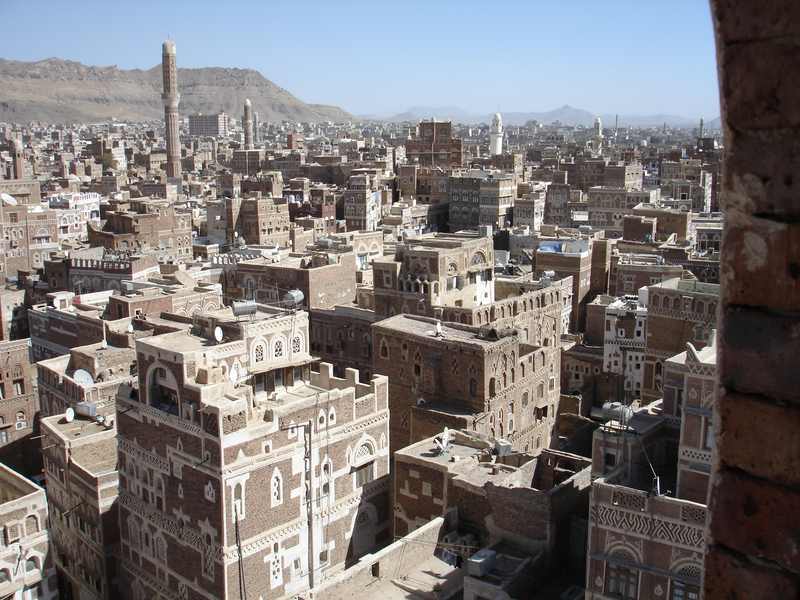
Yemen's war began in 2014, when the Houthi movement — formally Ansar Allah, backed by Iran — seized the capital Sana'a and eventually drove the internationally recognized government into exile. A Saudi-led coalition intervened in 2015. What followed was one of the world's worst humanitarian catastrophes: hundreds of thousands dead, millions displaced, and a country split between rival authorities, rival central banks, and rival currencies.
The UN-brokered truce of 2022 did not end the war, but it dramatically reduced the fighting. For more than four years, Yemen experienced what diplomats called "relative calm" — a fragile equilibrium in which front lines barely moved, even as the underlying political questions (who governs, who controls the ports, who pays the salaries) went unanswered.
That equilibrium broke in September 2026. The Houthis launched a major offensive along Yemen's western coast, seizing the strategic port of Mocha near the Bab al-Mandeb Strait — one of the world's most critical maritime chokepoints, linking the Red Sea to the Gulf of Aden. On September 8, Houthi missiles and drones struck targets across southern Saudi Arabia, including a military air base and energy facilities; Riyadh reported 73 civilians wounded and fires that temporarily disrupted operations at a major oil refinery in Jazan. The Security Council convened an emergency session on September 10, where Grundberg warned that the risk of a return to large-scale conflict had become, in his words, a "harsh reality."
What the Council heard on October 9 is that the month since has not stabilized — it has accelerated. The government's claim to have retaken Mocha, if accurate, indicates that the western coast is now an active, moving front rather than a consolidated Houthi gain. The fighting around Taiz, a city that has endured siege-like conditions for much of the war, is intensifying again. And the strikes into Saudi Arabia have not stopped; they continued this week, hitting airports and energy infrastructure.
Three capitals, three readings of the same war
Friday's Council session laid bare how differently the war's key players read the same battlefield — and why a diplomatic off-ramp remains elusive.
The Houthi calculus: pressure as leverage
From the Houthis' perspective, the September offensive is best understood as leverage, not conquest for its own sake. The movement has spent years demonstrating that it can impose costs far beyond Yemen's borders — on Saudi airports, on Red Sea shipping, on the energy infrastructure of the Gulf. Each cross-border strike is a message to Riyadh and to the international community: Yemen cannot be ignored, and the price of ignoring it rises monthly. The risk in that strategy is the one the Council named on Friday — that the pressure campaign tips a fragile country back into a war the Houthis themselves cannot easily control, and that the humanitarian costs fall overwhelmingly on Yemenis.
Riyadh and the government: the right to hit back
Saudi Arabia and Yemen's internationally recognized government read the same events as unprovoked aggression requiring a military answer. Pakistan's ambassador to the UN, speaking at Friday's briefing, denounced the attacks on King Khalid International Airport in Riyadh and Abha International Airport, invoked the Makkah Joint Defence Agreement, and affirmed what he called Riyadh's "legitimate right" to defend its population, cities, and critical infrastructure. France's representative went further on attribution, telling the Council that Iranian support had enabled the Houthi escalation and that threats to maritime shipping lanes require a firm response. The government's reported recapture of Mocha fits this frame: a counteroffensive to roll back September's losses, with Saudi backing.
The international stake: ships, oil, and cholera
For everyone else, the war is a threat to the systems the global economy runs on. The Bab al-Mandeb Strait carries a significant share of world trade; when fighting moves toward it, insurers notice, shipping reroutes, and costs rise for consumers everywhere. That is the quiet, distributed tax of Yemen's war — paid not in Sana'a or Riyadh but in freight rates and fuel prices from Rotterdam to Singapore. And then there is the humanitarian ledger: 200,000 newly displaced people joining millions already uprooted, cholera surging through communities with collapsing water systems, children killed in fighting they have no part in. The UN's appeal for Yemen has been chronically underfunded for years; a return to full-scale war will widen the gap between need and money, not close it.

What the numbers actually say
Displacement figures deserve careful reading. The "more than 200,000 displaced" cited at Friday's briefing covers roughly five weeks of fighting — a rate that, if sustained, would rival the worst periods of the war's earlier phases. For comparison, the September 10 emergency session heard that 11,400 households had been displaced since September 3 alone. The trajectory is unambiguously upward.
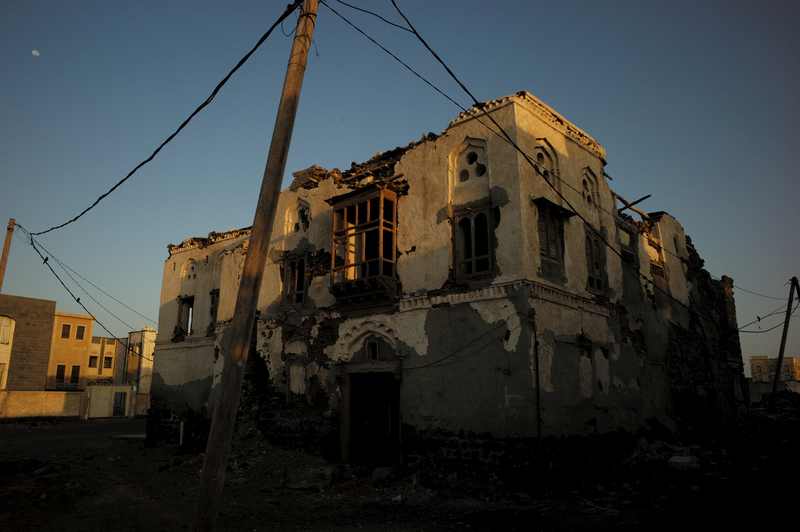
The civilian cost is already visible in the fragments: 73 civilians wounded in the September 8 strikes on Saudi Arabia, including women and children; child casualties rising inside Yemen; cholera — a disease of broken water systems and crowded displacement camps — surging again. These are the leading indicators of what "full-scale war" means in practice: not just front lines moving on a map, but the slow collapse of the systems that keep civilians alive.
On the military balance, the competing claims around Mocha illustrate why this war is so hard to read from the outside. The Houthis seized the port in September; the government says it has retaken it in October. Both claims serve obvious purposes — momentum narratives for domestic and international audiences. The truth likely lies in a fluid, contested coastline where control is partial and temporary. What is not in doubt is that the western coast, and with it the approaches to the Bab al-Mandeb, is once again a shooting war.
What happens next: three scenarios
Scenario one: a grinding coastal war. The government, with Saudi air support, tries to consolidate around Mocha and push north along the Red Sea coast, while the Houthis answer with cross-border drone and missile strikes on Saudi infrastructure. The front lines move slowly, the civilian toll climbs steadily, and Red Sea shipping faces periodic disruption. This is, in effect, the 2015–2018 war replayed with better drones — and it is the default outcome if diplomacy fails.
Scenario two: regional spillover. The briefing's reference to U.S.-Iran war spillover is the variable that makes this conflict different from Yemen's earlier phases. If Houthi strikes on Saudi or maritime targets are read in Washington or Tehran as moves in the larger U.S.-Iran confrontation, Yemen's civil war becomes a theater of a regional war — with correspondingly larger arsenals and smaller margins for error. France's attribution of the escalation to Iranian support points in exactly this direction. This is the scenario the Council fears most, and the one Grundberg's "full-scale war" warning is aimed at preventing.
Scenario three: a coerced pause. The September offensive may yet prove to be a negotiating tactic that worked — or failed — quickly enough to allow a return to talks. The Houthis have historically paired military pressure with diplomatic engagement, and Grundberg's office continues to pursue ceasefire parameters. But pauses bought by exhaustion tend to be temporary: the underlying issues — territory, revenue, the political future of the Yemeni state — remain unaddressed, and each round of fighting makes the next compromise harder.
The honest assessment is that scenario one is the most likely in the near term, scenario two the most dangerous, and scenario three the least likely without a major external shock — a collapse on one side's front, or intervention by a power with leverage over both. None of the Council's Friday statements suggested such a shock is imminent. What they suggested, instead, is that the world is watching Yemen slide back into a war it spent four years trying to end — and that this time, the slide is being narrated in real time, with the consequences still to come.
Sources
- UN News, "Security Council LIVE: Yemen has fallen back into full-scale war, warns UN envoy," 9 October 2026 — news.un.org
- WE News English, "Pakistan Urges UN Security Council To Act Against Houthi Attacks, Warns Of Threat To Regional Stability," 9 October 2026 — wenewsenglish.com
- JFeed, "France tells UN Security Council Iran enabled Houthi escalation," 9 October 2026 — jfeed.com