World · Middle East · Yemen · Red Sea
Six weeks after they fought their way back to the strait, Yemen’s Saudi-backed forces are leaving it — redeploying from Dhubab toward Aden as Houthi fighters close on the interim capital. The Red Sea’s southern gateway changes hands again, and the map of the war with it.
Track it live: Middle East tracker
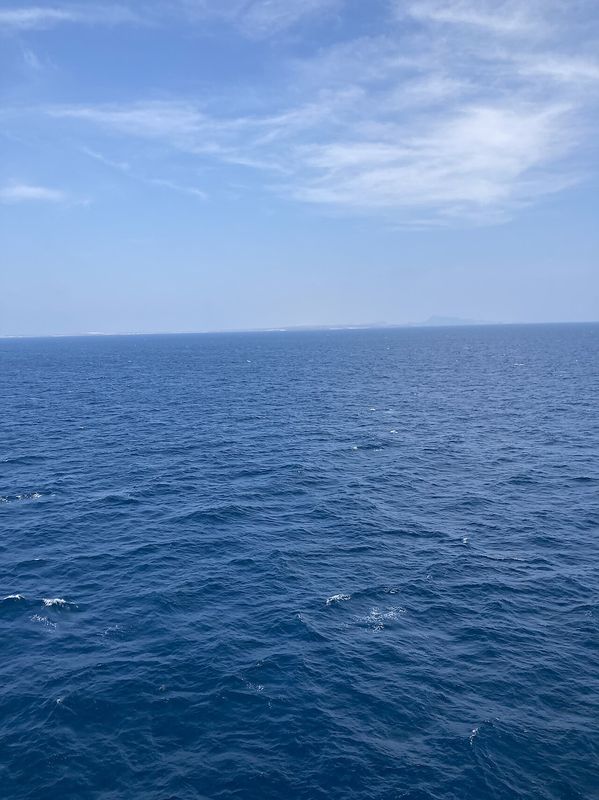
ADEN, Yemen, November 15, 2026 — The Yemen forces retreat Bab al-Mandab story is, at its core, a story about a government choosing its capital over a coastline. Saudi-backed forces fighting for Yemen’s internationally recognised government announced on Sunday that they are pulling back from the Bab el-Mandeb strait to defend Aden, their temporary capital — the apparent end of a six-week counteroffensive to drive the Houthis from the mouth of the Red Sea and secure one of the world’s key oil routes, Reuters reported. The Southern Armed Forces said they were implementing “a redeployment operation for its forces from Dhubab Airport and the Bab el-Mandeb area, west of Taiz Governorate,” a step taken, the statement said, “based on the priority of securing the capital, Aden, and the neighbouring governorates, as well as strengthening the front lines and addressing existing threats.” The BBC reported that pro-government forces are withdrawing from the area overlooking the strait, leaving it under Houthi control, and that Houthi-run media said later on Sunday that the group had taken control of the territory. Saudi Arabia, the government’s principal backer, has not commented.
The new lines: al-Suqyah and Tur al-Bahah
Yemeni military sources told Reuters where the retreating forces are going, and where the Houthis now stand — the two facts that, together, describe the new map. Forces around Bab el-Mandeb have redeployed to al-Suqyah, just south of Dhubab and about 150 kilometres (95 miles) west of Aden, while still trying to push the Houthis from nearby coastal areas. In the highlands north of Aden, meanwhile, Houthi fighters are now positioned just outside the Tur al-Bahah district, about 80 kilometres (50 miles) from the interim capital. A separate report carried by Xinhua put Houthi positions roughly 60 to 70 kilometres from Aden after gains in Lahj governorate overlooking the routes to both the city and the strait; this article uses the Reuters figure of about 80 kilometres at Tur al-Bahah as its anchor and notes that the reporting varies, as front-line distances in this war routinely do.
The government’s own recent movements underline how fast the position deteriorated. As recently as November 14 — the day before the announcement — government forces said they had begun fortifying positions west and north of Aden, after the Houthis took strategic high ground in Lahj. A force that is fortifying the approaches to its capital on Saturday and announcing a redeployment to defend that capital on Sunday is telling the same story twice, in two vocabularies: the strait could no longer be held and the capital defended with the troops available, so the strait was given up. The statement’s language of priorities and front lines is the language of a command making a choice; the geography — a fallback line 150 kilometres from Aden on the coast, an enemy 80 kilometres away in the hills — is the measure of how much choice it had.
How the strait changed hands — twice
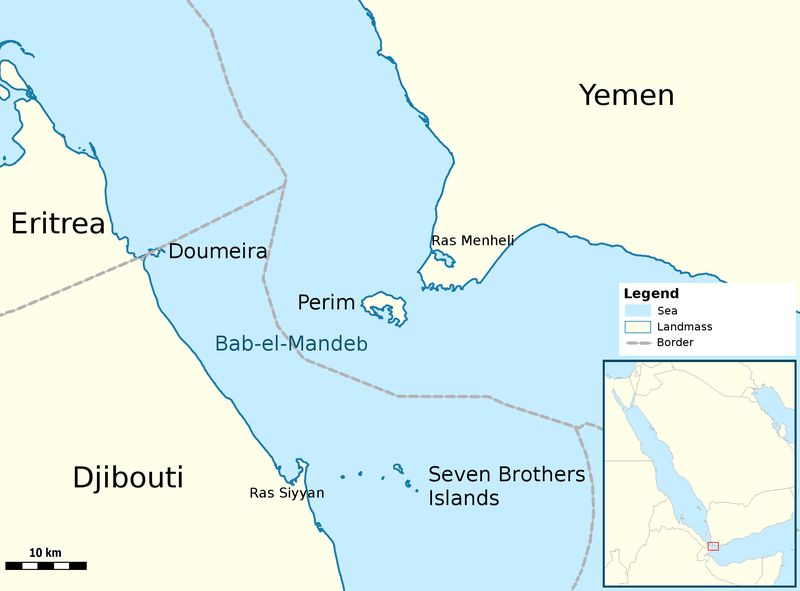
The retreat reverses a reversal, and the short chronology matters. Yemen’s war began in 2014–15, when the Houthis seized the capital, Sanaa, and the internationally recognised government fled south, eventually settling in Aden; a Saudi-led coalition intervened in 2015, and the war settled into the fractured, multi-sided conflict that has made Yemen the site of one of the world’s worst humanitarian crises. The Bab el-Mandeb front is the war’s newest chapter. In September 2026, the Houthis made rapid gains in a surprise offensive, capturing stretches of the Red Sea coast and the strait itself — including, in BBC-sourced reporting, Perim Island at the mouth of the strait and the port city of Mokha — squeezing global oil exports and prompting thousands to flee. Last month, a Saudi-backed government offensive retook key positions around the strait, as Signal Post News reported when government forces retook Dhubab and the Bab el-Mandeb positions in October — but it failed to drive the Houthis entirely away, and it never retook Mokha. Sunday’s announcement gives those October gains back.
One further development on Sunday cut in the opposite direction, and it deserves its own paragraph precisely because it does not fit the day’s military narrative. The Houthis released about 600 detainees the same day, in a move reported by the International Committee of the Red Cross and the Associated Press. Releases of that scale are rarely battlefield events; they are signals — to mediators, to the families’ constituencies, and to the other side — and they have accompanied previous rounds of negotiation in this war. Whether this one opens a channel or merely closes a file is not yet knowable, but a movement that is advancing on Aden and releasing prisoners on the same day is conducting politics as well as war, and any reading of Sunday that omits the release misses half of what the Houthis chose to do with it.
Why this matters
Analysis, labelled as such. The Bab el-Mandeb is about 26 kilometres wide at its narrowest, and through that gap passes the sea lane between the Red Sea and the Gulf of Aden — the southern entrance to the Suez route, and with it a substantial share of the world’s traded oil and container traffic. Whoever holds the Yemeni shore of the strait holds a lever over that traffic: not necessarily the power to close it, but the power to threaten it, tax it with risk, and raise the insurance cost of every hull that passes. The Houthis demonstrated that leverage against shipping earlier in the war; their return to the strait’s overlook restores it. That is why a redeployment announcement from a Yemeni force most readers have never heard of moved oil-route planners on a Sunday: the chokepoint risk that September’s offensive created, and October’s counteroffensive only partly relieved, is back in full.
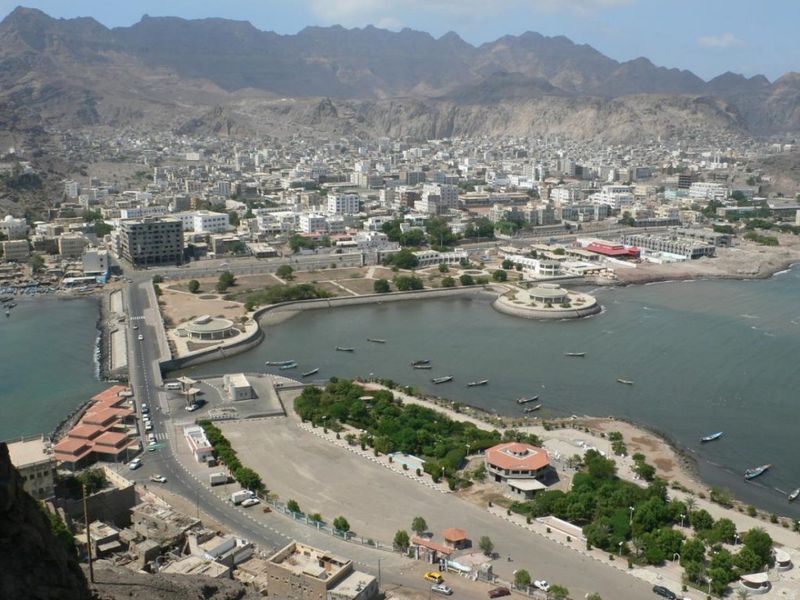
Second, Aden is now the story. A government that abandons a strategic coastline to defend its interim capital is a government whose centre of gravity has shrunk to a single city — and Aden is not a fortress but a port metropolis, approached through the Lahj highlands where Houthi fighters now sit. The government’s position also rests on a coalition of southern forces whose first loyalty is to the south itself; the Southern Armed Forces’ statement, with its emphasis on securing Aden and the neighbouring governorates, reads as much like a southern defence pact as a national strategy. If the Houthis press from Tur al-Bahah, the question will not be whether the government can retake the strait but whether the coalition holding Aden holds together — a question this site has tracked through the autumn’s displacement emergency as the offensive widened.
Third, Riyadh’s silence is a fact in itself. Saudi Arabia built the coalition that has backed the recognised government for a decade, and the six-week offensive to retake the strait was fought with Saudi backing. Its end — announced by the southern forces, unaccompanied by any Saudi statement — leaves open whether the kingdom accepts the new line, is preparing its own response, or is recalculating its Yemen commitments altogether. In this war, the patron’s silence has preceded both escalations and accommodations; it cannot yet be read as either.
The other accounts
The Houthis tell the story differently, and their version is part of the record. A Houthi military source, in reporting carried by the Abay Times from the wire, said government forces lost their positions and their rear lines after being cornered, and were forced back toward Aden — calling the “redeployment” explanation a sign of panic. The government’s spokesman, Colonel Majid al-Nuzayli, answered in the register of a fight not abandoned: liberating the strait and the western coast remained their right, he said, and he called for international help. Both statements are what their speakers needed them to be. The verifiable residue is smaller and harder: positions at Dhubab held in October are no longer held in November; a fallback line exists at al-Suqyah; Houthi fighters are in the Lahj highlands within roughly 80 kilometres of Aden; and Houthi media’s claim to have taken the vacated territory was reported by the BBC the same day. Between the two propagandas, those are the facts a reader can stand on.
One piece of regional context, kept to a paragraph as its scale warrants: the same Reuters report noted a second front in the Gulf, where Iran said its Islamic Revolutionary Guard Corps targeted a U.S. base in Bahrain with six drones on Sunday, and Bahrain said it intercepted Iranian aerial attacks. The exchange is context for the Red Sea story rather than part of it — a reminder that the Houthis’ advance on the strait is unfolding inside a regional confrontation whose other theatres can heat up without warning — and it is recorded here without folding it into this article’s headline or argument.
The data in context
The numbers that define Sunday are these. The fallback: al-Suqyah, about 150 kilometres west of Aden. The threat: Houthi positions about 80 kilometres from Aden at Tur al-Bahah, on Reuters’ reporting, with other reporting putting them closer. The strait: about 26 kilometres wide at its narrowest, carrying the Red Sea–Suez sea lane. The human cost of the escalation that produced this moment: the United Nations has estimated nearly 330,000 people displaced as the fighting escalated, and the International Organization for Migration’s tracking puts the figure at 334,181 displaced since the escalation began in June — two figures from two trackers, attributed separately here because they are not the same count. The institutional backdrop includes the Security Council’s continued sanctions framework on Yemen, renewed in the resolution Signal Post News covered as the UN renewed its Yemen sanctions in Resolution 2837 — a reminder that the diplomatic machinery around this war is still turning, even as the military map moves faster than it can follow.
What happens next
Four questions will decide whether Sunday was a setback or a turning point. First, does Aden’s defence hold — do the fortified lines west and north of the city, and the southern coalition behind them, stop the advance at Tur al-Bahah, or does the front keep moving? Second, do the Houthis press their advantage in Lahj and toward Taiz, or consolidate on the coast and the strait, where their leverage over shipping is already restored? Third, what do the shipping markets and navies do — advisories, escorts and insurance rates will register the chokepoint’s return before any communique does. Fourth, does Saudi Arabia break its silence, and in which direction — reinforcement, mediation, or acceptance of a Houthi-held strait as the war’s new fact? The detainee release, meanwhile, will either find a negotiating channel to flow into or stand as a one-day gesture. Six weeks ago the government was advancing and this article’s predecessor recorded a coastline being retaken; the speed of the reversal is itself the warning. Signal Post News will update this article as the Aden front and Riyadh’s position clarify.
Sources
- Reuters, November 15, 2026 — Saudi-backed forces’ announcement of the pullback from Bab el-Mandeb to defend Aden; the Southern Armed Forces’ redeployment statement (Dhubab Airport and the Bab el-Mandeb area, west of Taiz); Yemeni military sources on the al-Suqyah fallback line 150 km west of Aden and Houthi positions outside Tur al-Bahah about 80 km from Aden; the November 14 fortification of Aden’s approaches; and the same report’s Bahrain context (Iran’s IRGC drone claim and Bahrain’s interception statement).
- BBC News, November 16, 2026 — pro-government forces withdrawing from the area overlooking the strait, leaving it under Houthi control; the September Houthi seizure of the coast, Perim Island and Mokha; Houthi-run media reporting the group had taken control of the territory; Saudi Arabia not commenting.
- The International Committee of the Red Cross and the Associated Press, November 15, 2026 — the Houthis’ release of about 600 detainees the same day.
- Xinhua-sourced reporting, November 2026 — Houthi positions put at roughly 60–70 km from Aden after gains in Lahj; noted in the text as varying from the Reuters anchor figure.
- A Houthi military source and government spokesman Colonel Majid al-Nuzayli, via the Abay Times wire account, November 15, 2026 — the Houthi account of government forces cornered and forced back, and the government’s statement that liberating the strait remains its right, with a call for international help.
- United Nations displacement estimate (nearly 330,000) and International Organization for Migration tracking (334,181 displaced since the escalation began in June) — each attributed to its source in the text.
- Photos: the Bab el-Mandeb from mid-channel by Richard Weil (CC0) and the strait locator map by Archer90 (CC BY-SA 3.0), both via Wikimedia Commons; Aden harbour via Motabaat — each credited in its caption.