Yemen displacement crisis 2026
IOM's latest figures show displacement nearly tripling since mid-September as Yemen's “Dawn of Yemen” offensive and Houthi missile strikes turn the Red Sea coast into a battlefield again.
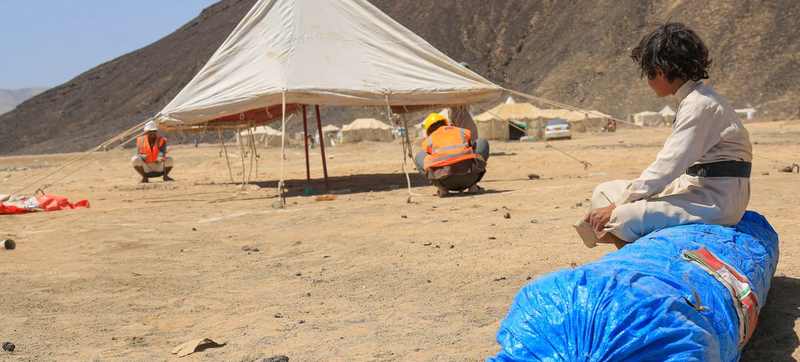
More than 200,000 people have fled their homes since fighting flared in Yemen in early September, according to data released Wednesday by the UN's International Organization for Migration and reported by Reuters. The agency called the surge alarming: from 76,000 displaced in mid-September to more than 200,000 now, nearly all of them uprooted since early September. The Yemen displacement crisis 2026 is no longer a secondary consequence of the renewed war. It is becoming the clearest measure of how quickly the conflict is spreading through places where civilians live.
Why this matters
The speed of the displacement is the story. Yemen was already enduring one of the world's worst humanitarian crises after 12 years of war. The new wave is adding tens of thousands of newly homeless families every week: IOM recorded 21,800 people displaced in the week through October 3, a 26 percent increase from the week before, then another 6,474 on October 4 alone.
IOM Yemen displacement figures show acceleration, not stability
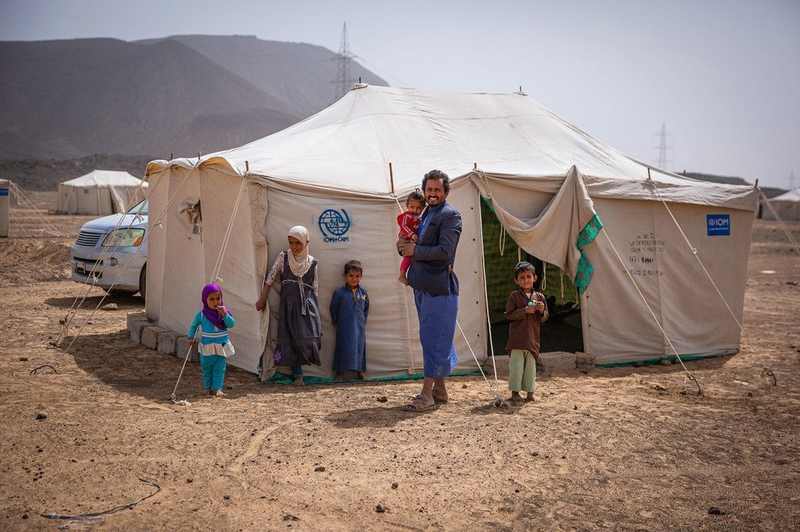
At displacement sites in Ma'rib, families are sleeping in the open, exposed to the danger of airstrikes and without enough latrines for women and girls, according to an IOM rapid assessment cited by UN News on October 5. About 45 percent of the households assessed had already been displaced before. Many lost assets in each successive flight, leaving less money, food and social support to absorb the next shock. IOM warned that some families are turning to child labour as a coping strategy.
Yemen's humanitarian crisis in October 2026 meets an energy squeeze
The timing could hardly be worse. Iran's closure of the Strait of Hormuz is already squeezing Gulf energy exports amid the U.S.-Iran war. Now the fight for Bab el-Mandeb threatens a second global energy chokepoint. Reuters reported that the renewed fighting has helped push global prices higher. That makes the crisis simultaneously local and international: Yemeni families lose homes while shippers, insurers and fuel buyers price in the risk of two disrupted straits.
How the war reignited
After months of relative calm, Yemen's dormant civil war erupted again in September as spillover from the U.S.-Iran conflict. Reuters reported that the Houthis sought control around Bab el-Mandeb while firing missiles and drones at Saudi cities and infrastructure. The group captured the Red Sea port of Mocha and nearby areas last month in what Anadolu monitoring described as its most serious advance since September 10.
The Dawn of Yemen offensive
Saudi Arabia, which arms and trains forces aligned with Yemen's internationally recognized government, answered with air power behind a ground counteroffensive. On Sunday, Presidential Leadership Council chairman Rashad al-Alimi announced “Dawn of Yemen,” promising to fight “until the country is liberated from the grip of the terrorist militia” and to reclaim land taken since 2014.
Government forces said they retook Dhubab district overlooking Bab el-Mandeb on Monday with heavy coalition air support. They then pushed into al-Waziiya district in Taiz and said they seized hills overlooking al-Mansoura, a gateway toward Mocha, according to Al Jazeera journalist Yousef Mawry as cited by Dagens. Houthi commanders dispute the army's account. Signal Post News has separately covered the reported government advance around Dhubab; the precise line of control remains difficult to verify independently.
The Aden airport missile attack widens the danger
On Wednesday, the Houthis struck back. Two missiles targeted Aden International Airport minutes before a Cairo flight was due to land; the aircraft diverted to Jeddah. The Saudi-led coalition said it intercepted and destroyed a Houthi ballistic missile headed for Khamis Mushait in southern Saudi Arabia, while the Houthis claimed attacks on airports in Riyadh and Abha. The Houthis said the Aden strike targeted “Saudi military supplies” at Badr camp. There was no immediate Saudi confirmation of the coalition's reported strikes in Ibb and Taiz carried by Houthi-run Al Masirah.
The competing accounts fit the wider pattern of Houthi–Saudi coalition fighting in 2026: battlefield claims move faster than independent verification, but the civilian risk is unmistakable. The Aden airport missile strike came close enough to a commercial arrival to demonstrate how little margin remains between military signalling and mass-casualty disaster.
What the numbers actually imply
The trajectory matters more than the total: 76,000 in mid-September, 184,000 by October 4, according to the UN, and more than 200,000 by October 7. The weekly pace is accelerating even as the base grows. That pattern is consistent with fighting spreading into populated areas rather than remaining in sparsely inhabited desert.
200,000 displaced in Yemen is a trajectory, not a ceiling
Taiz and Lahej are now among the heaviest fronts. Taiz is densely populated hill country, where block-by-block fighting can displace many more people per square kilometre than a mobile battle across open ground. The figure also has limits: IOM's Displacement Tracking Matrix counts people who reach locations that assessment teams can monitor. As humanitarian access deteriorates, people cut off from those points can go uncounted. That makes the recorded total a documented floor, not a reliable ceiling.
Taiz displacement camps and Yemen war refugees in 2026
Even the term “refugees” can obscure the geography. Most of these Yemen war refugees in 2026 are internally displaced: they have crossed front lines or governorate boundaries, not an international border. That keeps them closer to active fighting and places pressure on already strained Taiz displacement camps and host communities. The burden compounds because nearly half of assessed households have fled before.
Bab el-Mandeb war displacement and a Yemen famine warning
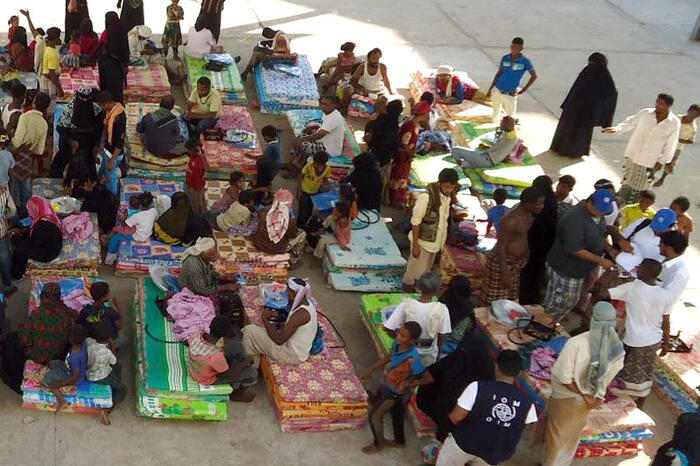
Bab el-Mandeb war displacement carries a second-order risk: when transport corridors close, aid becomes harder and more expensive to move just as needs rise. A Yemen famine warning in 2026 would not emerge from battlefield losses alone; it would reflect markets, port access, fuel costs and household purchasing power collapsing together. The current IOM data do not by themselves establish famine, but they show conditions that can push vulnerable families closer to it.
Who benefits, who loses, what critics say
The Yemeni government's case: each reclaimed district restores its claim to national legitimacy, creates a chance to reopen Red Sea shipping lanes and pushes Houthi launch sites farther from Saudi cities. The October 1 Houthi drone strike near Medina showed the reach the coalition wants to roll back.
The Saudi case: Riyadh can argue that air support is reversing Houthi gains and protecting Gulf infrastructure at a moment when energy exports are already under pressure. A successful campaign around Mocha would also show that the coalition can still shape the war's territorial map.
The Houthi case: the movement presents its campaign as resistance to a Saudi-backed force and says it repelled the al-Waziiya advance. It describes the strikes on Aden and Saudi airports as counter-attacks against military targets. Critics answer that the Aden strike nearly intersected with a civilian airliner from Cairo, which would have turned escalation into a humanitarian catastrophe.
The civilian and analyst warning: both sides' battlefield claims remain difficult to verify independently. Coalition airstrikes and Houthi missile attacks both endanger civilians. With the U.S.-Israel war on Iran continuing, any miscalculation around Bab el-Mandeb could draw outside powers deeper into the conflict. Humanitarian critics say the offensive is moving faster than any plan to protect civilians; IOM Director General Amy Pope's plea for access is the clearest signal that relief capacity is falling behind.
What happens next
Scenario one: government momentum
If government forces hold al-Waziiya and retake Mocha, the Houthis lose leverage over the Red Sea coast. Displacement could peak as front lines move away from populated areas and aid convoys regain access. That is the coalition's preferred path, but it depends on holding exposed terrain after the air campaign moves on.
Scenario two: a Houthi counterattack in the Taiz hills
The Houthis have long experience in mountainous terrain. A counterattack could bog the offensive down into protracted urban and hill fighting. In that scenario, displacement moves toward 300,000, Ma'rib's camps overflow and repeated flight strips more families of the assets they still possess.
Scenario three: an escalation spiral
If Houthi missiles keep targeting Saudi infrastructure and the coalition widens its airstrikes, Bab el-Mandeb faces prolonged disruption alongside Hormuz. A large share of global shipping passes through the Red Sea route. Two compromised chokepoints would deepen the energy crunch and raise the incentive for outside military intervention.
The immediate indicators are concrete: whether government forces hold the hills around al-Waziiya, whether IOM's weekly displacement count keeps rising, and whether humanitarian corridors open or remain shut. Also watch whether the latest numbers confirm or revise the earlier warnings about Yemen's collapsing health and aid systems. The conflict's next military headline may come from Mocha or Aden. Its most consequential measure will still be how many more families have nowhere safe to go.
Sources
- Reuters: More than 200,000 people displaced since fighting in Yemen began, says UN agency (Oct. 7, 2026)
- UN News: More than 184,000 displaced as fighting intensifies in Yemen (Oct. 5, 2026)
- ReliefWeb / IOM: New IOM Data: Yemen Displacement Reaches 184,000 (Oct. 5, 2026)
- Dagens: Yemen launches major push to recapture strategic Red Sea port from the Houthis (Oct. 7, 2026)
- Reuters: Houthi missiles target Aden airport as fighting intensifies (Oct. 7, 2026)