Politics · War — Iran
The Vance Iran forever war question was put to the vice president himself on Monday night, and JD Vance answered it with a cap rather than a calendar. The United States will not allow the Iran war to become a 10- or 15-year commitment, he told Fox News — “or frankly even a two-year commitment.” What he did not provide was an end date, a set of exit terms, or any new policy.
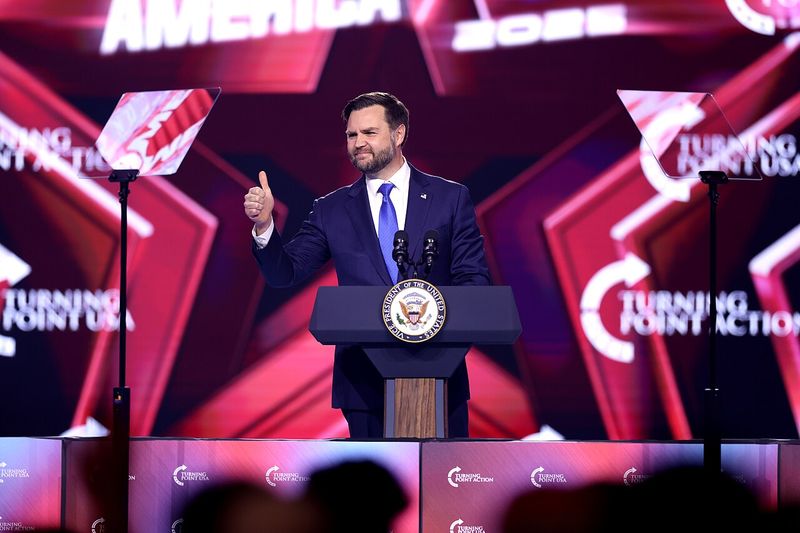
WASHINGTON, November 16, 2026 — The Vance Iran forever war pledge arrived in the form the vice president prefers: a television interview, a friendly host, and a sentence built to travel. Appearing on Fox News’ The Ingraham Angle on Monday night, in an interview with Laura Ingraham from which an early clip was released ahead of broadcast, Vice President JD Vance said the administration that took office promising an end to open-ended wars intends to keep that promise in Iran. “We told the American people we would do no more forever wars,” he said. And then he put a ceiling on the current one: “But we are not going to allow this to become a 10- or 15-year commitment, or frankly even a two-year commitment — despite the fact that a lot of neoconservatives and a lot of other people want us to stay there forever.”
Track it live: https://signalpostnews.com/tracker/iran-war · All live wars: https://signalpostnews.com/tracker/wars
Monday was day 262 of a war that began on February 28, 2026, with joint U.S.–Israeli strikes on Iran. In the nine months since, the conflict has burned through a negotiated memorandum that Vance himself architected and watched collapse, cost his party control of Congress in the November 3 midterms — a defeat Vance has publicly blamed primarily on the war — and settled into the grinding, carrier-heavy, tanker-by-tanker confrontation that now runs from the Strait of Hormuz to Bahrain. Against that backdrop, the significance of Monday night’s interview is not that the vice president announced an ending. He did not. It is that the administration’s chief negotiator with Iran chose to stand in front of the country’s largest conservative audience and describe the war in the language of its fiercest critics: as something that must not be allowed to become forever.
What we know
- The interview: Vice President JD Vance appeared on Fox News’ The Ingraham Angle with Laura Ingraham, broadcast Monday night, November 16, 2026; an early clip was released ahead of the broadcast and was reported by the New York Post and recapped independently by Al Jazeera’s live coverage.
- The cap: “We are not going to allow this to become a 10- or 15-year commitment, or frankly even a two-year commitment,” Vance said, adding that “a lot of neoconservatives and a lot of other people want us to stay there forever.”
- What was not said: Vance gave no end date, no exit terms and no new policy. Any 2028 date attached to the pledge is framing by others, not a deadline he stated — see the precision section below.
- His claims, attributed: Vance said President Trump “felt he had to destroy the nuclear program” and called Iran’s nuclear programme a threat to the United States. His characterisations in the interview of what has been destroyed in Iran are his claims, presented as such in this article, not findings Signal Post News has independently verified.
- The heat-shield line: as reported from the interview, Vance said he is “happy to be a heat shield for the president,” and that his critics “don’t have the courage to criticize the president.”
- The context: the war began February 28, 2026. Vance was chief architect of the 14-point Memorandum of Understanding negotiated in June 2026, which collapsed in July. He has blamed the war as the primary reason for Republicans’ sweeping midterm losses; Trump has described the war as partially responsible.
‘We signed up to not do this’
The architecture of Vance’s answer matters, because it was built in three moves. First, the founding promise: “We told the American people we would do no more forever wars” — the pledge on which the Trump–Vance ticket campaigned, invoked here not as history but as a binding commitment still in force. Second, the justification for the war that exists: “Yes, the president felt he had to destroy the nuclear program. And yes, the Iranian nuclear program is a threat to the United States of America.” Third, the ceiling — no decade, no decade and a half, not even two years — and an enemy for anyone who wants more: the neoconservatives who, in Vance’s telling, “want us to stay there forever.”
Al Jazeera’s live coverage, recapping the same interview independently of the Post’s account, captured the same combative register: “People who want it to become a forever war, they can attack me all they want to because we signed up to not do this.” That sentence is doing double duty. It defends the administration against the charge that it has drifted into exactly the kind of war it promised to avoid — and it relocates the blame for the war’s length from the men prosecuting it to an unnamed faction allegedly demanding its extension. The war, in this framing, is not long because the White House has failed to end it. It is long because other people keep asking for forever, and the vice president is the one standing in their way.
What Vance did not say: no date, no terms, no new policy
Precision is the whole story here, so Signal Post News states it plainly. In Monday night’s interview, JD Vance gave no end date for the Iran war. He announced no exit terms — no conditions Tehran must meet, no sequence of withdrawals, no revived negotiating track. And he unveiled no new policy: the interview changed no deployment, no sanction and no instruction. What he supplied was a duration ceiling expressed in round numbers — not ten years, not fifteen, not even two — and a political argument about who wants the war to last longer than that.
Readers will encounter a harder version of the pledge elsewhere, and it is worth separating the two. The New York Post’s report of the interview carried the headline “JD Vance promises Iran won’t turn into ‘forever war’ — and Trump will end it by 2028,” framing the administration’s intention as wrapping the war up well before both men leave office. That 2028 date is the Post’s framing of the pledge, not a deadline Vance stated. He named no year on air. Treating “end it by 2028” as a commitment the vice president made would be to promote a headline’s arithmetic into a promise he never uttered, and this article does not do that.
The arithmetic itself is simple, and it is analysis, not commitment. A two-year commitment counted from the war’s first day, February 28, 2026, would run to February 28, 2028. If Vance’s “not even two years” is read as a literal outer bound, the war he described on Monday would therefore end at some point before that February 2028 mark — roughly fifteen months from now. But every qualifier in that sentence is load-bearing: if the ceiling is literal, if it is counted from the war’s start rather than from today, and if a television formulation is treated as a schedule. Vance confirmed none of those readings. The honest summary of the pledge is narrower and, for that reason, more durable: the vice president has publicly ruled out a long war, in terms his own supporters can quote back to him, while retaining complete freedom over when and how the shorter one ends.
The negotiator who capped the war
No figure in the administration is more exposed on this question than Vance himself, because no figure is more identified with the attempt to end the war by agreement. In June 2026, Vance served as chief architect of the 14-point Memorandum of Understanding negotiated with Tehran — the framework that briefly stood between the February strikes and a wider war. In July, it collapsed, and the fighting resumed and widened. The man who built the off-ramp has therefore already watched one exit fail. When he says the war will not run for two years, he is speaking as the official who knows, from the inside of the last negotiation, exactly how many ways an ending can fall apart.
That history also explains the interview’s second audience. Vance remains, as Al Jazeera’s recap put it, a key U.S. negotiator with Iran. A public duration cap, delivered by the negotiator, is heard in Tehran as clearly as in Washington — and it cuts both ways there, as the analysis below explores. What can be said on the record is limited: no renewed MoU track was announced on Monday, no talks were scheduled, and no channel was described. The cap is a statement about American intentions. Whether it becomes a fact about the war depends on negotiations that, as of Monday night, have not been publicly restarted.
‘A heat shield for the president’
The interview’s most revealing line may have been about Vance himself. As reported from the Fox interview, the vice president said he is “happy to be a heat shield for the president,” suggesting his critics attack him because they “don’t have the courage to criticize the president.” It is an unusual piece of self-description from a sitting vice president — a job whose traditional public function is precisely to absorb blows aimed at the president, usually without announcing that that is what is happening. Vance announced it.
Read alongside the neoconservative framing, the heat-shield remark completes the interview’s political design. The war’s unpopularity is assigned to a faction — the forever-war wing of the old Republican foreign-policy establishment — rather than to the policy. The criticism of the war is assigned to cowardice — critics who will not aim at Trump, aiming at Vance instead. And the duration of the war is assigned a ceiling that no critic can call escalation. Each element moves pressure away from the president: his war is justified, his negotiator is loyal, his timeline is capped. Whether that design survives contact with a war now in its 263rd day on Tuesday is a separate question — but as a piece of coalition management, delivered on the coalition’s own network, it was complete.
The politics underneath: a war the vice president blames for the midterms
None of this is happening in a polling vacuum. Vance has blamed the U.S.–Israeli war on Iran for Republicans’ sweeping midterm losses — in his assessment, the war was the primary reason — while Trump has offered a slightly softer version, describing the war as partially responsible for the Democrats’ sweep. The numbers underneath those judgements are bleak. A four-day Reuters/Ipsos poll completed on Monday put Trump’s approval at 32%, held near his career low, with just 31% of Americans supporting the war in Iran — the subject of Signal Post News’ separate report, Trump Approval Holds at 32% in New Reuters/Ipsos Poll, whose findings are not repeated here beyond the context they give Monday’s interview: the vice president was capping the duration of a war that fewer than a third of Americans support, on the day a poll confirmed his president is governing at his floor.
One piece of chronology deserves care, because two Vance stories are running in parallel and they are not the same story. Last week, Trump directed Vance to shift his public focus away from the war and toward domestic crime and corruption — a separate development, reported separately by this newsroom as Trump Redirects Vance to Domestic Focus, and not a part of Monday’s interview. Monday’s appearance cuts in the opposite direction: the vice president, redirected or not, was back on television as the administration’s public face on Iran — not to announce a deal, but to bound the war’s length. The two stories describe different decisions by different men, and Signal Post News keeps them apart deliberately: a staffing instruction last week, a duration pledge this week, and no evidence in either that the other has been reversed.
The war outside the studio
The pledge was made about a war that is not pausing to hear it. On Sunday, Bahrain said its air defences intercepted and destroyed several Iranian aerial attacks — the first since September — while Tehran claimed six IRGC drones had hit a U.S. radar at Al-Rifaa, a claim neither Washington nor Manama has confirmed; that fighting is the subject of this newsroom’s separate report, Bahrain Intercepts Iranian Drones as Tehran Claims US Radar Hit. On Monday, in a separate diplomatic development that belongs to that story and not this one, Secretary of State Marco Rubio condemned Iran’s attacks on Bahrain in a call with Foreign Minister Abdullatif bin Rashid Al Zayani. Signal Post News notes the condemnation here only to keep the record straight: it is a distinct event from Vance’s interview, and the two are not merged in this report.
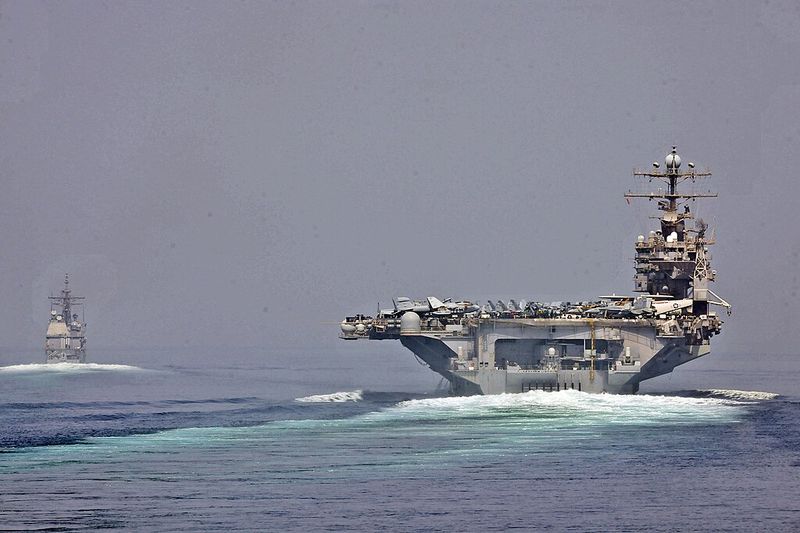
That is the terrain onto which a duration cap now falls: recurring intercepts over Bahrain, tankers and mines in and around Hormuz, and a U.S. naval presence in the Gulf large enough that its movements are themselves news. A pledge about years is ultimately a claim about all of that machinery — whether it winds down, holds, or grows. Nothing in Monday’s interview described a single ship sailing home.
Why this matters
Analysis, labelled as such. A vice-presidential ceiling on a war’s length can be two very different things, and Monday’s interview does not by itself decide which. It may be midterm damage control: the administration’s most articulate defender, a week and a half after a sweeping defeat he attributes to this war, reassuring a restless base that the forever war they fear is not coming — a message aimed at voters, priced in approval points, and costing nothing in deployments. Or it may be a real constraint: a public, quotable, falsifiable line — not even two years — laid down by the president’s own negotiator, which hawks inside the coalition, partners in the Gulf and adversaries in Tehran will all treat as the administration’s stated outer bound, and which becomes more expensive to break with every month the war continues. The difference between the two will not be found in interviews. It will be found in carrier schedules, in whether a negotiating track reopens, and in what the administration does the first time the war’s logic argues for staying longer than its politics allows.
The winners and losers are already sorting themselves. Vance, positioning for a post-Trump future that everyone in Washington can see on the calendar, strengthens his claim to lead the party’s anti-forever-war wing — and, with the heat-shield line, does so while performing conspicuous loyalty to the president whose war is dragging him down. The coalition’s hawks lose twice: their preferred open-ended posture is publicly disowned, and they are cast as the villains of the administration’s own account. Gulf partners hear an American exit clock starting, however loosely it is wound, and will price their own security accordingly. Tehran hears the same clock — which may stiffen its incentive to wait, a dynamic every negotiator understands and the precise reason duration caps are usually kept private. And Trump, in Asia this week ahead of the November 19 trilateral in Shenzhen, carries into the year’s most delicate diplomacy a war his own vice president has just told the world cannot last — delivered by a president whose approval, at 32%, gives him little margin if it does.
What happens next
Because the pledge contains no date and no terms, it can be tested only against events. Three will arrive quickly. The first is Shenzhen: whether the Iran war features in the November 19 trilateral, and whether the administration that has capped the war’s length seeks any great-power understanding to help end it. The second is the negotiating track: whether the MoU framework Vance built — or any successor to it — is revived, since a war ended by agreement is the only kind whose end date anyone can actually choose. The third is the force itself: deployments, rotations and intercepts in the Gulf over the coming weeks will show whether “not even two years” is a direction of travel or a form of words. Until one of those tests returns a result, the Vance Iran forever war pledge stands exactly as he left it on Monday night — a ceiling without a calendar, laid over a war in its ninth month, by the man who once negotiated its end and is now promising, in public, that it will not become forever.
Sources
- New York Post, November 16, 2026 (Washington) — “JD Vance promises Iran won’t turn into ‘forever war’ — and Trump will end it by 2028”: the report of Vance’s Monday-night interview on Fox News’ The Ingraham Angle, including the early-clip quotations (“We told the American people we would do no more forever wars”; “the president felt he had to destroy the nuclear program”; “not going to allow this to become a 10- or 15-year commitment, or frankly even a two-year commitment”), the Post’s framing of the pledge as wrapping the war up well before Trump and Vance leave office, the February 28 start of the war, Vance’s role as chief architect of the June 2026 14-point Memorandum of Understanding that collapsed in July, and the differing Trump and Vance assessments of the war’s role in the midterm losses. The 2028 date is the Post’s framing, as stated in the article above.
- Al Jazeera, live coverage, November 16–17, 2026 — including the November 17 (06:10 GMT) entry “Neoconservatives want US to stay in Iran ‘forever’, says JD Vance”: independent recap of the Fox News interview (“People who want it to become a forever war, they can attack me all they want to because we signed up to not do this”), Vance’s role as a key U.S. negotiator with Iran, Trump’s direction last week that Vance shift focus away from the war, and Vance’s blaming of the war for the Republican midterm losses. The “heat shield” line is attributed in this article to the Fox interview as reported in clip coverage of it.
- Signal Post News, related coverage (separate stories, linked for context and not merged with this report): Trump Approval Holds at 32% in New Reuters/Ipsos Poll (the November 16 Reuters/Ipsos poll: 32% approval, 31% support for the Iran war); Bahrain Intercepts Iranian Drones as Tehran Claims US Radar Hit (the November 15 intercepts and the Al-Rifaa radar claim; Secretary Rubio’s November 16 condemnation of Iran’s attacks on Bahrain is a separate diplomatic development belonging to that coverage); Trump Redirects Vance to Domestic Focus (the separate November 12 story of Trump redirecting Vance’s public focus to domestic crime and corruption).
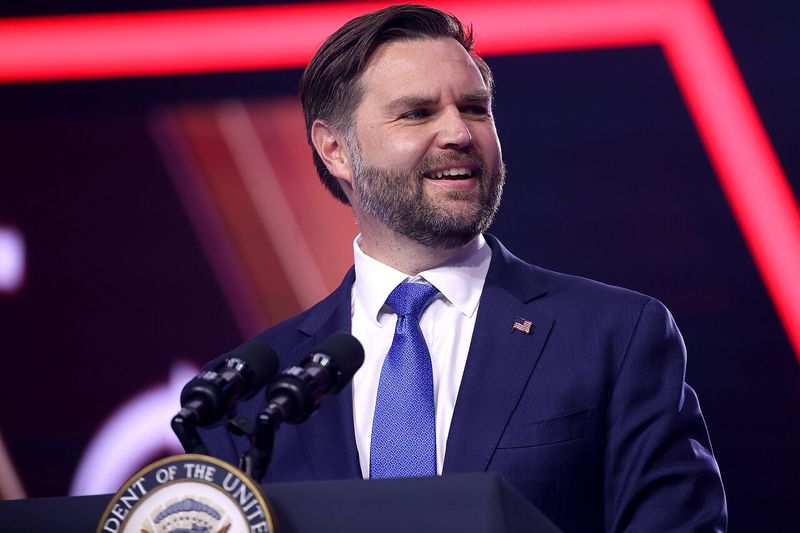
- Photos: Vice President JD Vance at a Turning Point Action podium and at the vice-presidential lectern, both by Gage Skidmore via Wikimedia Commons (CC BY-SA 2.0); a U.S. Navy aircraft carrier and escort transiting the Strait of Hormuz, official U.S. Navy imagery via Wikimedia Commons (public domain) — each credited in its caption. All are file photographs; none depicts the November 16, 2026 Fox News interview, and no network footage from the interview is embedded in this article.