War · Middle East · Bahrain
Bahrain said its air defences destroyed several Iranian aerial attacks on Sunday, the first interceptions since September, while the IRGC claimed six drones had hit a US radar at Al-Rifaa — a claim neither Washington nor Manama has confirmed, and which Bahrain’s account contradicts.
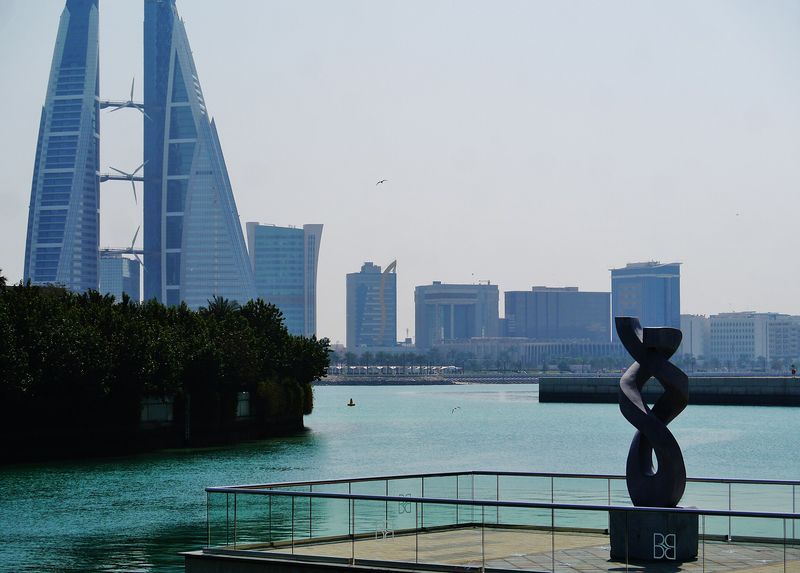
MANAMA, November 15, 2026 — Bahrain said on Sunday that its air defences intercepted and destroyed several Iranian aerial attacks before they reached their targets — the first such interceptions since September, according to Reuters — as the kingdom issued its first public threat alerts in two months and residents of the capital heard explosions in the early hours. Iran’s Islamic Revolutionary Guard Corps (IRGC) claimed separately that it had launched six drones at a United States air-defence radar at the Al-Rifaa helicopter base in Bahrain. That claimed hit is unconfirmed: neither Washington nor Manama has confirmed any strike on the radar, any damage, or any impact at all, and Bahrain’s account of Sunday morning is the opposite of Tehran’s — that the incoming attacks were intercepted and destroyed before achieving their targets. Both accounts cannot be true in full, and on the evidence available on Sunday, only one of them — Bahrain’s interception — comes from the authorities responsible for the airspace in which it is said to have happened.
The distinction is not a technicality, and this article will maintain it throughout. Bahrain intercepts Iranian drones: that is the confirmed event of Sunday, November 15, attested by the Bahrain Defence Force’s own statement and reported by Reuters and AFP. Tehran claims a US radar hit at Al-Rifaa: that is an unverified claim, issued by the IRGC through Iranian outlets, unaccompanied by any confirmation from the United States military or the Bahraini authorities, and contradicted in its essentials by Manama’s statement that the attacks were destroyed in the air. In a war that has run since February 28 on claims as much as on munitions, keeping those two sentences in their separate boxes is the whole of the journalistic task — and, as the analysis below argues, it may also be close to the whole of the strategic one, because a claimed hit that is treated as a real one can force decisions that a real one would not.
Track it live: Iran war tracker
What Bahrain says happened
The Bahrain Defence Force (BDF), in a statement posted on X and quoted in Sunday’s reporting, said its air defences “intercepted and destroyed a number of Iranian air strikes today, Sunday, November 15, 2026, before achieving their targets.” The BDF accused Iran of “continuing its systematic hostile approach,” describing Tehran’s method as a “systematic approach through its sinister attacks targeting the Kingdom of Bahrain.” Reuters, in its November 15 report by Jana Choukeir and Yomna Ehab, characterised the interceptions as the first since September — a dating that matters, because it measures the length of the lull that Sunday’s explosions ended. For roughly two months, the air-defence war over Bahrain had been quiet enough that the kingdom’s warning system had gone unused. On Sunday it was used twice.
Bahrain’s Interior Ministry issued two alerts of potential threats on Sunday, its first such warnings since September, urging citizens and residents to remain calm and proceed to the nearest safe location, Reuters reported. An AFP journalist on the ground in Bahrain reported hearing explosions at around 4:00 a.m. local time (0100 GMT) — the sound, familiar across the Gulf since February, of interceptors meeting incoming weapons in the dark above the capital. Manama did not publish a count of the incoming weapons, a list of their intended targets, or any report of damage or casualties, and the absence of a damage report in a statement that otherwise emphasises success is itself information: a government that had suffered a hit on a sensitive allied installation on its soil would be managing a very different Sunday than the one Bahrain’s statements describe.
What Tehran claims — and what is not confirmed
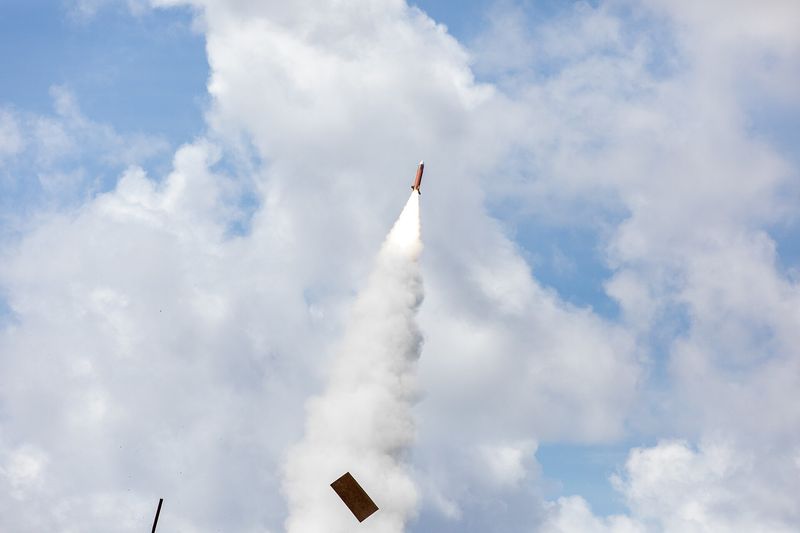
Against Bahrain’s account stands the IRGC’s. The Revolutionary Guards, in claims carried by the Fars news agency and Press TV and reported by Reuters, said they had launched six drones targeting a US air-defence radar at the Al-Rifaa — also spelled Al-Riffa — helicopter base in Bahrain, in retaliation for what Tehran called hostile US actions. The claim is specific in its weapon count and its target, and specificity is a technique: it is designed to sound like a battle-damage assessment rather than a press release. But a claim’s detail is not evidence of its truth, and on Sunday the claim stood entirely alone. No US official confirmed any hit. No Bahraini official confirmed any hit. The US military, which two days earlier had publicly and specifically denied a similar Iranian claim about a radar facility in Bahrain, had issued no confirmation of damage by the time of reporting. And Bahrain’s military statement asserted the contrary outcome: interception and destruction before the targets were reached.
The correct formulation, and the one this article uses, is therefore narrow: the IRGC claims six drones struck a US radar at Al-Rifaa; the hit is unconfirmed; Bahrain says the attacks were intercepted. Readers should treat any version of Sunday’s events that promotes the claimed radar hit to a fact as having outrun its evidence. That discipline matters doubly because this is the second time in three days that Tehran has claimed exactly this kind of success against exactly this kind of target in exactly this country. On November 13, the IRGC claimed it had attacked a US early-warning radar facility in Bahrain; the US military denied that any damage had occurred, saying it had intercepted two Iranian drones without damage. Sunday’s claim arrives, in other words, with a track record — and the track record, on the most recent comparable occasion, is of a claim the United States said was false.
A second claim at Hormuz, also unverified
The Al-Rifaa claim was not Tehran’s only unverified assertion of the weekend, and the pattern is worth recording because the claims interact. In its combined Gulf report of Sunday, November 15, Reuters reported that the Revolutionary Guards said two tankers were on fire on Sunday after striking naval mines in the Strait of Hormuz — and Reuters stated, in the same sentence’s shadow, that it could not independently verify the report. That claim, too, is claim-only and uncorroborated: no shipping authority, insurer, flag state or US naval command confirmed two tankers ablaze in the strait on Sunday, and the claim may not even describe a new incident. Iranian statements across the weekend variously described mine strikes involving tankers on Saturday — claims Signal Post News has covered separately, with the US Central Command’s position that the strait is mine-free carried alongside them — and Sunday’s “two tankers on fire” line may be a restatement of the Saturday claim rather than a distinct event. Until a source independent of the IRGC confirms a Sunday tanker incident, that is where the matter rests: an unverified claim, noted, labelled and not promoted.
Set the two claims side by side and a method emerges. A radar in Bahrain, tankers in Hormuz: each claim targets a node of the American position in the Gulf — its eyes and its sea lanes — and each is issued at a moment when Tehran benefits from the appearance of reach whether or not the reach was real. Claims of this kind cost nothing to make, are expensive for the other side to disprove in public (battle-damage details are themselves intelligence), and reliably generate headlines that do a share of the work a successful strike would do. None of which proves Sunday’s claims false. Bahrain’s interceptions prove that weapons were launched; they do not, by themselves, prove that every weapon failed. What they prove is narrower and sufficient: that the only confirmed events of Sunday morning over Bahrain are Iranian launches and Bahraini interceptions, and that everything beyond that is assertion.
Why this matters
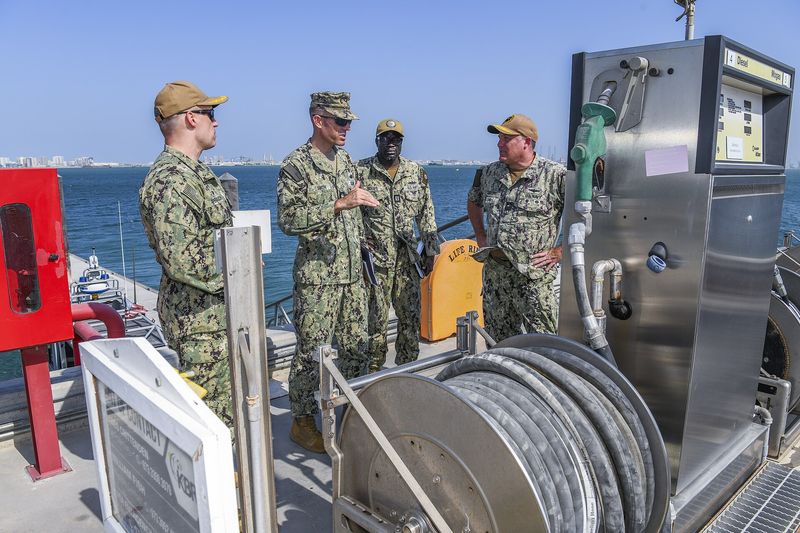
Analysis. Bahrain is not a bystander in this war; it is one of its addresses. The kingdom hosts the headquarters of the US Navy’s Fifth Fleet at Naval Support Activity Bahrain, the command that runs American naval operations across the Gulf, the Red Sea and parts of the Indian Ocean. An Iranian weapon aimed at Bahrain is therefore never only aimed at Bahrain: it is aimed at the infrastructure of American power in the region, at the host state that shelters it, and at the proposition — central to US strategy in the Gulf for a generation — that American protection and American presence are the same thing. Tehran’s choice of a radar as its claimed target sharpens the point. Radars are the sensors on which the entire Gulf air-defence web depends; a state that can credibly claim to have blinded one has claimed something more valuable than a crater. Which is precisely why the claim must be held to an evidentiary standard its maker has not met.
The timing compounds the stakes. Reuters’ reporting across the weekend noted that President Trump has said in recent days that he might hold off attacking Iran if there are no new provocations from Tehran or the Houthis, while the United States maintains its naval blockade. A conditional pause of that kind is a tripwire arrangement: it holds exactly as long as nothing crosses the line that defines a provocation, and it makes the classification of ambiguous events — an intercepted drone raid, a claimed radar hit, an unverified tanker fire — into decisions with escalatory weight. If a claimed hit is treated in Washington as a hit, the pause is tested by a press release. If it is treated as noise, Tehran learns that claims are free. Sunday’s events were calibrated, whether by design or by circumstance, to sit exactly on that seam: real launches, real interceptions, and a claim of success that the evidence does not support. The seam is where this war now lives.
There is also the population underneath the flight paths. Bahrain’s two alerts on Sunday were its first since September, which means that for two months the kingdom’s residents had been permitted to stop organising their nights around sirens — and on Sunday they were told, twice, to go to the nearest safe place and stay calm. Gulf states have become practiced at this rhythm, but practice is not immunity: every alert cycle re-prices insurance, shipping, expatriate retention and the quiet calculations of the financial and logistics firms on which these economies run. Tehran does not need to hit a radar to impose those costs. It needs only to launch often enough that the alerts keep coming — and to claim loudly enough that the launches are remembered as hits.
Context: a war since February, a lull since September
The wider war began on February 28, when the United States and Israel struck Iran, and it has since run through phases of direct exchange, blockade and uneasy pause. Bahrain’s place in it was established early: as the Fifth Fleet’s host, the kingdom sits inside the American security architecture that Tehran holds responsible for the war, and Iranian weapons have been aimed at Gulf hosts throughout the conflict. September brought a lull over Bahrain specifically — no interceptions, no alerts — and the lull held through October and into November, until the pattern reasserted itself in the second week of this month. On November 13 came the first radar claim and the American denial: two drones intercepted, no damage, Tehran’s assertion rejected by the US military in terms. Two days later came Sunday: more launches, interceptions Bahrain confirms, alerts Bahrain had not issued in two months, and a second, larger radar claim — six drones this time — that no American or Bahraini authority has confirmed.
The same Reuters report that carried Sunday’s Bahrain news also carried a second front, noted here only to keep the map complete: the Saudi-led coalition said on Sunday that it had intercepted two Houthi ballistic missiles launched toward Riyadh and three drones in Saudi Arabia’s Eastern Province. That is a separate event, banked and covered separately by this newsroom, and it is not part of Sunday’s Bahrain story except in the sense that everything in the Gulf this weekend was part of one weather system: multiple launchers, multiple hosts, one American-led defensive architecture being tested at several points within the same news cycle.
What happens next
The immediate question is evidentiary, and it belongs to Washington. The United States answered the November 13 claim with a prompt, specific denial. A comparable American statement on Sunday’s Al-Rifaa claim — confirming interception, denying damage, or, if the facts require it, acknowledging a hit — would do more to stabilise the information environment than any Bahraini or Iranian statement can, because the installation Tehran claims to have struck is American. Silence, by contrast, is a resource for the claimant: every hour without a denial is an hour in which the claim circulates as possibility. Watch, therefore, for a US Central Command or Fifth Fleet statement, for any Bahraini damage assessment, and for whether Manama’s alert tempo returns to its September-to-November silence or settles into a new pattern of regular warnings.
The diplomatic track, meanwhile, produced the weekend’s quietest and possibly most consequential line. Iranian Foreign Minister Abbas Araghchi will travel to Muscat on Tuesday, November 17, for talks with his Omani counterpart, Iran’s state agency IRNA reported, citing foreign ministry spokesperson Esmail Baghaei, in a report carried by Reuters on November 15. Oman holds the southern coast of the Strait of Hormuz and has acted as mediator in this crisis before; a foreign minister’s visit to Muscat in the middle of an interception weekend is the other half of Tehran’s method, conducted in the open — pressure in the air over Bahrain, process on the ground in Oman. Whether the Muscat talks address the blockade, the tanker claims, the terms of the conditional pause, or all three, they are the venue to watch when Tuesday comes. Until then, Sunday’s ledger stands as the evidence leaves it: Bahrain intercepted Iranian aerial attacks, the first since September; Tehran claimed a radar hit it has not substantiated and tankers ablaze that no one has corroborated; and the war’s most contested territory, for one more weekend, was the gap between the two.
Related coverage: Iran’s Guards Say They Struck a US Radar in Bahrain as Hormuz Tanker Claims Mount · Bahrain Puts 60 Shia Clerics on Trial as the Iran War Comes Home · Iran war tracker
Sources
Reuters — reporting of November 15, 2026 (Jana Choukeir and Yomna Ehab): Bahrain’s air defences intercepted and destroyed several Iranian aerial attacks, the first interceptions since September; two Interior Ministry threat alerts, the first since September; the Bahrain Defence Force statement quoted in the text; the IRGC claim, via Fars and Press TV, of six drones targeting a US air-defence radar at the Al-Rifaa helicopter base — unconfirmed by the US or Bahrain; the IRGC’s Sunday claim that two tankers were on fire after striking mines in the Strait of Hormuz, which Reuters stated it could not independently verify; IRNA, via foreign ministry spokesperson Esmail Baghaei, on Foreign Minister Abbas Araghchi’s Tuesday visit to Muscat. AFP — reporting of November 15, 2026: explosions heard in Bahrain at around 4:00 a.m. local time (0100 GMT). The November 13 IRGC radar claim and the US military’s denial (two drones intercepted, no damage) are as previously reported by this newsroom. Photographs: Zairon (CC BY-SA 4.0) via Wikimedia Commons; U.S. Navy and U.S. Army photographs (public domain) via Wikimedia Commons; the Patriot image is a file photo of a live-fire exercise and does not depict Sunday’s interceptions.