US · Politics · Polls
The Trump approval rating today is a number stuck at the floor: 32% in a four-day Reuters/Ipsos poll completed Monday, the fourth straight survey in the series at or near that level since approval touched a career low of 31% in mid-October. Just 31% of Americans support the war in Iran — and the same poll finds Democrats turning on Senate leader Chuck Schumer even as House leader Hakeem Jeffries holds up better with the party faithful.
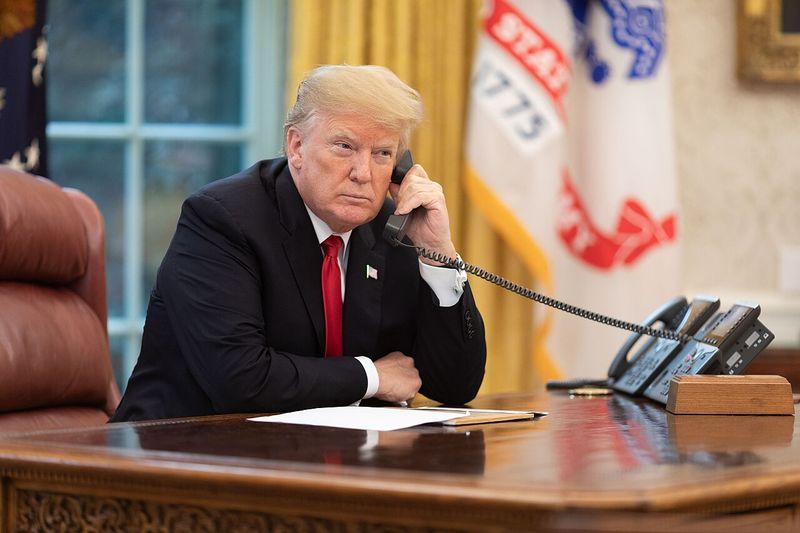
WASHINGTON, November 16, 2026 — The Trump approval rating today is 32%, according to a new Reuters/Ipsos poll — and the most important word in that sentence is not the number but the stillness around it. The four-day online poll, completed on Monday, found that 32% of Americans approve of President Donald Trump’s performance in office, a reading that has now held steady across four straight Reuters/Ipsos polls since mid-October, when the same series touched a career low of 31%. One point above the worst reading of his presidency, four surveys in a row, is not a recovery and it is not a collapse. It is a floor — and, two weeks after midterm elections that cost his party control of Congress, it is the floor on which the rest of Trump’s second term will be built unless something changes the country’s mind.
Precision matters here, because this number invites sloppy headlines. Thirty-two percent is near Trump’s career low in the Reuters/Ipsos series; it is not a new one. The low itself — 31% — was recorded in mid-October, and the four polls since have moved within a single point of it, well inside the survey’s margin of error of about three percentage points. What the November wave establishes is therefore not deterioration but duration: the president has now spent roughly a month at the lowest band of public support he has ever recorded in this series, with no bounce from the midterms, no rally effect from the autumn’s diplomacy, and no sign in this poll that the voters who left have any intention of coming back on their own.
What we know
- The headline number: 32% of Americans approve of Trump’s performance in the four-day Reuters/Ipsos poll completed Monday, November 16 — held steady across four straight Reuters/Ipsos polls since mid-October. It is near, not at, his career low.
- The career low: 31%, recorded in mid-October in the same Reuters/Ipsos series. Nothing in the November poll sets a new record.
- The war: just 31% of Americans support the war in Iran, according to the same poll. Reuters links the approval slide to the war’s hit to personal finances through sharply higher fuel prices.
- Schumer, among Democrats only: 34% of self-identified Democrats view Senate leader Chuck Schumer favourably and 43% view him unfavourably, with 22% saying they have never heard of him — down from 38% favourable and 37% unfavourable among Democrats in February. These are Democrats-only figures, not all-voter numbers.
- Jeffries, among Democrats only: House leader Hakeem Jeffries fares better with his own party — 40% favourable and 29% unfavourable among Democrats, with 29% saying they do not know the name.
- The method: an online Reuters/Ipsos poll of 1,521 U.S. adults nationwide, with a margin of error of about three percentage points. Subsamples — including the Democrats-only readings on Schumer and Jeffries — carry wider margins.
The Iran war drag
Every approval number has an engine, and Reuters is explicit about this one: the war in Iran, and what it has done to household budgets. Just 31% of Americans support the war, the poll found — a minority position for a conflict the president owns outright — and Reuters ties the broader slide in Trump’s standing to the way the war has reached into personal finances, above all through sharply higher fuel prices. That transmission mechanism, from a distant war to the price at the pump, is the oldest story in American politics: voters may not follow strategy, but they keep exact accounts of what a litre — or a gallon — costs, and they send the bill to the White House.
The political cost has already been invoiced once. Reuters describes the war-driven squeeze on living costs as an economic conflagration that cost Republicans control of Congress in the November 3 midterms — a verdict voters delivered while this same polling series was sitting at its floor. Read together, the sequence is stark. Approval touched 31% in mid-October. Voters then handed Congress to the opposition. And the first full Reuters/Ipsos wave completed after that rebuke finds the president exactly where he was before it: 32%, unmoved in either direction. Elections are supposed to clarify; this one, on the evidence of this poll, changed the government without changing a single point of the president’s standing.
There is a harder implication inside the 31% war-support figure. A president prosecuting an unpopular war with a third of the country behind the policy and roughly a third behind him personally has very little room to escalate, and not much more room to declare victory and leave: either course is judged by a public that has, on this evidence, stopped extending him the benefit of the doubt. The war number and the approval number are the same number wearing two coats — 31% and 32% — and that convergence is the poll’s quiet headline. The war is no longer something Trump does that voters weigh alongside other things. For a large share of the country, it appears to be the thing itself.
Why this matters
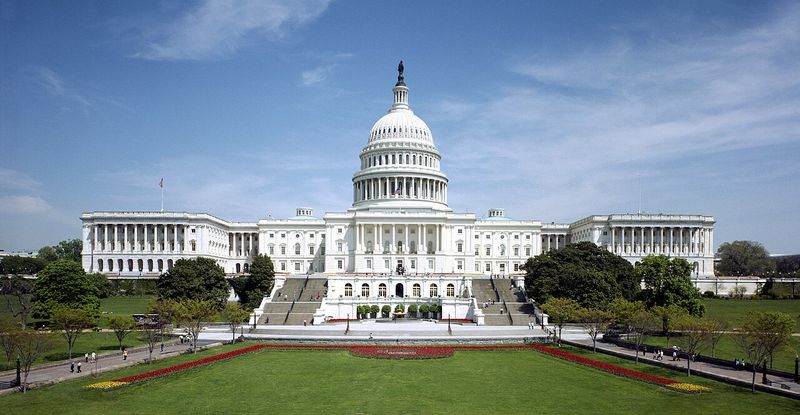
Analysis, labelled as such. A president at his floor is not powerless — the office carries its own momentum, and 32% of a country of more than 300 million is still an enormous constituency. But a president at his floor negotiates differently, and this poll lands in a week when Trump is negotiating with the whole world watching: the run-up to the November 19 trilateral meeting in Shenzhen with China’s and Russia’s leaders, the first of its kind, will be conducted by an American president whose own public, on this evidence, is not behind him. Foreign counterparts read American polls the way markets read central-bank minutes. They cannot set U.S. policy, but they can price the president’s room to deliver on any promise he makes — and a leader at 32%, facing a Congress his party no longer controls, gets priced accordingly.
At home, the arithmetic is just as unforgiving. Legislation now requires Democratic votes, which means the White House must bargain for everything it wants from a Congress led by the opposing party — a Congress whose own leaders, as the rest of this poll shows, have problems of their own. The midterms answered the question of who holds institutional power in Washington. This poll answers the follow-up: nobody in Washington, on either side, is currently holding much public confidence at all. The president is at his floor. His party has lost Congress. And the Democratic leaders who inherit the gavels are, with their own voters, underwater or unknown — which is where the second half of this survey becomes the story.
Sour on Schumer — with Democrats
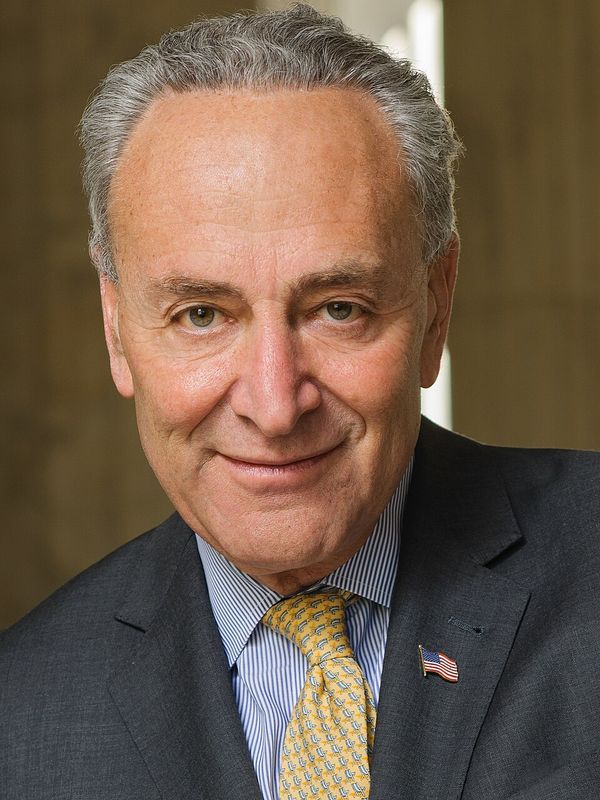
The poll’s most consequential finding may not be about the president at all. Among self-identified Democrats — and only among Democrats; these figures describe the party’s own electorate, not the country — just 34% view Senate leader Chuck Schumer favourably, while 43% view him unfavourably. A further 22% of Democrats say they have never heard of him, a remarkable figure for a man who has led Senate Democrats for years and is one of the most recognisable figures in Washington. A leader whose own side rates him nine points underwater, with more than a fifth of his party drawing a blank at his name, is not merely unpopular. He is, in the cold vocabulary of politics, available to be challenged.
The direction of travel is worse than the level. In February, the same Democrats-only question found 38% of Democrats viewing Schumer favourably and 37% unfavourably — essentially even, a leader holding his coalition. By November, the favourable share has fallen four points and the unfavourable share has risen six, flipping him from break-even to clearly negative with the voters he cannot afford to lose. This is not the opposition’s verdict; Republicans were not asked to rescue or condemn him in these figures. It is his own party, fresh off a midterm victory that returned Democrats to power in Congress, concluding that the victory happened despite — or at least without — much confidence in the man who leads them in the Senate.
And the timing is not incidental. Reuters frames the finding explicitly: Schumer faces a leadership challenge from Senator Chris Van Hollen of Maryland, and the poll was published on the eve of that challenge. A challenge to a sitting leader is normally a question of Senate arithmetic — of who can count to a majority of the caucus behind closed doors. What this poll changes is the public weather around that private count. Every Democratic senator weighing a vote now knows that the party’s voters, in the only fresh national reading available, rate the incumbent negatively and are drifting further away from him. That does not decide the challenge — leadership elections are won in cloakrooms, not crosstabs, and Signal Post News presents the contest as what it is: a challenge reported by Reuters, not a decided outcome. But it removes Schumer’s easiest defence, the claim to speak for a party that stands behind him. On this evidence, it does not.
The Jeffries contrast
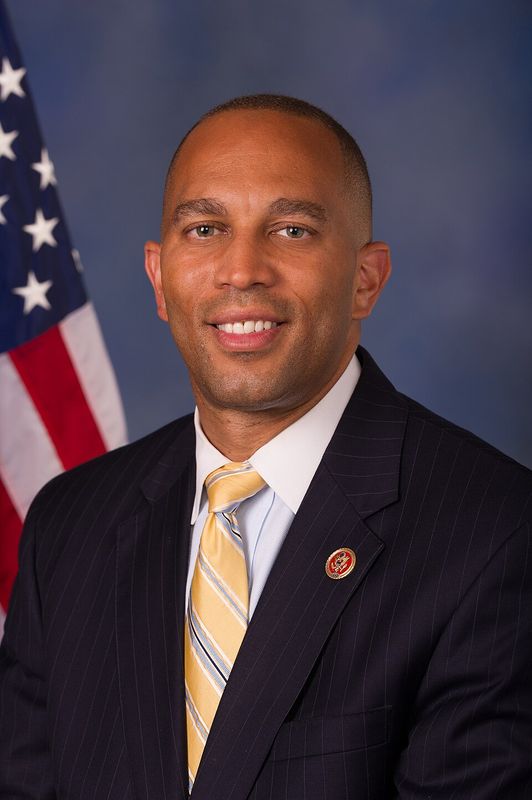
Across the Capitol, the same poll tells a different story about the Democrats’ other leader. House leader Hakeem Jeffries is viewed favourably by 40% of Democrats and unfavourably by 29% — again, Democrats only — a net-positive reading eleven points on the right side of even, in a survey where his Senate counterpart is nine points under. The contrast is not subtle, and it will not be lost on a party deciding, in the afterglow of a midterm win, what its leadership is for. One chamber’s leader is an asset his party can put on television. The other is the subject of a challenge.
Jeffries’ numbers come with their own warning label, though: 29% of Democrats say they do not know his name. Nearly three in ten of his own party’s voters cannot identify the man who leads them in the House — a reminder that congressional leaders, however powerful inside Washington, remain faint figures to much of the country, and that favourability built on partial recognition is softer than it looks. Schumer’s problem is the opposite: he is known, and the more his party has seen of this year, the less it has liked what it sees. Between an unknown leader rated kindly and a known leader rated harshly, the poll sketches a Democratic Party that won power in November without having settled the question of who embodies it.
How to read this poll: the method, and the one-point question
The Reuters/Ipsos poll was conducted online among 1,521 U.S. adults nationwide over four days, completed Monday, November 16, with a margin of error of about three percentage points. Those three facts discipline everything claimed above. A sample of that size, at that margin, can establish that the president’s approval sits in the low thirties and has sat there for a month. It cannot establish that 32% is meaningfully different from 31%: the one-point gap between this wave and the mid-October career low is far inside the margin of error, which is precisely why the honest description of this poll is “held steady near the career low” — and why any headline announcing a new low, in either direction of drama, would be inventing a movement the survey did not measure.
The same discipline applies with extra force to the leadership numbers. The Schumer and Jeffries readings come from the Democrats-only subsample of the 1,521 respondents — a smaller group than the full sample, carrying a wider margin of error than the headline three points. The February-to-November movement on Schumer (38% favourable and 37% unfavourable, to 34% and 43%) is large enough in direction and consistent enough across both measures to describe as a real souring, but the exact size of each shift should be held loosely. What the subsample can bear is the comparison that matters politically: within the same poll, the same party electorate rates Jeffries net-positive and Schumer net-negative. That internal contrast does not depend on any single point estimate being exact.
Background: a year spent sliding to the floor
This November wave is a distinct poll from Signal Post News’ earlier approval coverage, and its numbers should not be merged with theirs. In October, this newsroom reported a separate survey putting Trump’s approval at 31% — Trump Approval Rating October 2026: 31% Career Low as 65% Blame Him — and, in the run-up to the midterms, a separate Reuters/Ipsos-era reading at 32%: Trump Approval Falls to Career-Low 32% as Midterm Map Turns Against GOP. Each of those stories described its own poll, its own sample and its own moment. The value of the new survey is not that it repeats them; it is that it extends the line they began — through an election, past a verdict, and into a fourth consecutive Reuters/Ipsos reading at the bottom of the range.
The pattern across 2026, on the evidence assembled in this newsroom’s coverage, has been a ratchet rather than a plunge: approval stepped down through the year as the Iran war’s costs reached household budgets, paused at each new level long enough to prove it was a level and not a dip, and then stepped down again. Second terms are historically cruel to presidential approval — the coalition narrows, the promises meet arithmetic, and the voters who lent their support begin collecting on the loan — but what distinguishes this case is the absence of a floor-finding rally. Presidents at career lows usually get at least a flicker of movement: a good week, a foreign crisis that rallies the flag, an opponent’s stumble. Four straight polls at 31–32% describe a public that is not waiting for a reason to return. It has, for now, finished deciding.
Separately from the poll — and Signal Post News keeps the two apart, because they are different kinds of fact — Trump is also reported in this news cycle to face a rare leadership challenge within his own party, after Republicans’ worst midterm performance in a generation. That is reporting about the party’s internal politics, not a finding of the Reuters/Ipsos survey, and no number in this article should be read as measuring it. Its significance here is atmospheric: a president at 32% and a Senate Democratic leader underwater with his own voters are being challenged, simultaneously, from inside their own houses. Washington is entering a season in which both parties’ leadership questions are open at once — and the public, on this poll’s evidence, is not in a forgiving mood toward either.
What happens next
Three tests will decide whether 32% is a floor or merely a landing. The first is the Schumer challenge itself: whether Senator Van Hollen’s bid converts Democratic voters’ discontent into caucus votes, and whether a party that just won Congress decides its reward is a new Senate leader. Watch the February comparison point — if Schumer survives, the next Democrats-only reading of his favourability is the number that tells him what survival cost. The second test is the war. With support for the Iran war at 31%, every development at the Shenzhen trilateral and every movement in fuel prices runs through the same narrow channel of public patience; a president who needs the war’s economics to improve has handed his approval rating to a petrol pump. The third test is simpler and crueller: time. Four polls at the floor have established that nothing incidental moves this number. What moves it, if anything can, will have to be something voters can feel — in prices, in the war’s trajectory, or in a Congress that now answers to the other party. Until then, the Trump approval rating today is the same as it was yesterday, and the day before, and the month before that: 32%, near a career low, holding.
Sources
- Reuters, November 16, 2026 — Trump approval holds near career low at 32%, Reuters/Ipsos poll finds: the four-day Reuters/Ipsos poll completed Monday (32% approval, held steady across four straight polls since the mid-October career low of 31%; 31% support for the war in Iran; the fuel-price and midterm analysis; Schumer at 34% favourable / 43% unfavourable and Jeffries at 40% / 29% among Democrats only; the Van Hollen challenge framing). The same Reuters report was syndicated by multiple independent outlets on November 16, 2026.
- Ipsos / Reuters polling methodology, as reported with the poll — online survey of 1,521 U.S. adults nationwide, margin of error of about three percentage points; Democrats-only subsample figures for Schumer and Jeffries carry wider margins, and the February Democrats-only comparison for Schumer was 38% favourable / 37% unfavourable.
- Signal Post News, related coverage of distinct earlier polls (not this survey): Trump Approval Rating October 2026: 31% Career Low as 65% Blame Him and Trump Approval Falls to Career-Low 32% as Midterm Map Turns Against GOP — linked as background only; their figures describe separate polls and are not findings of the November Reuters/Ipsos wave.
- Photos: President Donald Trump in the Oval Office, official White House photograph via Wikimedia Commons (public domain); the U.S. Capitol west front, Library of Congress via Wikimedia Commons (public domain); Senate leader Chuck Schumer, official U.S. Senate portrait via Wikimedia Commons (public domain); House leader Hakeem Jeffries, official U.S. House portrait via Wikimedia Commons (public domain) — each credited in its caption, and none depicting the November 2026 poll itself.