Updated Oct. 1, 2026, 7:40 p.m. PDT
USS George H.W. Bush carrier
Topics: USS George H.W. Bush carrier · George H.W. Bush carrier Middle East 2026 · CVN-77 last Nimitz class carrier specs · USS George H.W. Bush homeport Norfolk · carriers in Middle East right now · Bush carrier Iran deployment · Nimitz class vs Ford class · carrier named after George H.W. Bush WWII · US carriers stationed Middle East October 2026 · how long are carrier deployments
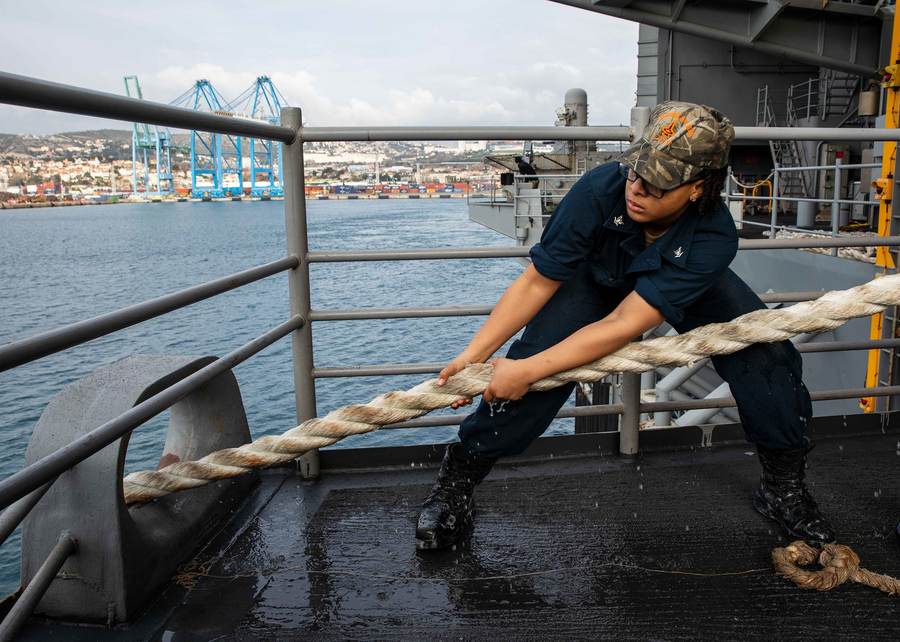
The USS George H.W. Bush carrier is already in the Middle East, making it the ship that must hold the current posture while reinforcements cross from San Diego. USS Theodore Roosevelt and its escorts are expected later in October or November; USS Makin Island is bringing a Marine expeditionary unit. Until they arrive, CVN-77 remains one of the two American carrier flight decks in the theater.
That makes Bush less visible than the ships just departing but more immediately consequential. It is already positioned to provide air defense, surveillance and strike capacity as fighting with Iran continues after a fragile ceasefire collapsed. Its day-to-day task is to make sure a presidential option exists before the next carrier reaches the region.
What the Bush is
USS George H.W. Bush, CVN-77, is the tenth and final Nimitz-class nuclear-powered aircraft carrier. Built by Northrop Grumman Newport News and commissioned in January 2009, it measures 1,092 feet and displaces roughly 104,000 long tons at full load. The ship is homeported in Norfolk, Virginia, and carries about 3,200 ship’s personnel before the air wing is added.
Like the other Nimitz-class ships, Bush uses two nuclear reactors. Its flight deck supports a carrier air wing of fighters, electronic-warfare aircraft, airborne radar planes and helicopters. The result is a mobile air base that can operate without a host nation’s runway, though it still depends on replenishment ships for aviation fuel, food, parts and weapons.
CVN-77: the last Nimitz-class carrier
The CVN-77 last Nimitz class carrier specs place Bush at the end of a design line that began with USS Nimitz. It shares the class’s basic hull and nuclear propulsion but incorporates updated electronics, improved aviation-fuel distribution, newer island design features and reduced maintenance demands. Those changes made it a bridge between the mature Nimitz program and the Ford class that followed.
In the Nimitz class vs. Ford class comparison, the biggest differences are not length or mission. Ford introduces electromagnetic aircraft launch, advanced arresting gear, a redesigned electrical system and a smaller planned crew. Bush still uses steam catapults and conventional arresting gear. Its advantage is maturity: decades of operating practice, trained maintainers and established logistics surround the design.
Named for a naval aviator president
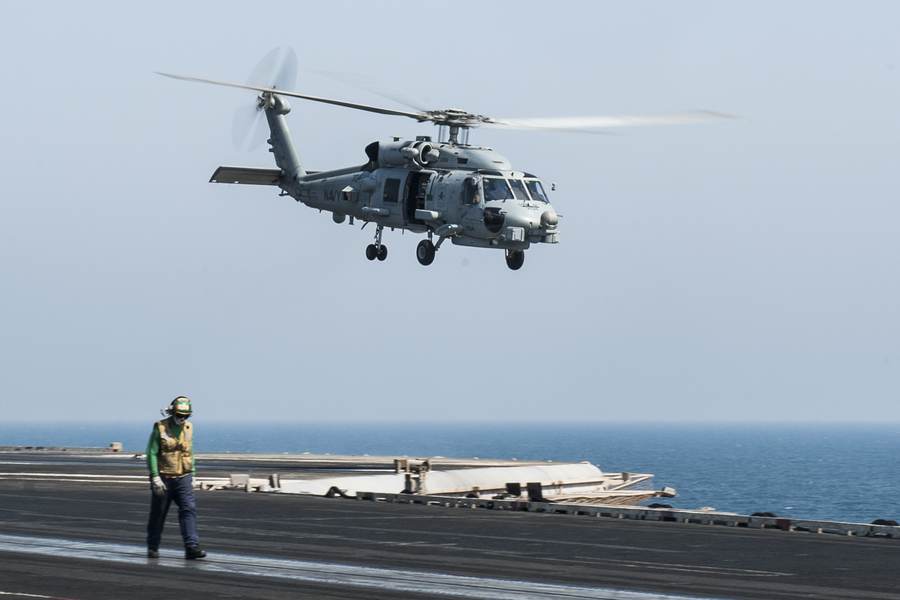
The carrier is named for President George H.W. Bush, who flew as a U.S. Navy torpedo bomber pilot in World War II. He was shot down in the Pacific in 1944 and rescued by a submarine. Naming CVN-77 for a former naval aviator linked the newest Nimitz-class ship to the generation that built carrier aviation into the center of U.S. sea power.
The biography matters because the ship’s name is not merely ceremonial. Carrier crews inherit traditions, symbols and expectations that help bind thousands of sailors into one organization. Bush attended the ship’s commissioning, and the connection between the president’s wartime service and the carrier’s mission remains central to its public identity.
Already on station: its role now
As of October 1, USS George H.W. Bush is one of the carriers in the Middle East right now, alongside USS George Washington. That posture exists against the background of a conflict that began February 28 and a ceasefire that did not hold. More than 50,000 U.S. troops are already stationed across the region, according to officials cited by the Wall Street Journal.
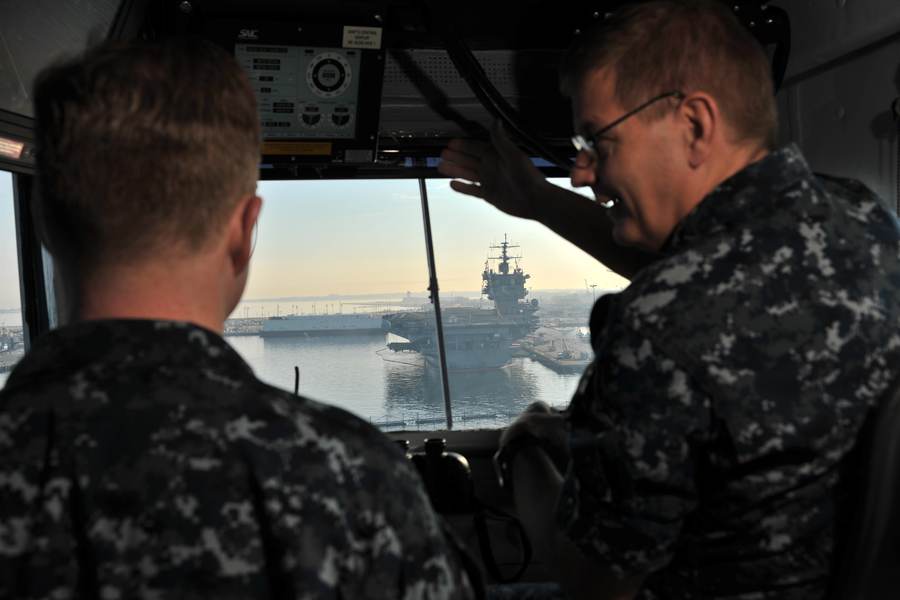
The Bush carrier Iran deployment provides persistent aviation where land bases can be politically sensitive or within missile range. Fighters can patrol airspace and escort other aircraft. E-2D Hawkeyes can build a wider radar picture. EA-18G Growlers can detect and disrupt emitters. Seahawks can hunt submarines, move people and recover aircrew. The carrier’s escorts add missile defense and sea-control capacity.
Its presence also buys time. Roosevelt left San Diego September 28 and cannot arrive instantly. Makin Island departed the next day. Bush must sustain readiness through that transit, respond to any incident and potentially hand off duties when reinforcements arrive. Carrier operations are therefore as much about rotation and endurance as raw combat power.
What the flight deck can do
A modern carrier air wing is not a single strike package. Super Hornets can carry air-to-air and air-to-ground weapons; Growlers attack an adversary’s use of the electromagnetic spectrum; Hawkeyes coordinate the fight; Seahawks conduct anti-submarine warfare and rescue. The deck crews, maintenance shops, weapons elevators and fuel system turn those aircraft into repeatable sorties.
The important number is tempo. A carrier can generate many sorties in a day, but weather, maintenance, mission distance and threat conditions shape the actual rate. Sustaining combat over weeks requires spare parts, trained crews and replenishment. A carrier “holding the line” is not idle: it is continuously maintaining aircraft, standing watches and rehearsing responses so the force can move quickly if ordered.
Why it matters
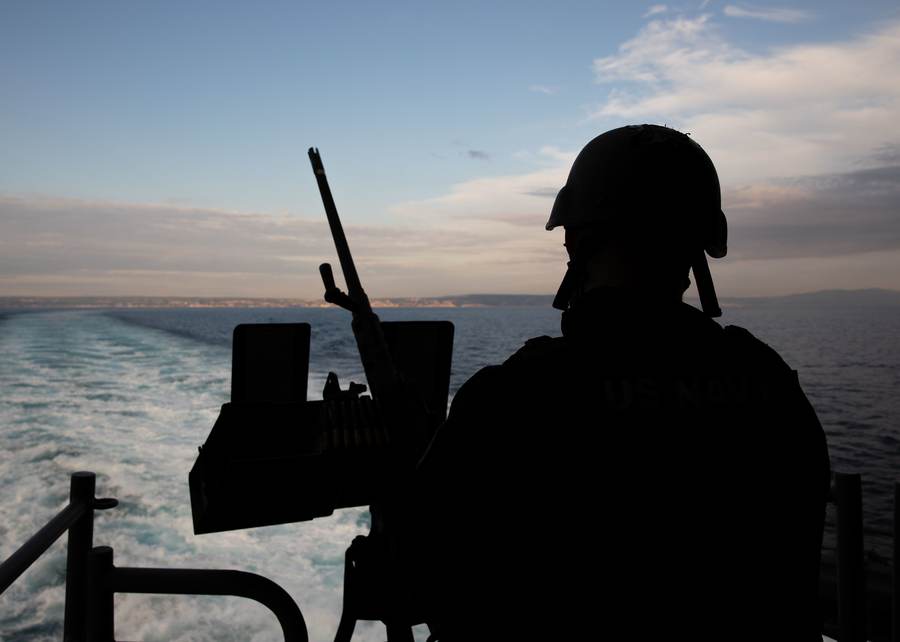
Bush matters because it converts strategic ambiguity into immediate capacity. Trump has said renewed strikes on Iran are possible after the November 3 midterms. Whether or not that order comes, aircraft and escorts already in theater make the threat more credible. They can respond within hours rather than waiting for forces to cross an ocean.
The carrier also helps protect the wider force. With more than 50,000 U.S. troops in the region, defensive patrols, radar coverage and missile interception can be as important as offensive missions. Sea-based aircraft can shift with the threat, but the ship itself must be defended against anti-ship missiles, drones, submarines and mines. Its value and vulnerability rise together.
Who wins and who loses
U.S. and allied commanders gain continuity. Bush keeps a large air wing available while other ships transit. Gulf partners gain reassurance that the United States can defend bases and shipping. Diplomats gain leverage from a capability already present rather than promised.
Iran faces more surveillance and shorter warning. A carrier on station can track activity and react quickly. Yet Tehran’s hard-liners can also use the ship as evidence that negotiations occur under military pressure, making compromise harder to sell domestically.
Other regions and the crew pay opportunity costs. A Norfolk-based carrier committed to the Middle East is unavailable for Atlantic or European contingencies. Sailors and families absorb uncertainty about how long carrier deployments last. Maintenance deferred at sea eventually has to be completed in port.
The last of her class in a changing fleet
Bush’s 2022–2023 Europe and Mediterranean deployment demonstrated the ship’s role in alliance reassurance as well as combat readiness. The current mission extends that pattern into a more volatile theater. The Navy is introducing Ford-class carriers, but Nimitz-class ships will carry a large share of deployments for years. CVN-77 represents the most modern version of that established system.
That continuity is strategically useful. New technology matters, but crises reward systems with trained crews, known maintenance needs and practiced supply chains. Bush’s newer features may bridge toward Ford, yet its immediate strength is that the Navy already knows how to fight, repair and replenish it.
What happens next
The first question is whether Bush remains after Roosevelt arrives. A three-carrier overlap would create a larger strike and defense posture; a rotation would preserve two carriers while sending one crew toward home or another assignment. Washington may also rotate back to Japan, so ship movements should be read as a sequence rather than a fixed count.
The second question is operational tempo. Visible patrols, replenishments and escort movements can indicate readiness without proving that strikes are imminent. If diplomacy holds, Bush may continue deterrence and air defense. If hostilities expand, it can support the opening phase immediately. Either way, the oldest question of carrier strategy applies: presence is valuable because the ship is there before the decision.
Sources
Internal links
- Third U.S. carrier and thousands of troops head toward the Middle East
- Iran’s president arrives in New York for the U.N. General Assembly
- USS George Washington: the Japan-based carrier now in the Middle East
Reporting note: Ship specifications and historical details are drawn from U.S. Navy public information and the image records linked above. Current deployment details are attributed to the listed reports. Force movements can change.