USS Abraham Lincoln Returns to San Diego After 321-Day Deployment
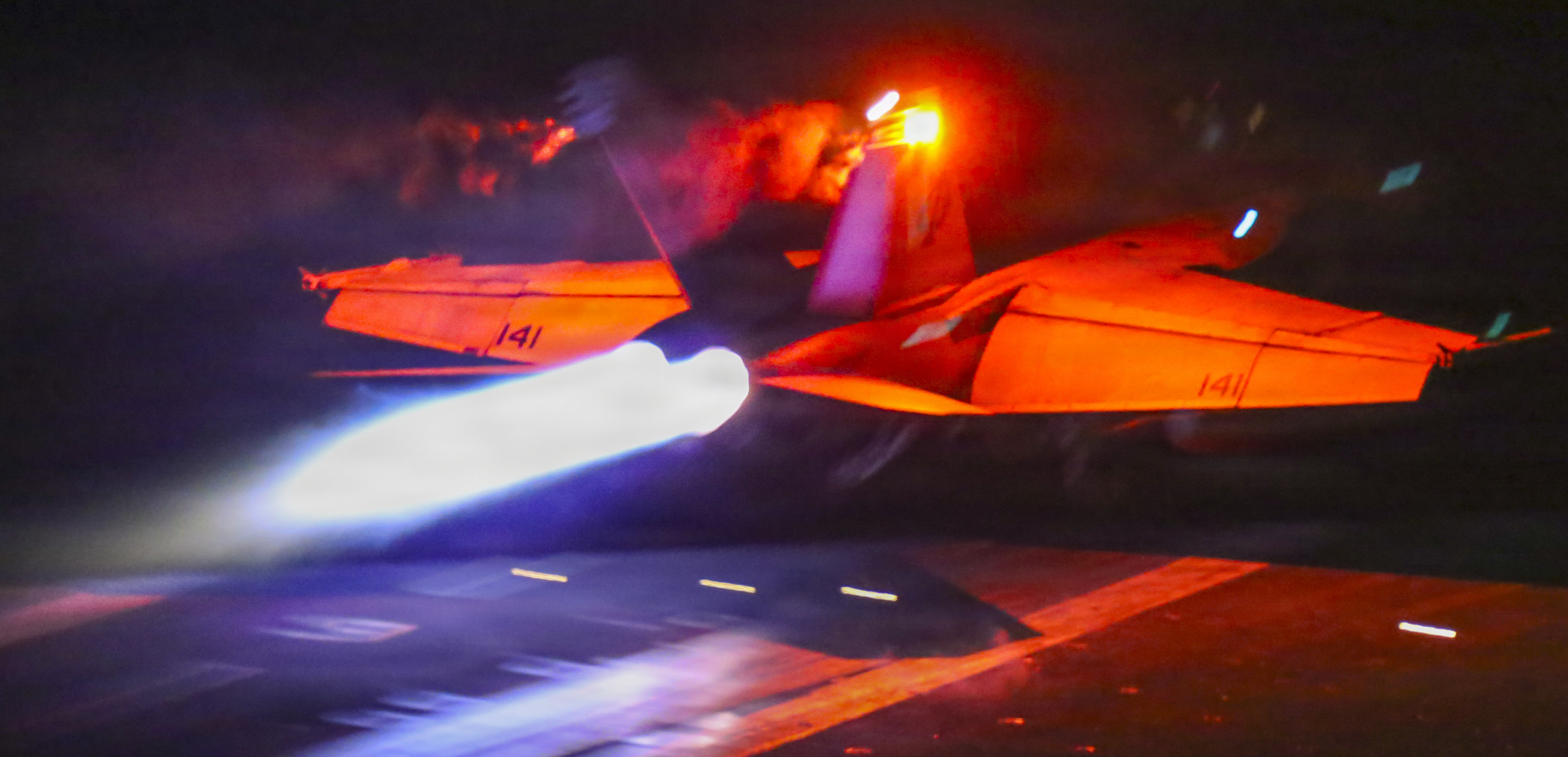
USS Abraham Lincoln returns home: The USS Abraham Lincoln steams into San Diego today, October 8, 2026, closing a 321-day deployment that began when the carrier departed on November 21, 2025. The ship spent 265 uninterrupted days at sea — a modern-era record for time between ports of call — with more than 200 of those days in a war zone supporting the Iran war: airstrikes on Iranian targets, a maritime blockade in and around the Strait of Hormuz, and sustained operations in the Arabian Sea under Operation Epic Fury.
What the ship did
The deployment was the second-longest carrier deployment since the Vietnam War, exceeded this year only by the USS Gerald R. Ford’s 326-day run. Across the deployment, the Lincoln and its strike group steamed more than 85,000 nautical miles and, per the Presidential Unit Citation presented aboard the ship yesterday, executed 3,693 combat missions, delivered 1.37 million pounds of ordnance, launched 450 Tomahawk cruise missiles, shot down 77 one-way attack drones, sank 64 Iranian warships and destroyed 21 anti-ship cruise missiles.
Defense Secretary Pete Hegseth flew out to the carrier on Wednesday to present the award in person, telling the crew that President Donald Trump had “tracked your activities from day one and couldn’t be more proud of what you executed.” The Asia-based USS George Washington relieved the Lincoln in the Middle East in August; the Lincoln then made a rare port stop in Thailand early last month on its way home — the crew’s first real break after more than 10 months at sea.
The reunions
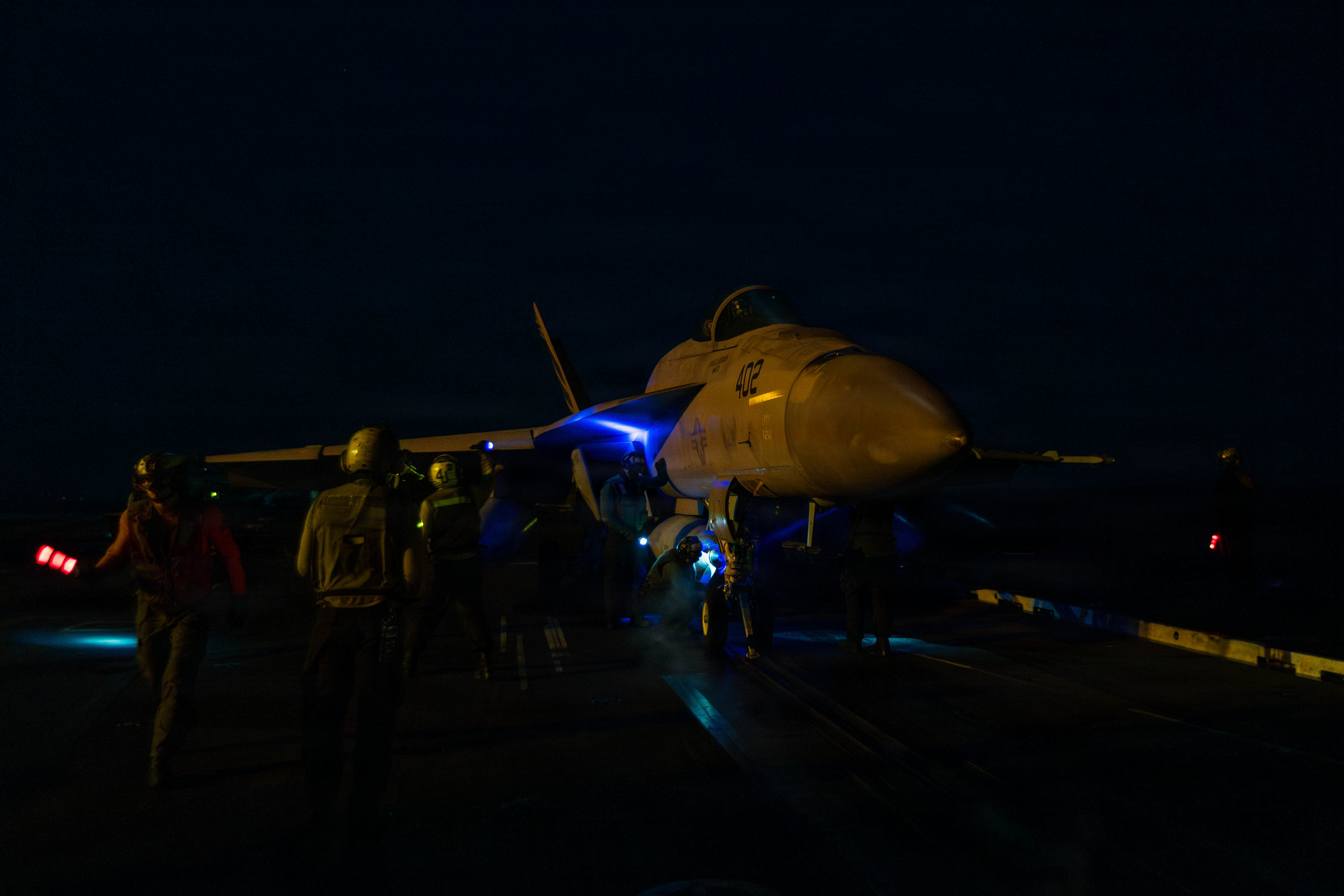
For the families on the pier at North Island, today is the payoff of nearly a year of absence — birthdays missed, children grown, marriages strained by distance and by the knowledge that the deployment was not routine. Sailors who left San Diego before Thanksgiving 2025 return after a deployment that made national news for its length and its toll. Firsthand accounts gathered by military reporters describe the particular texture of this homecoming: relief layered over exhaustion, pride mixed with the unprocessed weight of months at wartime tempo.
Homecomings after record deployments are never simple. Studies of long naval deployments consistently show that reintegration — the weeks after the pier-side embrace — is when the strain surfaces: disrupted sleep, fractured routines, relationships that must be rebuilt. For a crew that spent 265 straight days without setting foot on land, that adjustment will be steeper than usual.
The hardship the homecoming doesn’t erase
The celebration at the pier arrives alongside the deployment’s documented costs. The Navy told lawmakers that eight sailors attempted suicide across the strike group during the deployment, a disclosure made in acting Navy Secretary Hung Cao’s letter to Senator Kirsten Gillibrand. Experts note the number is low for a strike group of roughly 6,000 sailors over 10 months — but the attempts became a national story because of the deployment’s record length and the conditions surrounding it.
Those conditions drew national attention for months: reports of crew stress and poor mental health, and supply shortages including food and hygiene products. The Navy initially played down the reports; leaders eventually acknowledged problems. Cao said combat operations limited resupply opportunities, briefly reducing meal options from two to one, while maintaining that four nutritionally balanced meals were served daily. Navy officials said hygiene products were prioritized with a rotation system to streamline distribution.
Hegseth, aboard the ship Wednesday, pushed back on efforts to turn the Lincoln into “some sort of a symbol, a symbol of dysfunction or a symbol of low morale or a symbol of a failed mission.” The tension between the two framings — historic achievement versus historic strain — is the unresolved question this homecoming carries with it.

Why this matters
The Lincoln’s return marks the end of one of the most consequential carrier deployments in a generation — and the beginning of a reckoning about what the Navy is asking of its people and ships. Two carriers have now endured post-Vietnam-record deployments in a single year to support the Iran war, and both received the military’s highest unit award. That is no longer an anomaly; it is a pattern, and it tells the fleet what sustained high-tempo operations now look like.
It also matters for San Diego, a Navy town watching one of its own come home, and for the broader force posture: with the George Washington and the George H.W. Bush in the Middle East and the Theodore Roosevelt possibly joining them by late October, the Lincoln’s stand-down does not mean the region is losing American carrier presence.
And it matters for the sailors’ families, for whom the geopolitics were always secondary. Their metric for this deployment was never ordnance delivered or drones downed — it was whether everyone came home. Today, that part of the story gets its ending.
Who wins, who loses, what’s unresolved
The families win today. Whatever else is said about this deployment, 321 days of waiting ends at the pier. That is the one unambiguous victory of the story.
The Navy wins a showcase. A record deployment, a top unit award, a homecoming in America’s biggest Navy town — the service gets to close this chapter on its own triumphant terms.
The unresolved part is the precedent. Lawmakers, advocates and the crew’s own families will keep asking whether 265 uninterrupted days at sea, eight suicide attempts and months of reported supply problems are an acceptable price for the mission — and whether the next record deployment, which the current tempo makes likely, will look any different.
The ship’s future is open. Kitsap, Washington may become the Lincoln’s future homeport for maintenance, but the Navy has not confirmed the timing — leaving San Diego families and the Bremerton community alike waiting for an answer about where the ship, and its sailors, go next.
What the numbers actually say
321 days. The deployment’s length, from November 21, 2025 to October 8, 2026 — the second-longest carrier deployment since Vietnam.
265 days. Uninterrupted days at sea, a modern-era record.
200+ days in a war zone, conducting airstrikes and enforcing the Hormuz blockade.
85,000+ nautical miles steamed by the strike group.
~5,000 crew returning to San Diego today.
What happens next
Watch the pier. Today’s reunions close the deployment’s public chapter — and begin the quieter work of reintegration for thousands of sailors.
Watch Kitsap. The Navy’s decision on the Lincoln’s future homeport will reshape two Navy communities; until it confirms timing, both San Diego and Bremerton wait.
Watch the fleet’s tempo. With two more carriers in the Middle East and a third possibly on the way, the question is not whether record deployments continue — it is what the Navy changes about them after the Lincoln’s example.
Sources
- AP via NPR — “The long-deployed USS Lincoln is returning home to San Diego,” October 8, 2026
- USA Today — “When will USS Lincoln return home?” October 7, 2026
- Military.com — “Military veteran, Navy sailor father share firsthand accounts as USS Abraham Lincoln returns stateside,” October 2026
- Kitsap Sun — “USS Abraham Lincoln returns to San Diego homeport this week,” October 7, 2026