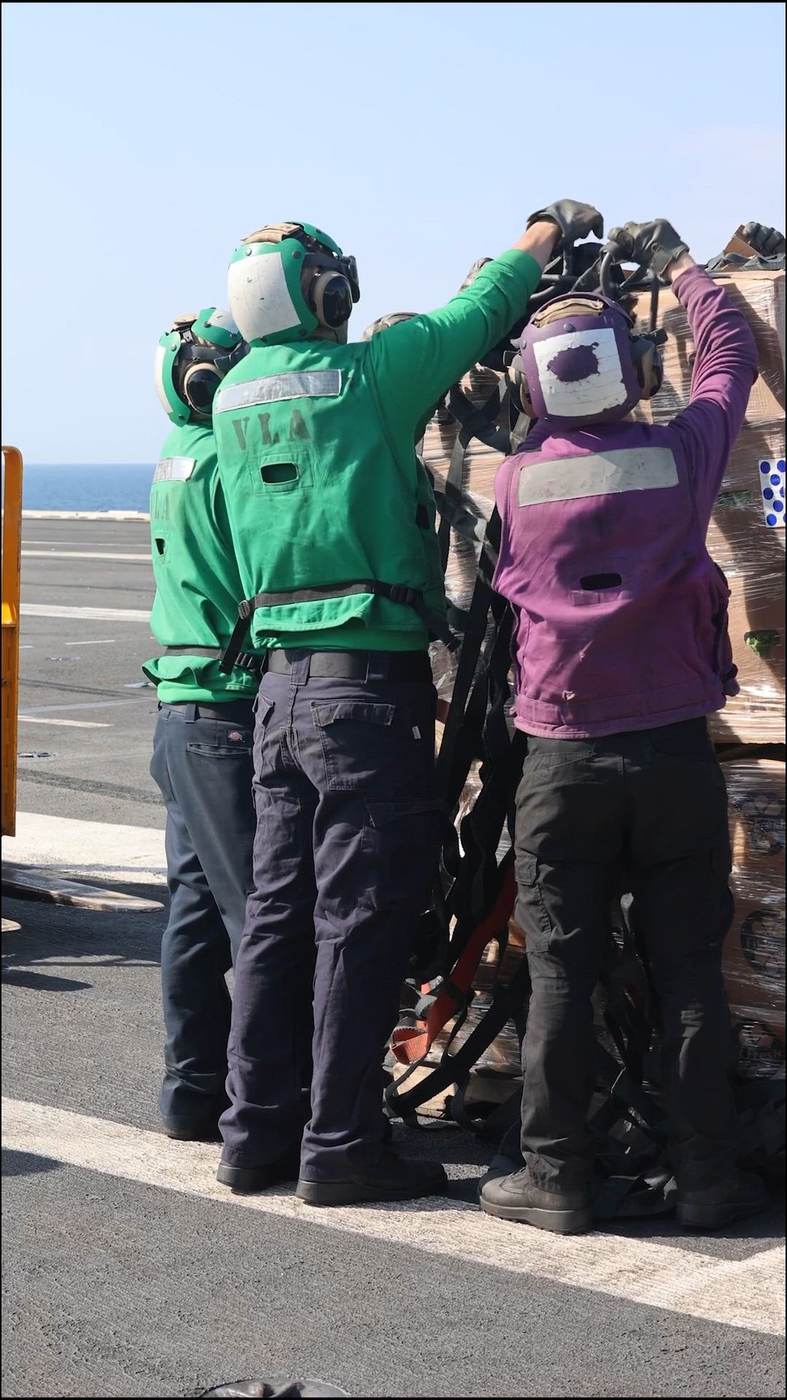
The USS Abraham Lincoln suicide attempts disclosed to Congress number eight across the carrier strike group during its current deployment, Acting Navy Secretary Hung Cao told Senator Kirsten Gillibrand. No service member died by suicide. The cases involved personnel connected not only to the aircraft carrier but also to its embarked air wing, strike-group and destroyer-squadron staffs, escorting destroyers and aviation squadrons.
The distinction matters. A carrier strike group is a distributed force operating under one demanding mission, not a single ship with one chain of daily life. The disclosure therefore points to strain across the deployment system: long separation, combat risk, disrupted resupply, compressed rest and the difficulty of accessing private, sustained care at sea.
The group deployed on November 21, 2025, and has remained away for more than 300 days, including operations connected to the Iran war. Families raised concerns about safety, food, water, mail and mental-health conditions. Cao said food was adequate, though limited resupply briefly reduced the main entrée choice from two to one.
Why this matters
Suicide attempts are an urgent measure of human distress, but they are also an operational warning. A force that asks sailors and aviators to sustain high-tempo missions for nearly a year must ensure that clinical care, confidential counseling, sleep, communications home and predictable relief are treated as readiness requirements rather than optional welfare programs.
Cao’s letter listed five chaplains, one integrated prevention counselor, one psychologist, one clinical social worker, three behavioral-health technicians and one expeditionary facility dog. That is a meaningful multidisciplinary team. The harder question is whether its capacity matched the number of people, the geographic spread of the strike group and the intensity and length of the mission.
The answer cannot be reduced to a ratio without more information. Not every person in distress seeks the same care, some clinicians may move between units, and emergency demand can arrive in clusters. But eight attempts are sufficient to test whether staffing designed for a normal deployment can absorb a prolonged combat deployment without delays or gaps.
What the Navy’s numbers do—and do not—show
Pentagon data cited in reporting recorded 356 suicide attempts among roughly 337,000 active-duty sailors in 2025. That is about 106 attempts per 100,000 sailors for that year, a crude rate that should not be directly compared with eight cases in one strike group without the group’s precise population, observation period and case definitions.
The strike-group count is still significant because it describes a concentrated operational environment. It does not prove that deployment caused every attempt, and public reporting does not provide the medical histories needed to make that claim. It does show that prevention systems were confronting repeated crises while the force remained deployed.
Attempt data are also incomplete by nature. Definitions, reporting practices and medical privacy shape what is recorded. A rise can reflect worsening conditions, better detection or both. Responsible oversight must look beyond the headline number to timing, unit, access to care, prior help-seeking and whether recommended follow-up was possible.
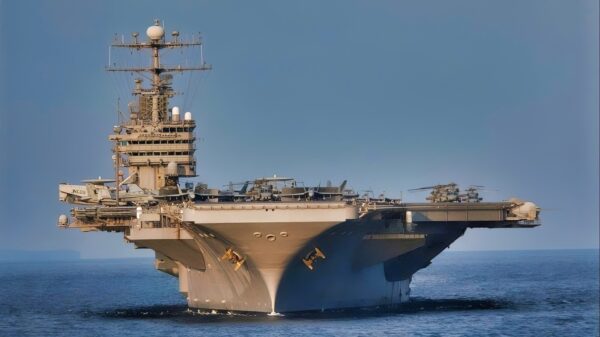
A record-length deployment changes the risk calculation
Carrier deployments have repeatedly expanded during crises. The Theodore Roosevelt’s 2020 deployment, complicated by a COVID-19 outbreak, exposed how quickly health, command confidence and family uncertainty can converge. Earlier post-9/11 deployments also ran beyond planned schedules as wars and maintenance cycles constrained the fleet.
The Lincoln’s extended mission belongs to that history but has its own conditions. The Iran war added direct operational pressure, while families followed a schedule whose end became less predictable. Uncertainty can be more corrosive than a known long absence: childcare, employment, housing and emotional endurance are harder to plan when return dates move.
Leaders gain operational flexibility from keeping a capable carrier on station. The cost is transferred to crews, families and the ships that must later absorb maintenance. The service may meet today’s mission while creating tomorrow’s retention, repair and training problems.
Critics, commanders and the accountability gap
Gillibrand’s inquiry reflects a congressional view that aggregate readiness claims are not enough. Lawmakers can reasonably ask when senior leaders learned of each attempt, whether units changed watch schedules or access to care, and what thresholds trigger additional clinicians or an earlier relief plan.
Commanders face a real counterargument: war does not pause because a deployment becomes difficult. Moving a carrier or replacing specialists can create immediate security risk, and publicizing medical details can violate privacy. Those constraints justify caution; they do not justify treating endurance as unlimited.
The most useful scrutiny avoids blaming individuals who sought help or the clinicians serving them. It examines systems: staffing, leave, sleep, communications, resupply, command climate and whether asking for care affects a sailor’s career. A culture that formally encourages treatment but informally penalizes it will undercount distress until it becomes acute.
Who bears the costs—and who benefits
Deployed personnel bear the most direct cost, followed by families managing prolonged separation and repeated uncertainty. Shipboard medical teams face the burden of caring for crises in confined environments with limited evacuation options. Local commands may lose experienced people temporarily when treatment requires movement ashore.
The strategic beneficiaries are national leaders and allies who gain the deterrence, strike capacity and visible commitment of a carrier presence. The Navy also gains operational experience. Those are real benefits, but they are paid for with human time and risk that rarely appear in a deployment-days statistic.
There are institutional winners only if the disclosure produces better prevention: more deployable clinicians, protected recovery periods, clearer escalation rules and honest reporting. If it becomes a brief controversy without structural change, the burden remains concentrated on the same crews.
What should happen next
Congress should seek a timeline of the eight cases, anonymized to protect individuals, and compare it with staffing changes, port calls, combat phases and evacuation capacity. The Navy should explain what support will remain after homecoming, when delayed reactions and relationship strain may surface.
Three scenarios follow. In the best case, additional care and a predictable return reduce acute risk while lessons are applied fleetwide. In a middle case, the group returns safely but treatment backlogs and retention losses persist. In the worst case, operational extensions continue without matching mental-health capacity, making repeated crises more likely elsewhere.
The decisive measure is not whether every planned mission was completed. It is whether the Navy can show that people who disclosed distress received timely care without stigma, that families were given reliable support and that future deployment plans price human endurance into readiness.
Sources and further reading
- CNN: Navy letter detailing eight attempts across the strike group
- USA Today: congressional scrutiny of the deployment
- Military.com: staffing and deployment details
- U.S. Navy: USS Abraham Lincoln operations in the Fifth Fleet
Reporting basis: Fixed September 24, 2026 snapshot. Medical details remain private, and the public record does not establish that deployment conditions caused any individual attempt.